Debt can be a powerful tool for companies, helping them fund expansion, invest in new projects, and pursue growth opportunities without relying entirely on equity. However, when debt starts rising faster than a company’s ability to manage or repay it, it can become a financial burden and raise concerns about the company’s long-term viability. So, how can investors tell when a company’s debt is becoming a problem? What are the signs, and what can companies do? Get answers to these questions and more in this blog and enrich your fundamental analysis journey.
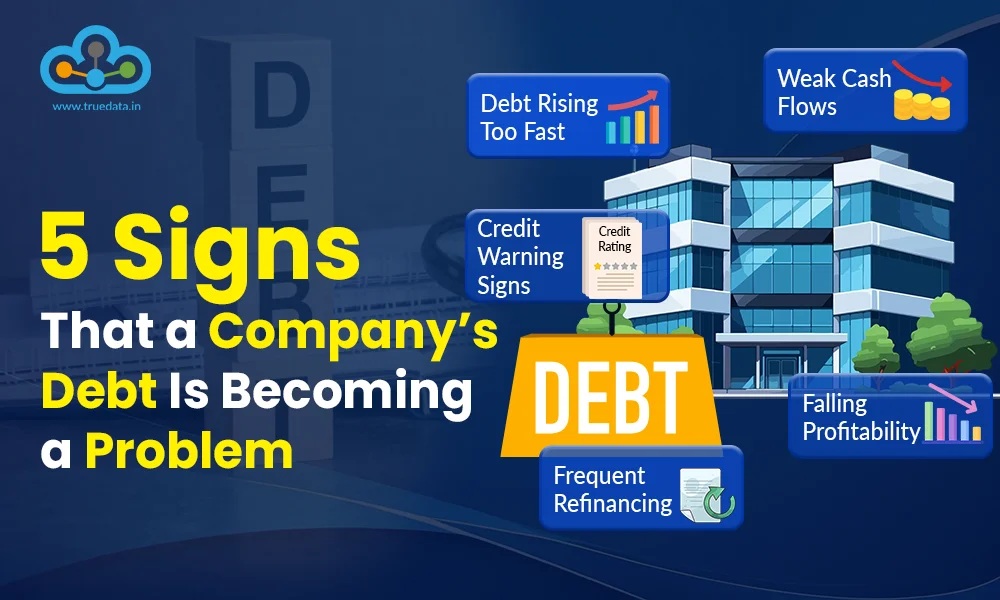
Debt is not necessarily a bad thing for a company. Businesses often borrow money to expand operations, purchase equipment, enter new markets, or fund other growth plans. The problem arises when a company takes on more debt than it can comfortably manage. Certain financial and operational signs can indicate that debt is starting to put pressure on the company. These signs include,

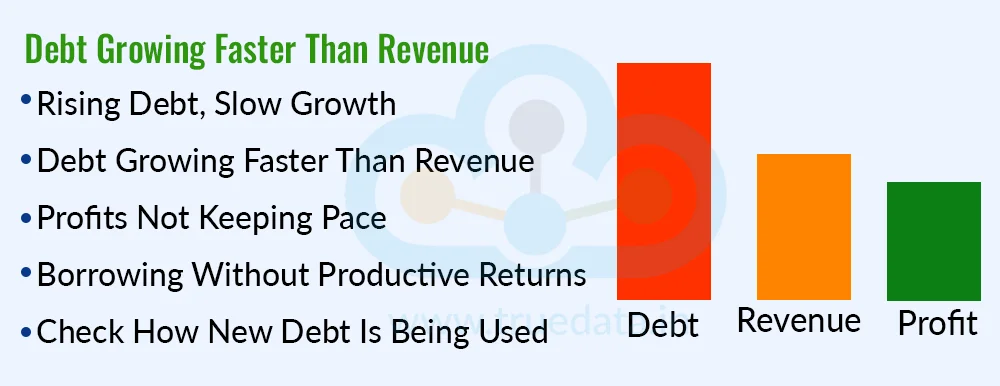
One of the first warning signs is when a company’s debt keeps increasing while its revenue and profits are not growing at a similar pace. Borrowing can make sense when the additional funds are being used to generate higher sales and earnings. However, if debt rises significantly without a corresponding improvement in business performance, the company may be taking on financial obligations without creating enough income to support them. Investors can compare a company’s total debt, revenue and profit growth over several years. For example, if debt has doubled while revenue and operating profit have grown only marginally, it may be worth investigating why the company needs so much additional borrowing and whether the new debt is being used productively.

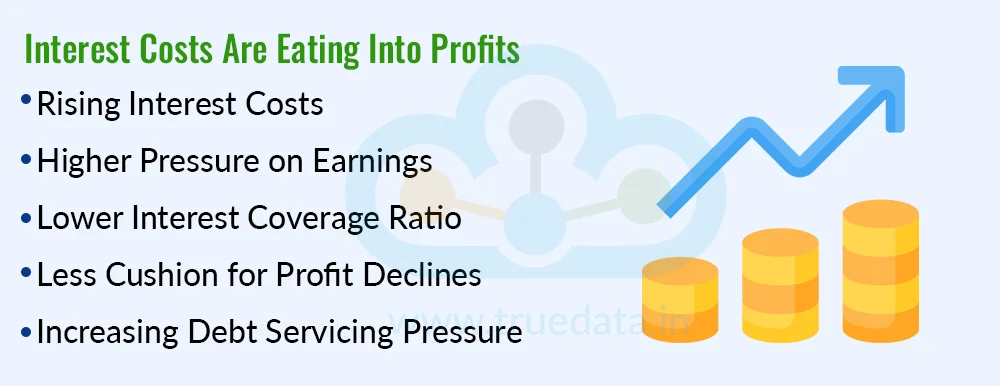
Borrowing comes with an interest cost, and this cost can put pressure on a company’s earnings. If interest expenses increase significantly, a larger portion of the company’s operating profit may be required just to service its debt. Investors can track metrics such as the Interest Coverage Ratio, which indicates how comfortably a company can meet its interest payments from its operating earnings. A declining ratio can be a warning sign because it suggests that the company has less of a cushion to absorb a fall in profits or an increase in borrowing costs.

A company may report accounting profits but still face pressure if it does not generate enough cash from its operations. This is why investors should look beyond the profit and loss statement and examine the cash flow statement. If operating cash flow remains weak or negative while the company continues borrowing, it could indicate that the business is struggling to generate enough cash internally. Investors should also check whether the company is regularly taking on new debt to repay existing obligations or fund routine business expenses. Persistent dependence on borrowing for day-to-day needs can be a sign of financial stress.

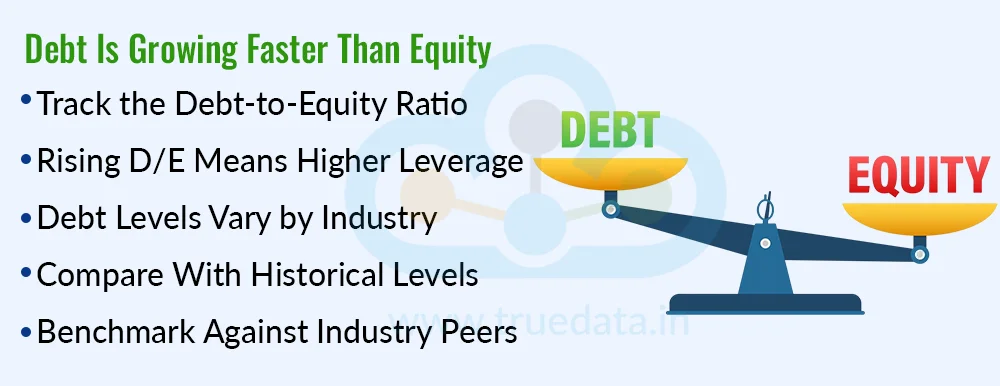
The Debt-to-Equity (D/E) Ratio compares a company’s debt with shareholders’ equity and is commonly used to understand its financial leverage. A rising D/E ratio means the company is relying increasingly on borrowed funds relative to the capital provided by shareholders. However, there is no single D/E ratio that is automatically considered problematic for every company. Debt levels can vary considerably across industries. For example, capital-intensive businesses such as infrastructure, manufacturing and utilities may naturally use more debt than some technology or service companies. Investors should therefore compare a company’s leverage with its own historical levels and similar companies in the same industry.

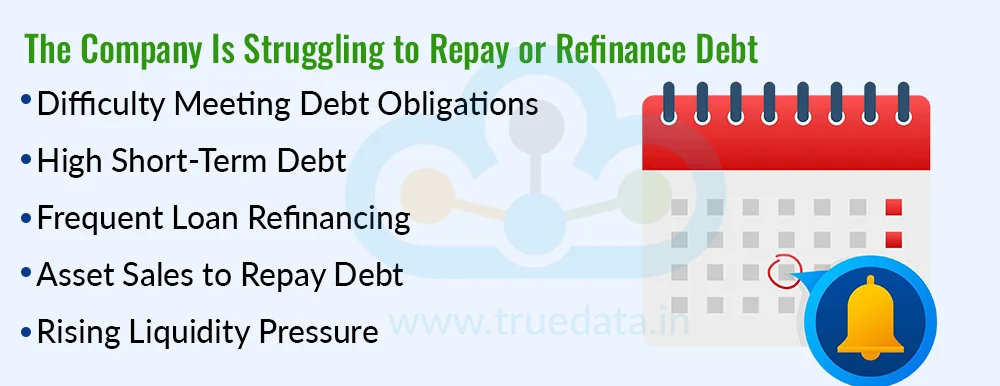
Another important warning sign is difficulty in meeting debt obligations when they become due. Investors should examine the company’s balance sheet for short-term borrowings, upcoming debt maturities and repayment obligations. If a company repeatedly needs to refinance loans, extend repayment periods, sell assets or raise fresh capital simply to meet existing obligations, it may indicate increasing financial pressure. Investors should also pay attention to the proportion of debt that is due in the near term as a large repayment requirement can create liquidity pressure, particularly if cash reserves are limited.

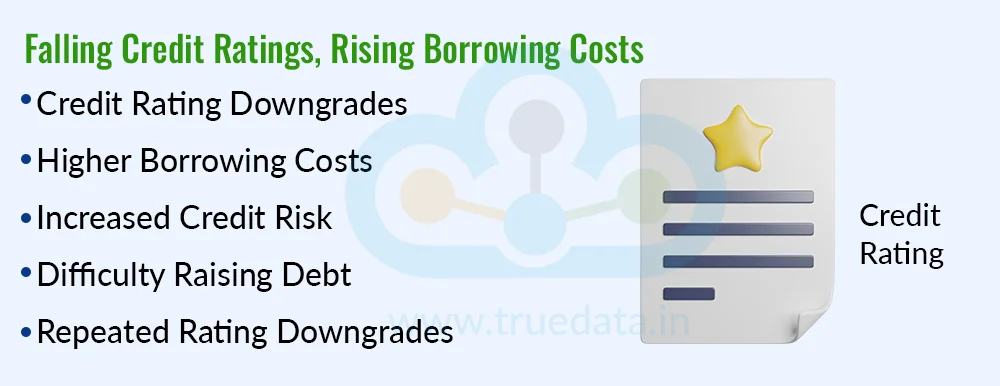
A company's credit rating reflects a credit rating agency's assessment of its ability to meet its financial obligations. A downgrade can indicate that the agency sees increased credit risk. It can also make future borrowing more expensive for the company. Investors should therefore monitor rating changes from agencies such as CRISIL, ICRA, CARE Ratings and India Ratings when relevant. A pattern of downgrades, higher interest rates on new borrowings or difficulty raising debt can provide additional clues that the company's financial position is under pressure.

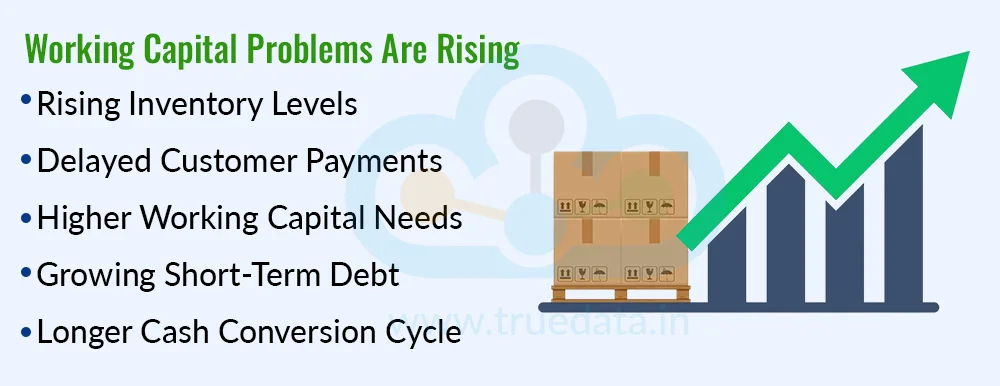
A company can also run into debt-related problems because too much money is tied up in working capital. For instance, if inventory keeps increasing or customers take longer to pay, the company may need additional short-term borrowing to maintain its operations. Investors can monitor metrics such as inventory days, receivable days and the cash conversion cycle. If these numbers deteriorate significantly while short-term debt continues to rise, it may suggest that the company is borrowing more money to bridge a growing working-capital gap.

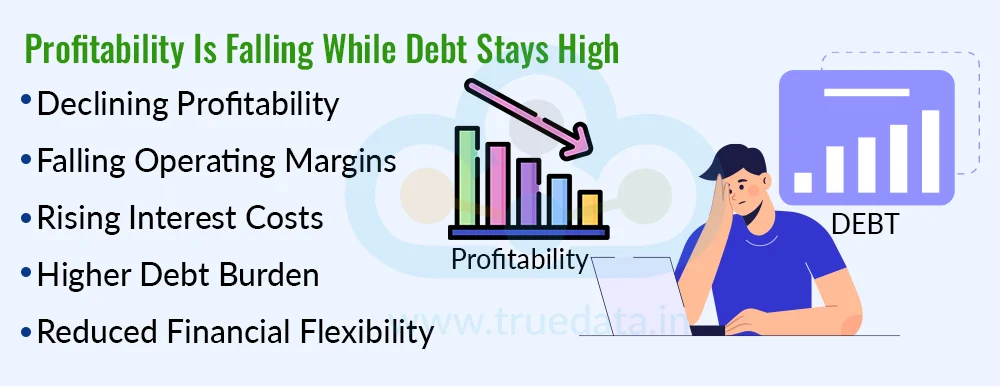
High debt becomes more difficult to manage when a company's profitability starts declining. A fall in operating margins or net profit can reduce the company's ability to service its existing debt. It is useful to look at EBITDA, operating profit margin, net profit and interest expenses together rather than considering debt in isolation. If profitability is weakening while debt and interest costs continue to rise, the company's financial flexibility may be getting squeezed.

Asset sales are not always negative. Companies may sell non-core assets as part of a planned strategy. However, frequent asset sales to raise money for debt repayment can be a warning sign, particularly when the underlying business is not generating sufficient cash. Investors should examine the company’s financial statements and disclosures to understand why assets are being sold and where the proceeds are being used. If asset sales repeatedly go towards servicing debt rather than supporting productive investments, it deserves closer attention.

Management may announce plans to reduce debt through higher cash generation, asset sales, cost reductions or equity fundraising. Investors should track whether these plans actually result in lower leverage over time. A consistent gap between management's stated debt-reduction plans and the company's actual financial performance can be an important point for further analysis. Investors should rely on reported financial results and regulatory disclosures rather than announcements alone.
When a company starts showing signs that its debt is becoming difficult to manage, early action can help prevent the situation from becoming more serious. The right response depends on the company's financial position, industry, cash flows and the reason behind the rising debt. Here are some steps companies can consider, which investors can also track to understand how management is addressing financial stress.

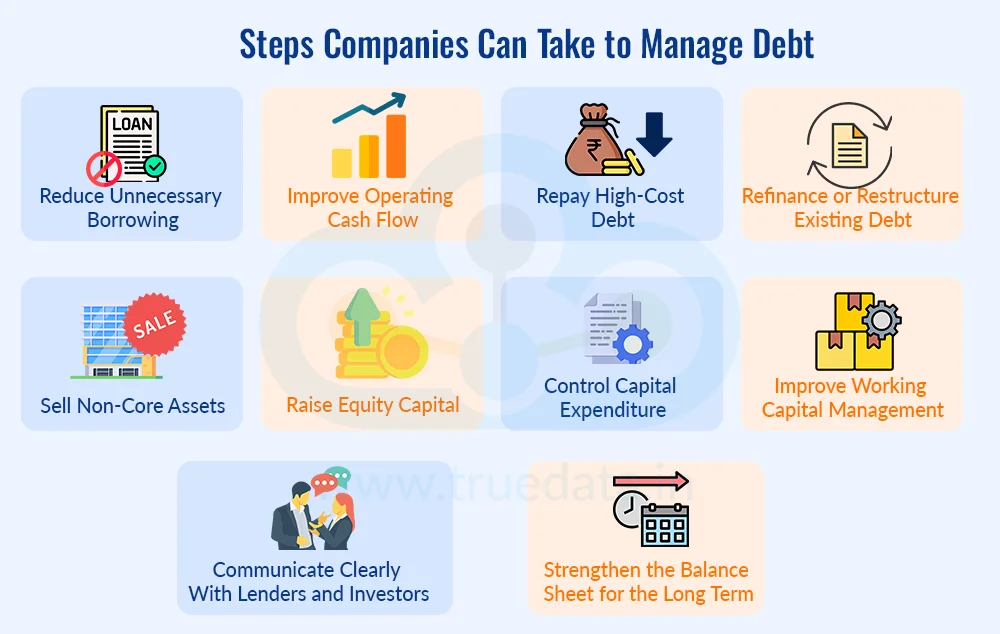
The first step is to control further borrowing. If a company is already carrying a high debt burden, taking on additional loans without a clear plan to generate sufficient returns can increase financial pressure. Companies can review their expansion plans, capital expenditure and other major spending requirements and prioritise projects that are expected to generate sustainable cash flows. For investors, a slowdown in fresh borrowing along with improving cash flows can indicate that the company is becoming more disciplined about its finances.
Strong cash generation is one of the most important ways for a company to manage its debt. Companies can focus on improving profitability, controlling operating costs and making their core business more efficient. They can also improve working capital management by collecting payments from customers faster, reducing excess inventory and negotiating better payment terms with suppliers. An improvement in cash flow from operating activities is important because it shows whether the underlying business is generating enough cash to support its operations and financial obligations.
Not all debt carries the same interest rate. Companies may have loans or borrowings that are significantly more expensive than others. In such cases, management can prioritise repayment or refinancing of high-cost debt, provided the company's cash position allows it. Lower interest expenses can reduce the pressure on profits and cash flows. Investors can track whether finance costs are declining and whether the company's overall debt burden is becoming more manageable over time.
If a company is facing near-term repayment pressure, it may negotiate with lenders to refinance or restructure its existing borrowings. Refinancing can involve replacing an existing loan with a new loan that has a different interest rate or repayment schedule. Debt restructuring can also involve extending repayment periods or changing other terms, depending on the agreement with lenders and applicable regulations. While refinancing can provide breathing room, investors should examine why the company needs refinancing and whether it is solving a temporary cash-flow mismatch or a deeper financial problem.
Companies sometimes own assets or businesses that are not central to their main operations. Selling such non-core assets can generate cash that may be used to repay debt. For example, a company may sell an unused property, a non-core subsidiary or an investment that is not contributing meaningfully to its business. However, investors should distinguish between planned asset monetisation and repeated asset sales simply to meet debt obligations. If a company is continuously selling productive assets without improving its underlying business, the debt problem may not be fully resolved.
Another option is to raise additional equity capital. A company may issue new shares to existing shareholders or other investors and use the funds to reduce debt or strengthen its balance sheet. Unlike debt, equity does not create a mandatory interest-payment obligation. However, issuing new shares can dilute the ownership percentage of existing shareholders. Investors should therefore examine the purpose of the fundraise, the amount being raised and how management plans to use the proceeds.
Large capital expenditure can increase borrowing requirements, particularly for businesses that are expanding rapidly. When debt levels become uncomfortable, companies may review the timing and scale of planned investments. This does not necessarily mean stopping all expansion. Instead, management may prioritise projects with stronger expected cash flows and postpone projects that are less urgent. Investors can compare the company's capital expenditure, debt growth and operating cash flow to understand whether expansion is putting additional pressure on the balance sheet.
Poor working capital management can force a company to rely more heavily on short-term borrowing. Companies can address this by reducing excess inventory, improving collection of receivables and managing supplier payments efficiently. Changes in receivable days, inventory days and payable days can provide useful clues. If these metrics improve alongside a reduction in short-term debt, it may indicate that the company is becoming more efficient in managing its working capital.
When financial pressure increases, timely and transparent communication becomes important. Companies should clearly disclose relevant information about their borrowings, repayment obligations, refinancing plans and steps being taken to improve their financial position, subject to applicable disclosure requirements. Company filings, quarterly results, annual reports and credit-rating updates can help track whether management's actions are translating into measurable improvements.
Ultimately, reducing debt is only part of the solution. A company needs a sustainable business model that can generate adequate profits and cash flows over the long term. Investors should therefore look beyond a one-time reduction in debt and check whether debt-to-equity is improving, interest costs are under control, operating cash flow is strengthening, and profitability is sustainable. A company that addresses the underlying reasons for its financial stress may be better positioned to manage its obligations in the future.
When a company shows signs of rising debt or financial stress, investors should not look at debt in isolation. The objective is to understand how the company's borrowing could affect its earnings, cash flows and, ultimately, shareholders.

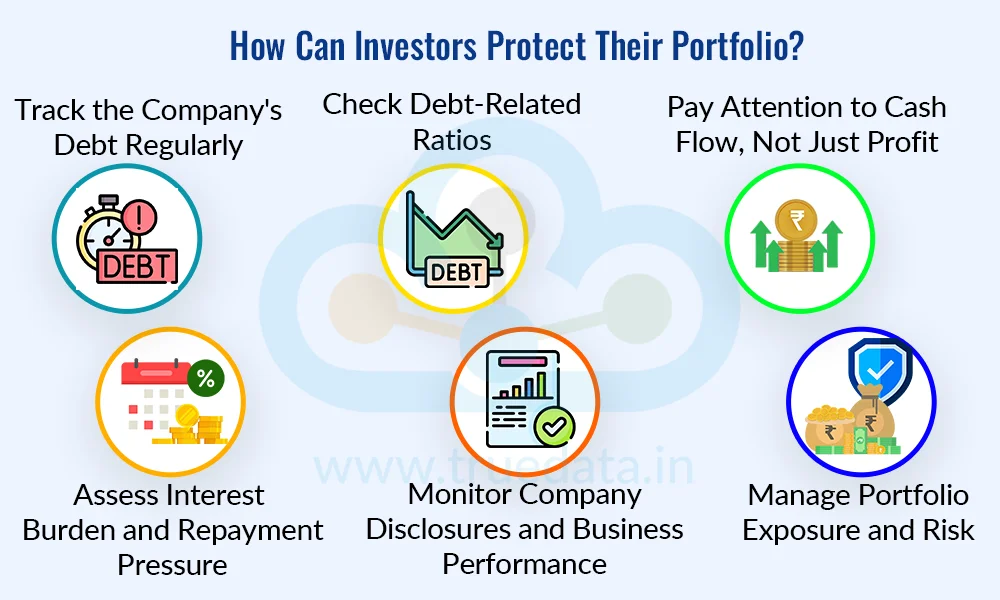
Track the Company's Debt Regularly - Investors should keep an eye on the company's total debt, short-term borrowings and long-term borrowings through quarterly results and annual reports. Instead of looking at debt for just one period, compare it across several quarters or years. A steady increase in debt deserves closer attention, especially if revenue, profits and operating cash flow are not growing at a similar pace. Investors should also check why the company is borrowing and whether the funds are being used for expansion, working capital, acquisitions or other purposes.
Check Debt-Related Ratios - Financial ratios can help investors understand whether a company can comfortably manage its borrowings. Some useful ratios include,
Debt-to-Equity Ratio - Shows the level of debt compared with shareholders' equity.
Interest Coverage Ratio - Indicates how comfortably operating earnings can cover interest expenses.
Debt-to-EBITDA Ratio - Helps assess debt relative to the company's operating earnings.
Cash Flow-to-Debt Ratio - Shows the company's ability to support its debt using operating cash flow.
Investors should compare these ratios with the company's historical performance and with similar companies in the same industry. A ratio that looks high for one industry may be normal for another.
Pay Attention to Cash Flow, Not Just Profit - A company can report healthy accounting profits while struggling to generate enough cash. Therefore, investors should examine the cash flow statement along with the income statement. They should look for consistent cash flow from operating activities. If profits are rising but operating cash flow remains weak for several periods, investors should investigate the reason. Strong and consistent operating cash flow can help a company meet interest and repayment obligations without relying excessively on fresh borrowing.
Assess Interest Burden and Repayment Pressure - Investors should assess whether the company can comfortably meet its interest payments and upcoming debt repayments. Rising finance costs, falling operating profits, or large debt repayments due soon can reduce financial flexibility and create liquidity pressure. It is also useful to check the interest-rate structure of borrowings, where disclosed, as changes in floating interest rates can increase borrowing costs.
Monitor Company Disclosures and Business Performance - Investors should regularly review quarterly results, annual reports, investor presentations and stock-exchange disclosures to track changes in debt, interest costs, repayments and cash flows. At the same time, they should monitor revenue, margins, profitability and cash generation, as rising debt becomes more concerning when the underlying business is weakening.
Manage Portfolio Exposure and Risk - Investors should avoid putting too much of their portfolio into a single debt-heavy company and consider diversification across companies, sectors and asset classes. They should also align their exposure with their investment horizon, risk tolerance and financial capacity, while combining company-level debt analysis with overall portfolio risk management.
Debt is not always a problem, but excessive or poorly managed debt can put pressure on a company’s profits, cash flows and financial stability. Investors should watch for warning signs such as rising interest costs, weak cash flows, difficulty in meeting repayments, declining business performance and increasing reliance on new borrowings. By regularly reviewing these factors along with company disclosures and financial statements, investors can better understand the risks associated with a highly leveraged company and make more informed investment decisions.
This article explains how investors can identify when a company’s debt can become an issue and what investors can do about it. Let us know your thoughts on this topic or if you need further information, and we will address it soon.
Till then, Happy Reading!
Read More: How to Analyse Businesses with High Intangible Assets?
Thestock market never stands still, and prices swing constantly with every new h...
Corporate data is more than just the numbers of a company. They can show what is...
Investing is not just about numbers on a screen. It is about understanding the s...