Corporate data is more than just the numbers of a company. They can show what is going on behind the scenes and help the management and other stakeholders steer the company in the right direction. But did you know you do not have to wait for the entire year to understand the performance of a company? You can review it each quarter when the results are out, and the market reaction to these results can give an insight into it, too. So how do you read these reports, and which one is more important? Get answers to these questions and more in this blog, where we break down the understanding and relevance of quarterly and annual corporate data and what it means for investors.

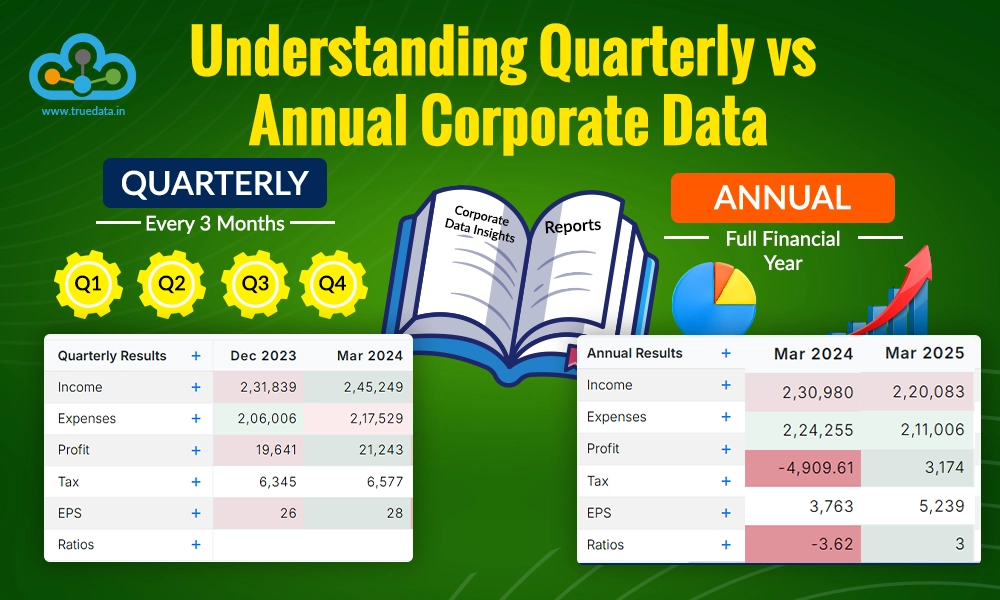
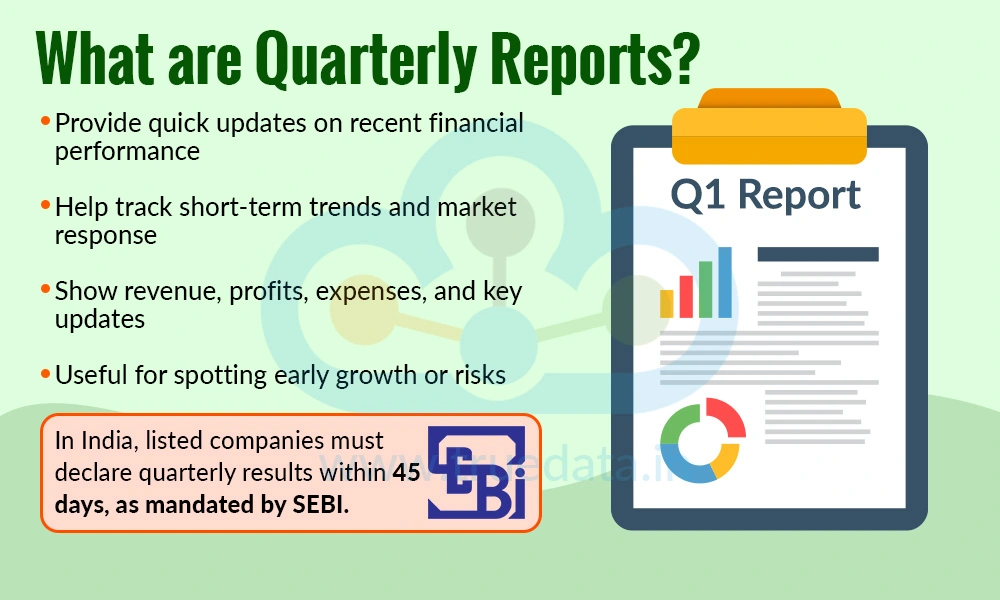
Quarterly and annual reports are official financial updates that companies share to explain how their business is performing. Quarterly reports are released every three months and give investors a quick snapshot of recent performance, such as revenue, profits, expenses, and key business updates. They help investors track short-term trends, spot early signs of growth or stress, and understand how management is responding to current market conditions. In India, listed companies must declare quarterly results within 45 days from the end of each quarter, as mandated by the Securities and Exchange Board of India (SEBI). For example, results for the June quarter are usually announced by mid-August.

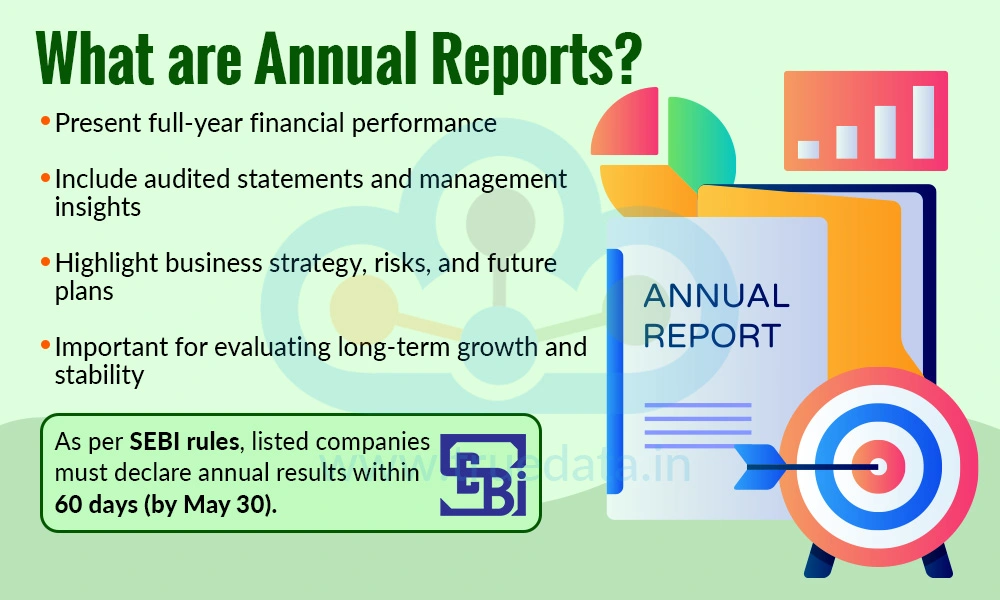
Annual reports, on the other hand, show the company’s performance for the entire financial year and provide a much broader view. They include audited financial statements, management discussions, business strategy, risks, and future plans, thus making them especially important for long-term investors. As per SEBI rules, listed companies must declare annual results within 60 days from the end of the financial year (by May 30). Additionally, under the Companies Act, 2013, companies must hold their Annual General Meeting (AGM) by 30 September, and the annual report must be shared with shareholders before the AGM. Together, quarterly reports help investors stay updated throughout the year, while annual reports help them judge the company’s overall quality, consistency, and long-term direction.
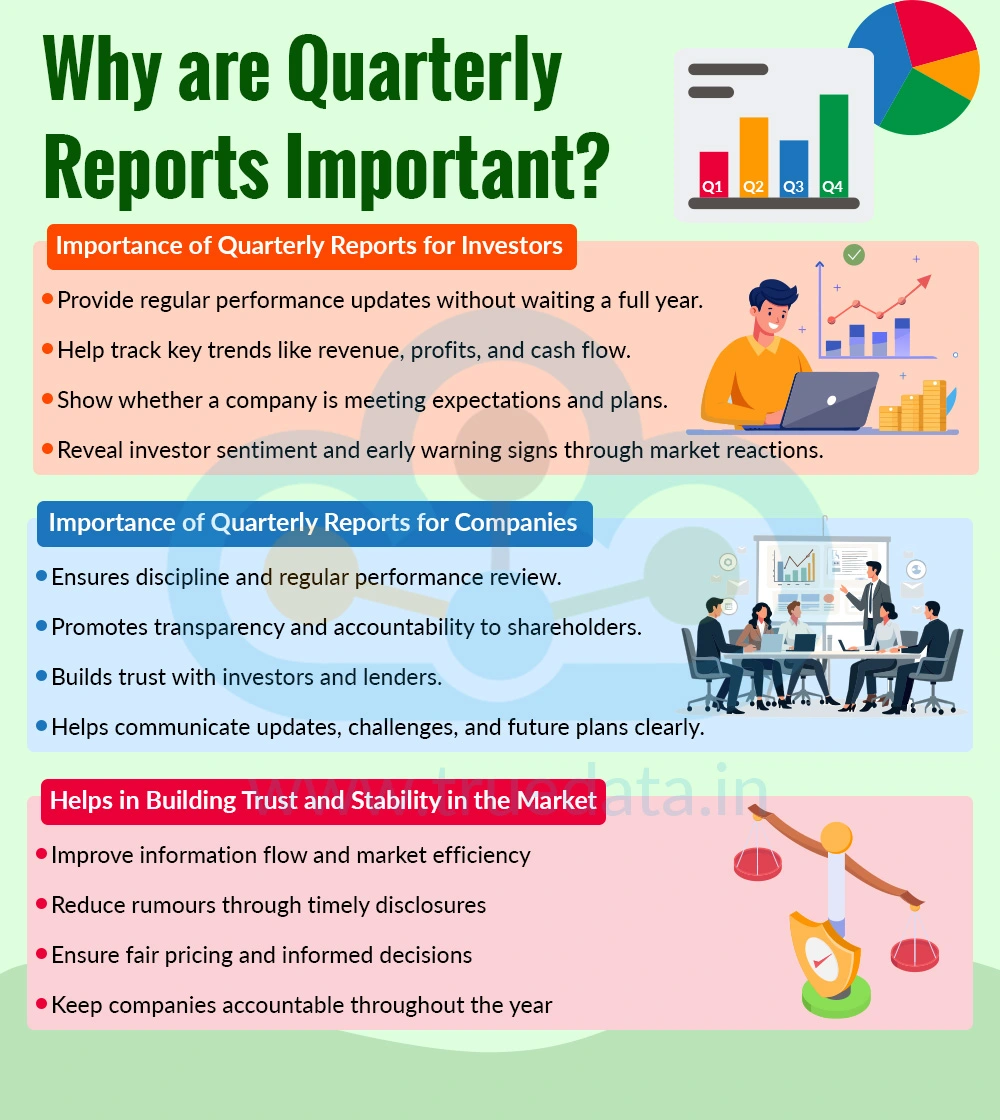
Quarterly reports may look routine, but they play a big role in how investors and companies make decisions throughout the year. The importance of quarterly reports is explained below.

Quarterly reports give investors regular updates on how a company is performing, instead of waiting an entire year for answers. They help investors track key trends such as revenue growth, profit margins, expenses, and cash flows. These reports are useful to check whether a company is meeting expectations and staying on track with its business plans. Market reactions to quarterly results also offer clues about investor sentiment, where sharp price movements often signal surprises, either positive or negative. By following quarterly reports consistently, investors can spot early warning signs like declining margins or rising debt, and also identify companies that are showing steady and improving performance.
Quarterly reporting brings discipline and transparency to the business. It forces management to regularly review performance, explain results to shareholders, and take timely corrective action if things are not going as planned. Regular disclosure helps build trust with investors, lenders, and analysts, which is especially important in the market, where credibility and governance matter a lot. Quarterly reports also allow companies to communicate business updates, challenges, and future priorities clearly, reducing uncertainty and unrealistic expectations.
Quarterly reports improve the flow of information in the stock market and make it more efficient. When companies share updates frequently, it reduces rumours and ensures that all investors have access to the same information at the same time. This leads to fairer stock prices and better decision-making. In simple terms, quarterly reports act like a regular health check by helping investors stay informed and encouraging companies to stay focused and accountable throughout the year.

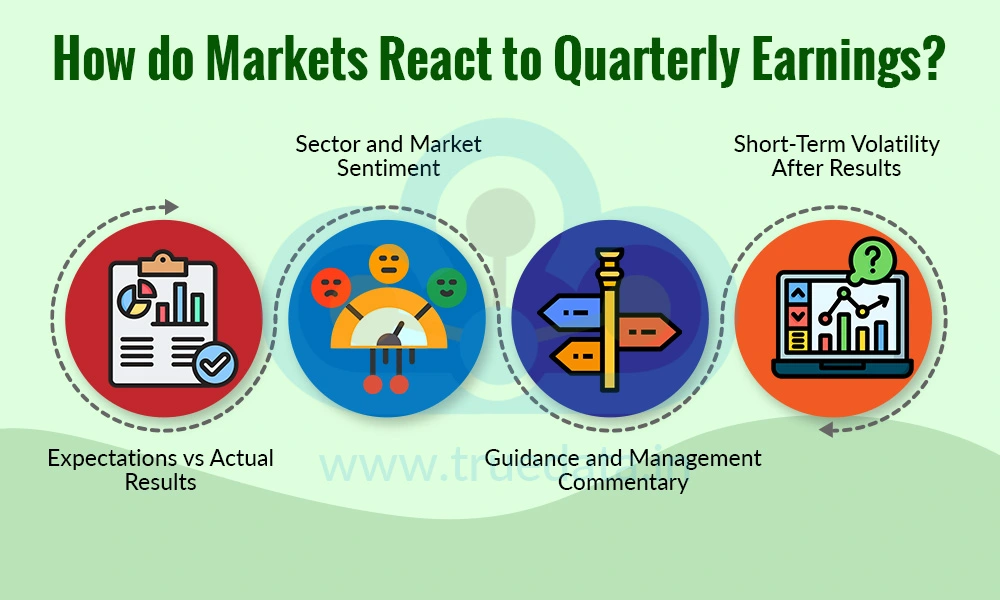
Market reactions to quarterly earnings are often quick and sometimes sharp. This can be based on the new information, which can change how investors see a company’s future. Market reaction to quarterly results is explained below.
Expectations vs Actual Results - Markets do not react only to profits or losses, but they also react to how results compare with expectations. If a company reports numbers better than what investors and analysts were expecting, the stock price usually rises. If the results fall short, even if the company is still profitable, the stock can decline. This ‘expectation gap’ is one of the biggest drivers of post-results price movement.
Sector and Market Sentiment - Market reaction also depends on the overall mood of the market and the sector. During strong market phases, even average results may be accepted positively. In weak or uncertain markets, investors may punish even small disappointments. Understanding this context helps investors to avoid overreacting to one quarter’s results.
Guidance and Management Commentary - Apart from numbers, investors closely watch what the management says about the future. Comments on demand, costs, margins, expansion plans, or challenges can strongly influence the stock price. Positive guidance often supports prices, while cautious or weak outlooks can lead to selling, even if the quarter’s numbers look decent.
Short-Term Volatility After Results - Quarterly earnings often bring short-term volatility, especially in the days immediately after results are announced. Traders react quickly, while long-term investors may take more time to analyse the data. This is why stock prices sometimes move sharply in the short term but settle down once the broader picture becomes clearer.

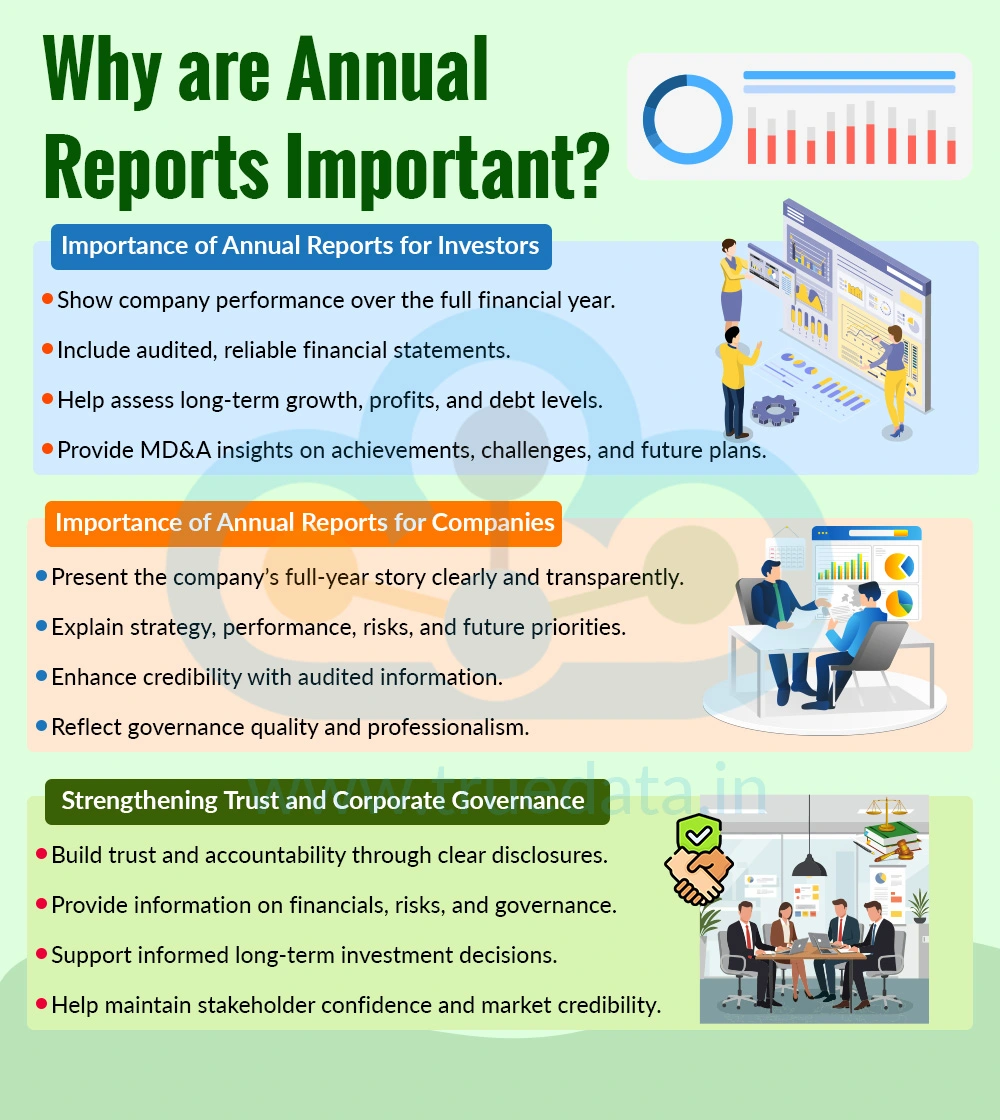
Annual reports are more than a year-end formality as they offer a complete and reliable picture of a company’s performance and direction. The importance of annual reports is explained below.
Annual reports help investors understand how a company has performed over an entire financial year, not just in one good or bad quarter. They include audited financial statements, which makes the numbers more reliable and easier to trust. Annual reports are especially useful for investors to judge long-term growth, consistency in profits, cash flows, debt levels, and return ratios. They also contain the Management Discussion and Analysis (MD&A), explaining the achievements and shortcomings of the company and how it plans to move forward. This helps investors decide whether the business is worth holding for the long term.
Annual reports are a chance for companies to present their full-year story in a structured and transparent manner. They allow management to explain business strategy, performance, risks, and future priorities in detail, rather than just focusing on short-term numbers. Since annual reports are audited, they improve credibility with shareholders, lenders, regulators, and other stakeholders. A well-prepared annual report also reflects the quality of governance and professionalism within the company.
Annual reports play a key role in building trust and accountability in the market. By clearly disclosing financials, risks, related-party transactions, and governance practices, companies help investors make informed decisions. Annual reports act as a strong foundation for the markets, where long-term investing relies heavily on trust and transparency. This helps investors assess business quality and enables companies to maintain confidence among all stakeholders.
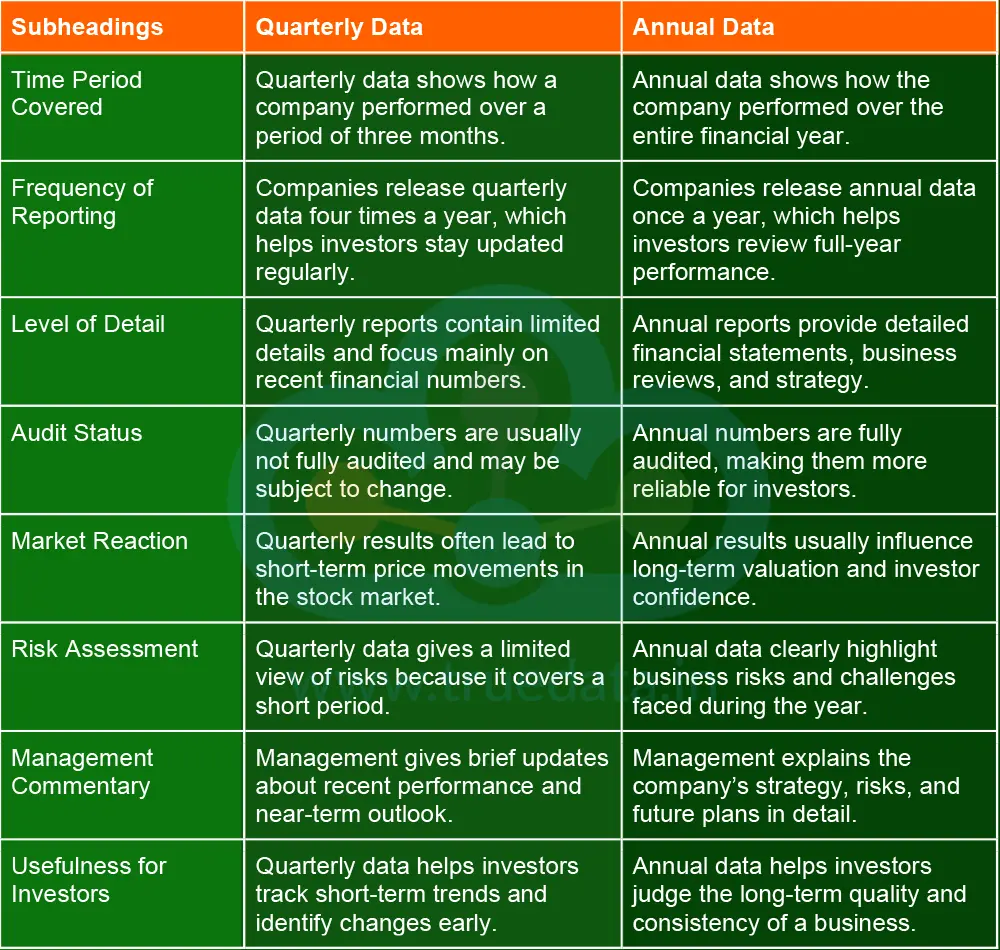
Quarterly and annual reports reflect the performance of the company during the specified time period and thus its financial health. However, there are a few core differences between these reports. These differences are highlighted below.


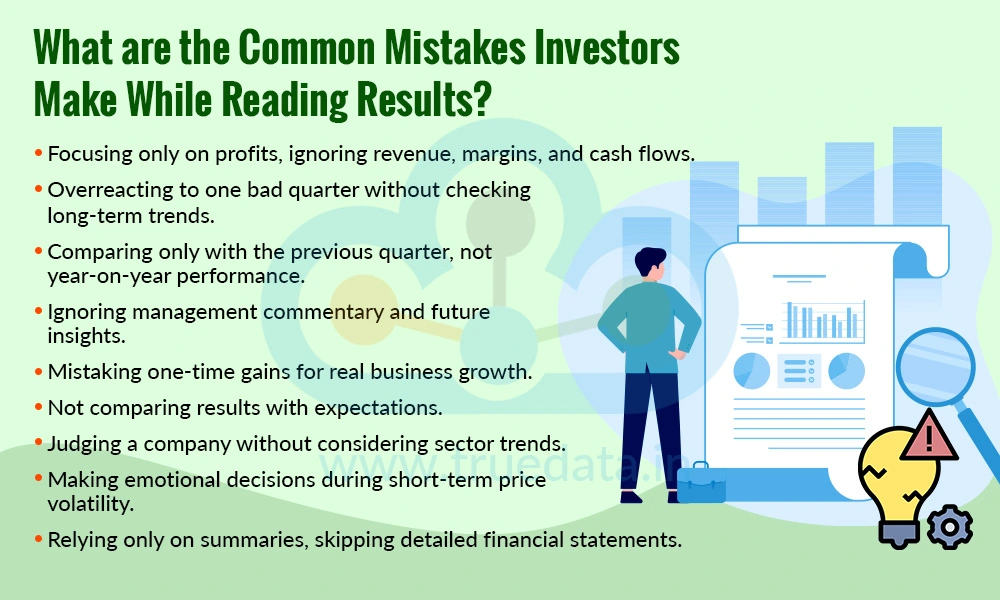
Analysing quarterly and annual financial statements can be tricky, and in many cases, investors miss out on the bigger picture or the important red flags that are hidden under the barrage of numbers. Here are the common mistakes often overlooked by investors while reading the quarterly and annual results.
Many investors focus only on profit numbers and ignore revenue growth, margins, and cash flows, which together show the real health of the business.
Investors often overreact to one bad quarter without checking whether the issue is temporary or part of a long-term problem.
Some investors compare results only with the previous quarter instead of also looking at year-on-year performance, which gives a clearer picture.
Another common mistake is to overlook or ignore management commentary and focus only on the headline numbers, missing important insights about future plans and challenges.
Quite often, investors, especially new investors, also fail to check whether growth is driven by real business improvement or by one-time gains and accounting adjustments.
Investors often forget to compare results with expectations, which is why stock prices may fall even when profits increase.
Another common mistake is to ignore sector trends and judge a company in isolation, even though industry conditions strongly affect performance.
It is often seen that investors may panic during short-term price volatility after results and make emotional decisions instead of analysing calmly. This is a crucial difference between seasoned and novice investors.
Investors sometimes rely only on summary presentations and do not read key parts of the financial statements and notes.

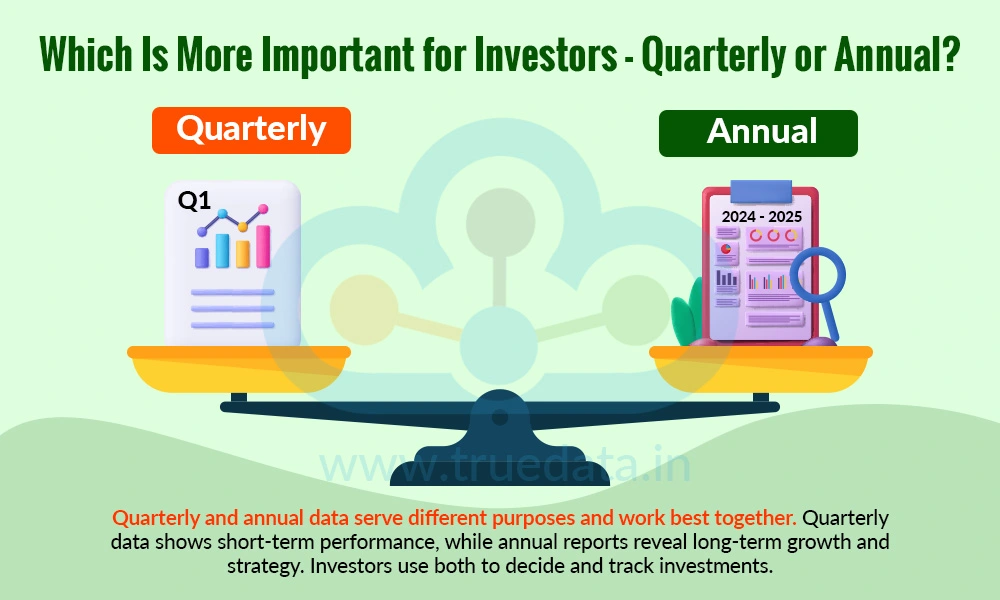
There is no straightforward answer to this question as neither quarterly nor annual data is more important on its own. Both these statements serve different purposes and work best together. Quarterly results help investors stay updated on short-term performance, track trends, and spot early signs of improvement or stress in the business. They are useful for understanding how the company is performing right now and how the market is reacting. Annual reports, on the other hand, are more important for judging the company’s long-term quality because they provide audited numbers, detailed explanations, and a full-year view of growth, profitability, risks, and strategy. Smart investors usually rely on annual data to decide what to invest in and use quarterly data to decide whether the company is still on track.
Understanding quarterly and annual results helps investors see both the short-term movements and the long-term strength of a company. Quarterly results act like regular health checks, showing recent performance, while annual reports provide the bigger picture with audited numbers. Relying on only one can lead to incomplete decisions, and having a complete picture can help investors avoid overreacting to short-term noise and make confident, informed decisions.
This blog aims to assist investors in navigating the constant stream of numbers throughout the year, whether through quarterly updates or annual results, and help them make better sense of them. Let us know your thoughts on this topic or if you need further information on the same, and we will address it soon.
Till then, Happy Reading!
Read More: The Role of Promoter Holding and Pledged Shares in Company Analysis
Thestock market never stands still, and prices swing constantly with every new h...
Net profits in the P&L statement are usually a sign of a healthy company. Ho...
Analysing the financial statements is the first step in the fundamental analysis...