When investors look for companies that can create wealth over the long term, they often focus on businesses that generate strong returns from the capital they employ. This is where Return on Capital Employed (ROCE) becomes an important metric. Companies with consistently high ROCE are often able to grow profitably, reinvest efficiently, and reward shareholders over time. One such example is Asian Paints, a company that has maintained impressive ROCE levels for years and established itself as one of India's most successful blue-chip stocks. What enables Asian Paints to deliver such consistent profitability? Is it its strong brand, wide distribution network, pricing power, or efficient use of capital? More importantly, why should investors pay attention to companies with high ROCE? In this blog, we explore the factors that drive high ROCE, examine Asian Paints as a case study, and discuss the key lessons investors can use to identify quality businesses for long-term wealth creation.
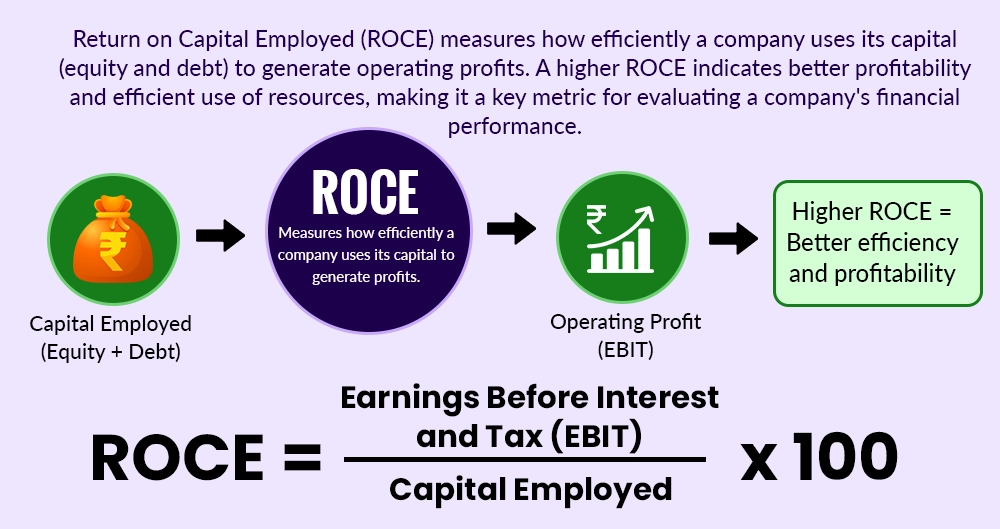
Return on Capital Employed (ROCE) is a financial ratio that measures how efficiently a company uses its capital to generate profits. It shows how much operating profit a company earns for every rupee invested in the business through equity and debt. ROCE helps investors understand whether a company is making good use of the money available to it. A higher ROCE generally indicates that the company is generating strong profits from its capital, while a lower ROCE may suggest inefficient use of resources. Since ROCE considers both equity and debt, it provides a more complete picture of a company's profitability and operational efficiency than some other financial ratios.
The formula to calculate ROCE is,
ROCE = EBIT (Earnings Before Interest and Taxes) / Capital Employed * 100
Where,
EBIT represents the company's operating profit before interest and taxes.
Capital Employed = Total Assets - Current Liabilities
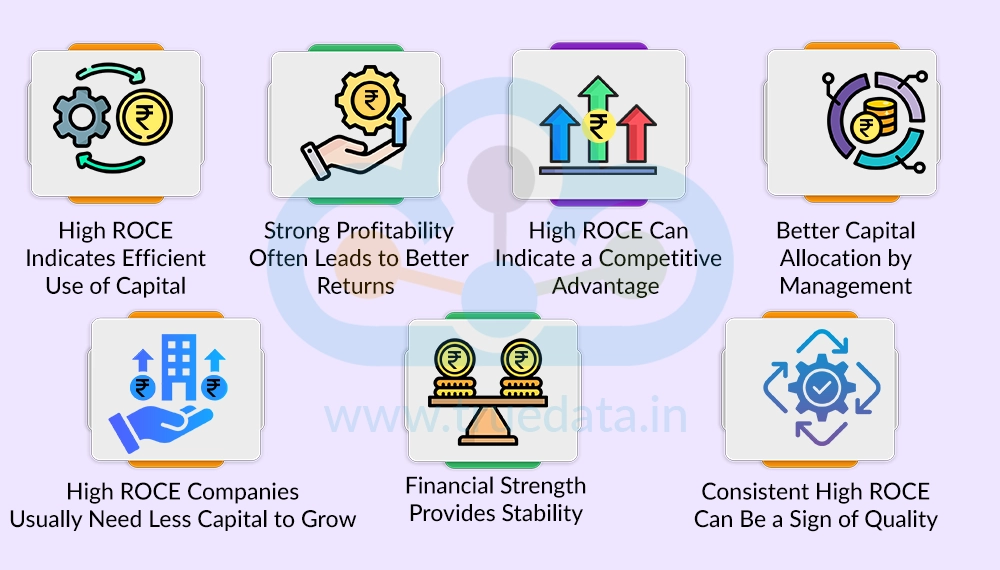
Focusing on companies with high ROCE can help investors create successful portfolios and long-term wealth. The reasons or factors that drive investors to prefer high ROCE companies in their portfolio are elaborated below.
High ROCE Indicates Efficient Use of Capital - One of the main reasons investors prefer high ROCE companies is that they use their capital efficiently to generate profits. A company with a high ROCE is able to earn more operating profit from every rupee invested in the business. This shows that the company is making productive use of its assets, resources, and investments, which is a positive sign for investors looking for quality businesses.
Strong Profitability Often Leads to Better Returns - Companies with consistently high ROCE tend to generate healthy profits without requiring excessive capital investment. This ability to earn strong returns from existing resources often translates into better financial performance over time. As profits grow, investors may benefit through capital appreciation and, in some cases, higher dividend payouts.
High ROCE Can Indicate a Competitive Advantage - A consistently high ROCE is often a sign that a company has certain strengths that competitors find difficult to replicate. These may include a strong brand, a wide distribution network, loyal customers, efficient operations, or pricing power. Such competitive advantages can help the company maintain profitability even during challenging market conditions.
Better Capital Allocation by Management - Investors often view high ROCE as an indication that the management is making sound capital allocation decisions. Instead of investing money in low-return projects, the company focuses on opportunities that generate attractive returns. Over the long term, disciplined capital allocation can contribute significantly to shareholder wealth creation.
High ROCE Companies Usually Need Less Capital to Grow - Many high ROCE businesses are able to expand their operations without requiring large amounts of additional debt or equity. Since they generate strong returns from existing capital, they can often fund growth through internal cash flows. This reduces dependence on external financing and can strengthen the company's financial position.
Financial Strength Provides Stability - Companies with high ROCE often have healthier balance sheets and stronger cash generation capabilities. This financial strength can help them navigate economic slowdowns, industry challenges, or periods of market uncertainty more effectively than weaker competitors. As a result, investors may view such companies as relatively more resilient.
Consistent High ROCE Can Be a Sign of Quality - While a high ROCE in a single year may not mean much, a company that maintains high ROCE over several years often demonstrates business quality and operational excellence. Investors generally prefer companies that can consistently deliver strong returns rather than those that experience short-term spikes in profitability.
For decades, Asian Paints has been one of the best examples of a high-ROCE company in India. Even though its ROCE has moderated in recent years due to increased competition and slower demand, it has remained well above the levels achieved by many businesses. As of FY2025, the company's consolidated ROCE stood at about 26.6%, highlighting its continued ability to generate strong returns from the capital invested in the business.
So, what enables a company like Asian Paints to maintain a high ROCE over long periods? Let us look at the key drivers.
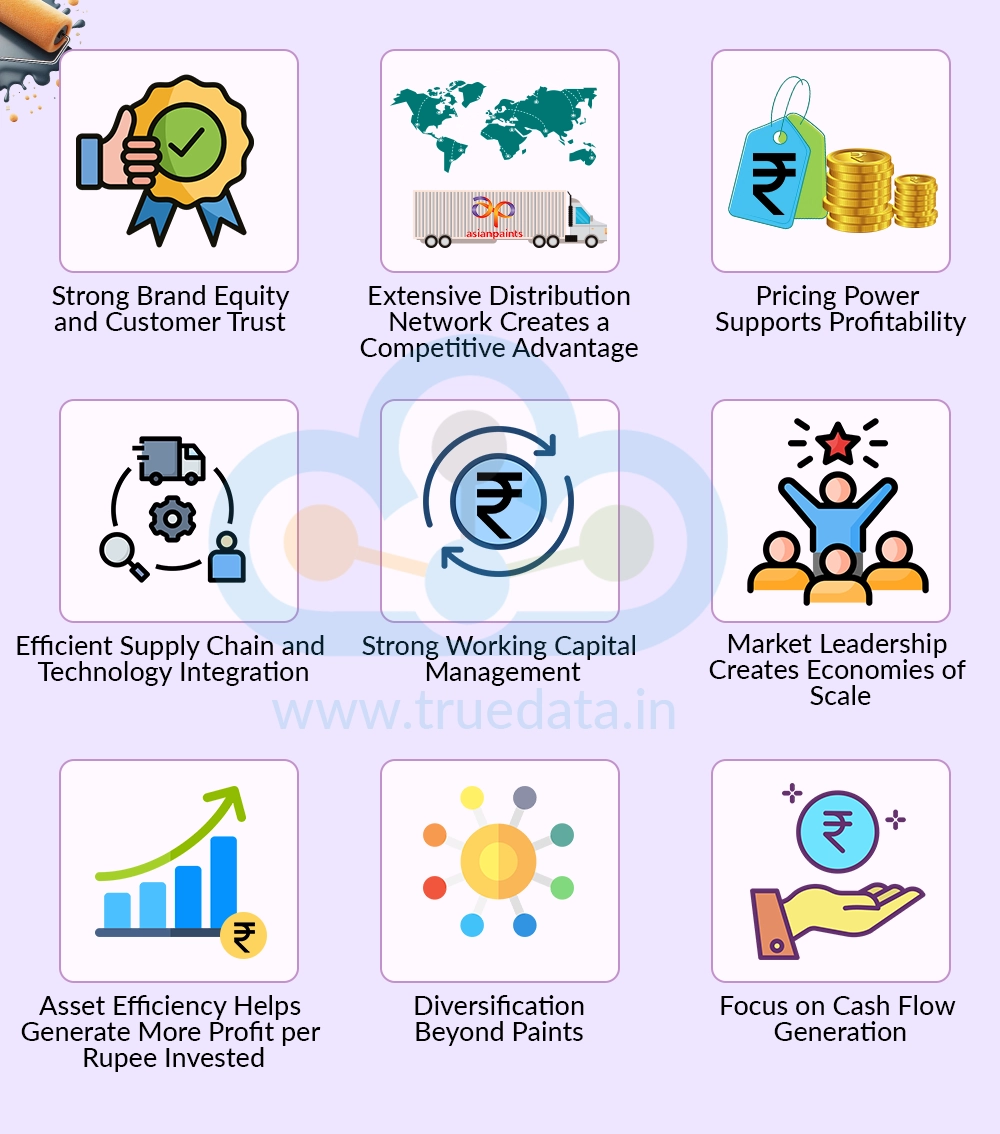
One of Asian Paints' biggest strengths is its brand. Over several decades, the company has built a strong reputation for quality, reliability, and innovation. When homeowners, contractors, and painters think of paints, Asian Paints is often among the first brands that come to mind. A strong brand allows the company to attract customers without constantly competing on price. This helps protect profit margins and improves profitability, which ultimately supports a higher ROCE. Brand strength also reduces customer acquisition costs and creates repeat demand, making the business more efficient over time.
Asian Paints has one of the largest distribution networks in the Indian paint industry. The company's products are available across a vast network of dealers and retailers throughout the country. This extensive reach makes it easier for customers to access its products and harder for competitors to replicate its presence. As the distribution infrastructure has been built over many years, the company can generate significant sales from an already established network. This allows revenue to grow faster than capital employed, which is one of the key ingredients of a high ROCE business.
Companies with high ROCE often possess pricing power, and Asian Paints is a good example. Customers are usually willing to pay a premium for trusted brands, especially in categories where product quality and durability matter. This pricing power helps the company pass on a portion of increases in raw material costs to customers. The ability to maintain healthy margins despite changing market conditions supports profitability and contributes to strong returns on capital over the long term.
Asian Paints is widely recognised for its investments in technology, demand forecasting, and supply chain management. The company uses data-driven systems to manage inventory, production, and distribution efficiently. An efficient supply chain helps reduce inventory costs, minimise wastage, and improve product availability. When a company can generate more sales with fewer resources tied up in operations, its capital efficiency improves, leading to a higher ROCE.
Working capital management is an often-overlooked driver of ROCE. Companies that can collect money quickly from customers, manage inventory efficiently, and optimise payments to suppliers generally require less capital to run their operations. Asian Paints has historically maintained strong working capital efficiency, allowing it to generate substantial revenue without locking up excessive amounts of capital in inventory or receivables. This improves the company's ability to earn higher returns on the capital employed in the business.
Asian Paints continues to be the largest player in the Indian paint industry, with annual revenue exceeding Rs. 33,000 crore in FY2025 despite a challenging year for the sector. Its scale enables the company to negotiate better terms with suppliers, optimise manufacturing costs, and spread fixed costs across a large revenue base. These economies of scale improve operating efficiency and profitability, which in turn support higher ROCE compared to smaller competitors.
A key characteristic of high-ROCE companies is their ability to generate significant profits without continuously investing large amounts of additional capital. Asian Paints has historically demonstrated strong asset utilisation by generating substantial revenue from its manufacturing facilities, distribution network, and brand investments. When assets are used efficiently, profits grow faster than capital employed, leading to stronger ROCE figures.
Over the years, Asian Paints has expanded into adjacent home décor categories such as waterproofing solutions, adhesives, modular kitchens, bath fittings, lighting, furnishings, and uPVC windows and doors. The company has positioned itself as a broader home décor solutions provider rather than just a paint manufacturer. This diversification allows the company to leverage its existing distribution network and customer relationships to generate additional revenue streams without proportionately increasing capital requirements.
High ROCE companies typically generate strong cash flows, and Asian Paints has historically been no exception. In FY2024, the company generated free cash flow of about Rs. 3,571 crore, demonstrating its ability to convert profits into cash. Strong cash generation reduces dependence on external borrowing and gives the company flexibility to invest in growth opportunities, acquisitions, innovation, and shareholder returns.
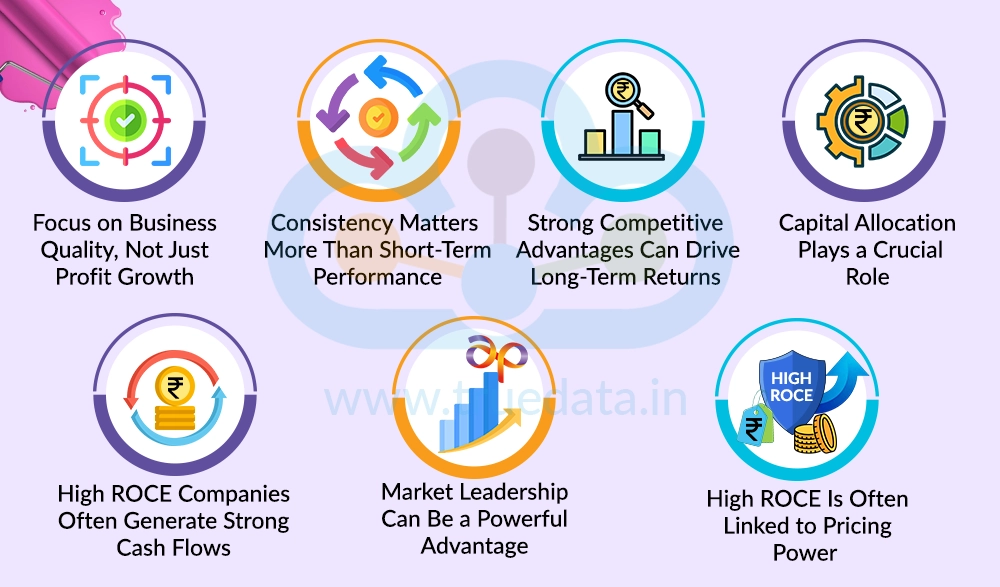
Asian Paints' journey offers several valuable lessons for investors looking to identify quality businesses and build long-term wealth. The company's success was not driven by a single breakthrough or a short-term market trend. Instead, it was the result of strong business fundamentals, disciplined execution, and the ability to generate high returns on capital over many years. Here are some key lessons investors can learn from its high ROCE journey.
Focus on Business Quality, Not Just Profit Growth - Many investors are attracted to companies that report rapid revenue or profit growth. However, Asian Paints demonstrates that the quality of growth matters just as much as the growth itself. The company has consistently generated healthy profits while efficiently using its capital. This shows that investors should look beyond earnings growth and evaluate how effectively a company generates returns from the money invested in the business.
Consistency Matters More Than Short-Term Performance - A company may report a high ROCE for one or two years due to favourable market conditions, but truly exceptional businesses are able to sustain strong returns over long periods. Asian Paints has maintained healthy ROCE levels across different economic cycles, raw material price fluctuations, and competitive environments. This highlights the importance of looking for consistency rather than temporary spikes in profitability.
Strong Competitive Advantages Can Drive Long-Term Returns - One of the biggest reasons behind Asian Paints' success is its strong competitive position. Its brand reputation, distribution network, customer relationships, and operational efficiency have helped it stay ahead of competitors for decades. Investors should thus focus on companies with durable competitive advantages as they often have a better chance of maintaining profitability and generating superior returns over time.
Capital Allocation Plays a Crucial Role - A business may generate profits, but how those profits are reinvested is equally important. Asian Paints has generally deployed its capital carefully by expanding capacity, improving technology, strengthening its distribution network, and entering related business segments. Investors should pay attention to management's capital allocation decisions, as they can have a significant impact on future growth and shareholder returns.
High ROCE Companies Often Generate Strong Cash Flows - Another lesson from Asian Paints is the importance of cash flow generation. Profits reported in financial statements are valuable, but businesses that consistently convert profits into cash are often financially stronger. Strong cash flows allow companies to fund growth, reduce debt, invest in innovation, and reward shareholders without depending heavily on external financing.
Market Leadership Can Be a Powerful Advantage - Asian Paints' leadership position in the Indian paint industry has helped it achieve economies of scale, stronger bargaining power, and wider customer reach. Thus, the key takeaway here is that market-leading companies often enjoy advantages that support profitability and capital efficiency. While market leadership alone is not enough, it can be an important factor when combined with strong execution and financial discipline.
High ROCE Is Often Linked to Pricing Power - A company that can increase prices without significantly affecting demand usually has a stronger business model. Asian Paints' brand strength has helped it maintain pricing power over the years. Investors should look for businesses that can protect their margins during periods of rising costs, as this often contributes to sustainable profitability and higher returns on capital.
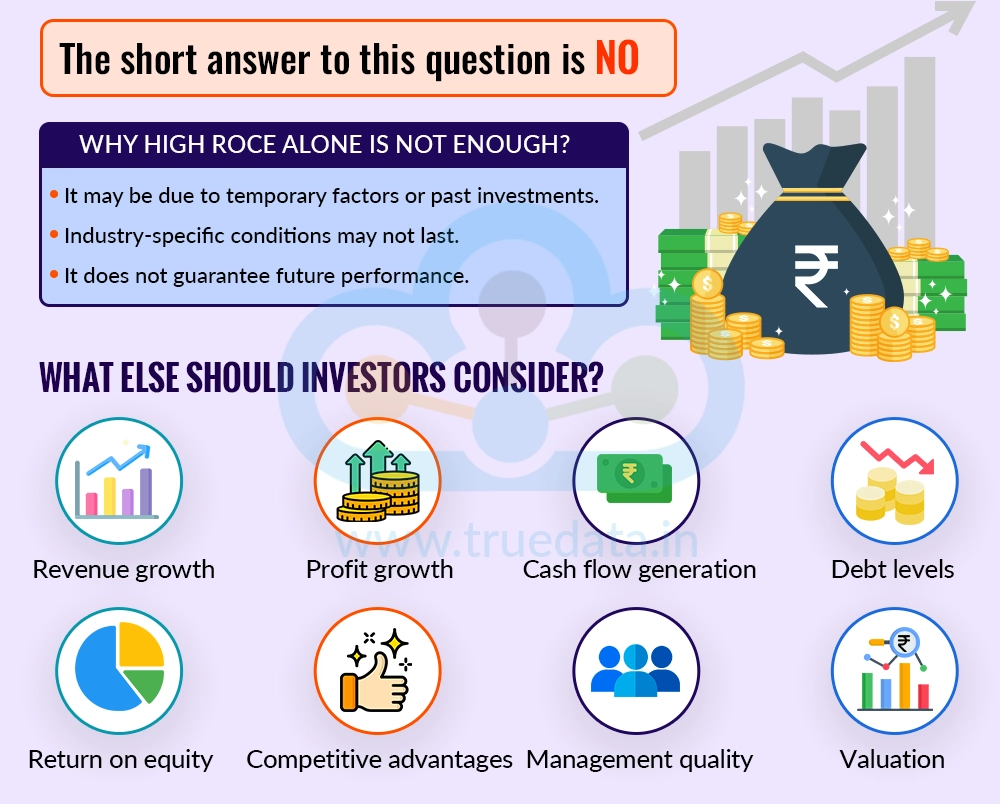
The short answer to this question is no. Investors should not buy a stock solely based on high ROCE. While a high ROCE is often a sign of an efficient and profitable business, it is only one piece of the investment puzzle. A company may have a strong ROCE due to temporary factors, past investments, or industry-specific conditions that may not continue in the future. Investors should also examine factors such as revenue growth, profit growth, cash flow generation, debt levels, return on equity (ROE), competitive advantages, management quality, and valuation before making an investment decision.
Investors should use ROCE as an important screening and analysis tool, but combine it with other financial and qualitative factors to make well-informed investment decisions. The best investment opportunities often come from companies that not only have high ROCE but also possess strong fundamentals, sustainable growth potential, and attractive valuations.
High ROCE companies are often among the most attractive businesses for long-term investors because they generate strong profits while using capital efficiently. The journey of Asian Paints shows that factors such as a strong brand, pricing power, efficient operations, and disciplined capital allocation can help a company maintain high returns over many years. However, investors should remember that ROCE is just one metric and should be analysed alongside growth, cash flows, debt levels, and valuation. By focusing on businesses that consistently create value from their capital, investors can improve their chances of identifying quality companies capable of delivering sustainable wealth creation over the long term.
This article is a case study highlighting the importance of ROCE and its role in fundamental analysis. Let us know your thoughts on the topic or if you would like to read more such case studies explaining fundamental analysis metrics in a practical way.
Till then, Happy Reading!
Read More: Family-Owned vs Professionally Managed Firms - Does management style impact financial performance?

Marisha Bhatt is a financial content writer @TrueData.
She writes with the sole aim of simplifying complex financial concepts and jargon while attempting to clarify technical and fundamental analysis concepts of the stock markets. The ultimate goal is to spread vital knowledge and benefit the maximum audience. Her Chartered Accountant background acts as the knowledge base to help clarify crucial concepts and create a sound investment portfolio.

Thestock market never stands still, and prices swing constantly with every new h...
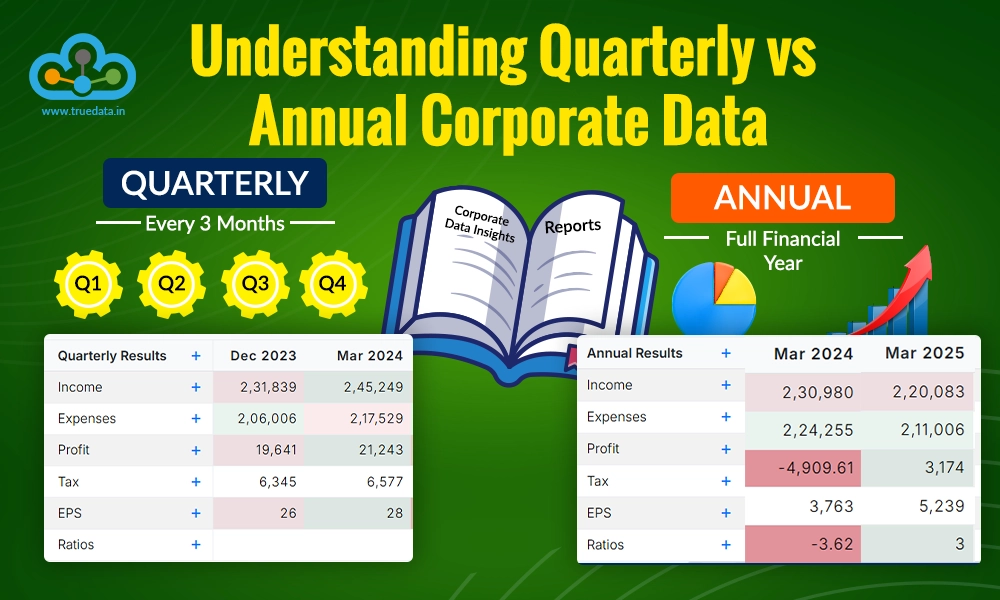
Corporate data is more than just the numbers of a company. They can show what is...

Investing is not just about numbers on a screen. It is about understanding the s...
