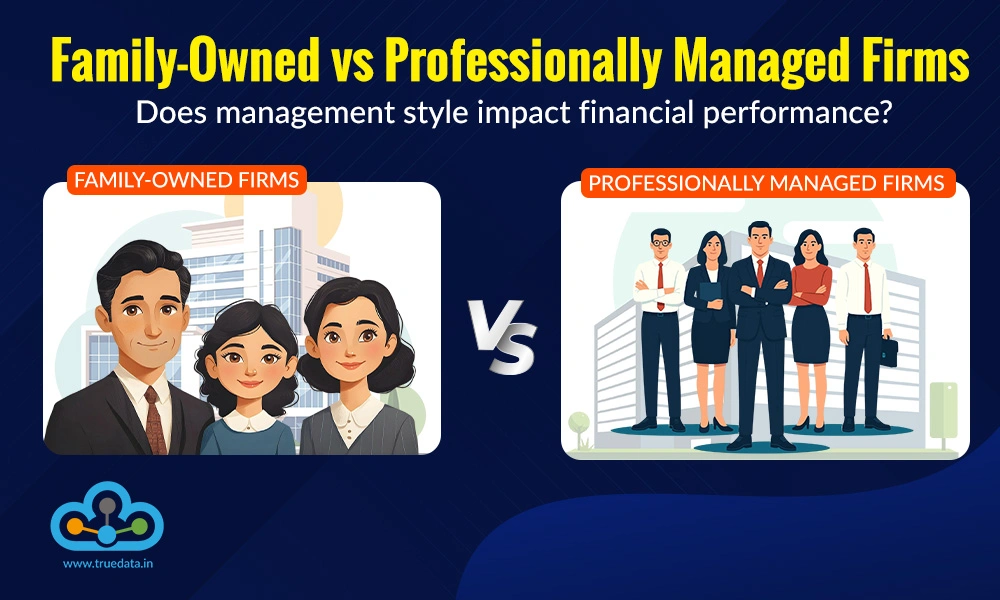
Take some of India's most successful companies, such as Reliance Industries, the Tata Group, and Infosys. While each has a unique story, they share an interesting trait, they were founded by visionary entrepreneurs and later evolved into businesses that combine family ownership with professional management. This raises an important question for investors, i.e., does the way a company is managed influence its financial performance? The answer can have a significant impact on growth, profitability, governance, and long-term value creation. Let us explore the key differences between family-owned and professionally managed firms, the influence of management styles on decision-making, and what these differences can mean for investors evaluating a company's future potential.

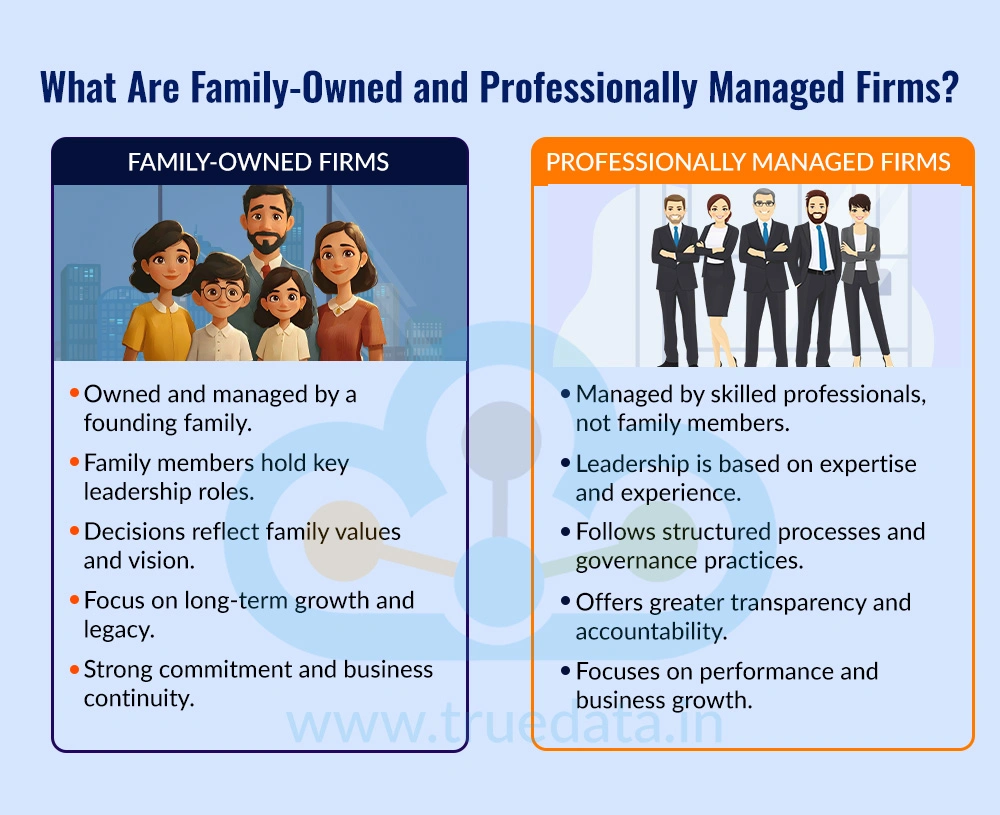
A family-owned firm is a business where a founding family owns a significant portion of the company and plays an active role in its management and decision-making. In many cases, family members occupy key leadership positions such as Chairman, Managing Director, or CEO, and important decisions are influenced by the family's vision and values. Many successful Indian companies began as family businesses and have grown over generations. Family-owned firms often focus on building a long-term legacy, preserving the company's reputation, and creating sustainable growth rather than concentrating only on short-term profits. Their deep understanding of the business and strong commitment can be major strengths.
A professionally managed firm, on the other hand, is a company where day-to-day operations and strategic decisions are primarily handled by experienced professionals who are appointed based on their skills and expertise rather than family ties. While the founders or promoters may still hold ownership stakes, professional managers are responsible for running the business and achieving its goals. These firms often follow structured processes, clear performance metrics, and established corporate governance practices. For investors, professionally managed firms can offer benefits such as greater transparency, accountability, and access to specialised leadership talent. However, the success of both family-owned and professionally managed firms ultimately depends on the quality of leadership, governance standards, and the ability to adapt to changing market conditions.

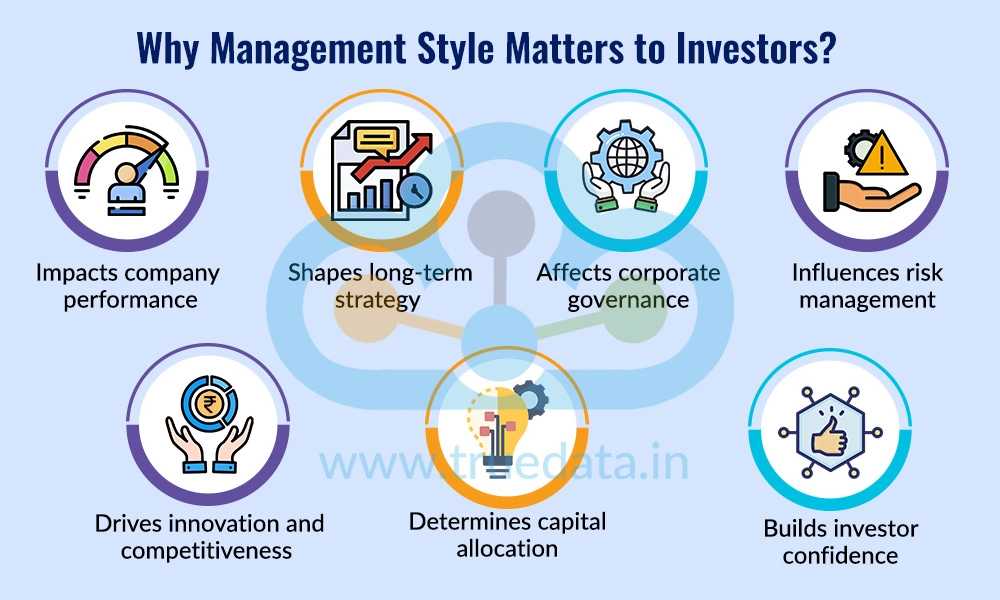
The management of a company is directly responsible for the day-to-day operations and steering the company in the right direction to achieve its objectives. Hence, the analysis of management style analysis of management style, along with other key fundamental analysis factors, is quite relevant for investors in building their portfolio. The importance of management style in decision-making is explained hereunder.
Impacts company performance - The management team makes important decisions that influence revenue growth, profitability, and overall business success.
Shapes long-term strategy - Management decides how the company will expand, invest, and respond to changing market conditions.
Affects corporate governance - Strong management practices can improve transparency, accountability, and protection of shareholder interests.
Influences risk management - Good leaders can identify and manage business risks effectively, helping the company navigate difficult periods.
Drives innovation and competitiveness - Management plays a key role in introducing new products, entering new markets, and staying ahead of competitors.
Determines capital allocation - Management decisions on dividends, debt, acquisitions, and reinvestment directly affect shareholder returns.
Builds investor confidence - Companies with capable and trustworthy management teams are often viewed more positively by investors and the market.
India has a huge base of family-owned firms, with cases of such businesses being in the family for generations. Thus, it is important to understand the key strengths and challenges faced by these businesses to make informed investment decisions. Here are some of the primary strengths and challenges faced by family-owned firms

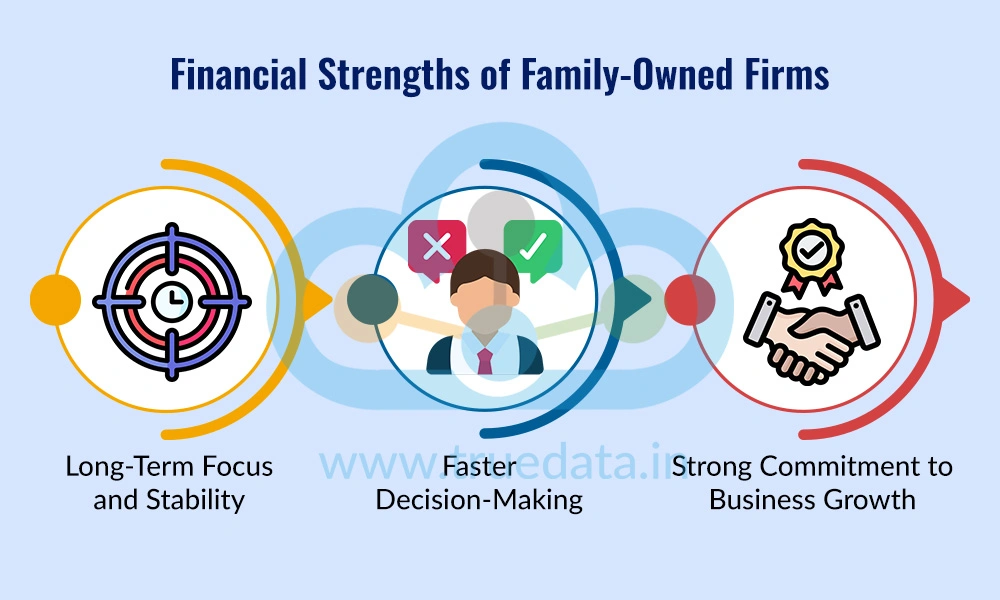
Long-Term Focus and Stability - One of the biggest strengths of family-owned firms is their long-term approach to business. Unlike companies that may focus heavily on meeting short-term market expectations, family-owned businesses often prioritise sustainable growth and wealth creation over several years or even generations. This can lead to more disciplined decision-making, better financial planning, and investments that strengthen the business in the long run. Such stability can be attractive for investors, especially when looking for companies that can withstand market fluctuations and economic downturns.
Faster Decision-Making - In many family-owned businesses, important decisions can be made quickly as ownership and management are concentrated within a small group of people. This allows the company to respond faster to market opportunities, customer needs, or industry changes. During challenging business environments, quick decision-making can help protect profitability and maintain business continuity.
Strong Commitment to Business Growth - Since the family's wealth and reputation are closely linked to the company, promoters are usually highly committed to its success. This often results in greater involvement in operations, careful monitoring of costs, and a strong focus on maintaining the company's market position. Family-owned firms may also be more patient with investments that take time to generate returns, allowing them to pursue opportunities that can create long-term value for shareholders.

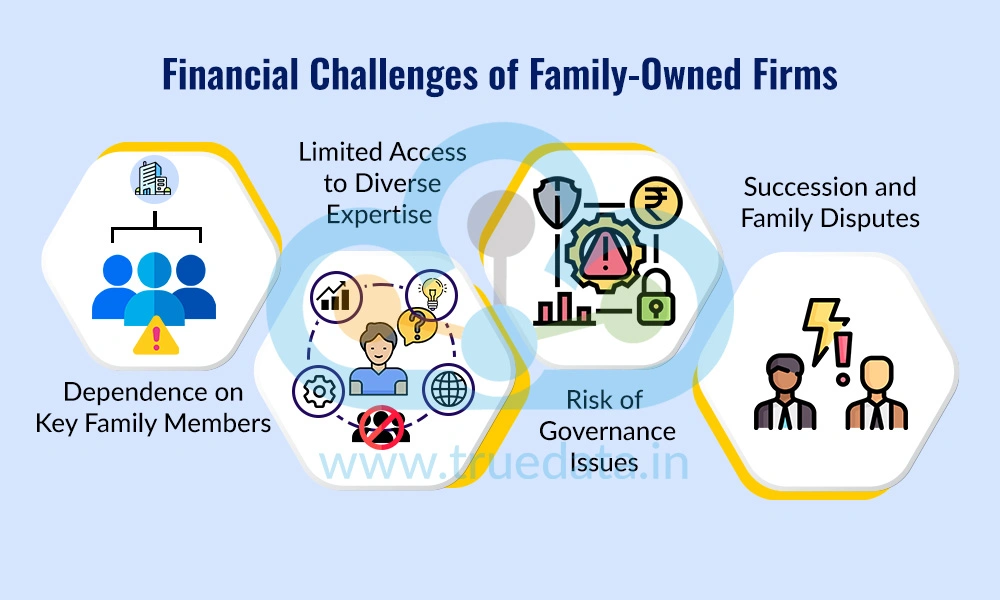
Dependence on Key Family Members - A common challenge in family-owned firms is the heavy reliance on a few family members for leadership and strategic decisions. If key individuals retire, step down, or are unable to manage the business effectively, the company's performance may be affected. Uncertainty around leadership succession can create concerns for investors about the firm's future growth and stability.
Limited Access to Diverse Expertise - While family members may have deep knowledge of the business, they may not always possess the specialised skills needed to manage a growing and complex organisation. Without experienced professionals in leadership positions, the company may struggle with innovation, technological changes, or expansion into new markets. This can affect its ability to compete effectively and generate consistent financial growth.
Risk of Governance Issues - In some cases, family control can lead to governance challenges. Decisions may sometimes prioritise family interests over those of minority shareholders. This can result in concerns related to transparency, related-party transactions, or inefficient allocation of company resources. Investors should therefore pay close attention to corporate governance practices when evaluating family-owned firms.
Succession and Family Disputes - Leadership transitions can be a significant challenge for family-owned businesses. Disagreements among family members regarding ownership, management roles, or business strategy can create uncertainty and negatively impact operations. Such disputes may affect investor confidence and, in some cases, lead to weaker financial performance.
Professionally managed firms such as ITC Limited, L&T Limited, etc., are often found at the top tier of the Indian business landscape, and most have become strong brand names after years of strong business performance. However, such businesses are also not free from challenges and concerns. The primary strengths and challenges of these businesses are highlighted below.

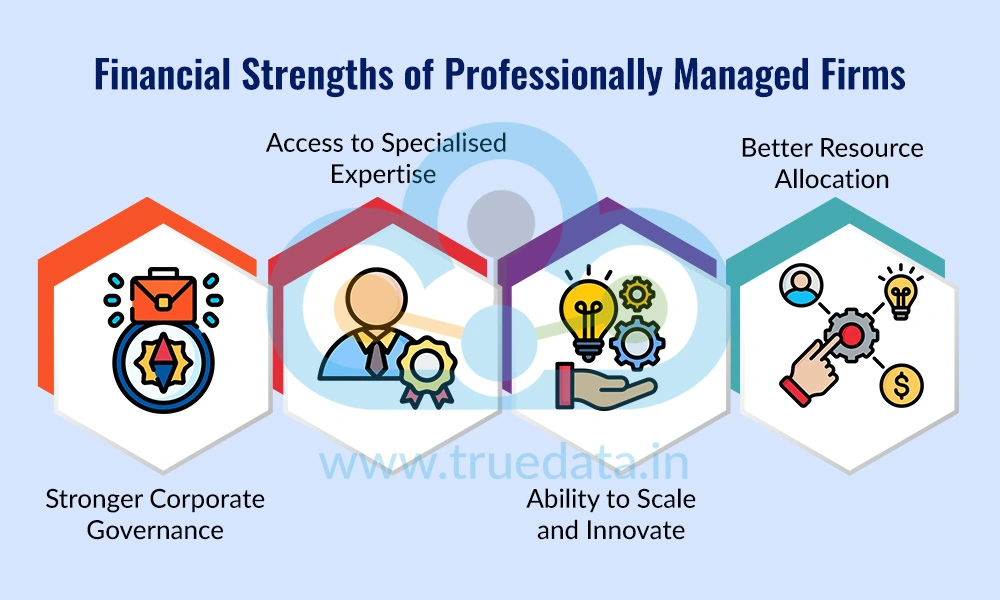
Stronger Corporate Governance - Professionally managed firms generally follow structured governance practices, with clear roles and responsibilities for management and the board of directors. Decisions are often subject to greater oversight and accountability, reducing the risk of personal interests influencing business operations. Better governance can improve transparency, protect shareholder interests, and enhance investor trust. Companies with strong governance standards are also more likely to attract institutional investors and maintain a positive market reputation.
Access to Specialised Expertise - One of the biggest advantages of professionally managed firms is that leadership positions are filled by individuals who are selected based on their skills, experience, and industry knowledge. These professionals often bring expertise in areas such as finance, operations, technology, marketing, and strategy. As businesses grow larger and more complex, this specialised knowledge can help improve efficiency, identify new growth opportunities, and strengthen financial performance. Ultimately, experienced management teams can increase confidence in a company's ability to compete and create value.
Ability to Scale and Innovate - Professionally managed firms are often better equipped to handle large-scale operations and rapidly changing business environments. Professional leaders may be more willing to adopt new technologies, enter emerging markets, and implement modern business practices. This focus on innovation can help companies remain competitive and create new revenue streams, benefiting shareholders over time.
Better Resource Allocation - Professional managers are usually evaluated based on business performance and shareholder value creation. As a result, they often focus on allocating capital efficiently, whether through business expansion, research and development, acquisitions, or dividend payments. Their objective approach can help ensure that company resources are directed toward projects that offer the best potential returns. This can contribute to improved profitability and long-term growth.

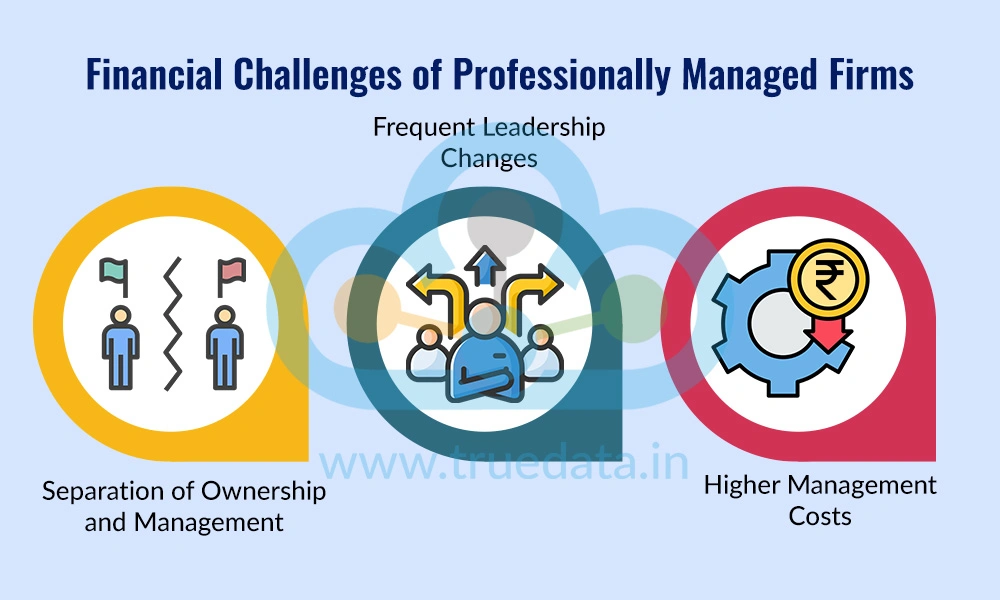
Separation of Ownership and Management - In professionally managed firms, the owners and managers are often different groups. While shareholders own the company, professional executives run its daily operations. This separation can sometimes create situations where management decisions do not fully align with shareholder interests. For example, executives may prioritise personal career goals, compensation, or expansion plans that do not necessarily maximise shareholder value.
Frequent Leadership Changes - Professional managers may move between companies as career opportunities arise. Frequent changes in top leadership can lead to shifts in business strategy, uncertainty among employees, and disruptions in long-term planning. Investors should therefore evaluate whether a company has a stable leadership team and a clear strategic direction.
Higher Management Costs - Hiring experienced professionals often involves significant compensation packages, including salaries, bonuses, stock options, and other benefits. While skilled managers can add substantial value, high executive costs can affect profitability if performance does not justify the expense. Investors should assess whether management compensation is aligned with the company's financial results and shareholder returns.
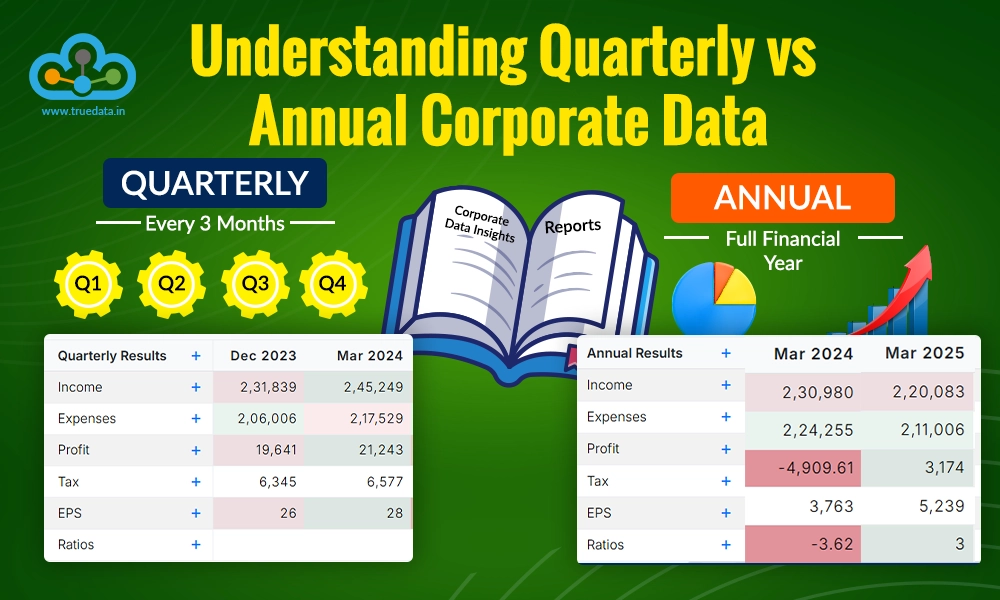
Potential of Short-Term Focus - One of the major challenges faced by professionally managed firms is the measurement of managerial performance, which is often used through the yardstick of quarterly and annual results. This often hampers long-term business growth, as sometimes leaders focus on short-term earnings and stock market performance. This approach can help in improving immediate results, but can come at the expense of long-term sustainability.
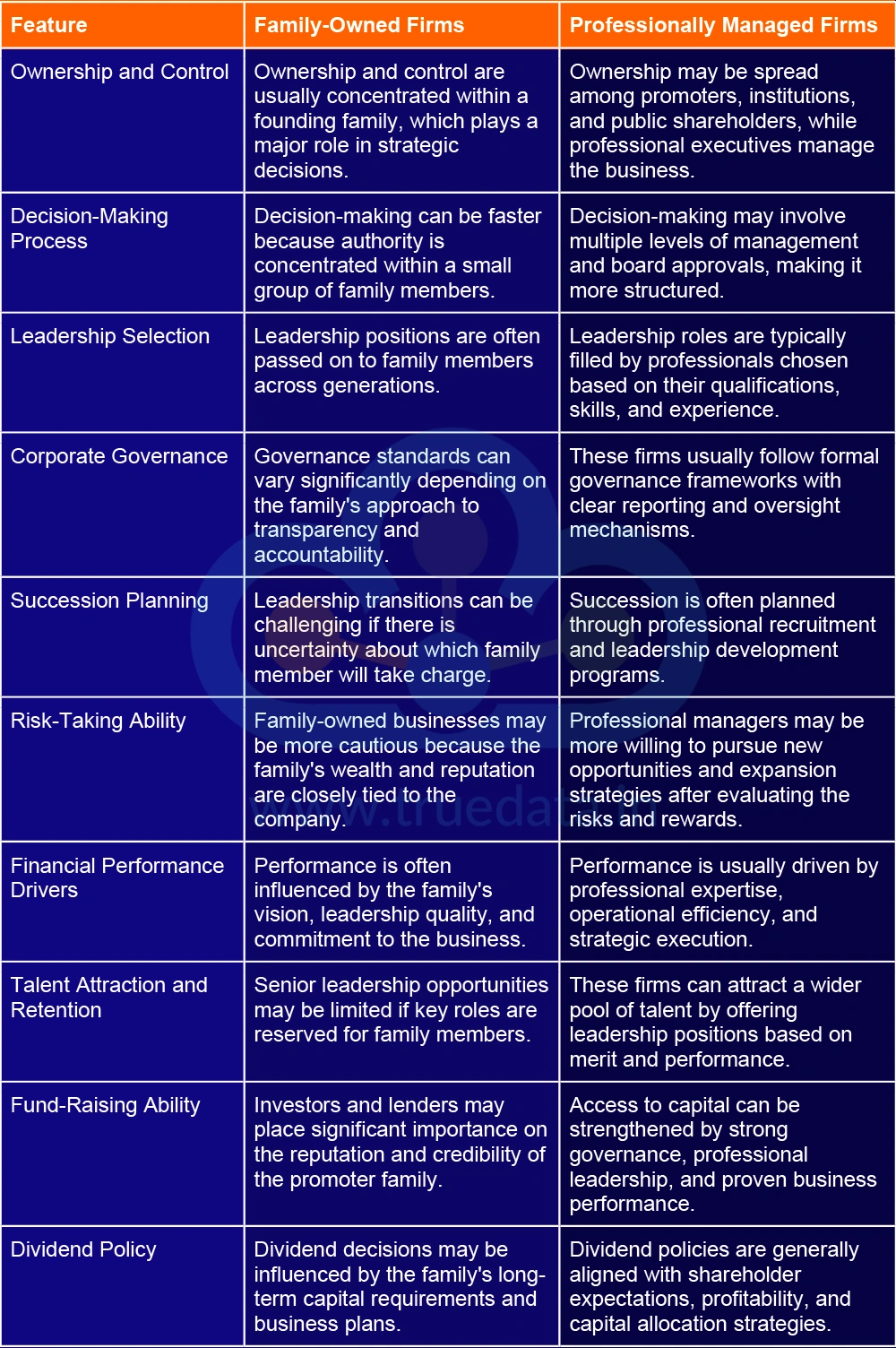
A well-run family-owned firm can deliver excellent long-term returns through strong promoter commitment and vision, while a professionally managed firm can benefit from specialised expertise and robust governance practices. The key differences between the two management styles are explained below.


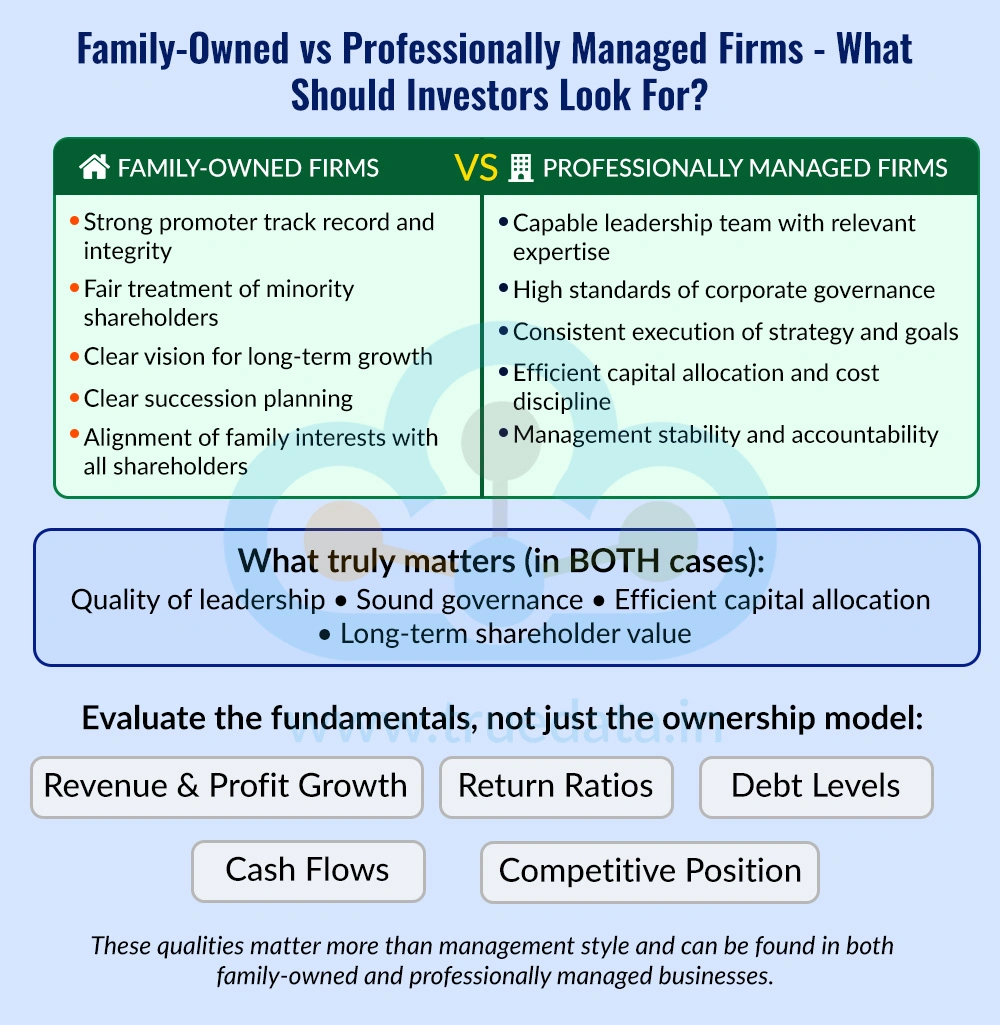
When comparing family-owned and professionally managed firms, investors should focus less on the management structure itself and more on the quality of leadership and business performance. A family-owned company can be an excellent investment if the promoters have a strong track record, treat minority shareholders fairly, and demonstrate a clear vision for long-term growth. Similarly, a professionally managed firm can create significant value if its leadership team allocates capital wisely, maintains high governance standards, and consistently delivers on its strategic goals. Therefore, investors should evaluate factors such as revenue and profit growth, return ratios, debt levels, cash flows, and the company's competitive position rather than relying solely on the ownership model.
Investors should also pay close attention to corporate governance, transparency, and management accountability. In family-owned firms, it is important to assess whether succession planning is clear and whether the interests of all shareholders are protected. In professionally managed firms, investors should examine management stability, executive compensation, and the effectiveness of the leaders in executing the company's strategy. Ultimately, the most successful companies are often those that combine strong leadership, sound governance, efficient capital allocation, and a long-term focus on creating shareholder value. These qualities can be found in both family-owned and professionally managed businesses, making them far more important than the management style alone.
The debate between family-owned and professionally managed firms does not have a one-size-fits-all answer. While family-owned businesses often benefit from a long-term vision, strong promoter commitment, and business continuity, professionally managed firms can leverage specialised expertise, structured governance, and operational efficiency. Both models have their own strengths and challenges that should be evaluated carefully. The key for investors is not to focus solely on who manages the company, but to evaluate whether the management team is capable of creating sustainable growth and long-term shareholder value.
This article is a brief attempt to shed light on two diverse business styles or approaches and simplify them to a certain extent. Let us know your thoughts on this topic or if you need further information on the same, and we will address it soon.
Till then, Happy Reading!
Read More: How to Analyse Businesses with High Intangible Assets?
Thestock market never stands still, and prices swing constantly with every new h...
Corporate financial data is the backbone ofsmart investing. It helps investors d...