Corporate Data

Common Mistakes in Company Fundamental Analysis and How to Avoid Them

Marisha Bhatt · 28 Apr 2026 · 10 mins read · 2 Comments

common-mistakes-in-company-fundamental-analysis-and-how-to-avoid-them

Choosing the right stocks from countless options can feel overwhelming. The key lies in striking the right balance between fundamental and technical analysis. While technical analysis helps you understand price and volume movements, fundamental analysis goes deeper, i.e., evaluating a company’s financial health and long-term potential. However, fundamental analysis is not always as straightforward as it sounds. With so many factors to consider, it is easy to make small mistakes that can lead to big investment decisions going wrong. So, what are these common mistakes, and how can you avoid them? In this blog, we’ll break them down in simple terms to help you make smarter decisions and build a stronger, more reliable portfolio.

Why is the Company Fundamental Analysis Important?

Why is the Company Fundamental Analysis Important

Fundamental analysis is a vital step in building a robust investment portfolio. The importance of fundamental analysis of a company can be explained as follows. 

  • Helps Understand the Real Value of a Company - Fundamental analysis tells investors what a company is actually worth, thus enabling them to not rely on its current market price alone for investment decisions. This helps them avoid overpaying for stocks that are overpriced.

  • Supports Long-Term Wealth Creation - Good, fundamentally strong companies tend to grow over time. Investing in them can help investors build wealth steadily instead of chasing short-term gains.

  • Reduces Investment Risk - When investors understand a company’s financials, they can avoid weak or risky businesses. This lowers the chances of big losses in a portfolio.

  • Identifies Strong and Stable Companies - By checking revenue, profit, debt, and cash flow, investors can find financially healthy companies. Such companies are more likely to survive tough market conditions.

  • Helps Spot Undervalued Opportunities - Sometimes, good companies are available at low prices due to market sentiment. Fundamental analysis helps investors identify these hidden opportunities early.

  • Helps Make Informed Decisions - Instead of following tips or market noise, investors should rely on facts and data. This builds confidence and discipline in the investing journey.

What are the Common Mistakes While Doing Company Fundamental Analysis?

We have explored the key areas that make company fundamental analysis important. However, there are a few key mistakes or errors that investors often make in the process of analysing companies. These mistakes include, 

Focusing Only on Profit Numbers

Focusing Only on Profit Numbers

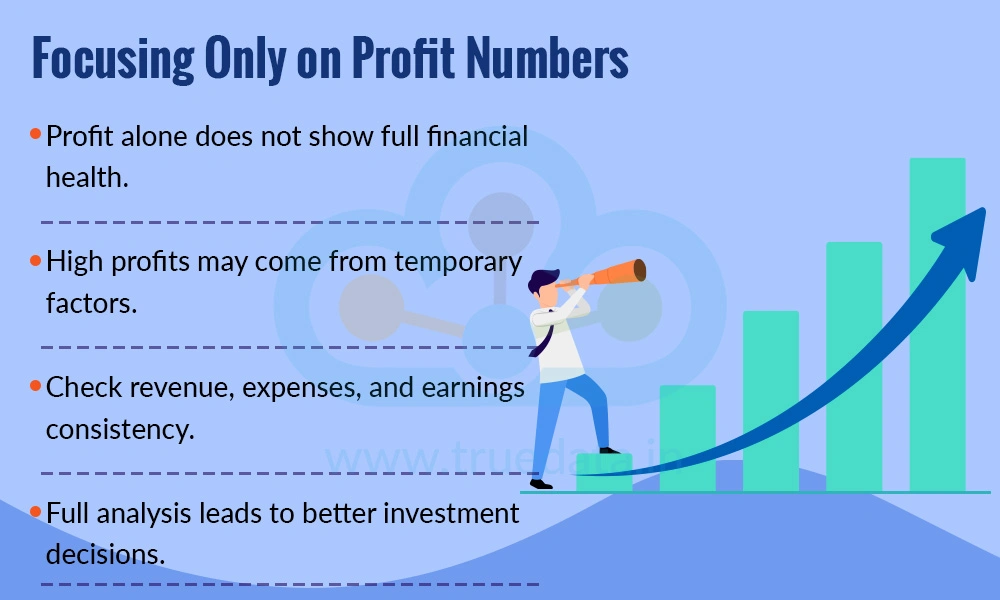
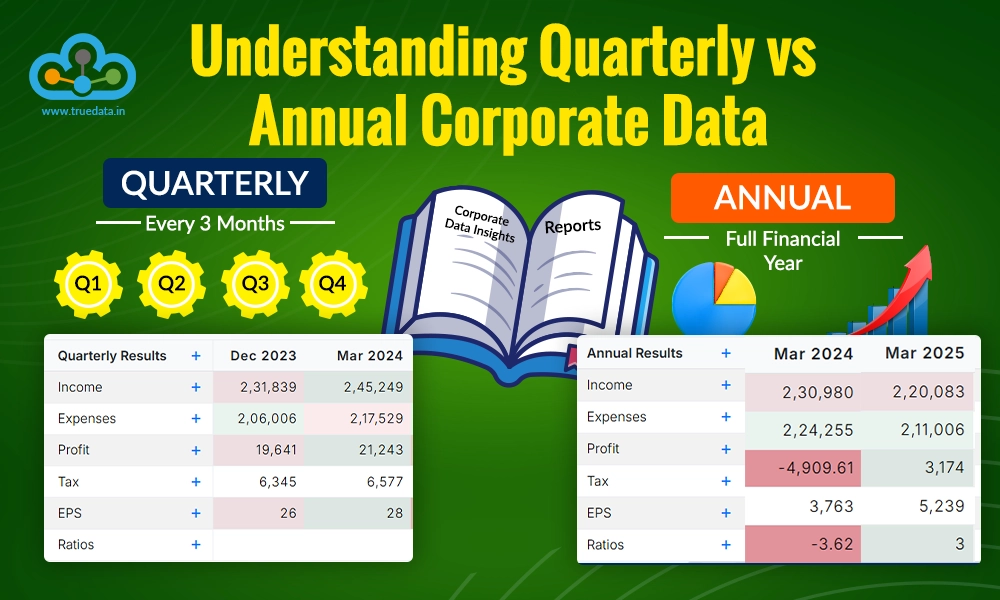
Many investors tend to judge a company only based on its profit figures or Earnings Per Share (EPS). While profits are important, they do not provide a complete picture of the company’s financial health. A company may report high profits due to one-time income, accounting adjustments, or temporary cost reductions, which may not be sustainable in the long run. Investors should also analyse revenue growth, operating expenses, and consistency of earnings over time. Looking at the full financial picture helps in making more balanced and informed investment decisions.

Not Understanding the Business Model

Not Understanding the Business Model

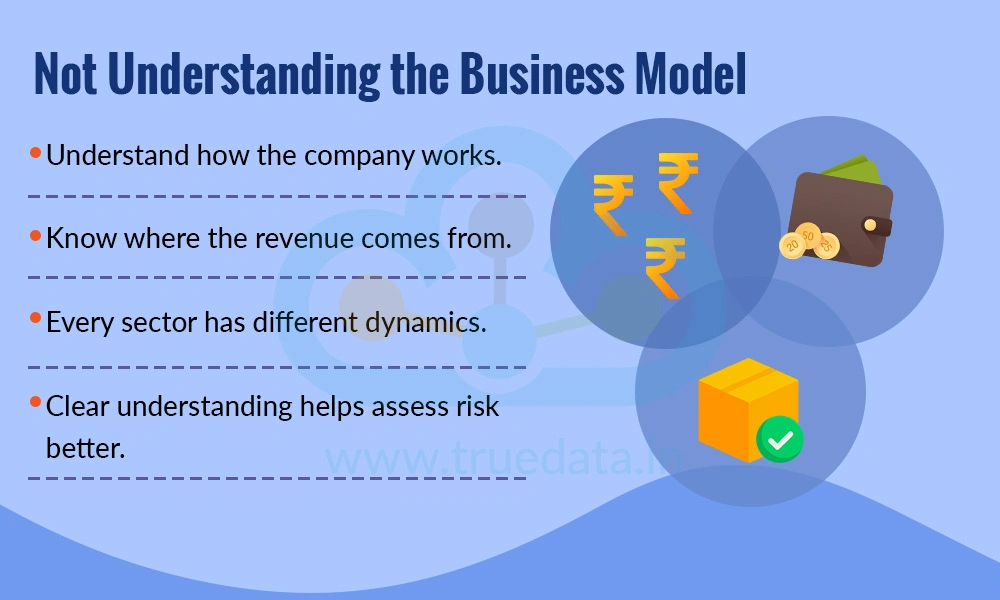
A common mistake investors make is investing in companies without fully understanding how they operate. If an investor does not know how a company generates revenue or what drives its growth, it becomes difficult to assess its long-term potential. Different sectors, such as IT, banking, FMCG, and infrastructure, have unique business dynamics. A clear understanding of the business model allows investors to evaluate risks better and stay confident during market fluctuations.

Overlooking Cash Flow

Overlooking Cash Flow

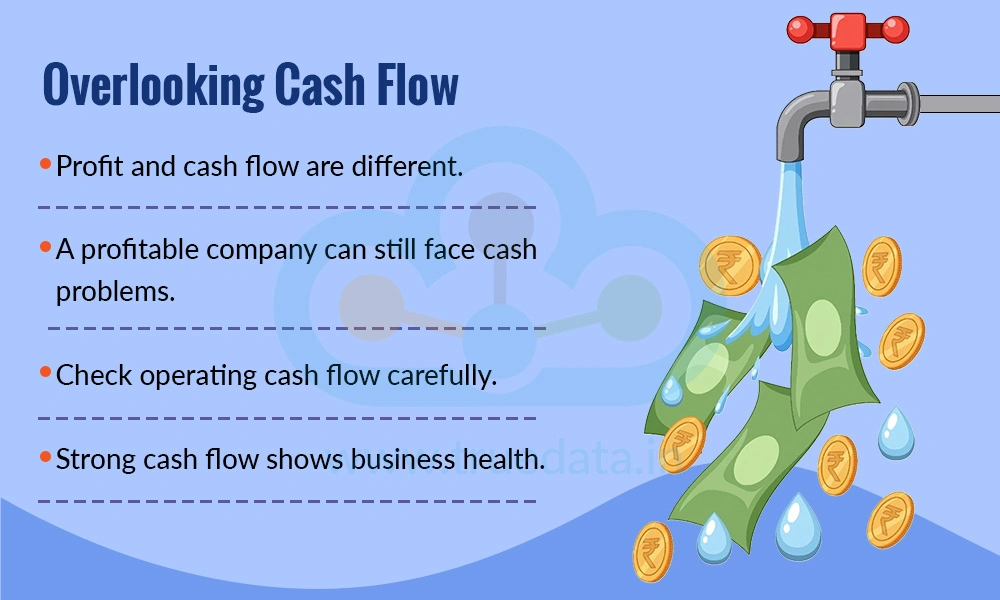
Many investors ignore cash flow and focus only on profit figures shown in financial statements. However, profit and cash flow are not the same. A company can report profits but still face cash shortages due to delays in receiving payments or inefficient operations. Investors should carefully examine the cash flow statement, especially operating cash flow, to ensure that the company is generating real cash from its core business. Strong and consistent cash flow is a key sign of a healthy company.

Ignoring Debt Levels

Ignoring Debt Levels

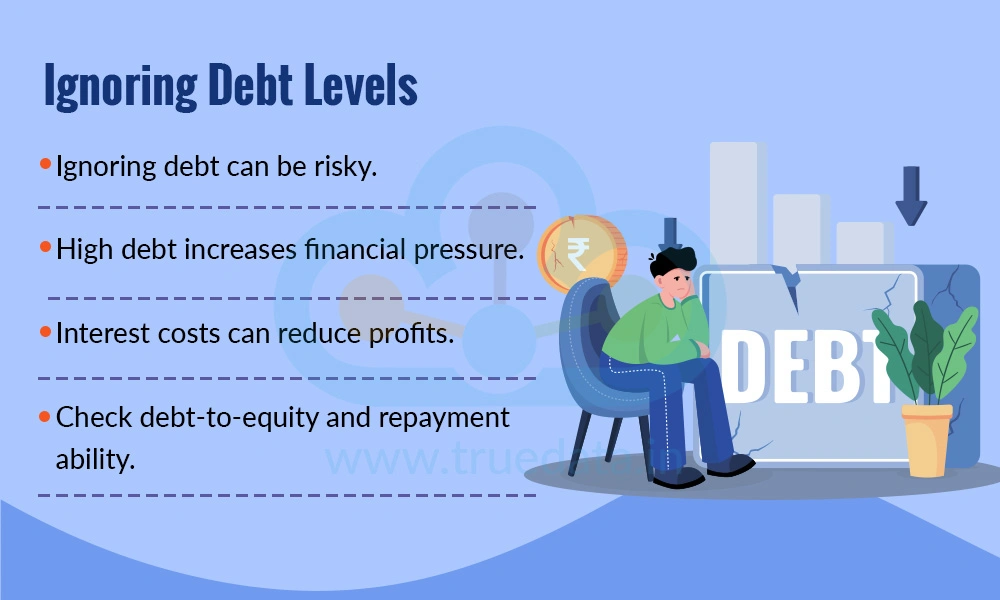
Ignoring debt is one of the most critical mistakes in fundamental analysis. Some companies rely heavily on borrowed funds to expand their business. While this may boost growth in the short term, it increases financial risk if the company is unable to repay its obligations. High debt leads to increased interest costs and can affect profitability. Investors should always check the debt-to-equity ratio and assess whether the company has sufficient earnings to service its debt comfortably.

Ignoring Management Quality

Ignoring Management Quality

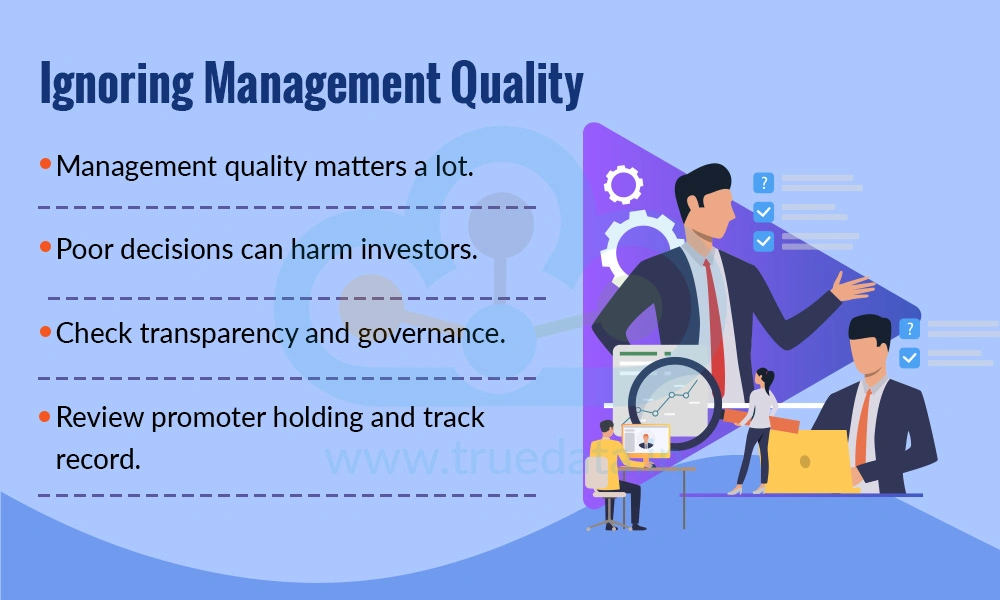
Many investors focus only on financial numbers and overlook the importance of management quality. However, the people running the company play a major role in its long-term success. Poor management decisions, lack of transparency, or weak corporate governance can negatively impact shareholders. It becomes essential to review promoter holding, management track record, and overall credibility before investing, especially in cases where governance issues have been seen in some companies.

Not Comparing with Peers

Not Comparing with Peers

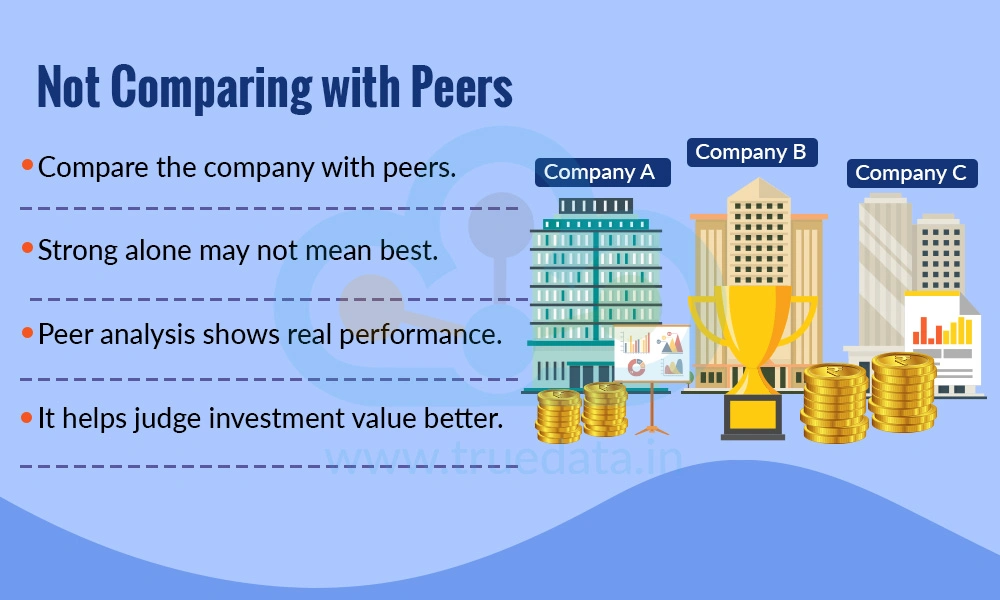
Analysing a company without comparing it to its competitors can lead to incomplete conclusions. A company may appear strong when viewed in isolation, but it might be underperforming compared to others in the same sector. Peer comparison helps investors understand relative performance in terms of growth, profitability, and valuation. This provides better clarity on whether the company is truly a good investment option.

Blindly Following Ratios

Blindly Following Ratios

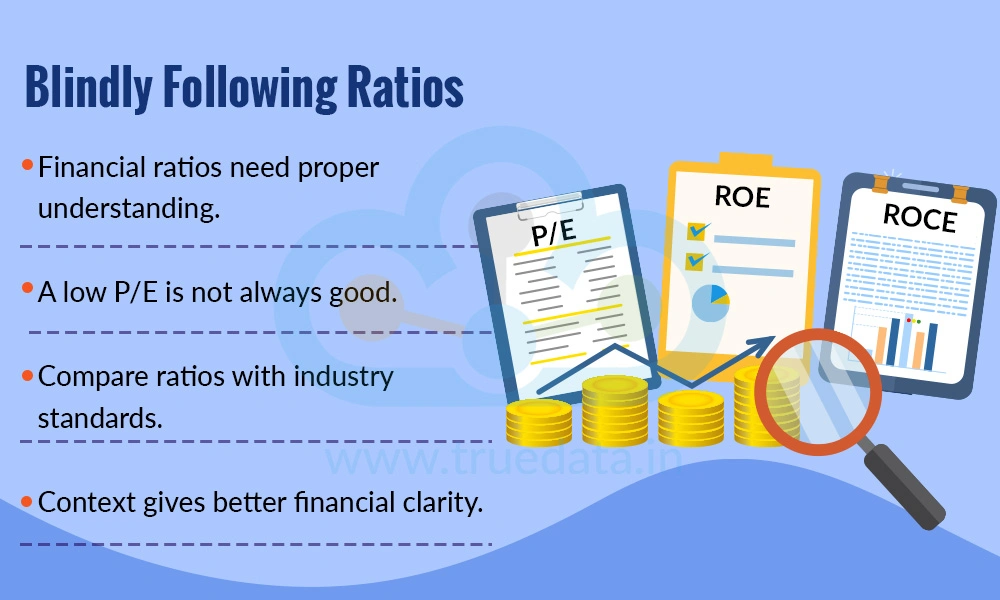
Financial ratios such as P/E, ROE vs ROCE are widely used in fundamental analysis, but relying on them without proper understanding can be misleading. For instance, a low P/E Ratio may seem attractive, but it could indicate weak future growth or underlying business issues. Investors should always analyse ratios in context, compare them with industry standards, and understand the reasons behind high or low values. This ensures a more accurate interpretation of financial data.

Ignoring Future Growth Prospects

Ignoring Future Growth Prospects

Some investors base their decisions only on a company’s past performance, assuming that it will continue in the same way. However, past success does not guarantee future growth. Changes in competition, technology, or consumer preferences can impact a company’s performance. Investors should evaluate future plans, expansion strategies, and industry outlook before investing. Focusing on future potential is essential for long-term success, especially in markets that evolve rapidly.

Ignoring Macroeconomic and Regulatory Factors

Ignoring Macroeconomic and Regulatory Factors

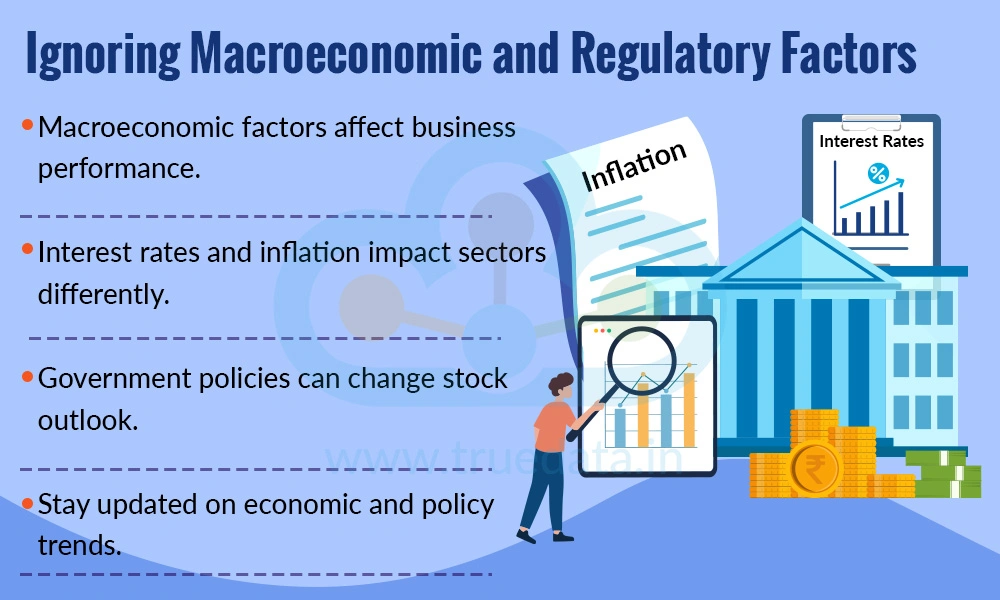
Macroeconomic conditions and government policies play a significant role in shaping business performance. Factors such as interest rates, inflation, taxation, and regulatory changes can directly impact different sectors. For example, RBI policy changes can affect banking stocks, while government regulations can influence real estate or infrastructure companies. Ignoring these factors can lead to incorrect investment decisions.

How to Avoid these Common Mistakes?

How to Avoid these Common Mistakes

Now that we have seen the common mistakes in the fundamental analysis of companies, let us focus on how to avoid them. 

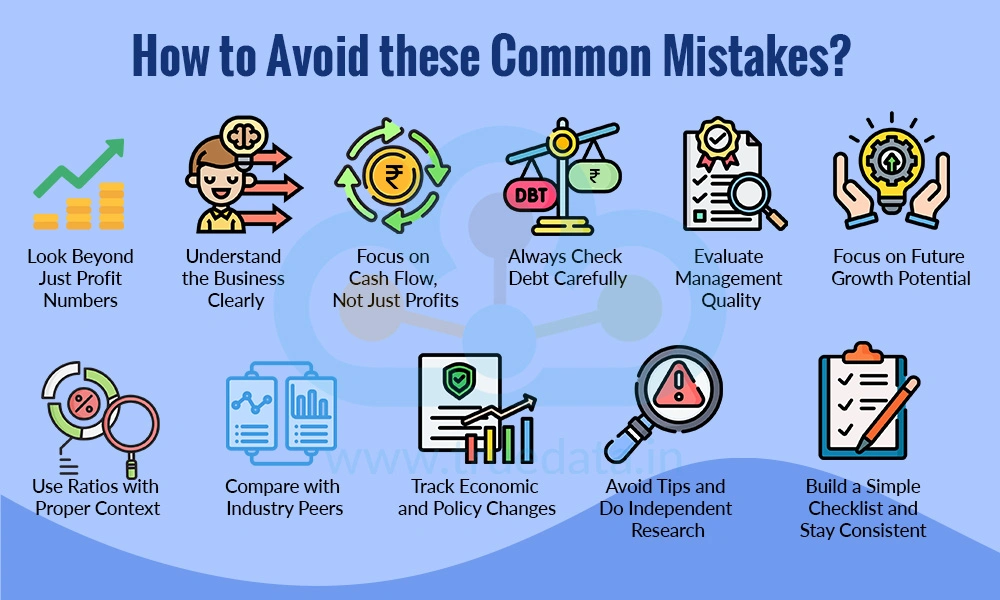
Look Beyond Just Profit Numbers 

Many investors tend to focus only on profit figures like net profit or earnings per share (EPS) while analysing a company. However, profits alone do not give the complete picture. A company may show high profits for a short period due to one-time gains or cost-cutting measures, but that may not be sustainable. It is important for investors to also look at revenue growth, operating margins, and consistency of performance over multiple years. A business that shows stable and gradual growth is generally more reliable than one with sudden fluctuations.

Understand the Business Clearly

Investors should avoid putting money into businesses they do not understand. Knowing how a company earns revenue, what products or services it offers, and what factors drive its growth is essential. Operations in different sectors vary in many ways, thus, a clear understanding of the business model helps investors make informed decisions and avoid confusion during market fluctuations.

Focus on Cash Flow, Not Just Profits

Profit shown in financial statements does not always mean actual cash is being generated. This is why analysing cash flow, especially operating cash flow, is very important. A company may report profits but still struggle with cash shortages due to delayed payments or poor working capital management. Investors should prefer companies that consistently generate positive cash flow from their core operations, as it reflects true business strength.

Always Check Debt Carefully

Debt is a crucial factor that should never be ignored during fundamental analysis. Many companies expand their operations by borrowing heavily, which can become risky if business conditions change. Investors should check the debt-to-equity ratio and also assess whether the company earns enough to pay its interest comfortably. A company with manageable or low debt is usually better positioned to handle economic downturns and uncertainties.

Evaluate Management Quality

The quality of management plays a major role in the success of a company. Even a financially strong company can underperform if it is not managed properly. Investors should review promoter holding, management track record, and corporate governance practices. Checking management credibility becomes even more important, particularly where issues related to governance have occurred in the past. Transparent and trustworthy management builds long-term investor confidence.

Focus on Future Growth Potential

While past performance provides useful insights, it should not be the only basis for investment decisions. Investors should evaluate the company’s future growth prospects, including expansion plans, new product launches, and industry opportunities. Sectors can evolve quickly due to policy changes, technology, and competition. A company with strong future potential is more likely to deliver long-term returns.

Use Ratios with Proper Context

Financial ratios can provide a deeper analysis of the financial statements, yet they can also be misleading if used in isolation. Therefore, it is crucial to understand the content of these ratios while analysing them and look at the bigger picture or the comprehensive picture by comparing them with industry peers and historical trends. This helps in understanding the reason behind changes in value, if any, leading to better investment decisions.

Compare with Industry Peers

Analysing a company in isolation is another mistake to avoid, as it gives an incomplete or misleading analysis. A company may appear strong on its own, but when compared with competitors, it gives the true picture of its underperformance or huge success. This helps investors pick the right investment option from the sector that aligns with their risk and return perception and investment horizon.

Track Economic and Policy Changes

Macroeconomic factors such as interest rates, inflation, and government policies have a significant impact on businesses. While some factors have an immediate and short-term effect, some macroeconomic or policy changes have a lasting impact that can change the industry in a positive or negative manner. Thus, staying updated on such changes that impact the industry should be a priority and cannot be ignored. 

Avoid Tips and Do Independent Research

Many investors rely on tips from social media, friends, or news channels, which can often be incomplete or biased. Instead, investors should focus on their own research using reliable sources such as company financial statements and annual reports. Independent analysis builds confidence and helps investors stay disciplined, especially during market volatility.

Build a Simple Checklist and Stay Consistent

To avoid common mistakes, investors should create a simple checklist covering key factors like revenue growth, debt levels, cash flow, management quality, and valuation. Following a consistent approach for every investment helps reduce errors and improve decision-making over time. A disciplined process is often more effective than trying to time the market.

Conclusion

Company fundamental analysis is a powerful pillar for making informed investment decisions, but it must be done carefully and correctly. It can be too cumbersome and tricky, especially for beginners; however, ignoring this crucial aspect can have a detrimental impact on the investment portfolio. Therefore, investors should take a holistic approach of focusing on not only the quantitative factors but also the qualitative factors of fundamental analysis to create a balanced yet stronger, more reliable portfolio for long-term wealth creation. 

This article focuses on the dos and don'ts of fundamental analysis to simplify the vast ocean of analysing a stock. We hope this helps you clear many key points of fundamental analysis and create a robust fundamental analysis portfolio. 

Till then, Happy Reading!


Read More: What is Dividend Per Shares and How to Calculate it?

Frequently Asked Questions

Relying too much on the P/E ratio can be dangerous because a low P/E does not always mean a stock is cheap. It may also indicate weak growth or hidden problems. Investors should, thus, always look at other factors like earnings quality, debt, and future growth before making decisions.

Confirmation bias is dangerous because investors tend to look only for information that supports their existing views and ignore negative signals. This can lead to poor decisions, as important risks or warning signs about a stock may be overlooked.

Overreliance on management or market sentiment can be risky because positive statements or hype may hide real financial weaknesses. Investors should verify claims with actual numbers like profits, cash flow, and debt before trusting the story.

Ignoring cash flow is a red flag because a company may show profits on paper but still struggle to generate real cash to run its business. Weak or negative cash flow can signal financial stress and potential future problems.

Macro forecasting can be misleading as big economic predictions (like interest rates or GDP growth) are often uncertain and may not play out as expected. Investors should focus more on company fundamentals, as strong businesses can perform well even if macro forecasts go wrong.
Marisha Bhatt

Marisha Bhatt is a financial content writer @TrueData.
She writes with the sole aim of simplifying complex financial concepts and jargon while attempting to clarify technical and fundamental analysis concepts of the stock markets. The ultimate goal is to spread vital knowledge and benefit the maximum audience. Her Chartered Accountant background acts as the knowledge base to help clarify crucial concepts and create a sound investment portfolio.

2 Comments
R
Rahav
· April 29, 2026

Informative

·
S
Srinivas
· April 29, 2026

Excellent

·