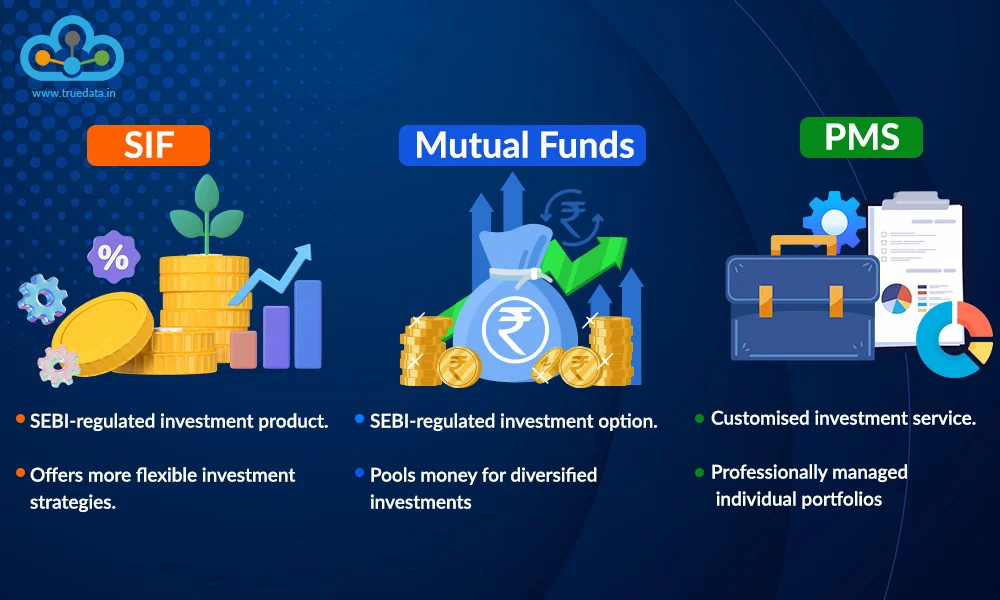
When it comes to investments, mutual funds are among the popular choices for wealth creation. But with the growing number of HNIs in India and increasing financial awareness, did you know that investors can also explore avenues offering greater flexibility and customised investment strategies? In recent years, SEBI has made reforms to introduce Specialised Investment Funds (SIFs), while Portfolio Management Services (PMS) continue to cater to investors looking for a more customised approach. So, how do you choose between SIFs, mutual funds and PMS, and how are they different? Read on to find the answers and understand which factors to consider when making informed portfolio decisions.
As investors look beyond traditional mutual funds for greater flexibility and more customised investment strategies, Specialised Investment Funds (SIFs) and Portfolio Management Services (PMS) have gained attention in India. While both can provide access to more specialised investment approaches, they differ significantly in their structure, investment flexibility, minimum investment requirements and how the investor's money is managed.

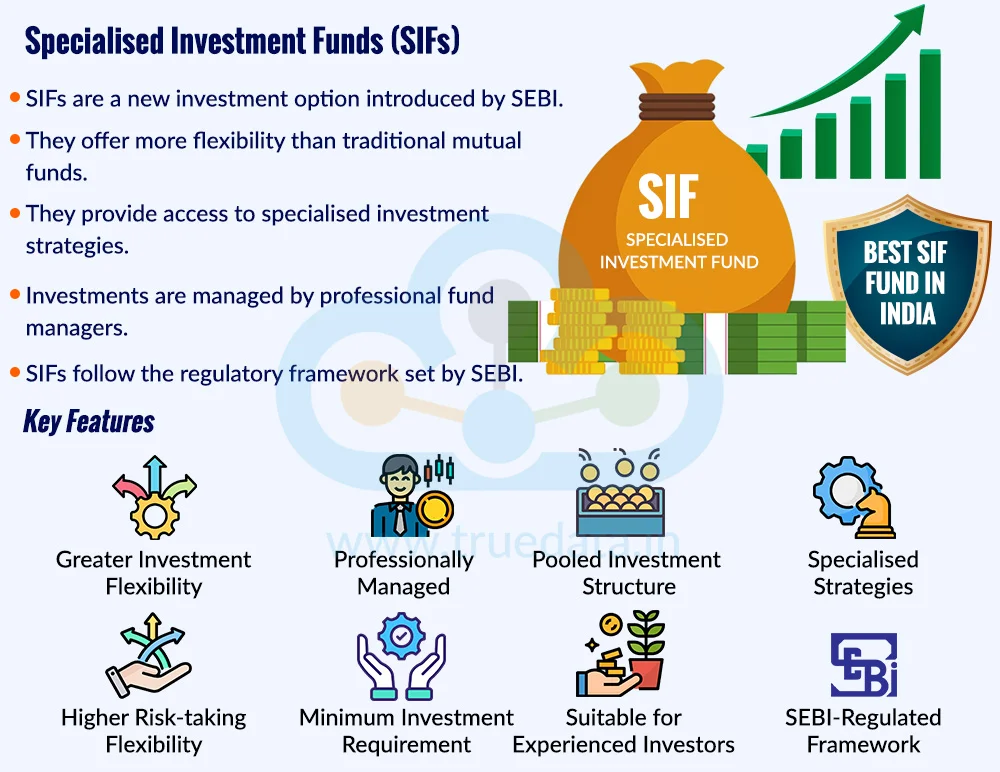
Specialised Investment Funds (SIFs) are a relatively new investment vehicle introduced by SEBI that sits between mutual funds and PMS in terms of investment flexibility and risk-taking. SIFs are designed for investors who may want more specialised investment strategies than those generally available through traditional mutual fund schemes, while still investing through a regulated pooled-fund structure. Unlike a mutual fund, which generally follows predefined scheme categories and investment limits, an SIF can offer strategies with greater flexibility within the framework prescribed by SEBI. The fund pools money from multiple investors, and a professional fund manager manages the portfolio according to the strategy stated in the scheme documents.
Key Features of SIFs -
Greater Investment Flexibility - SIFs can follow strategies with more flexibility than conventional mutual fund schemes, subject to SEBI's prescribed framework.
Professionally Managed - A professional fund manager makes investment decisions based on the stated investment strategy.
Pooled Investment Structure - Money from multiple investors is pooled and invested in securities according to the scheme's objective.
Specialised Strategies - SIFs can offer strategies designed around specific investment approaches, including equity, debt and hybrid strategies.
Higher Risk-taking Flexibility - Certain SIF strategies can take higher exposure to securities or use investment approaches that may not be available to ordinary mutual fund schemes.
Minimum Investment Requirement - SIFs have a higher minimum investment threshold of Rs. 10,00,000 than regular mutual funds, subject to applicable SEBI rules.
Suitable for Experienced Investors - They are generally intended for investors who understand market risks and are comfortable with more specialised investment strategies.
SEBI-Regulated Framework - SIFs operate within the regulatory framework prescribed by SEBI, providing a structured framework for their operation.

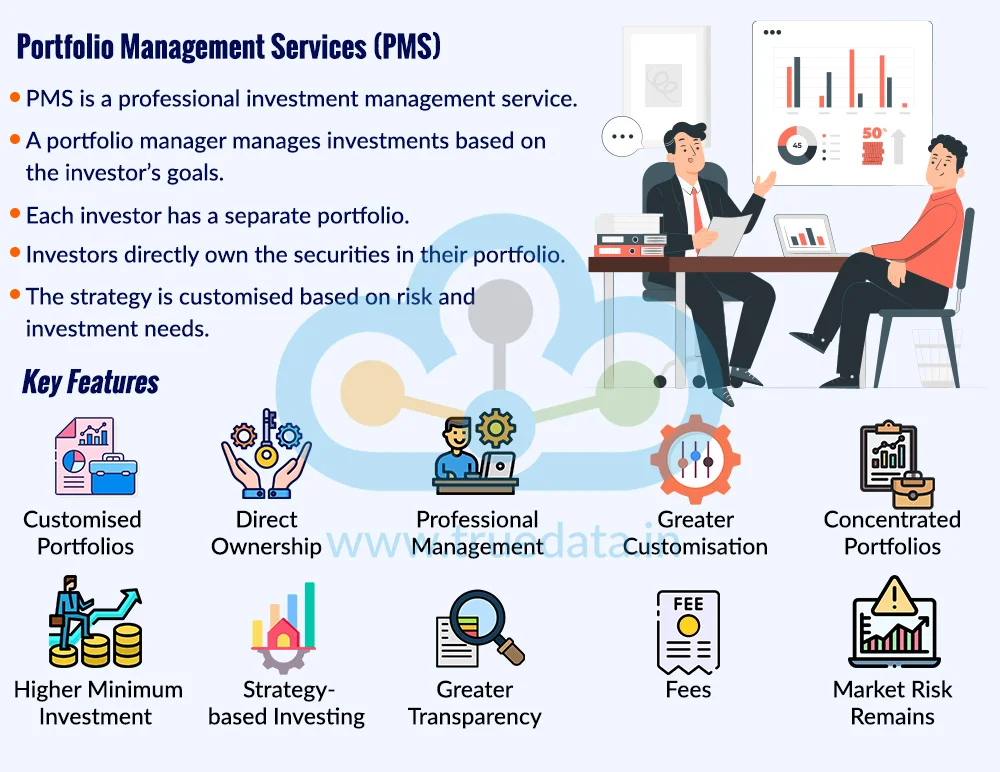
Portfolio Management Services (PMS) is a professional investment management service where a portfolio manager manages investments on behalf of an investor according to an agreed investment strategy and the investor's objectives. Unlike a mutual fund or SIF, where money from several investors is pooled into a common fund, a PMS portfolio is maintained separately for each client. This means the securities bought for one investor's portfolio can be different from those held for another investor, depending on their investment strategy, risk profile and other requirements. For example, if an investor opts for an equity PMS strategy, the portfolio manager may select a specific set of stocks for that investor. The investor generally owns the securities in their own name, while the portfolio manager makes investment decisions and manages the portfolio according to the agreed mandate.
Key Features of PMS -
Customised Portfolios - The portfolio can be managed according to the investor's objectives, risk profile and chosen strategy.
Direct Ownership - Investors generally hold the securities in their own demat accounts, unlike pooled mutual fund structures.
Professional Management - A SEBI-registered portfolio manager takes investment decisions on behalf of the investor.
Greater Customisation - Depending on the agreement, investors may have greater scope to customise or modify their portfolio compared with pooled investment products.
Concentrated Portfolios - PMS strategies may hold a relatively smaller number of securities, depending on the investment strategy.
Higher Minimum Investment - PMS is generally meant for investors with a higher investable amount and has a prescribed minimum portfolio value.
Strategy-based Investing - Investors select a PMS strategy based on its investment philosophy, objectives and risk profile.
Greater Transparency - Investors can generally see the individual securities held in their portfolio rather than only seeing the overall holdings of a pooled fund.
Fees - PMS providers charge fees according to the agreed fee structure, which may include fixed fees, performance-linked fees or a combination of both.
Market Risk Remains - Professional management does not eliminate market risk, and the portfolio can gain or lose value depending on market conditions and the securities held.
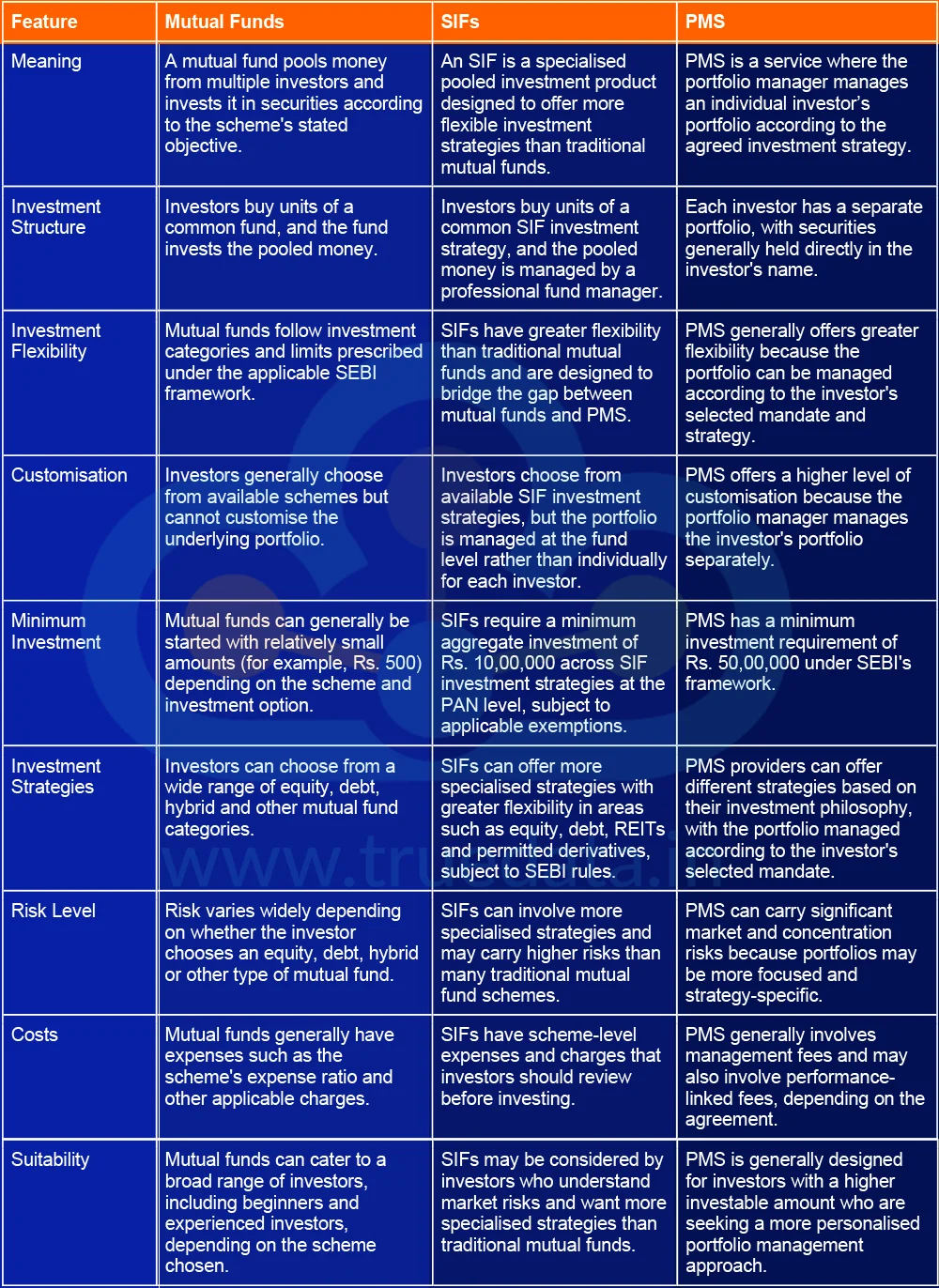
SIFs, mutual funds and PMS are all professionally managed investment avenues, but they differ in their structure, investment flexibility, minimum investment, customisation and suitability. The following table explains the key differences in simple terms for investors. SEBI introduced SIFs specifically to bridge the gap between mutual funds and PMS in terms of portfolio flexibility.

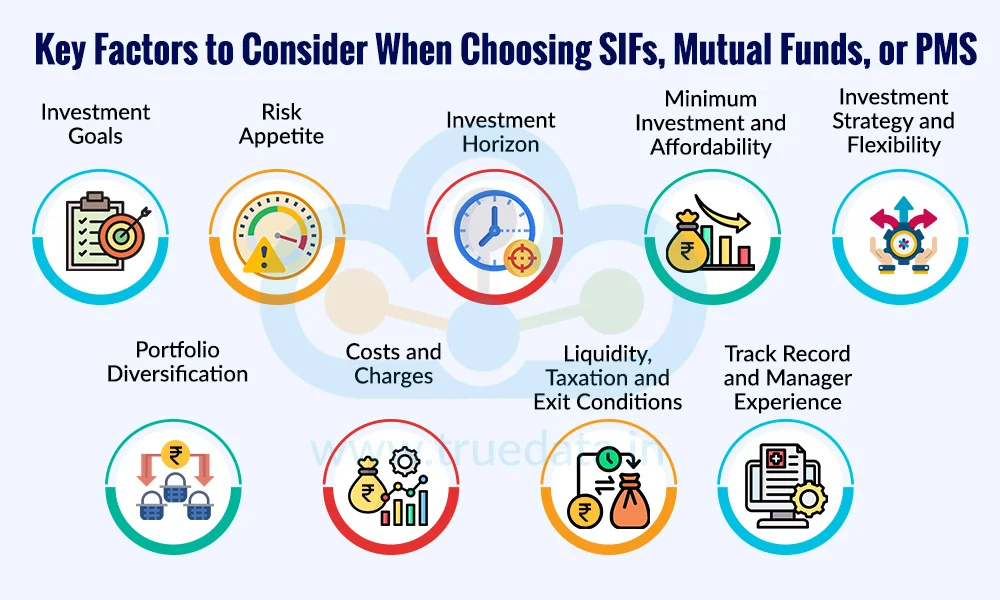
SIFs, mutual funds and PMS differ in their structure, investment flexibility, risk and cost. Before choosing any of these options, investors should understand each product and check whether it fits their financial goals and risk-taking ability. Some key factors to consider while investing in these products are,

Investment Goals - Investors should first identify their investment goals, such as long-term wealth creation, regular income, capital preservation or portfolio diversification. The chosen investment option should align with these goals rather than being selected only because of its past returns.
Risk Appetite - Investors should assess how much market risk they are comfortable taking and the loss they can afford. SIFs and PMS may offer specialised or concentrated strategies that can carry higher risks than some traditional mutual fund schemes. Investors should understand the risks associated with the specific strategy before investing.
Investment Horizon - Investors should consider how long they can remain invested. Equity-oriented strategies can experience significant short-term price fluctuations and may be more suitable for investors with a longer investment horizon. The expected time before the money is needed should therefore be considered before selecting a product.
Minimum Investment and Affordability - Investors should check whether they meet the minimum investment requirement and whether the investment fits comfortably within their overall financial plan. Mutual funds generally allow investment with relatively small amounts, while SIFs generally require a minimum aggregate investment of Rs. 10,00,000 across SIF strategies at the PAN level, subject to applicable rules and exemptions. PMS has a minimum investment requirement of Rs. 50,00,000 under the SEBI framework.
Investment Strategy and Flexibility - Investors should understand where their money will be invested and how the strategy will be implemented. Mutual funds generally follow predefined investment objectives, while SIFs offer greater flexibility within the applicable regulatory framework. PMS can provide greater portfolio-level customisation because the portfolio is managed separately for each investor.
Portfolio Diversification - Investors should examine the level of diversification offered by the selected scheme or strategy. They should look at the securities, sectors and asset classes in which the money may be invested. A highly concentrated portfolio can be more sensitive to the performance of a small number of investments and may result in larger fluctuations in portfolio value.
Costs and Charges - Investors should understand all applicable costs before investing. These may include expense ratios, management fees, performance-linked fees, brokerage and other charges, depending on the investment avenue. Comparing the costs with the services and investment strategy offered can help investors understand the overall expense of investing.
Liquidity, Taxation and Exit Conditions - Investors should check how easily they can withdraw their money and whether any exit loads, lock-in periods or other conditions apply. They should also understand the applicable tax treatment, as taxation can vary depending on the investment structure, securities held and applicable tax rules.
Track Record and Manager Experience - Investors should review the historical performance and investment approach of the specific scheme or strategy instead of relying only on recent returns. They can also consider the experience of the fund manager or portfolio manager, while remembering that past performance does not guarantee future returns.
The taxation of SIFs, mutual funds and PMS depends mainly on the type of investment, the holding period and the way the investment is structured. It is important to understand that these three avenues are not taxed in the same manner. The taxation of these investment options based on the latest tax provisions of the Income Tax Act 2025 is explained below.
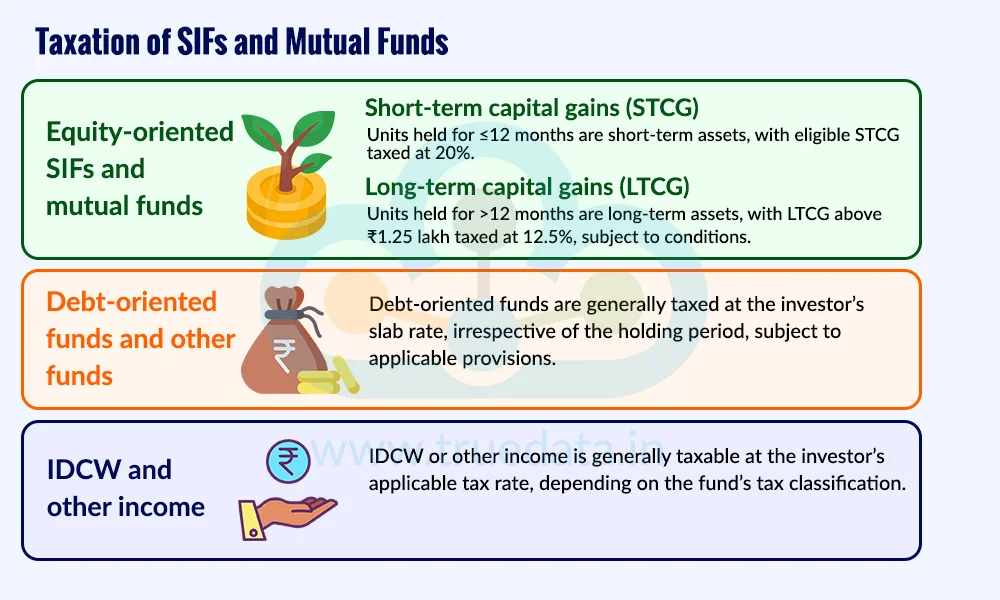
The taxation of SIFs and mutual funds depends mainly on the type of fund and its underlying investments.

For equity-oriented SIFs and mutual funds, units held for 12 months or less are generally treated as short-term capital assets, with eligible short-term capital gains taxed at 20%. If the units are held for more than 12 months, the gains are generally treated as long-term capital gains, with LTCG above Rs. 1,25,000 in a tax year taxed at 12.5%, subject to applicable conditions.
Gains for debt-oriented funds and other funds covered under the specified mutual fund provisions are generally taxed at the investor's applicable income-tax slab rate, irrespective of the holding period. From 1 April 2025, this treatment applies to funds that meet the specified criteria, including funds investing more than 65% of their total proceeds in debt and money-market instruments, subject to the applicable provisions.
Any IDCW or other income distributed by an SIF or mutual fund is generally taxable in the hands of the investor at the applicable tax rate. Therefore, investors should check the specific fund's investment strategy and tax classification before investing, as the tax treatment can vary across different SIFs and mutual fund schemes.

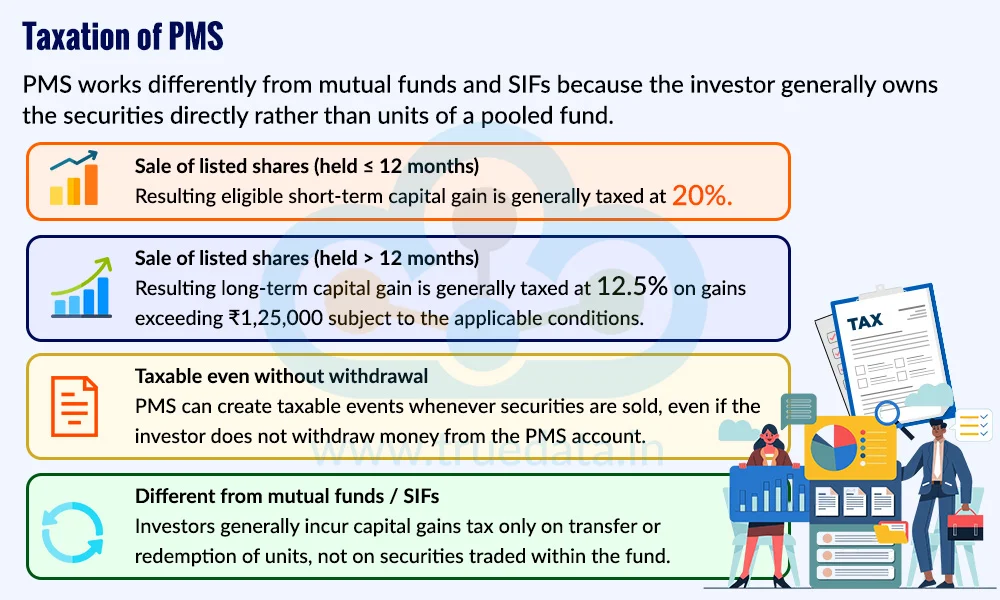
PMS works differently from mutual funds and SIFs because the investor generally owns the securities directly rather than units of a pooled fund. As a result, when the portfolio manager sells securities in the investor's portfolio, the resulting capital gain or loss is generally recognised in the investor's hands.
For example, if a PMS manager sells listed shares that have been held for 12 months or less, the resulting eligible short-term capital gain is generally taxed at 20%. If the shares have been held for more than 12 months, the resulting long-term capital gain is generally taxed at 12.5% on gains exceeding Rs. 1,25,000, subject to the applicable conditions. This broadly follows the tax treatment applicable when an investor directly buys and sells eligible listed equity.
This also means that PMS can create taxable events whenever securities are sold, even if the investor does not withdraw money from the PMS account. In contrast, an investor in a mutual fund or SIF generally does not incur capital gains tax merely because the fund manager buys or sells securities within the pooled portfolio. Taxation generally arises when the investor transfers or redeems the fund units.
SIFs, mutual funds and PMS cater to investors with different investment amounts, risk appetites, experience levels and portfolio requirements. The target investor for each option can be understood as follows.

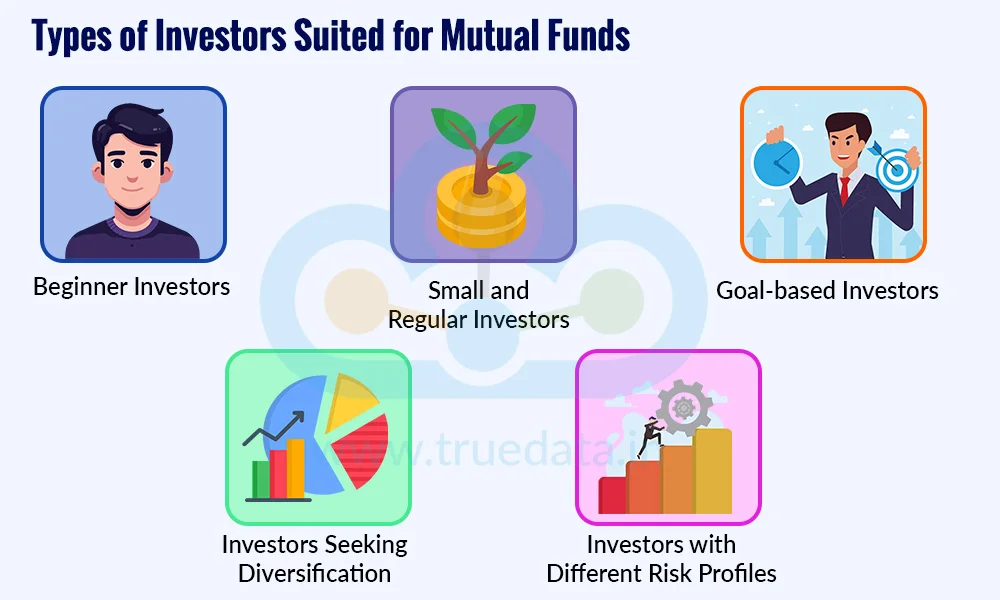
Beginner Investors - Mutual funds can be considered by investors who are new to investing and want professional management without selecting individual securities themselves.
Small and Regular Investors - Mutual funds generally allow investors to start with relatively small amounts, making them accessible to a broad investor base.
Goal-based Investors - Investors saving for goals such as retirement, children’s education or other long-term needs can choose mutual fund schemes based on their objectives and risk appetite.
Investors Seeking Diversification - Mutual funds can help investors spread their money across different securities, sectors or asset classes through a single scheme.
Investors with Different Risk Profiles - There are equity, debt, hybrid and other mutual fund categories, allowing investors to choose based on their risk tolerance and investment horizon.

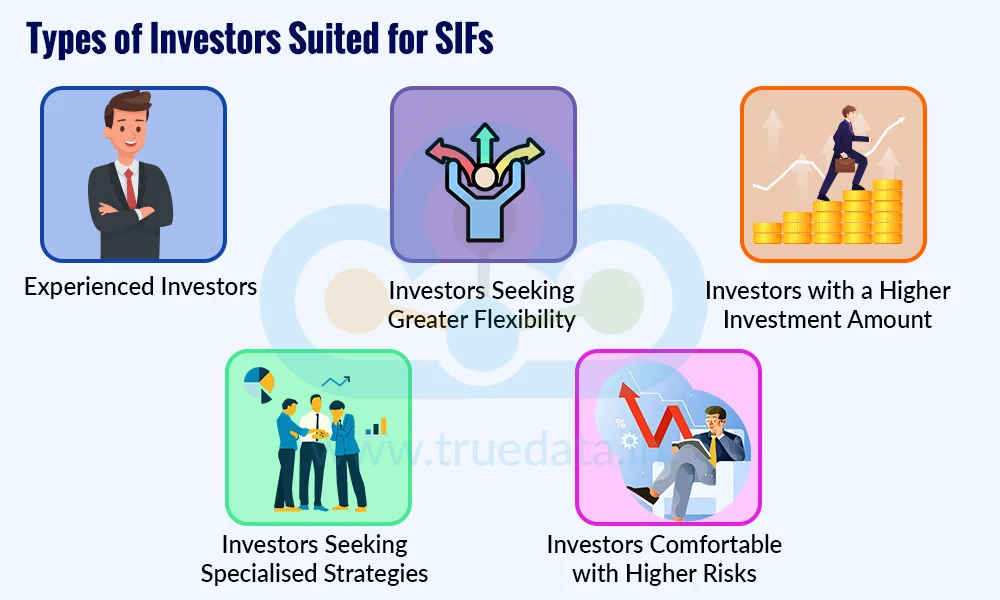
Experienced Investors - SIFs may be suitable for investors who understand market risks and have some experience with financial markets.
Investors Seeking Greater Flexibility - They may appeal to investors looking for investment strategies with greater flexibility than traditional mutual funds.
Investors with a Higher Investment Amount - SIFs generally have a minimum aggregate investment requirement of Rs. 10,00,000 across SIF strategies at the PAN level, subject to applicable SEBI rules and exemptions.
Investors Seeking Specialised Strategies - SIFs may suit investors who want access to more specialised equity, debt or hybrid investment strategies within a pooled fund structure.
Investors Comfortable with Higher Risks - Some SIF strategies can take higher or more specialised exposures, so investors should understand the associated risks before investing.

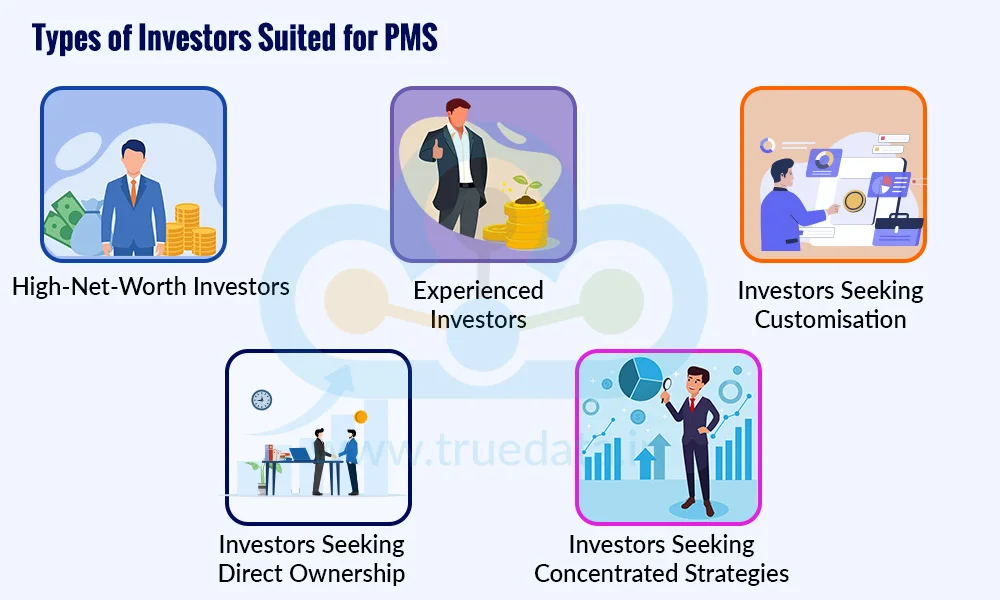
High-Net-Worth Investors - PMS is generally aimed at investors who have a larger amount of investable capital, with a minimum investment requirement of Rs. 50,00,000 under the SEBI framework.
Experienced Investors - PMS may be considered by investors who understand market fluctuations and are comfortable with the risks associated with actively managed portfolios.
Investors Seeking Customisation - PMS can be suitable for investors who want their portfolio to be managed separately according to an agreed investment strategy and mandate.
Investors Seeking Direct Ownership - PMS generally involves securities being held directly in the investor's name rather than through units of a pooled fund.
Investors Seeking Concentrated Strategies - Some PMS strategies may invest in a relatively smaller number of securities, which can increase both the potential impact of individual investments and the associated portfolio risk.
SIFs, mutual funds and PMS offer different ways to invest, with differences in investment flexibility, minimum investment, customisation, risk and portfolio management. Mutual funds can suit a wide range of investors, while SIFs may appeal to those seeking more specialised strategies, and PMS may suit investors looking for greater portfolio-level customisation. Understanding these differences can help investors choose an option that aligns with their financial goals, risk appetite, investment horizon and available capital.
This article explains the three important investment options around mutual funds and their suitability for investors. We hope this article helps investors understand these products in a better light and make informed investment decisions. Let us know your thoughts on the topic or if you need further information, and we will address it soon.
Till then, Happy Reading!
Read More: Stock Lending Borrowing Mechanism (SLBM)
Mutual fund investments have simplified greatly with just a tap on your smartpho...
Your mutual fund has delivered impressive returns, but are those the actual retu...
Many investors think thatmutual fund investing is simply selecting a fund and wa...