Mutual Funds

Difference Between Active Mutual Funds and Passive Mutual Funds

Marisha Bhatt · 25 Jul 2026 · 8 mins read · 40 Comments

difference-between-active-mutual-funds-and-passive-mutual-funds

Many investors think that mutual fund investing is simply selecting a fund and waiting for the markets to multiply the investment in the long run. However, this is not the whole story. While selecting the right fund is the starting point, it is based on the approach or the investment strategy of the investor. The two main strategies or types of funds that most mutual funds are generally categorised into are active mutual funds and passive mutual funds. So what are the differences between the two fund strategies, and more importantly, what is more suitable to you? Dive into this blog to get answers to these questions and get an edge in mutual fund investing. 

What are Active Mutual Funds?

What are Active Mutual Funds

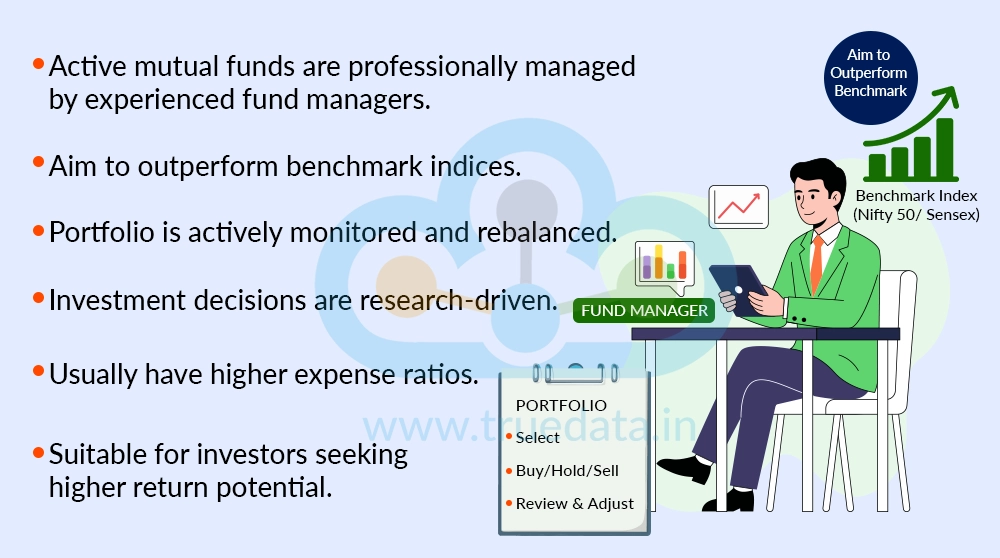
Active mutual funds are mutual fund schemes where a professional fund manager actively selects and manages investments with the aim of generating higher returns than a benchmark index, such as the Nifty 50 or Sensex. Instead of simply tracking an index, the fund manager conducts detailed research, analyses companies, sectors, economic trends, and market conditions, and then decides which securities to buy, hold, or sell. The portfolio is regularly reviewed and adjusted to take advantage of potential opportunities or manage risks. 

As active funds involve continuous research and active decision-making, they generally have higher expense ratios than passive funds. The performance of an active mutual fund depends largely on the fund manager's expertise and investment strategy. Active funds can invest across various categories such as large-cap, mid-cap, small-cap, hybrid, and debt funds, making them suitable for investors who seek the potential for market-beating returns and are comfortable relying on the fund managers’ investment decisions.

What are Passive Mutual Funds?

What are Passive Mutual Funds

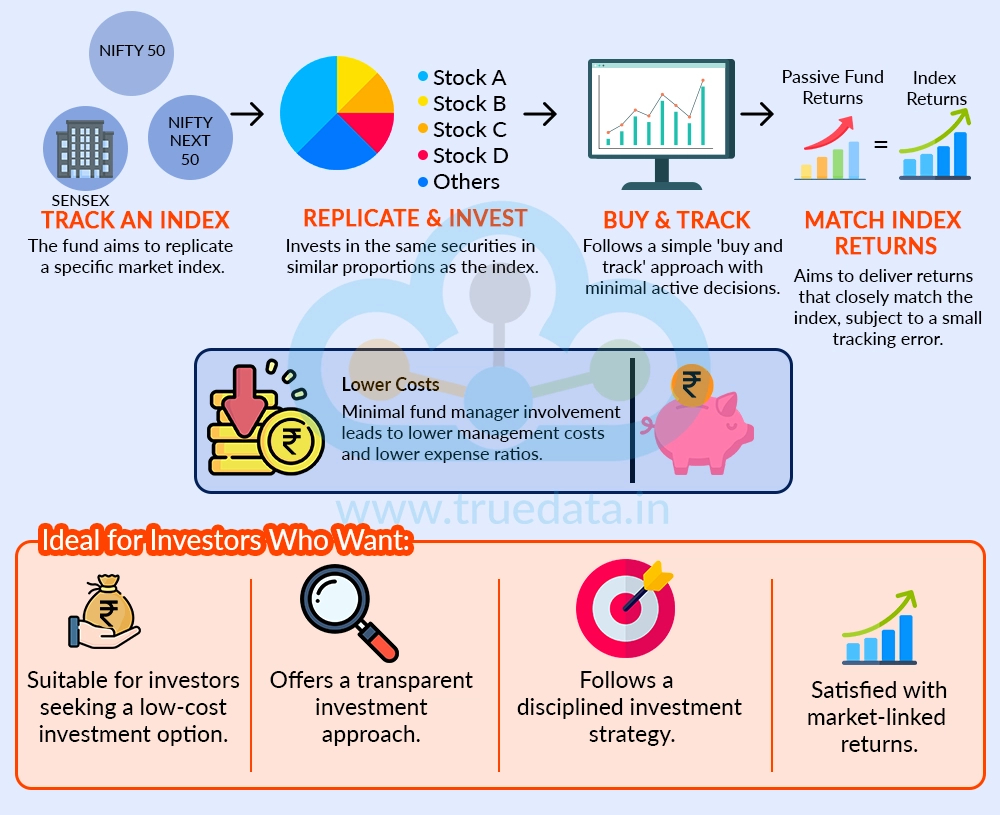
Passive mutual funds are mutual fund schemes that aim to replicate the performance of a specific market index rather than trying to outperform it. Instead of actively selecting stocks or timing the market, these funds invest in the same securities that make up the chosen index, such as the Nifty 50, Sensex, or Nifty Next 50, and in similar proportions. Since there is minimal involvement of a fund manager in selecting investments, passive funds follow a simple ‘buy and track’ approach. This results in lower management costs and generally lower expense ratios compared to active funds. 

The returns of a passive fund are designed to closely match the returns of its underlying index, subject to a small difference known as tracking error. Passive mutual funds are suitable for investors who prefer a low-cost, transparent, and disciplined investment approach and are satisfied with earning returns that are broadly in line with the overall market.

What are the Differences Between Active and Passive Mutual Funds?

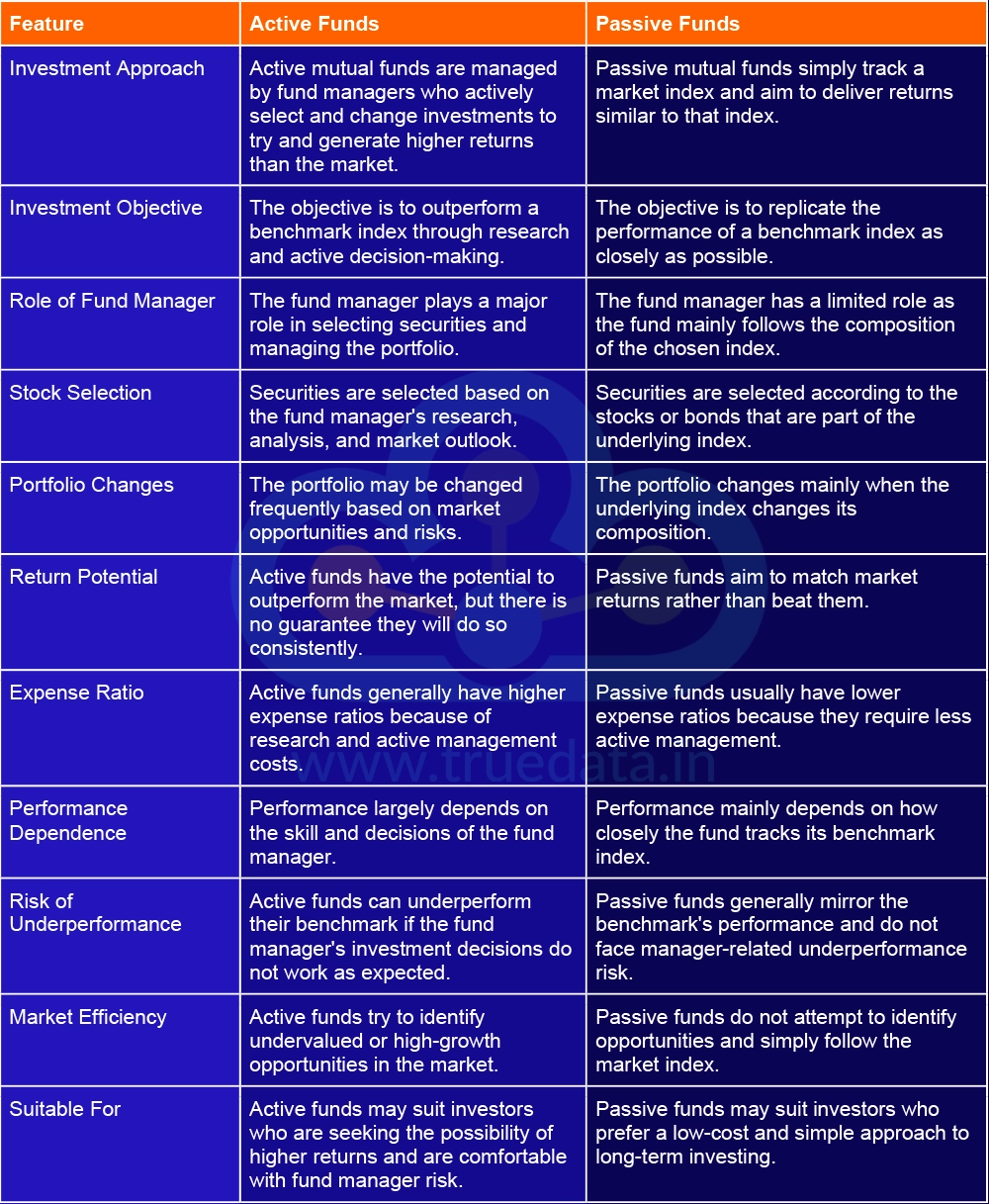
Active funds and passive funds are two distinct investment approaches, especially in terms of risk, return and fund manager role. These differences between the two are explained below. 

 What are the Differences Between Active and Passive Mutual Funds

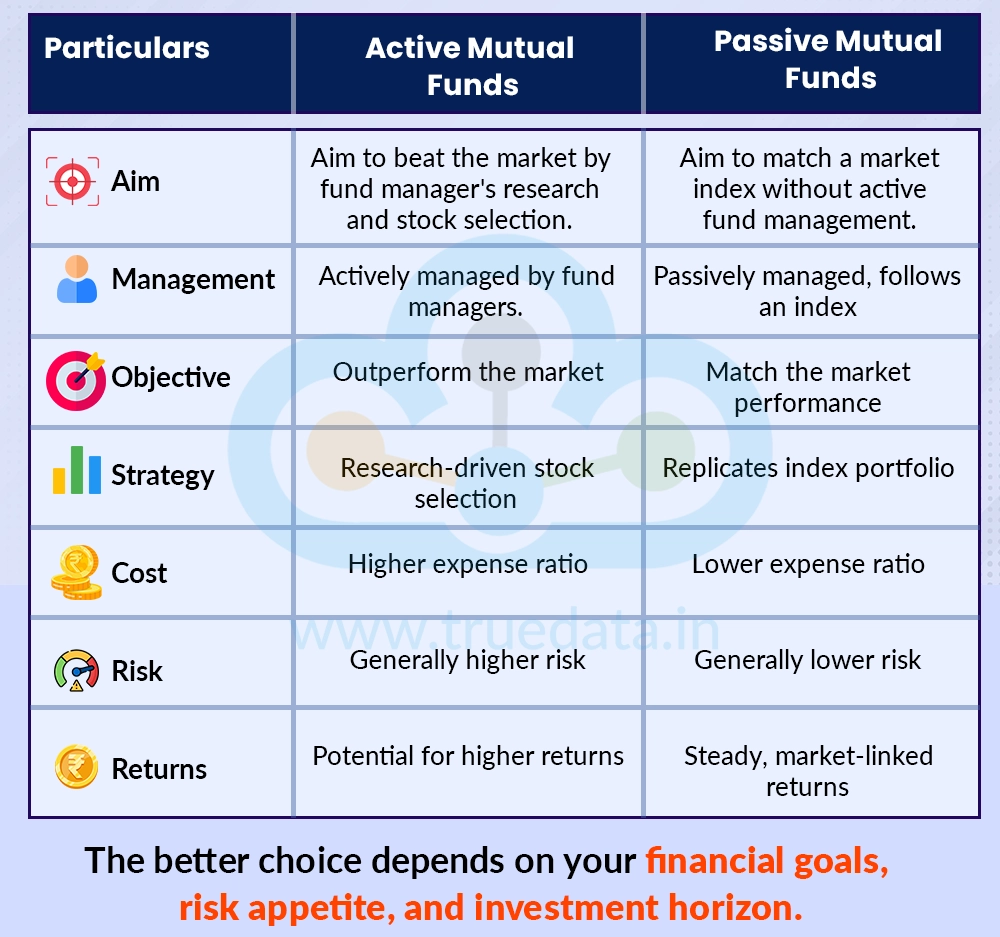
Feature

Active Funds

Passive Funds

Investment Approach

Active mutual funds are managed by fund managers who actively select and change investments to try and generate higher returns than the market.

Passive mutual funds simply track a market index and aim to deliver returns similar to that index.

Investment Objective

The objective is to outperform a benchmark index through research and active decision-making.

The objective is to replicate the performance of a benchmark index as closely as possible.

Role of Fund Manager

The fund manager plays a major role in selecting securities and managing the portfolio.

The fund manager has a limited role as the fund mainly follows the composition of the chosen index.

Stock Selection

Securities are selected based on the fund manager's research, analysis, and market outlook.

Securities are selected according to the stocks or bonds that are part of the underlying index.

Portfolio Changes

The portfolio may be changed frequently based on market opportunities and risks.

The portfolio changes mainly when the underlying index changes its composition.

Return Potential

Active funds have the potential to outperform the market, but there is no guarantee they will do so consistently.

Passive funds aim to match market returns rather than beat them.

Expense Ratio

Active funds generally have higher expense ratios because of research and active management costs.

Passive funds usually have lower expense ratios because they require less active management.

Performance Dependence

Performance largely depends on the skill and decisions of the fund manager.

Performance mainly depends on how closely the fund tracks its benchmark index.

Risk of Underperformance

Active funds can underperform their benchmark if the fund manager's investment decisions do not work as expected.

Passive funds generally mirror the benchmark's performance and do not face manager-related underperformance risk.

Market Efficiency

Active funds try to identify undervalued or high-growth opportunities in the market.

Passive funds do not attempt to identify opportunities and simply follow the market index.

Suitable For

Active funds may suit investors who are seeking the possibility of higher returns and are comfortable with fund manager risk.

Passive funds may suit investors who prefer a low-cost and simple approach to long-term investing.

What are the Advantages and Disadvantages of Active and Passive Mutual Funds?

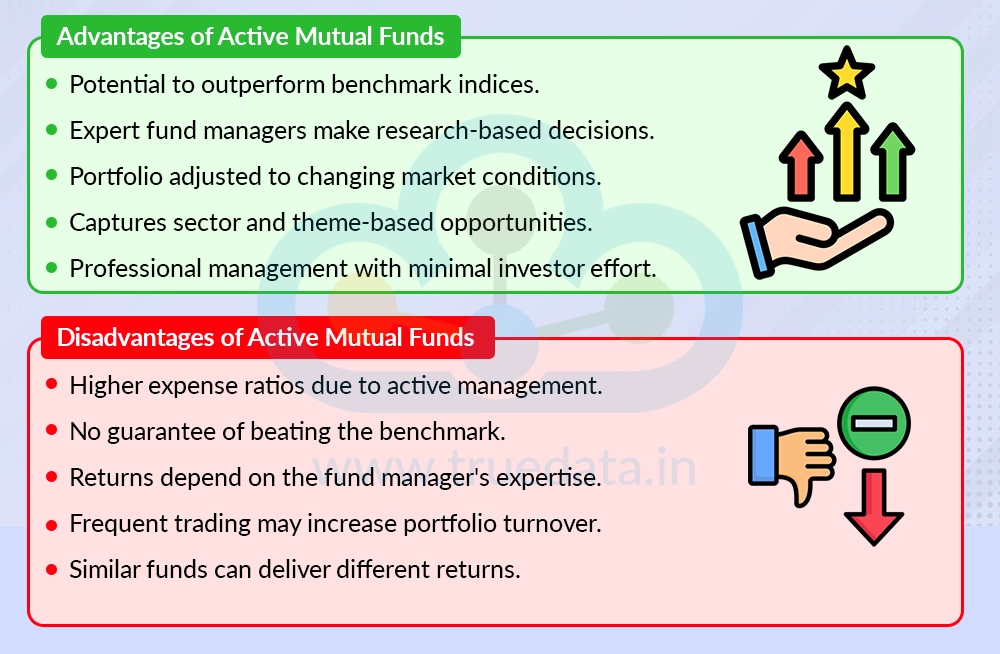
After understanding the differences between active and passive funds, let us now consider the advantages and disadvantages of investing in them for more informed decision-making.

Active Mutual Funds 

Active Mutual Funds 

  • Advantages of Active Mutual Funds

    • Active mutual funds have the potential to generate returns that are higher than the benchmark index.

    • Experienced fund managers can identify attractive investment opportunities through detailed research.

    • Fund managers can adjust the portfolio during changing market conditions to manage risks.

    • Active funds can take advantage of opportunities in specific sectors, themes, or companies.

    • Investors benefit from professional management without having to research and track investments themselves.

  • Disadvantages of Active Mutual Funds

    • Active funds generally have higher expense ratios due to research and portfolio management costs.

    • There is no guarantee that the fund will outperform its benchmark index.

    • Fund performance depends significantly on the fund manager's skill and investment decisions.

    • Frequent buying and selling of securities may increase portfolio turnover.

    • Different active funds following the same category can deliver widely different returns.

Passive Mutual Funds

Passive Mutual Funds

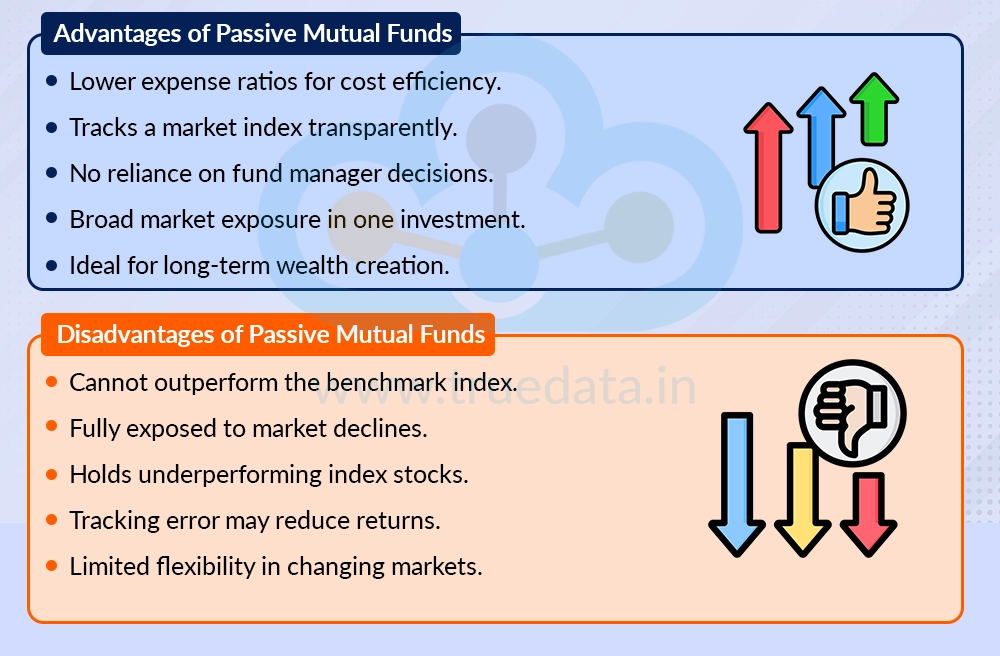
  • Advantages of Passive Mutual Funds

    • Passive mutual funds usually have lower expense ratios, which can help improve long-term returns.

    • They offer a simple and transparent investment approach by tracking a known market index.

    • Investors are not dependent on the stock-picking ability of a fund manager.

    • Passive funds provide broad market exposure through a single investment.

    • They are easy to understand and suitable for long-term wealth creation.

  • Disadvantages of Passive Mutual Funds

    • Passive funds cannot outperform the index they track.

    • Investors remain fully exposed to market declines when the benchmark index falls.

    • These funds do not actively avoid poorly performing stocks that remain part of the index.

    • Returns may be slightly lower than the index because of tracking error and fund expenses.

    • Passive funds have limited flexibility to respond to changing market conditions or emerging opportunities.

What is Better for Investors Between the Two?

What is Better for Investors Between the Two

There is no single answer to whether active or passive mutual funds are better, as the right choice depends on an investor's financial goals, risk appetite, investment horizon, and personal preferences. Active mutual funds may be suitable for investors who are willing to take slightly higher risk in the hope of earning returns that are better than the market. They can also be useful in market segments where skilled fund managers have the opportunity to identify undervalued companies and generate additional returns. However, investors should remember that higher returns are not guaranteed, and fund performance can vary based on the fund manager's decisions.

Passive mutual funds may be more suitable for investors who prefer a simple, low-cost, and disciplined approach to investing. These funds aim to match the performance of a market index and do not rely heavily on fund manager expertise. They can be a good choice for long-term investors who want broad market exposure with lower expenses. In practice, many investors choose a combination of active and passive funds to balance the potential for higher returns with the benefits of lower costs and diversification.

Conclusion

Active and passive mutual funds each have their own strengths and limitations, and neither is universally better than the other. While active funds aim to outperform the market through professional management, passive funds focus on delivering market-linked returns at a lower cost. Thus, the right choice depends on individual financial goals, risk appetite, investment horizon, and investment preferences. Understanding these two approaches in detail can help investors make informed decisions and build a mutual fund portfolio that aligns with their long-term wealth creation objectives.

This blog addresses the starting point to mutual fund investing and the nuances of active and passive mutual funds. We hope this blog can answer most of your queries. Let us know your thoughts on the topic or if you need further information on the same, and we will address it soon. 

Till then, Happy Reading!


Read More: Mutual Fund Myths You Still Believe

Frequently Asked Questions

No, active funds cannot consistently beat their benchmarks in all market conditions. While some fund managers may outperform the benchmark for certain periods, there is no guarantee that they will continue to do so over the long term.

Passive funds generally offer higher transparency because investors can easily see the index being tracked and the securities held by the fund. Active funds are also transparent, but their holdings and investment decisions may change based on the fund manager's strategy and market outlook.

When comparing an active fund with a passive fund, investors should look at factors such as long-term returns, expense ratio, risk levels, consistency of performance, and how well each fund meets their investment goals. Also, it is important to consider whether the active fund has been able to justify its higher costs by outperforming its benchmark over time.

Yes, investors can combine active and passive funds in the same portfolio. This approach allows them to benefit from the growth potential of actively managed funds while keeping overall costs lower through passive investments.

Active funds can increase or reduce exposure to specific sectors, themes, or investment styles based on the fund manager's outlook. Passive funds simply follow the sector and style allocation of their underlying index, with little flexibility to make changes.

Investors can choose active funds if they are seeking the possibility of higher returns and are comfortable with fund manager risk and slightly higher costs. On the other hand, passive funds can be selected if investors prefer a low-cost, simple, and disciplined approach that aims to match overall market performance over the long term.
Marisha Bhatt

Marisha Bhatt is a financial content writer @TrueData.

She writes with the sole aim of simplifying complex financial concepts and jargon while attempting to clarify technical and fundamental analysis concepts of the stock markets. The ultimate goal is to spread vital knowledge and benefit the maximum audience. Her Chartered Accountant background acts as the knowledge base to help clarify crucial concepts and create a sound investment portfolio.

40 Comments
S
Sudheep
· July 25, 2026

Most wanted topic

·
Marisha Bhatt Author
Sudheep · July 27, 2026

Thank you for your kind words! We are glad you found this topic valuable. We appreciate your support and look forward to bringing you more insightful content. Happy investing!

·
S
Sam
· July 25, 2026

Excellent writeup

·
Marisha Bhatt Author
Sam · July 27, 2026

Thank you so much for your encouraging feedback! We are delighted to know you enjoyed the article. Stay tuned for more interesting content on TrueData!

·
K
Karan
· July 25, 2026

Nice

·
Marisha Bhatt Author
Karan · July 27, 2026

Thank you for appreciating our post!

·
M
Manik
· July 25, 2026

Good read.. mutual fund blogs are interesting

·
Marisha Bhatt Author
Manik · July 27, 2026

Thank you for your kind words! We are delighted to hear that you are enjoying our mutual fund blogs. Our goal is to make investment concepts easy to understand so investors can make informed decisions with confidence. We truly appreciate your support and look forward to sharing more helpful content. Happy investing!

·
S
Sanam shetty
· July 25, 2026

Good read

·
Marisha Bhatt Author
Sanam shetty · July 27, 2026

Thank you, glad you like our post! Stay tuned for more infomative content on TrueData!

·
M
Mariana
· July 25, 2026

Excellent topic

·
Marisha Bhatt Author
Mariana · July 27, 2026

Thank you for your encouraging feedback! Watch this space for more interesting content on TrueData!

·
I
Issac ibbas
· July 25, 2026

Nice

·
Marisha Bhatt Author
Issac ibbas · July 27, 2026

Thank you, glad you like the post!

·
D
Dhanuja
· July 25, 2026

Nice blog. Keep sharing interesting posts

·
Marisha Bhatt Author
Dhanuja · July 27, 2026

Thank you for your encouraging feedback! We will surely keep sharing more informative content on diverse topics. Stay tuned!

·
Y
Yadhav
· July 26, 2026

Great comparison! This article clearly explains the difference between active and passive mutual funds in simple terms.

·
Marisha Bhatt Author
Yadhav · July 27, 2026

Thank you so much for your thoughtful feedback! We are delighted to know that you found the comparison clear and easy to understand. Our aim is to simplify investment concepts like active and passive mutual funds so investors can confidently choose the option that best suits their financial goals and investment style. We truly appreciate your support. Happy investing!

·
S
Sakthish
· July 26, 2026

this post helped me understand which option may suit different investment goals.

·
Marisha Bhatt Author
Sakthish · July 27, 2026

Thank you for your wonderful feedback! We are glad to hear the article helped you understand how active and passive mutual funds can suit different investment goals. Choosing the right type of fund depends on factors like your risk appetite, investment horizon, and financial objectives, so understanding the differences is an important first step. We truly appreciate your support. Happy investing!

·
S
Srikanth
· July 26, 2026

I've always been confused about whether active funds are worth the higher expense ratio. This blog explained the pros and cons very well. Thanks for sharing!

·
Marisha Bhatt Author
Srikanth · July 27, 2026

Thank you so much for your thoughtful feedback! We are delighted to hear that the article helped clear up your doubts about active funds and their higher expense ratios. Yes, while active funds may charge higher fees, the key is to evaluate whether they consistently deliver returns that justify those costs and align with your investment goals. We truly appreciate your support and look forward to sharing more helpful insights. Happy investing!

·
M
Mahadev
· July 26, 2026

Excellent breakdown of active vs. passive investing. The comparison table made it much easier to understand the key differences.

·
Marisha Bhatt Author
Mahadev · July 27, 2026

Thank you so much for your encouraging feedback! We're delighted to hear that you found the comparison table helpful. We truly appreciate your support. Happy investing!

·
N
Natharsha
· July 26, 2026

Does it make sense to invest in both active and passive mutual funds in the same portfolio? I'd love to hear your thoughts on diversification strategies.

·
Marisha Bhatt Author
Natharsha · July 27, 2026

Thank you for your thoughtful question! Yes, investing in both active and passive mutual funds can make sense for many investors. Passive funds can provide broad market exposure at a lower cost, while active funds may offer opportunities to outperform the market in certain sectors or market conditions. The right mix depends on your financial goals, risk appetite, and investment horizon.

·
S
Shiva Ganesh
· July 26, 2026

Does it make sense to invest in both active and passive mutual funds in the same portfolio? I'd love to hear your thoughts on diversification strategies.

·
Marisha Bhatt Author
Shiva Ganesh · July 27, 2026

Thank you for your thoughtful question! Yes, combining active and passive mutual funds in the same portfolio can be a sensible approach for many investors. Passive funds can help build a low-cost core portfolio with broad market exposure, while active funds can be used selectively to seek potentially higher returns in specific sectors or market segments. The ideal allocation depends on your financial goals, risk appetite, and investment horizon.

·
R
Reshma
· July 26, 2026

Which type of mutual fund is generally better for long-term wealth creation: active or passive?

·
Marisha Bhatt Author
Reshma · July 27, 2026

Thank you for your question! There is no one-size-fits-all answer, as both active and passive mutual funds can support long-term wealth creation. Passive funds offer low costs and aim to match market returns, while active funds seek to outperform the market but depend on the fund manager's ability to deliver consistent performance. The better choice depends on your financial goals, risk appetite, investment horizon, and investment strategy. Happy investing!

·
M
Mervik Jo
· July 26, 2026

Can an active mutual fund consistently outperform its benchmark over 10–15 years?

·
Marisha Bhatt Author
Mervik Jo · July 27, 2026

Thank you for your question! Yes, some active mutual funds have outperformed their benchmarks over long periods of 10-15 years, but doing so consistently is challenging. Performance depends on factors such as the fund manager's investment strategy, market conditions, and costs. Hence, it is important to review a fund's long-term track record, consistency across market cycles, and risk-adjusted returns rather than relying solely on past performance. Happy investing!

·
K
Kailash
· July 26, 2026

Thanks for simplifying a topic that often seems complicated

·
Marisha Bhatt Author
Kailash · July 27, 2026

Thank you so much for your kind words! We are delighted to hear that you found the article easy to understand. Our goal is to simplify investment concepts like active and passive mutual funds so investors can make informed decisions with confidence. We truly appreciate your support and look forward to sharing more helpful insights. Happy investing!

·
S
Srinivas
· July 27, 2026

I appreciate that the blog doesn't promote one approach over the other. Understanding the pros and cons of both active and passive funds helps investors make more informed decisions.

·
Marisha Bhatt Author
Srinivas · July 27, 2026

Thank you for your thoughtful feedback! We are glad you appreciated the balanced approach. Every investor has different financial goals, risk appetite, and investment preferences, so understanding the pros and cons of both active and passive mutual funds is far more valuable than assuming one is always better. We truly appreciate your support and are happy the article helped you make a more informed investment decision. Happy investing!

·
A
Arvind Mehta
· July 27, 2026

Thanks for the post. Looking forward to more investment-related content like this.

·
Marisha Bhatt Author
Arvind Mehta · July 27, 2026

Thank you for your kind words! We are delighted to know you found the article helpful. We will continue sharing more easy-to-understand content on mutual funds and other investment topics to help investors make informed financial decisions. We truly appreciate your support and look forward to having you with us on this learning journey. Happy investing!

·
K
kawaskar
· July 27, 2026

Nice post

·
Marisha Bhatt Author
kawaskar · July 27, 2026

Thank you for your valuable feedback! We are glad you found the post useful and informative. Stay tuned for more interesting content on TrueData!

·

Related Articles

SEE ALL
Mutual Funds
Mutual Funds
How to Complain About Mutual Funds?

Mutual fund investments have simplified greatly with just a tap on your smartpho...

Investing / Trading
Investing / Trading
Stocks or mutual funds? Which is better?

Introduction For the longest time, investment in stock markets was thought to b...

Mutual Funds
Mutual Funds
PE Ratio in Mutual Funds

Every investor knows that the stepping stones to a good investment in thestock m...