Mutual Funds

Fund Manager Change: Does It Really Impact Fund Performance?

Marisha Bhatt · 09 Apr 2026 · 9 mins read · 2 Comments

fund-manager-change-does-it-really-impact-fund-performance

fund manager is like a pilot who helps the fund take off and soar at heights. But what happens when this pilot steps down, and someone else takes control? Does the fund automatically lose direction? Should investors exit the fund, too, even if it is profitable? Many investors face this dilemma. So if you, too, are among them, then read on to know what a fund manager’s exit means for the fund and whether it always affects its performance. 

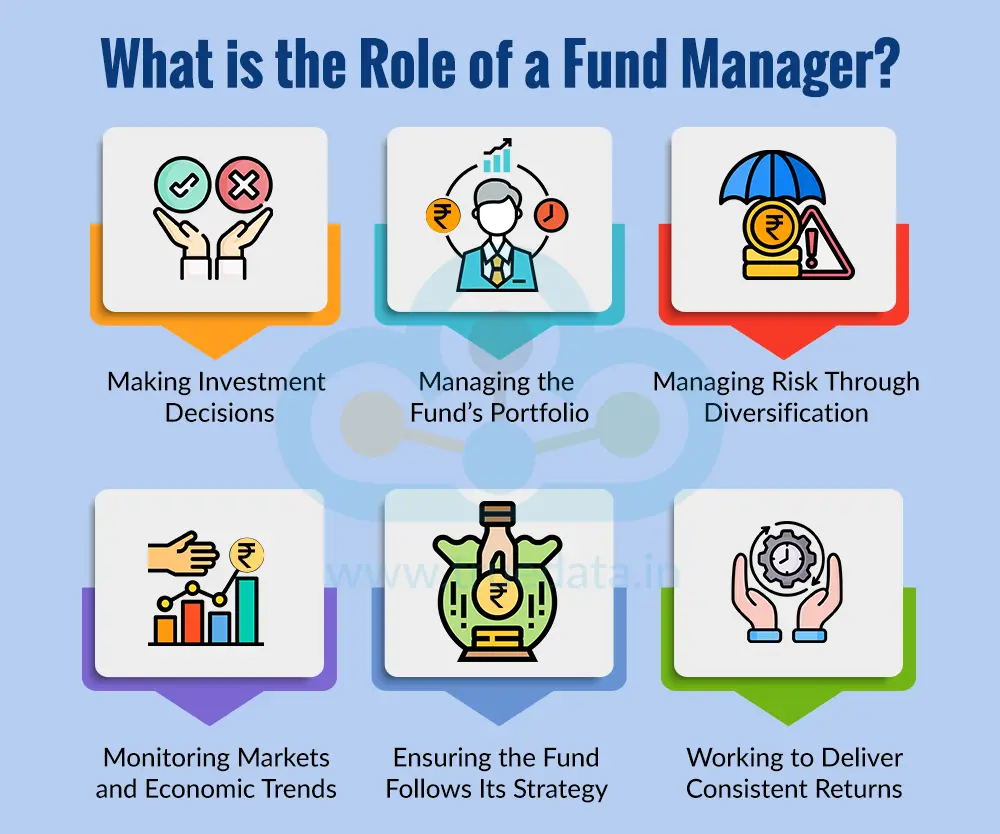
What is the Role of a Fund Manager?

What is the Role of a Fund Manager

The primary role of the fund manager is to ensure the fund objectives are met and to maximise the return for investors. The impact and the scope of the fund manager’s role are explained below. 

  • Making Investment Decisions - One of the most important responsibilities of a fund manager is deciding where to invest the fund’s money. This could include stocks, bonds, money market instruments, or other securities. The fund manager studies companies, industries, and market trends to identify investment opportunities. Based on this research, they decide which securities to buy, hold, or sell so that the portfolio aligns with the fund’s goals, such as growth, income, or stability.

  • Managing the Fund’s Portfolio - A fund manager also oversees the overall portfolio of the fund. This involves selecting a mix of investments that work well together and regularly reviewing them. As market conditions change, the fund manager may adjust the portfolio by increasing or reducing exposure to certain sectors, companies, or asset classes to maintain the desired balance.

  • Managing Risk Through Diversification - Risk management is another key part of a fund manager’s role. Instead of investing all the money in a single company or sector, the fund manager spreads investments across different securities. This diversification helps reduce the impact if one investment performs poorly, thereby protecting investors from excessive risk.

  • Monitoring Markets and Economic Trends - Financial markets are constantly changing, so fund managers must keep a close watch on economic developments, interest rates, government policies, and global events. These factors can influence the performance of investments. By staying informed and analysing market data, the fund manager can make timely decisions to protect and grow the fund’s value.

  • Ensuring the Fund Follows Its Strategy - Every mutual fund has a defined investment objective and strategy mentioned in its scheme documents. The fund manager ensures that the investments remain aligned with these guidelines. They also make sure the fund complies with regulatory requirements while maintaining transparency and discipline in managing investors’ money.

  • Working to Deliver Consistent Returns - Ultimately, the fund manager’s aim is to generate reasonable returns for investors over the long term. While short-term market movements may affect performance, a skilled fund manager focuses on building a strong portfolio that can deliver consistent results while managing risk effectively.

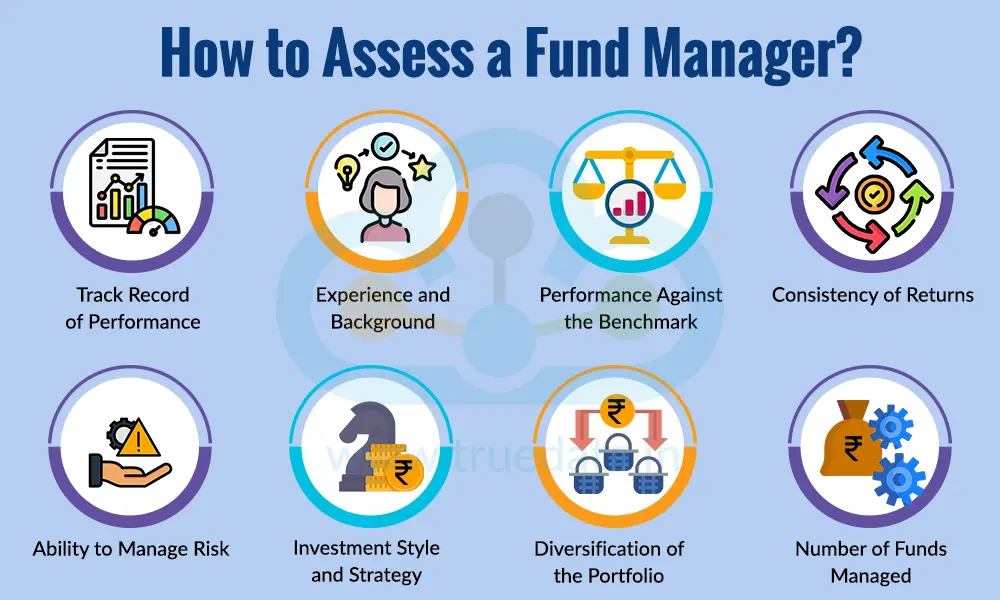
How to Assess a Fund Manager?

How to Assess a Fund Manager

Fund managers are one of the many contributing factors in a fund’s performance. Thus, evaluating a fund manager’s capabilities and their impact on the fund’s performance is crucial for investors. A few factors that can help assess a fund manager’s skills are explained below. 

  • Track Record of Performance - Investors should review how the fund has performed under the fund manager over several years. Consistent performance across different market conditions can indicate strong management.

  • Experience and Background - Investors should look at the fund manager’s experience in managing funds and their years in the financial markets. Greater experience often helps in handling market volatility better.

  • Performance Against the Benchmark - Investors can compare the fund’s returns with its benchmark index. If the fund regularly performs better than the benchmark, it may reflect effective decision-making by the fund manager.

  • Consistency of Returns - Investors should check whether the fund has delivered stable returns over longer periods, such as three to five years, rather than focusing only on short-term performance.

  • Ability to Manage Risk - Investors can observe how the fund performs during market downturns. A skilled fund manager usually aims to limit losses when markets fall.

  • Investment Style and Strategy - Investors should understand the fund manager’s investment approach and see whether it remains consistent with the fund’s stated objectives.

  • Diversification of the Portfolio - Investors can check whether the fund’s investments are spread across different sectors and companies. Proper diversification can help reduce risk.

  • Number of Funds Managed - Investors may also review how many funds the manager handles. Managing too many funds at the same time may affect the manager’s ability to focus on each fund properly.

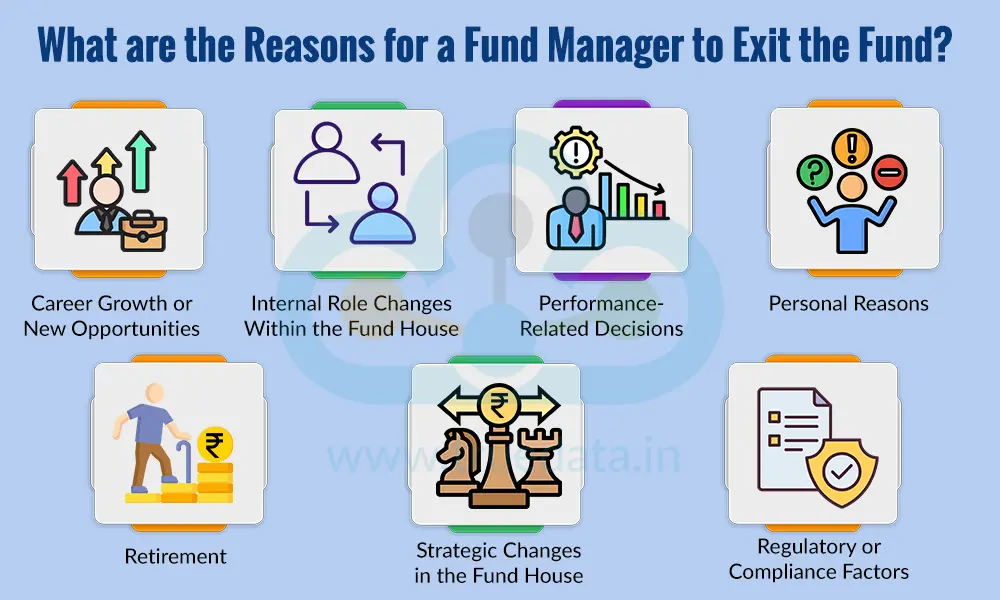
What are the Reasons for a Fund Manager to Exit the Fund?

What are the Reasons for a Fund Manager to Exit the Fund

A change in a fund manager can sometimes make investors uneasy. However, such changes are fairly common in the mutual fund industry and can happen for several reasons. In many cases, the exit may be part of normal career movements or organisational decisions rather than a sign of problems with the fund.

  • Career Growth or New Opportunities - One common reason for a fund manager’s exit is career advancement. The manager may move to another asset management company, take up a senior role, or manage a different fund that aligns better with their expertise. Just like professionals in other industries, fund managers may switch jobs to explore better opportunities or take on greater responsibilities.

  • Internal Role Changes Within the Fund House - Sometimes, the fund manager may not actually leave the company but may move to another role within the same asset management company. For example, they may be assigned to manage a different fund, oversee multiple funds as a senior manager, or take on a leadership position in the investment team. In such cases, the change is often part of the organisation’s internal restructuring.

  • Performance-Related Decisions - In certain situations, a fund house may decide to replace a fund manager if the fund has been underperforming for a long period compared to its benchmark or peer funds. The company may believe that a change in leadership and investment approach could help improve the fund’s performance.

  • Personal Reasons - A fund manager may also exit due to personal reasons. These may include health issues, family commitments, relocation, or the desire to take a break from work. Such changes are part of normal professional life and may not necessarily reflect anything about the fund’s performance.

  • Retirement - Senior fund managers may step down when they reach retirement or decide to slow down their professional commitments. In such cases, the fund house usually plans the transition in advance and appoints a new manager to ensure continuity in the fund’s management.

  • Strategic Changes in the Fund House - Sometimes a fund house may change its investment strategy or restructure its team. This may lead to the reassignment or replacement of fund managers to align with the new strategy or management approach.

  • Regulatory or Compliance Factors - In rare cases, regulatory requirements or compliance issues may lead to a change in fund management. Asset management companies must follow strict rules and governance standards, and any issues in these areas may lead to organisational changes, including replacing a fund manager.

Can a Fund Manager’s Exit Affect the Fund Performance?

Can a Fund Manager’s Exit Affect the Fund Performance

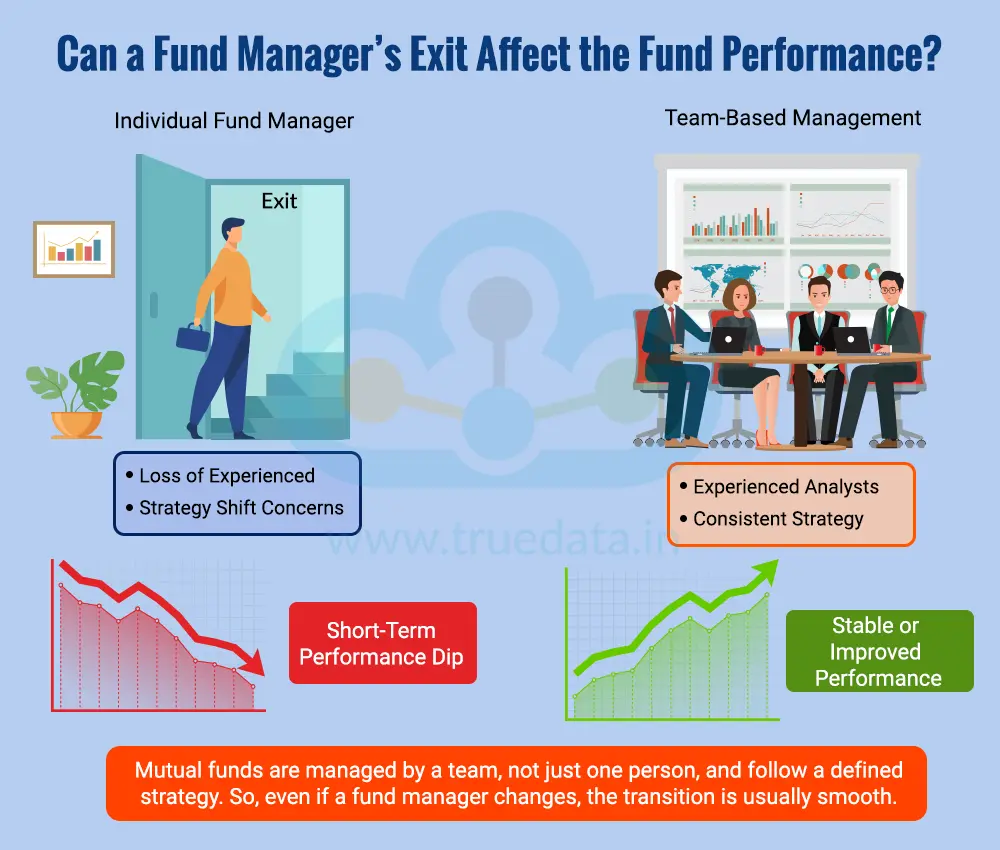
A fund manager’s exit can sometimes affect a mutual fund’s performance, but the impact is not always significant. The fund manager plays an important role in selecting investments and managing the portfolio, so a change in leadership may lead to some differences in investment decisions or strategy. If the outgoing manager had a strong track record and a unique investment style, investors may initially feel uncertain about the fund’s future performance. However, mutual funds are usually managed by a team of analysts and investment professionals, and the fund’s strategy is often defined by the asset management company rather than one individual. Because of this, the transition to a new fund manager may be smooth, especially if the new manager follows the same investment approach. Therefore, while a fund manager’s exit can influence performance in some cases, it does not automatically mean that the fund will perform poorly in the future.

What should Investors Do?

What should Investors Do

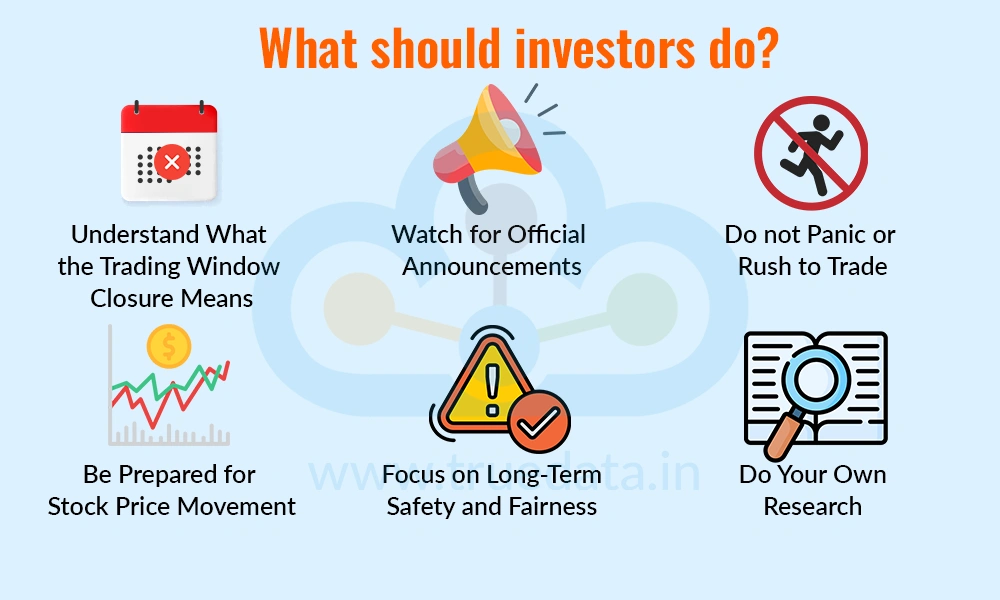
When a fund manager exits a mutual fund, investors do not always need to react immediately or exit the investment. Instead, they should first understand the reason for the change and evaluate the background of the new fund manager. Looking at the new manager’s experience, track record, and investment style can help investors judge whether the fund is likely to continue following the same strategy. It is also useful to assess whether the fund house has a strong investment team and a consistent process, as many mutual funds rely on a team-based approach rather than on a single individual.

Investors should also review the fund’s long-term performance, portfolio strategy, and the fund’s ability to handle similar transitions in the past. If the fund continues to follow its stated objective and remains consistent with the investor’s financial goals and risk tolerance, there may be no need to make quick changes. However, if there are major shifts in strategy, asset allocation, risk management, or a persistent decline in performance after the change, investors may consider reassessing their investment. Therefore, taking a calm and informed approach can help investors make better decisions rather than reacting to the change alone.

Conclusion

A fund manager’s exit can happen for many reasons, and it does not always mean that the fund will perform poorly in the future. Rather than reacting in haste, investors may benefit from reviewing the fund carefully and tracking its performance over time to understand whether the change in management affects the fund. This approach can help investors avoid making premature exit decisions and allow them to explore other investment opportunities if needed.  

This article explores the possibility of change in fund managers and its impact on the fund and ultimately your portfolio. Let us know your thoughts on the topic or if you need further information on the same, and we will address it soon.

Till then, Happy Reading!


Read More: What is loss aversion? Is it bad for your portfolio?

Frequently Asked Questions

Yes, some fund types can be more sensitive to manager changes. Actively managed funds, such as small-cap or thematic funds, often depend more on the manager’s decisions, while index funds or passive funds are usually less affected because they simply track a market index.

Investors should also look at the fund’s investment strategy, risk level, and long-term performance compared to its benchmark and similar funds. It is also helpful to consider the strength of the fund house and the experience of the overall investment team.

Yes, this can sometimes happen. Even a successful manager may take time to understand the fund’s portfolio and strategy, so performance may fluctuate in the short term while the new manager settles into the role.

Yes, fund houses usually disclose important internal changes that may affect a fund, including a change in the fund manager. As per rules from the Securities and Exchange Board of India, Asset Management Companies (AMCs) must inform investors about such changes through updates to scheme documents, addendums, and official notices so that investors remain aware of key developments in the fund.

Yes, investors may notice improvement if the fund starts performing better than its benchmark or peer funds and maintains more consistent returns over time. SEBI now requires mutual funds to disclose additional performance metrics, such as risk-adjusted return measures like the Information Ratio, which can help investors see whether the new manager is delivering better results while managing risk.
Marisha Bhatt

Marisha Bhatt is a financial content writer @TrueData.

She writes with the sole aim of simplifying complex financial concepts and jargon while attempting to clarify technical and fundamental analysis concepts of the stock markets. The ultimate goal is to spread vital knowledge and benefit the maximum audience. Her Chartered Accountant background acts as the knowledge base to help clarify crucial concepts and create a sound investment portfolio.

2 Comments
V
vikas
· April 09, 2026

Excellent blog

·

Related Articles

SEE ALL
Mutual Funds
Mutual Funds
How to Complain About Mutual Funds?

Mutual fund investments have simplified greatly with just a tap on your smartpho...

Mutual Funds
Mutual Funds
How Mutual Fund Managers Use Corporate Financial Data?

Corporate financial data is the backbone ofsmart investing. It helps investors d...

Investing / Trading
Investing / Trading
Stocks or mutual funds? Which is better?

Introduction For the longest time, investment in stock markets was thought to b...