Mutual Funds

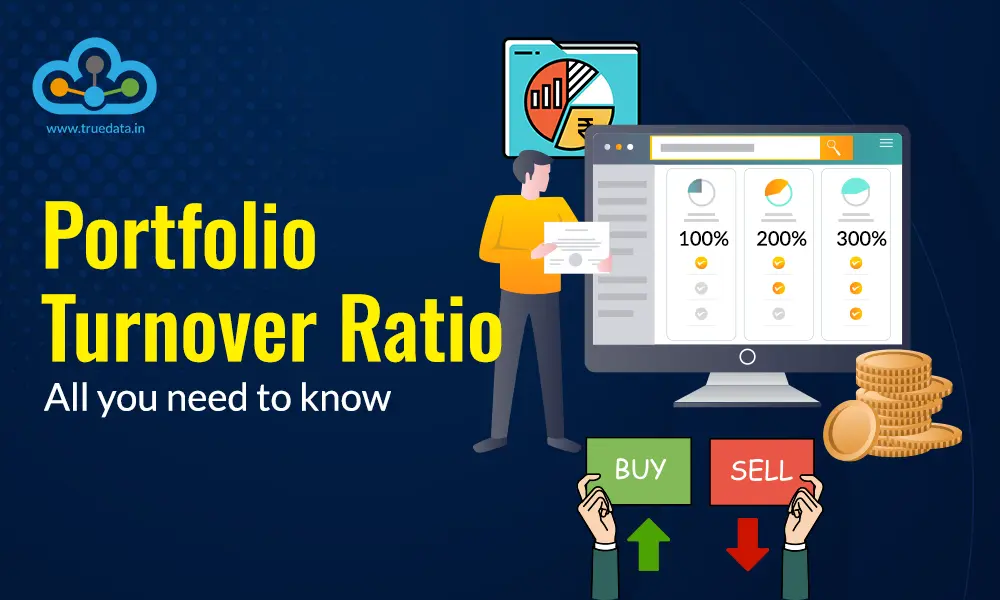
Portfolio Turnover Ratio - All you need to know

Marisha Bhatt · 31 Mar 2026 · 7 mins read · 0 Comments

portfolio-turnover-ratio-all-you-need-to-know

Fund managers are constantly buying and selling securities to keep a fund aligned with its goals and to aim for better returns. But have you ever wondered how often these changes actually happen? That is where the portfolio turnover ratio comes in. This simple yet powerful metric reveals how actively a fund is managed, and it can have a direct impact on your returns. Curious to understand what it really means and why it matters to you as an investor? Read on to know all about it.

What is the Portfolio Turnover Ratio?

What is the Portfolio Turnover Ratio

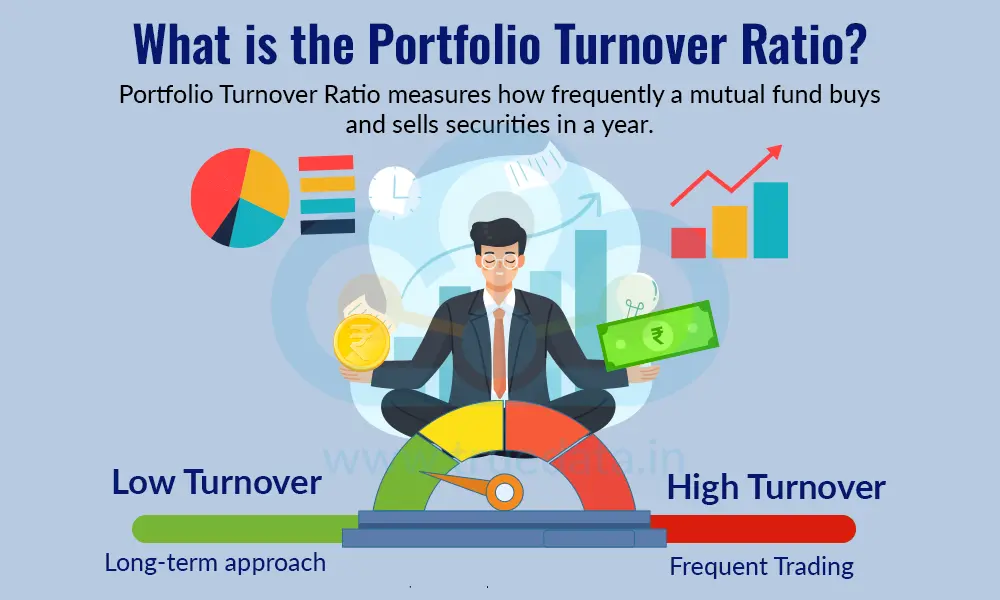
Portfolio Turnover Ratio measures how often a mutual fund buys and sells securities in a year. In simple terms, it shows how actively the fund manager is changing the fund's investments. Usually, it is expressed as a percentage. For example, if a fund has a portfolio turnover ratio of 100%, it means the entire portfolio was bought and sold once during the year. A higher turnover ratio indicates more frequent trading, while a lower ratio suggests the fund manager takes a steadier, long-term approach. This number is significant as higher trading can lead to increased transaction costs and taxes, which may affect overall returns. Therefore, the portfolio turnover ratio helps investors understand the fund’s investment style and its potential impact on their returns.

How to Calculate Portfolio Turnover Ratio?

How to Calculate Portfolio Turnover Ratio

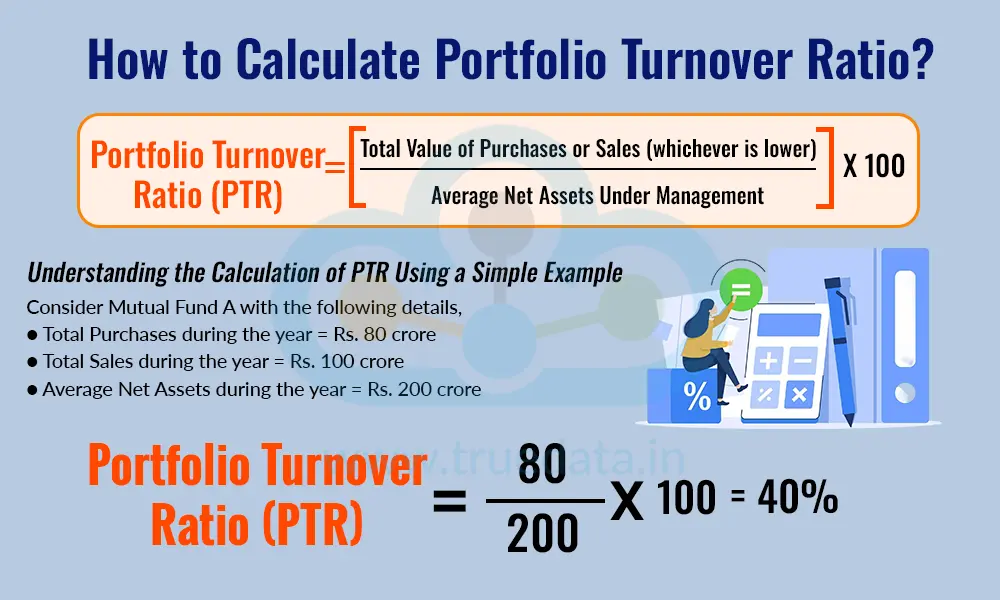
The Portfolio Turnover Ratio measures how much of a fund’s portfolio has been bought or sold during a year. It helps investors understand how actively the fund manager is trading. The formula to calculate the portfolio turnover ratio is,

Portfolio Turnover Ratio (PTR) = [Total Value of Purchases or Sales (whichever is lower) / Average Net Assets Under Management] * 100

Understanding the Calculation of PTR Using a Simple Example

Consider Mutual Fund A with the following details,

  • Total Purchases during the year = Rs. 80 crore

  • Total Sales during the year = Rs. 100 crore

  • Average Net Assets during the year = Rs. 200 crore

The PTR for the fund is calculated as follows.

Using the lower of purchases or sales during the year, i.e., Rs. 80 crore

Portfolio Turnover Ratio (PTR) = 80 / 200 * 100 = 40%

Thus, the fund manager changed or replaced 40% of the fund’s portfolio, i.e., less than half of the investments during the year. If the ratio was 100%, it would mean the entire portfolio was bought and sold once during the year. On the other hand, if it was 20%, it would mean very limited trading activity. 

How to Interpret Portfolio Turnover Ratio?

How to Interpret Portfolio Turnover Ratio

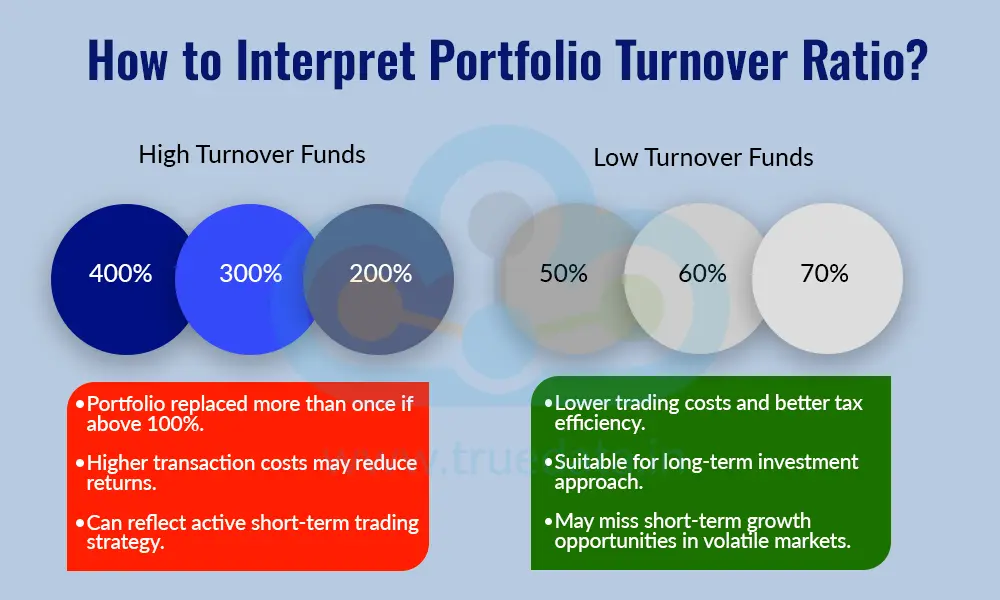
A high portfolio turnover ratio means the fund manager is buying and selling securities frequently during the year. Conversely, a low portfolio turnover ratio means the fund manager follows a more stable and long-term investment approach. 

  • If the turnover ratio is above 100%, it means the fund’s entire portfolio has been replaced more than once in a year.

  • A high turnover ratio can increase transaction costs, which may reduce your overall returns. However, it is not automatically bad, as it may reflect an active strategy to capture short-term market opportunities.

  • In equity funds, high turnover may also result in more short-term capital gains, which are taxed at a higher rate in India.

  • A low turnover ratio may indicate lower trading costs and better tax efficiency, especially for long-term investors. However, it is not always better either, as the fund may miss quick growth opportunities in changing markets.

Thus, the turnover ratio should always be compared with other funds in the same category for a fair understanding. Furthermore, investors should consider the turnover ratio along with past performance, expense ratio, and the fund’s investment objective before making any decision.

Why is the Portfolio Turnover Ratio Important?

Why is the Portfolio Turnover Ratio Important

Portfolio Turnover Ratio is an essential metric in evaluating, and is part of the mutual fund factsheet. The importance of this ratio and how it can impact investors and their portfolios is explained below.

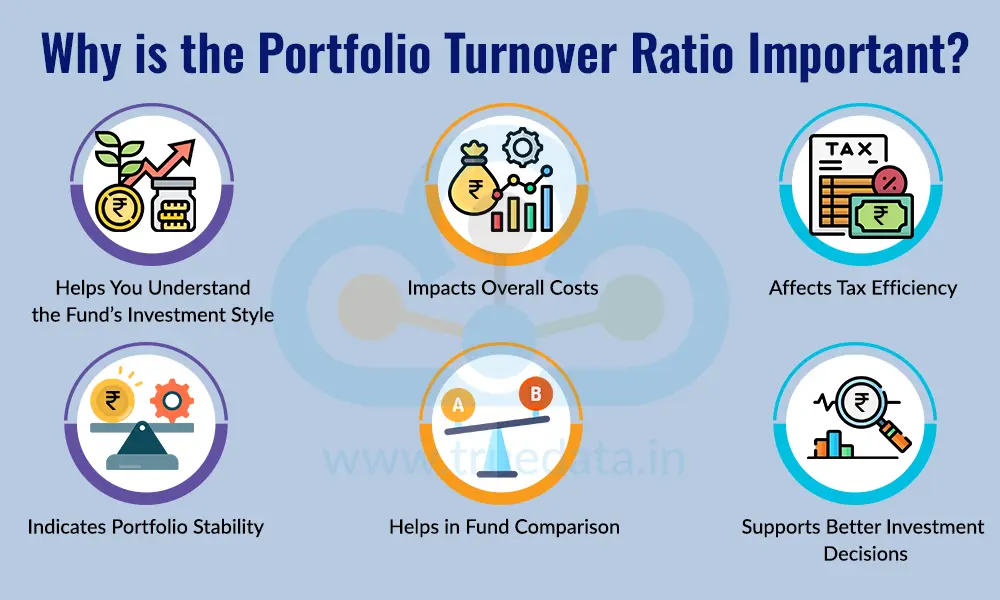
  • Helps You Understand the Fund’s Investment Style - The portfolio turnover ratio shows whether a fund manager uses an active trading strategy or a long-term buy-and-hold approach. A high turnover ratio indicates the manager often changes stocks or bonds to take advantage of short-term opportunities. A low turnover ratio indicates that the manager prefers to hold investments longer. This helps investors choose a fund that fits their investment style and comfort level. 

  • Impacts Overall Costs - Frequent buying and selling of securities raises transaction costs, including brokerage fees, stamp duty, and other charges. These costs come from the fund’s assets, which indirectly affect investors’ returns. Thus, a higher turnover ratio might lead to higher expenses, even if you do not see them directly.

  • Affects Tax Efficiency - Short-term capital gains in India are taxed at a higher rate than long-term gains. If a fund has a high turnover ratio, it may generate more short-term gains, increasing your tax liability. Conversely, a lower turnover ratio may improve tax efficiency for long-term investors.

  • Indicates Portfolio Stability - A low turnover ratio usually means the portfolio is stable and does not change often. This can give investors more confidence, especially if they prefer steady, consistent investment strategies. A very high turnover ratio might suggest aggressive management, which could imply higher risk. 

  • Helps in Fund Comparison - The portfolio turnover ratio is useful for comparing similar funds within the same category. For instance, if two equity funds have similar returns but one has a significantly higher turnover, it may involve more costs and taxes. This ratio provides extra insight beyond just looking at returns. 

  • Supports Better Investment Decisions - Investors can make more informed choices by understanding this ratio rather than focusing on past performance. It helps investors see how returns are generated, i.e., whether through frequent trading or long-term investing, and if that approach aligns with your financial goals.

What are the Limitations of Portfolio Turnover Ratio?

What are the Limitations of Portfolio Turnover Ratio

While the Portfolio Turnover Ratio is important for investors to analyse and select funds that align with their goals, this ratio is not free from a few limitations. These limitations are explained below.

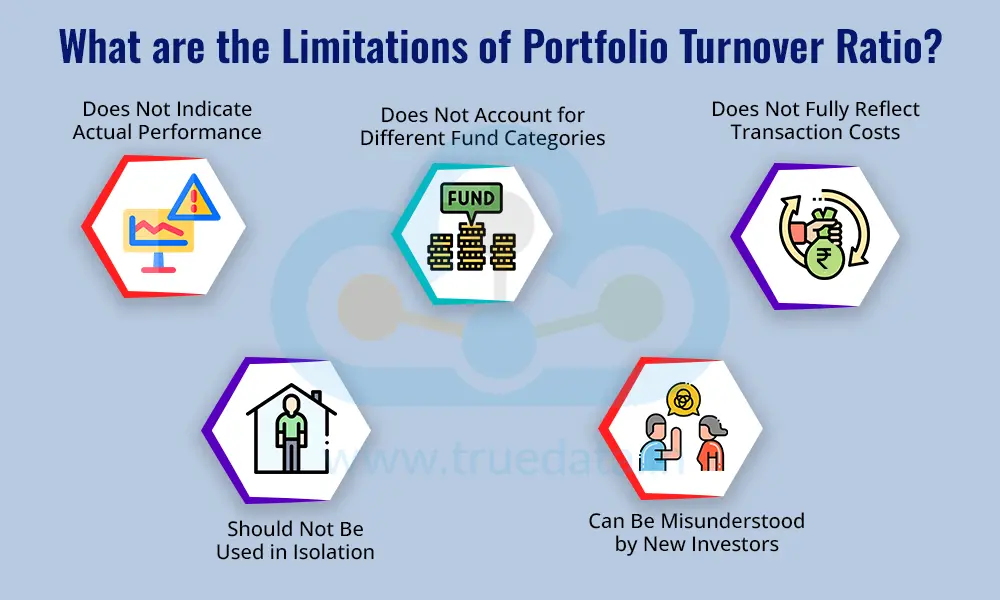
  • Does Not Indicate Actual Performance - The portfolio turnover ratio does not show whether the fund is performing well or poorly. It only tells investors how frequently the fund manager buys and sells securities, not whether those decisions are generating good returns.

  • Does Not Account for Different Fund Categories - Different types of funds, such as equity, debt, and index funds, naturally have different turnover levels. Comparing their portfolio turnover ratios without considering their investment style can lead to wrong conclusions.

  • Does Not Fully Reflect Transaction Costs - A higher turnover ratio usually means more trading activity, which increases brokerage, taxes, and other charges. However, the ratio itself does not clearly show how much these costs are affecting the final returns.

  • Should Not Be Used in Isolation - The portfolio turnover ratio is only one metric and should not be the only factor in your decision-making. Investors should also consider the expense ratio, past performance, risk level, and the fund manager’s strategy before investing.

  • Can Be Misunderstood by New Investors - Some beginners may assume that a higher turnover ratio means better and more active management. In reality, it may simply result in higher costs and taxes without guaranteeing better returns.

Conclusion

The portfolio turnover ratio is a useful measure that helps investors understand how actively a mutual fund is managed. It shows how often the fund manager buys and sells securities, which can affect costs, taxes, and overall returns. However, it does not indicate performance, risk level, or the quality of investments on its own. Thus, this ratio should not be used on its own for an effective investment strategy and to make well-informed decisions.

This article covers a crucial metric in the mutual fund factsheet and its importance in decision-making. Let us know your thoughts on the topic, or if you need further information, and we will address it soon. 

Till then, Happy Reading!


Read More: SEBI Categorisation and Rationalisation of Fund Scheme

Frequently Asked Questions

A portfolio turnover ratio above 100 is generally considered high, as it means the fund’s entire portfolio has been replaced more than once in a year. This usually indicates very active trading, which may lead to higher costs and taxes.

No, index funds usually have a low portfolio turnover ratio because they simply track a market index and do not actively buy and sell securities. Thus, changes happen mainly when the index composition changes, so trading activity is limited.

Yes, it is possible in some cases. A fund may make several small trades during the year, but if the overall value of securities bought and sold is low compared to its average assets, the portfolio turnover ratio can still appear low.

Yes, turnover can impact performance. Very high turnover may increase transaction costs and taxes, which can reduce returns, while well-timed active trading may sometimes improve performance.

Portfolio turnover ratio is usually reported annually in a mutual fund’s factsheet and annual report. Some fund houses may also mention it in half-yearly disclosures for investors.
Marisha Bhatt

Marisha Bhatt is a financial content writer @TrueData.

She writes with the sole aim of simplifying complex financial concepts and jargon while attempting to clarify technical and fundamental analysis concepts of the stock markets. The ultimate goal is to spread vital knowledge and benefit the maximum audience. Her Chartered Accountant background acts as the knowledge base to help clarify crucial concepts and create a sound investment portfolio.

0 Comments

Related Articles

SEE ALL
Mutual Funds
Mutual Funds
How to Complain About Mutual Funds?

Mutual fund investments have simplified greatly with just a tap on your smartpho...

Investing / Trading
Investing / Trading
Stocks or mutual funds? Which is better?

Introduction For the longest time, investment in stock markets was thought to b...

Mutual Funds
Mutual Funds
PE Ratio in Mutual Funds

Every investor knows that the stepping stones to a good investment in thestock m...