Creating a successful mutual fund portfolio is not just about buying the right fund. It is also about knowing when to exit it. A smart exit strategy is not about an emotional reaction to short-term market movements. Rather, it requires thoughtful decisions based on your financial goals, risk appetite, fund performance, and changing life priorities. This is essential for wealth protection, improving portfolio performance, and keeping investments aligned with long-term plans. Check out this blog where we explore the key signs that may indicate it is time to exit or switch a mutual fund, common mistakes investors should avoid, and practical strategies to make informed investment decisions with confidence.

Selling a mutual fund should not be based on emotions or short-term market noise. Instead, it should happen when there is a valid financial reason connected to your goals, risk tolerance, or the performance of the fund. Here are some common situations when investors may consider selling their mutual funds.
One of the most common and sensible reasons to sell mutual funds is when your financial goal has been reached. Mutual funds are usually invested with specific objectives in mind, such as buying a house, funding higher education, planning a wedding, or building retirement savings. For example, if investment is made in an equity mutual fund for a child’s college education and the goal is only a year away, it may be wise to gradually redeem the investment and move the money to safer options like liquid funds or fixed deposits. This helps protect the accumulated wealth from sudden market fluctuations close to the goal date. Selling investments after achieving the intended purpose ensures that financial planning remains disciplined and goal-oriented.
Every mutual fund may go through short periods of weak performance as markets naturally move in cycles markets naturally move in cycles. However, if a fund continuously underperforms its benchmark and peer funds over several years, it may be a warning sign. Investors should review whether the fund manager’s strategy is still effective and whether the fund continues to deliver value compared to similar funds in the same category. If poor performance continues for a long time despite favourable market conditions, switching to a better-performing fund could be a smarter decision. At the same time, investors should avoid making decisions based only on a few months of weak returns, as short-term volatility is normal in equity investing.
Financial needs and priorities can change over time, warranting a change in financial planning. Marriage, parenthood, career changes, business plans, or retirement may require adjustments in investment strategy. For example, a young investor may initially prefer aggressive equity funds for long-term wealth creation. However, as retirement nears, reducing exposure to high-risk investments and shifting towards debt-oriented or balanced funds may become more suitable. Similarly, if investment goals change or there is an immediate liquidity requirement for an emergency, selling some mutual fund investments may help manage your finances better.
Sometimes the mutual fund itself undergoes significant changes that may no longer suit an investor’s needs. This could include any of the following,
A change in the fund manager
A shift in investment strategy
Merger with another scheme
Increase in risk exposure
Change in the fund’s objective
Therefore, it is important to carefully read fund house updates and scheme-related communications to understand whether the fund still matches the financial goals and risk appetite.
Market movements can sometimes increase the proportion of one asset class in a portfolio beyond the desired allocation. For example, if equity markets rise sharply, the portfolio's equity investments may become much larger than originally planned, thereby increasing overall portfolio risk. In such cases, investors may sell a portion of their equity mutual funds and rebalance the portfolio by investing in debt funds or other safer assets. Rebalancing helps maintain the intended balance between risk and return while keeping investments aligned with long-term financial goals. Regular portfolio review and rebalancing can also help investors avoid excessive exposure to market volatility.
Taxation is another important factor when deciding when to sell mutual funds. Selling investments without understanding tax implications may reduce actual returns. Some examples of tax treatment in mutual funds are,
Equity mutual funds held for more than one year qualify for long-term capital gains taxation.
Debt fund taxation rules differ depending on the purchase date, holding period and applicable regulations.
Investors may sometimes delay or stagger redemptions to optimise taxes and improve post-tax returns. Thus, consulting a financial advisor or tax expert can help make more tax-efficient decisions.

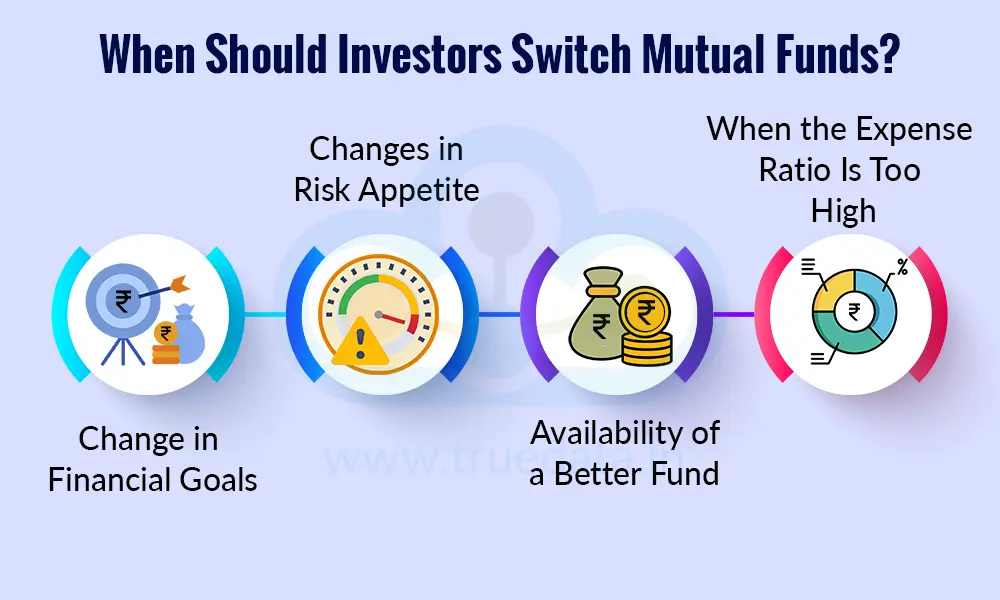
Switching mutual funds simply means moving investments from one scheme to another, either within the same fund house or across different fund houses. However, this decision should not be made based on short-term market movements or temporary fear. A fund switch should always be driven by logical financial reasons and long-term investment goals. A few situations where investors can switch mutual funds are explained below.
Investment goals often change as life progresses. A person investing aggressively in their twenties may prefer high-growth equity funds, while someone nearing retirement may need safer and more stable investments. For instance, if an investor’s original goal was long-term wealth creation, but now they need funds for a house purchase or a child’s education within a few years, shifting from high-risk equity funds to debt or hybrid funds may be a better choice. Switching mutual funds in line with changing goals helps maintain the right balance between risk and financial security.
Risk tolerance is not constant throughout an investor’s life. During certain life stages or economic conditions, investors may become more conservative or more comfortable taking risks. For example,
A young salaried investor may initially choose small-cap or mid-cap funds for higher growth potential.
After marriage, family responsibilities, or approaching retirement, the same investor may prefer balanced or debt-oriented funds for greater stability.
In such situations, switching to funds that better match the updated risk appetite can help reduce stress and improve financial confidence during market volatility.
The mutual fund industry in India constantly evolves, and newer funds or better-performing alternatives may become available over time. Investors can compare funds based on the following parameters to consider switching after proper research.
Better long-term consistency
Lower expense ratio
Stronger fund management
Better portfolio quality
Improved risk-adjusted returns
However, switching should not happen frequently just based on a slightly better performance of another fund for a short period, as long-term consistency and suitability matter more than temporary rankings.
The expense ratio is the fee charged by the fund house for managing the mutual fund. Higher expenses can reduce overall returns over the long term, especially if the fund is not delivering strong performance. If investors find similar funds offering better returns at lower costs, switching may help improve net returns over time. This is particularly important for long-term investors as even small differences in fees can significantly affect wealth creation through compounding.

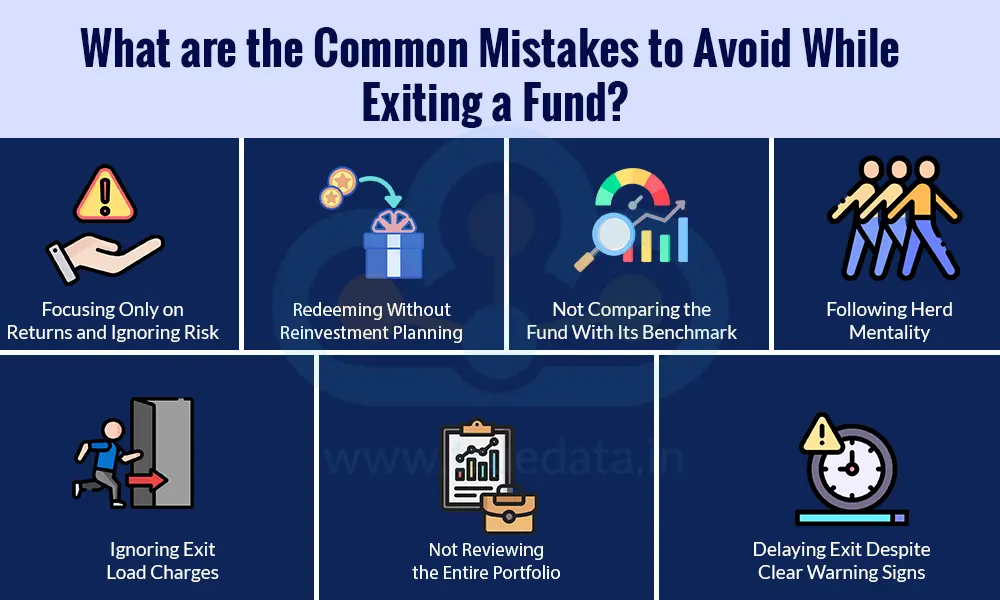
Exiting a mutual fund is an important financial decision that should be taken carefully and not emotionally. Avoiding common mistakes while exiting funds can help protect long-term wealth and improve overall investment outcomes. Some of the common mistakes to avoid include,
Focusing Only on Returns and Ignoring Risk - Higher returns often come with higher risk. Some investors exit safe funds to chase aggressive returns elsewhere or redeem balanced investments during volatile periods. A fund should always match the investor’s risk tolerance, age, financial goals, and investment horizon. Decisions based only on returns may lead to unsuitable investments later.
Redeeming Without Reinvestment Planning - Another major mistake is withdrawing money from a fund without deciding where the money will go next. Idle money kept in savings accounts for long periods may lose value due to inflation. Before exiting a mutual fund, investors should have a clear plan for reinvestment, emergency needs, or financial goals.
Not Comparing the Fund With Its Benchmark - A fund may appear to be underperforming, but the overall market or benchmark may also be weak during that period. Investors often exit without checking whether the fund manager has actually performed poorly compared to similar funds or benchmark indices. A proper comparison helps investors understand whether the underperformance is temporary or a genuine concern.
Following Herd Mentality - Investors sometimes exit funds simply due to following others, i.e., if their friends, relatives, social media influencers, or market experts are doing so. Every investor has different financial goals, risk tolerance, and investment horizon. A decision suitable for someone else may not be right for another investor. Mutual fund decisions should always be based on personal financial requirements rather than market rumours or crowd behaviour.
Ignoring Exit Load Charges - Many mutual funds charge an exit load if units are redeemed before a specific holding period. Some investors redeem their investments without checking these charges and end up losing part of their returns. Before exiting a fund, investors should always verify whether an exit load applies and calculate how much money will actually be received after deductions.
Not Reviewing the Entire Portfolio - Exiting a single fund without checking the overall portfolio allocation can create an imbalance in investments. For example, redeeming a large-cap equity fund may increase dependence on risky small-cap funds. Investors should review the complete portfolio before exiting any scheme to ensure proper diversification remains intact.
Delaying Exit Despite Clear Warning Signs - While emotional exits are harmful, delaying exits despite serious issues can also be a mistake. Investors should carefully monitor warning signs such as,
Consistent underperformance over several years
Significant change in investment strategy
Poor risk management
Repeated fund manager changes
High portfolio concentration
Ignoring such factors for too long may negatively affect long-term returns.

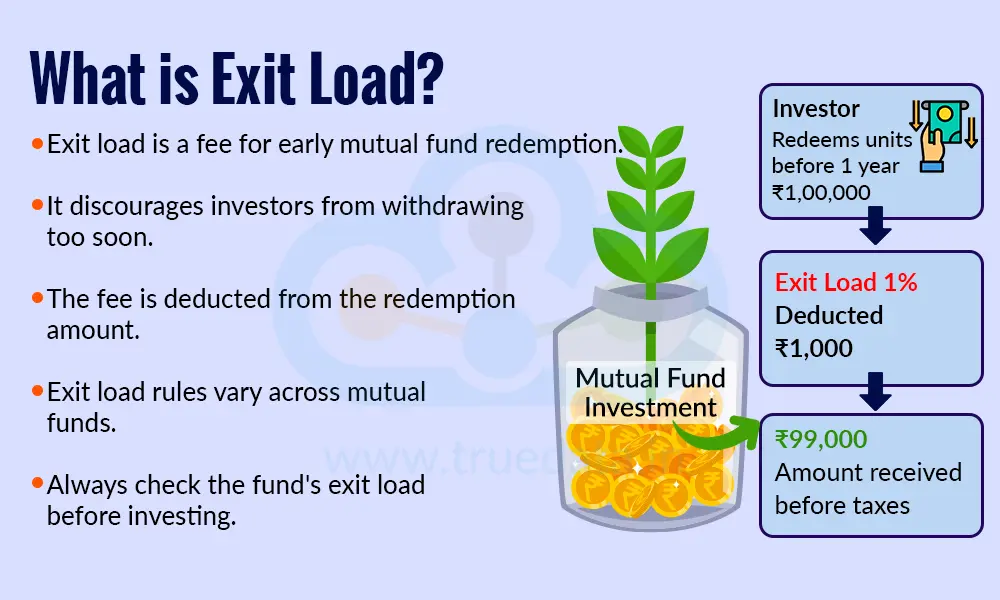
Exit load is a fee charged by a mutual fund company when an investor redeems or withdraws units from a mutual fund before a specified time period. It is mainly used to discourage investors from exiting the fund too quickly and to protect long-term investors from sudden large withdrawals. For example, if a mutual fund has an exit load of 1% for withdrawals made within one year and an investor redeems units worth Rs. 1,00,000 before completing one year, Rs. 1,000 may be deducted as the exit load, and the investor will receive Rs. 99,000 before taxes. Different mutual funds have different exit load rules depending on the fund category, investment strategy, and holding period. Investors should always check the Scheme Information Document (SID) or fund factsheet carefully before investing so they understand the applicable exit load conditions and avoid unnecessary deductions from their returns.
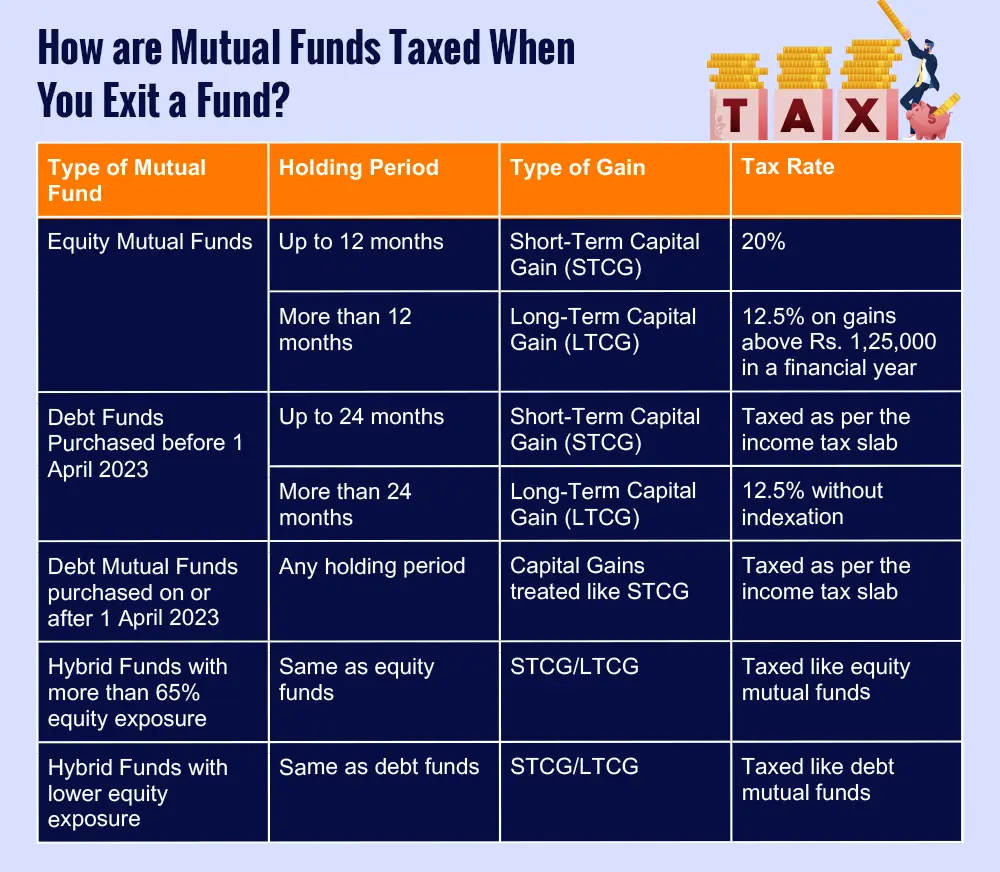
When investors redeem or sell mutual fund units, the profit earned is called capital gains. The tax payable depends on factors such as
Type of mutual fund
Holding period
Date of investment
Amount of gains
The taxation rules for mutual funds have been revised after the changes introduced in the Union Budget 2024 and related amendments. The taxation of mutual funds, subject to all the changes are tabled below.

Exiting or switching a mutual fund should always be a thoughtful financial decision rather than an emotional reaction to short-term market movements. Selling or switching funds may become necessary when a fund consistently underperforms, no longer matches investment objectives, or when personal financial needs change. At such times, investors should focus on a well-planned exit strategy that not only protects investments from unnecessary losses and taxes but also supports long-term wealth creation and better financial stability.
We have explored the importance of timely exit from a fund and the approach towards it in this blog. Let us know your thoughts on the topic or if you need further information on the same, and we will address them soon.
Till then, Happy Reading!
Read More: Top Mutual Fund Strategies for Maximising Your Investment Returns
Mutual fund investments have simplified greatly with just a tap on your smartpho...
Remember the first time you tried riding a bicycle? The thrill of moving forward...
Introduction For the longest time, investment in stock markets was thought to b...