Investing / Trading

Understanding Asset Allocation and Why It Matters

Marisha Bhatt · 12 May 2026 · 12 mins read · 0 Comments

understand-asset-allocation-and-why-its-matter

When you begin your investing journey, one of the biggest questions is ‘how to build a successful portfolio?’ The answer is not just about picking good stocks or funds. It starts with dividing your money across different assets to balance risk and returns. There is a technical term to it, ‘asset allocation’. Have you heard about it? Think of it as the foundation of your portfolio, where risk and returns are based on your goals. So what is the right mix, and how to achieve it? Get answers to this question and more as we decode the meaning and importance of asset allocation in long-term investing success.

What is Asset Allocation?

What is Asset Allocation

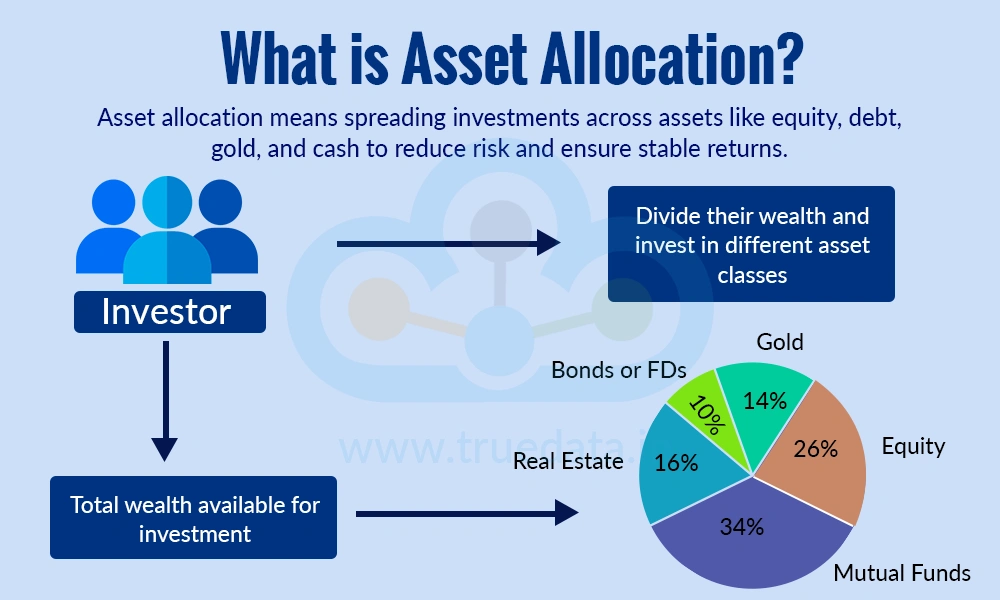
Asset allocation refers to dividing the investment money across different asset types, such as stocks (equity), fixed income (like bonds or Fixed Deposits), gold, and sometimes cash. This helps spread the overall portfolio risk and achieve more stable returns over time, rather than putting all money in one place. For example, if stock markets fall, investments in bonds or gold can help balance the loss. The right asset allocation depends on personal financial goals, time horizon, and risk appetite. A young investor may have a higher risk appetite and aim for aggressive returns, thereby investing more in equities. On the other hand, an investor who is close to retirement or is risk-averse may prefer safer options such as debt, fixed deposits or hybrid mutual funds. Thus, asset allocation is essentially creating the right mix of investments to grow personal wealth while protecting it from severe losses.

Why is Asset Allocation Important?

The importance of asset allocation in creating a successful portfolio is explained hereunder, 

Why is Asset Allocation Important

Helps Balance Risk and Return

Asset allocation plays a crucial role in balancing risk and return in an investor’s portfolio. Equity investments such as stocks and equity mutual funds can offer higher returns over the long term but are subject to market volatility. On the other hand, fixed income options like Fixed Deposits (FDs), Public Provident Fund (PPF), and debt mutual funds provide more stability but relatively lower returns. By allocating funds across these asset classes, an investor can reduce overall portfolio risk while still aiming for steady growth.

Protects the Portfolio During Market Volatility

Financial markets can be influenced by factors like inflation, interest rate changes, global events, and government policies. During periods when equity markets fall, assets like gold or debt instruments often perform better. A well-diversified asset allocation helps cushion the impact of such market fluctuations. This ensures that the investor’s portfolio does not experience extreme losses during downturns and remains more stable over time.

Aligns Investments with Financial Goals

Every investor has different financial goals, such as buying a home, funding children’s education, or planning for retirement. Asset allocation helps in selecting the right mix of investments based on the time horizon and the importance of each goal. For long-term goals, higher exposure to equity may be suitable, while for short-term goals, safer instruments like FDs or short-duration debt funds are more appropriate. This goal-based approach makes investing more structured and effective.

Improves Long-Term Wealth Creation

A disciplined asset allocation strategy allows investors to benefit from the growth potential of multiple asset classes. Over time, this diversification supports better compounding of wealth. Instead of depending on a single investment type, the portfolio grows through a combination of assets, making the overall journey smoother and more reliable for long-term wealth creation.

Reduces Emotional Investing Decisions

Many investors tend to react emotionally to market movements, i.e., selling investments during market falls or investing aggressively during market highs. Asset allocation provides a structured plan, which helps investors stay disciplined. With a predefined strategy in place, investors are less likely to make impulsive decisions that can negatively impact their returns.

Enables Periodic Rebalancing

Asset allocation makes it easier to rebalance the portfolio at regular intervals. For example, if equity markets perform strongly and increase their share in the portfolio, the investor can shift some funds to safer assets like debt or gold to maintain the desired allocation. This process helps in booking profits and maintaining the intended risk level.

What are the Factors to Consider for Optimum Asset Allocation?

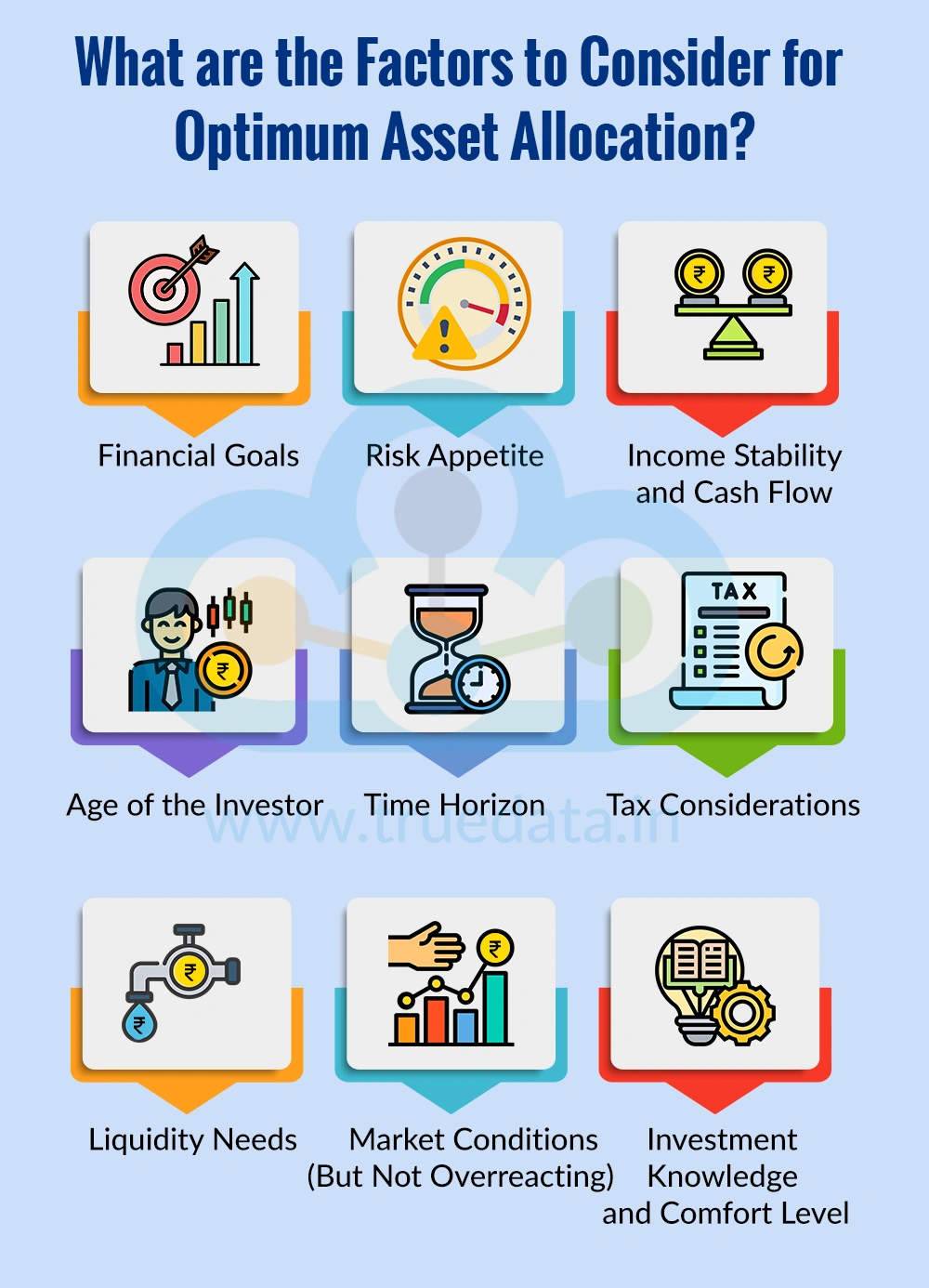
Understanding the risk and return expectations can help in effective asset allocation. The factors that contribute to optimum asset allocation are

What are the Factors to Consider for Optimum Asset Allocation

  • Financial Goals - The first and most important factor in deciding asset allocation is the investor’s financial goals. Common goals include buying a house, children’s education, marriage, or retirement. Each goal has a different time frame and importance. For example, long-term goals like retirement may allow higher allocation to equity for growth, while short-term goals may require safer investment options like debt funds. A clear understanding of goals helps in choosing the right mix of assets.

  • Risk Appetite - Risk appetite refers to how much risk an investor is comfortable taking. Some investors can handle market ups and downs calmly, while others prefer stability and peace of mind. Many conservative investors prefer debt-heavy portfolios, while aggressive investors may allocate more to equities. Understanding one’s risk tolerance is important to avoid panic during market volatility and stay invested for the long term.

  • Income Stability and Cash Flow - An investor’s income stability also affects asset allocation. Individuals with stable and predictable income (such as salaried professionals) may be able to take slightly higher risks compared to those with irregular income (like business owners or freelancers). Regular income allows investors to continue investing even during market downturns, which supports a more growth-oriented allocation.

  • Age of the Investor - Age is another important factor that influences asset allocation. Younger investors usually have fewer responsibilities and more time, so they can afford to take higher risks by investing more in equities. As the investor grows older, especially nearing retirement, the focus generally shifts towards capital protection and steady income, leading to higher allocation in safer assets like debt and fixed income instruments.

  • Time Horizon - The investment time horizon plays a key role in asset allocation decisions. An investor with a longer time horizon (10-20 years) can take more exposure to equities because they have time to recover from market fluctuations. On the other hand, for short-term goals (less than 3-5 years), it is generally safer to invest more in stable instruments. Thus, the longer the time horizon, the higher the ability to take risks.

  • Tax Considerations - Taxes can significantly impact investment returns. Different asset classes (such as equity, debt, gold, and real estate, etc.) are taxed differently with specific tax rules for each segment. Investors may consider tax-saving options like ELSS, PPF, or NPS while planning their allocation. A tax-efficient asset allocation helps in maximising post-tax returns rather than just focusing on nominal gains.

  • Liquidity Needs - Liquidity refers to how quickly an investment can be converted into cash without significant loss. Investors should consider their need for emergency funds or upcoming expenses. For example, keeping some portion in liquid funds or savings accounts ensures easy access to money when required. Allocating everything to long-term or illiquid assets can create financial stress during emergencies.

  • Market Conditions (But Not Overreacting) - While asset allocation should not be changed frequently based on market movements, it is still important to be aware of economic conditions like inflation, interest rates, and market valuations. However, investors should avoid making drastic changes based on short-term news. A disciplined approach with periodic review works better than reacting to every market movement.

  • Investment Knowledge and Comfort Level - An investor’s understanding of different asset classes also matters. Someone familiar with equity markets may feel more confident allocating a higher portion to stocks, while a beginner may prefer mutual funds or safer options. Choosing investments that one understands helps in staying invested during market volatility.

What are the Different Asset Allocation Strategies?

What are the Different Asset Allocation Strategies

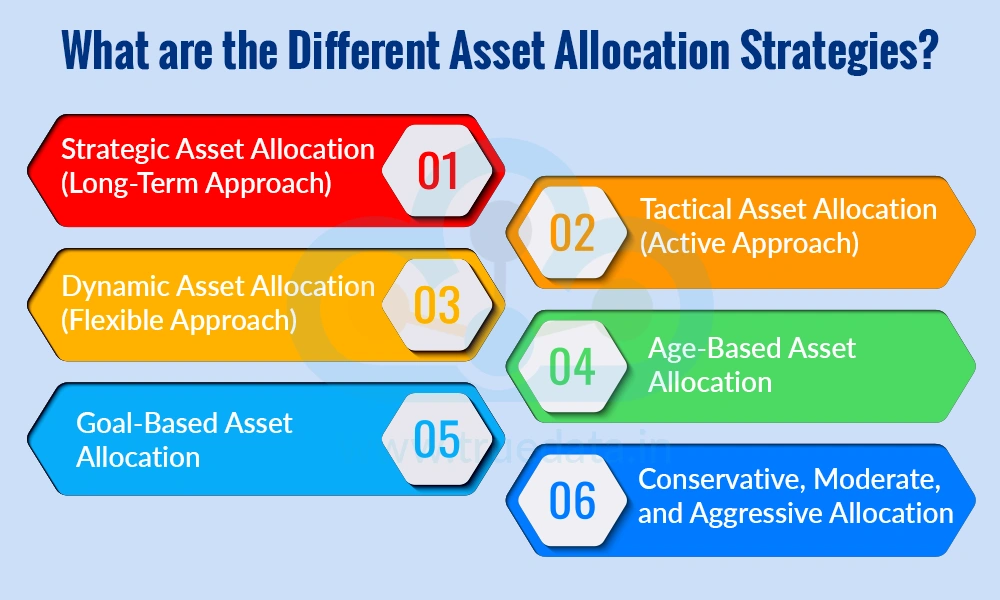
The essence of asset allocation is finding the right mix of assets to gain maximum returns at manageable risks. The common strategies used for optimum asset allocation include,

Strategic Asset Allocation (Long-Term Approach)

Strategic asset allocation is a long-term approach where an investor decides a fixed mix of assets based on their goals, risk appetite, and time horizon. For example, an investor may choose to keep 60% in equity, 30% in debt, and 10% in gold. This allocation is maintained over time, regardless of short-term market movements. This approach works well for investors who prefer discipline and stability. The portfolio is reviewed periodically and rebalanced to maintain the original allocation.

Tactical Asset Allocation (Active Approach)

Tactical asset allocation is a more active strategy where the investor makes short-term changes to the portfolio based on market conditions. For example, if equity markets are expected to perform well, the investor may temporarily increase equity exposure. Similarly, during uncertain times, more money may be shifted to safer assets like debt or gold. This strategy requires good market understanding and regular monitoring, making it more suitable for experienced investors.

Dynamic Asset Allocation (Flexible Approach)

Dynamic asset allocation is a flexible strategy where the allocation between equity and debt keeps changing based on market valuations and economic conditions. Many mutual funds follow this approach, often called the balanced advantage funds. The fund manager increases equity exposure when markets are undervalued and reduces it when markets are overvalued. This helps in managing risk while still aiming for growth.

Age-Based Asset Allocation

This is a simple and commonly used strategy, especially for beginners. The asset allocation is decided based on the investor’s age. A popular thumb rule is ‘100 minus age’ or ‘110 minus age’ to determine equity allocation. For example, a 30-year-old investor may allocate around 70-80% to equity and the rest to debt. As the investor grows older, the allocation gradually shifts towards safer assets. This strategy is easy to follow and suitable for long-term planning.

Goal-Based Asset Allocation

Goal-based asset allocation focuses on aligning investments with specific financial goals rather than following a fixed percentage. Each goal, such as buying a house, education, or retirement, has its own asset mix depending on its time horizon and importance. For example, retirement planning may have higher equity exposure, while a short-term goal may focus on debt instruments. This approach is widely recommended for investors as it brings clarity and purpose to investing.

Conservative, Moderate, and Aggressive Allocation

Investors can also choose asset allocation based on their overall risk profile. The common risk perceptions and the asset allocation strategy used include,

  • Conservative - Higher allocation to debt and fixed income, lower exposure to equity

  • Moderate - Balanced mix of equity and debt

  • Aggressive - Higher allocation to equity for maximum growth potential

What are the Common Mistakes in Asset Allocation?

What are the Common Mistakes in Asset Allocation

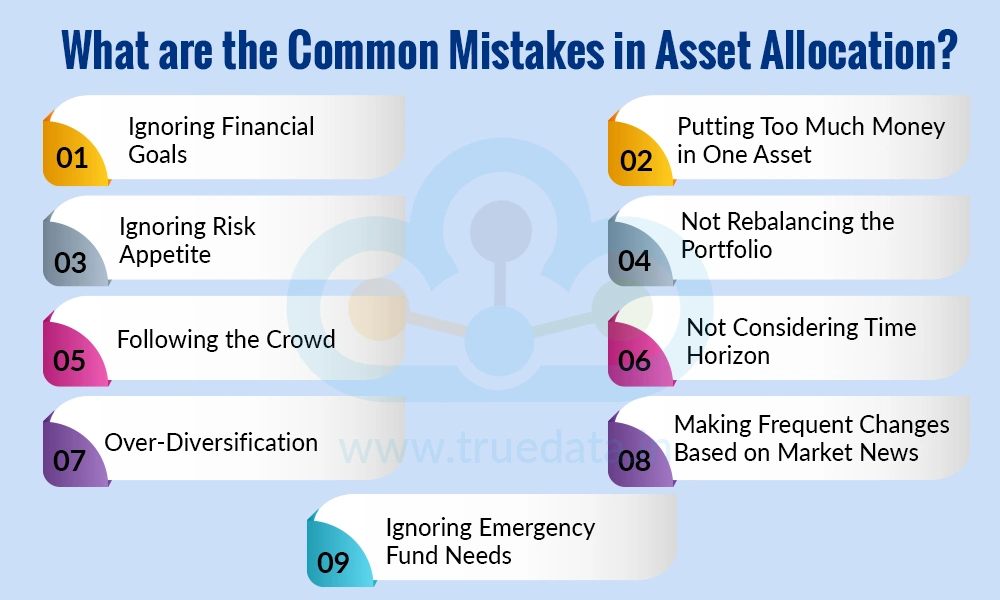
Asset allocation can be a subtle art of picking the right assets that meet your investment goals; however, it can also be tricky. A few common mistakes in the way of optimum asset allocation include,

  • Ignoring Financial Goals - Some investors invest without clearly defining their goals, and without proper goals, asset allocation becomes random and ineffective. Each investment should be linked to a specific goal like retirement, education, or buying a house.

  • Putting Too Much Money in One Asset - Many investors allocate most of their money to a single asset class, like only stocks or only real estate. This increases risk because if that one asset performs poorly, the entire portfolio suffers. A balanced mix is always safer.

  • Ignoring Risk Appetite - Some investors take more risk than they can handle, especially during bull markets, and when markets fall, they panic and exit at a loss. Allocation should match the investor’s comfort with risk.

  • Not Rebalancing the Portfolio - Over time, some assets grow faster than others, which disturbs the original allocation. Many investors ignore rebalancing at this stage, leading to higher risk than intended. Thus, regular review helps maintain balance.

  • Following the Crowd - Many investors also simply copy other investors’ portfolios, i.e., investing in trending stocks, gold, or real estate, without understanding if it suits their needs. However, asset allocation should be personal, not based on market hype.

  • Not Considering Time Horizon - Another common mistake is investing in risky assets for short-term goals or being too conservative for long-term goals. For example, putting short-term funds in equities can be risky due to market volatility.

  • Over-Diversification - While diversification is important, spreading money across too many investments can reduce returns and make the portfolio difficult to manage.

  • Making Frequent Changes Based on Market News - Constantly changing asset allocation based on short-term market movements or news is a common mistake, especially among novice investors. This leads to poor decisions and unnecessary costs.

  • Ignoring Emergency Fund Needs - Some investors invest all their money without keeping aside an emergency fund. This forces them to sell investments during bad market conditions when urgent cash is needed.

Why is Asset Allocation Critical in Mutual Funds?

Why is Asset Allocation Critical in Mutual Funds

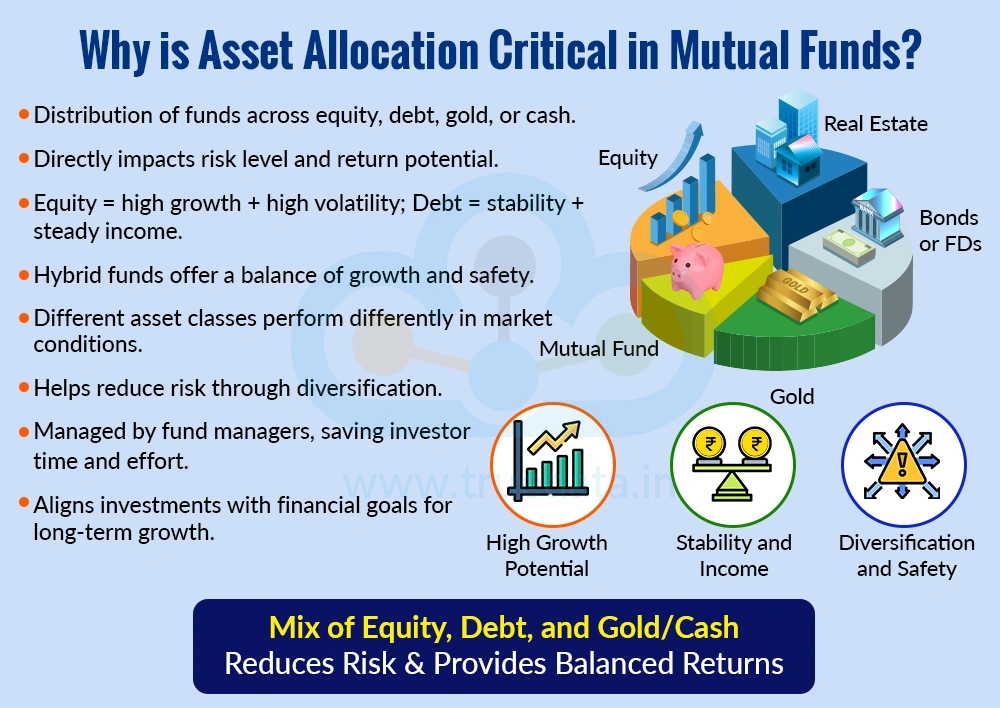
Asset allocation is critical in mutual funds as it decides how the fund’s money is distributed across different asset classes like equity, debt, and sometimes gold or cash. This allocation directly impacts the fund’s risk level and return potential. For example, equity mutual funds aim for higher growth but come with volatility, while debt funds focus on stability and regular income. Hybrid or balanced funds combine both to provide a mix of growth and safety. This becomes especially important for investors as different asset classes perform differently based on economic conditions such as interest rate changes, inflation, and market cycles. A well-planned asset allocation within a mutual fund helps reduce the impact of market fluctuations and provides a smoother investment journey.

Optimum asset allocation in mutual funds also allows professional fund managers to actively manage and adjust the portfolio based on market conditions. Instead of the investor having to decide when to shift between equity and debt, the fund manager does it on their behalf. This is particularly useful for investors who may not have the time or expertise to track markets regularly. Additionally, mutual funds offer different categories (such as large-cap, multi-cap, debt, and hybrid funds), each following a specific asset allocation strategy suited for different financial goals and risk profiles. By choosing the right type of mutual fund, investors can align their investments with their goals, manage risk effectively, and benefit from disciplined and diversified investing over the long term.

Conclusion

Asset allocation is the foundation of a strong and successful investment portfolio. It helps investors balance risk and return by spreading money across different assets like equity, debt, and gold based on their goals, time horizon, and risk appetite. By following the right strategy, avoiding common mistakes, and reviewing the portfolio regularly, investors can stay disciplined and handle market ups and downs with more confidence. A well-planned asset allocation not only protects investments but also supports steady and long-term wealth creation.

We hope this article helps in exploring the meaning and importance of asset allocation in shaping a successful portfolio. Let us know your thoughts on the topic or if you need further information, and we will address it soon. 

Till then, Happy Reading!


Read More: What is loss aversion? Is it bad for your portfolio? 

Frequently Asked Questions

An investor can decide their ideal asset allocation by considering their financial goals, time horizon, and risk appetite. As a general rule of thumb, long-term goals can have more equity, while short-term goals should focus on safer options like debt. It is also important to review and adjust the allocation regularly to stay aligned with changing needs and market conditions.

Asset allocation is more important as it decides the overall risk and return of a portfolio, while individual securities only impact a small part of it. A good mix of assets helps protect against market ups and downs, whereas even the best stock cannot balance risk on its own.

Investors should review and rebalance their portfolio at least once or twice a year, or whenever the asset mix changes significantly due to market movements. Regular rebalancing helps maintain the desired risk level and keeps investments aligned with financial goals.

A typical starting point for beginners is a simple mix like 60-70 in equity and 30-40 in debt, depending on risk comfort and time horizon. This provides growth potential from equities while keeping some stability through safer investments.

Market volatility can change the value of different assets, causing the portfolio mix to shift away from the original allocation. Thus, investors need to rebalance their portfolio to control risk and keep their investments aligned with their goals.

Investors should choose the mix based on time, i.e., more equity for long-term goals like retirement or a young child’s education, and gradually shift to safer assets like debt as the goal gets closer. This helps grow money early while protecting it when the need is near.

Yes, asset allocation should be adjusted during major life events like marriage, buying a house, or nearing retirement, as financial needs and risk tolerance change. Updating the mix helps keep investments aligned with new goals and ensures better financial stability.
Marisha Bhatt

Marisha Bhatt is a financial content writer @TrueData.

She writes with the sole aim of simplifying complex financial concepts and jargon while attempting to clarify technical and fundamental analysis concepts of the stock markets. The ultimate goal is to spread vital knowledge and benefit the maximum audience. Her Chartered Accountant background acts as the knowledge base to help clarify crucial concepts and create a sound investment portfolio.

0 Comments

Related Articles

SEE ALL
Corporate Data
Corporate Data
Investing Smarter: The Power of Corporate Data and Market Sentiment Analysis

Thestock market never stands still, and prices swing constantly with every new h...

Analyst Report
Analyst Report
The Next India - Investing in a High-Growth Powerhouse

The Next India - Investing in a High-Growth Powerhouse An economist's guide to ...

Sector Focus
Sector Focus
Sector analysis - Investing in the AI sector in India

Unless you are living under a rock, you cannot miss the increasing use of AI in...