Mutual Funds

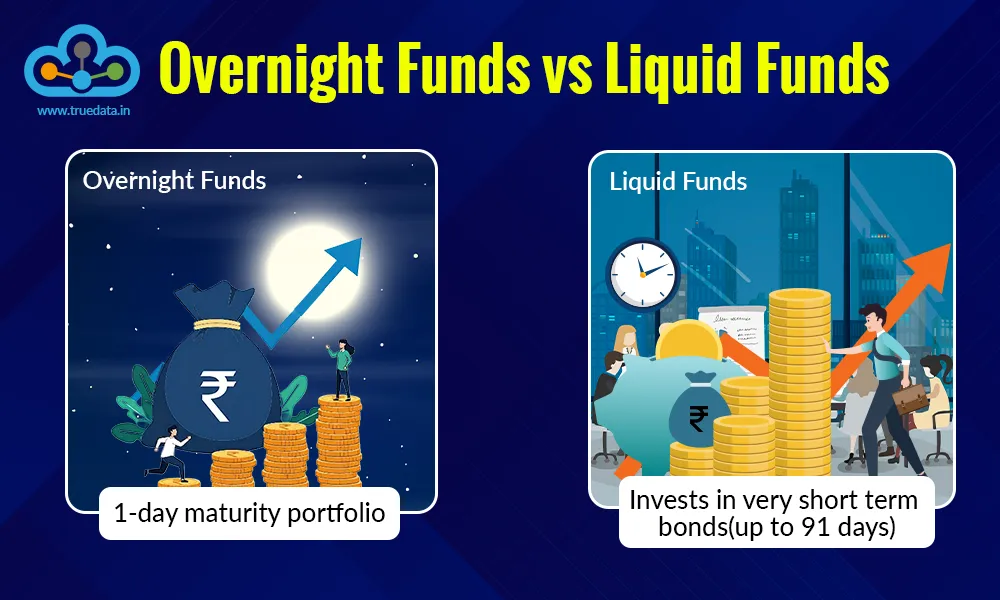
Overnight Funds vs Liquid Funds

Marisha Bhatt · 09 May 2026 · 6 mins read · 0 Comments

Overnight Funds vs Liquid Funds

The stock markets have been taking a huge plunge since the start of 2026, and FIIs have withdrawn nearly Rs. 70,000 crores from the domestic markets. In the face of this severe volatility, most investors turn towards debt instruments to park their funds. But what if you want to jump right in when the markets turn? This is where overnight funds come into the picture. They are debt funds that provide relative safety in a volatile market and are also quite liquid to grab market opportunities. Dive into this blog to explore all about overnight funds and how they are different from other funds in this category, like liquid funds and ultra short-term funds. 

What are Overnight Funds?

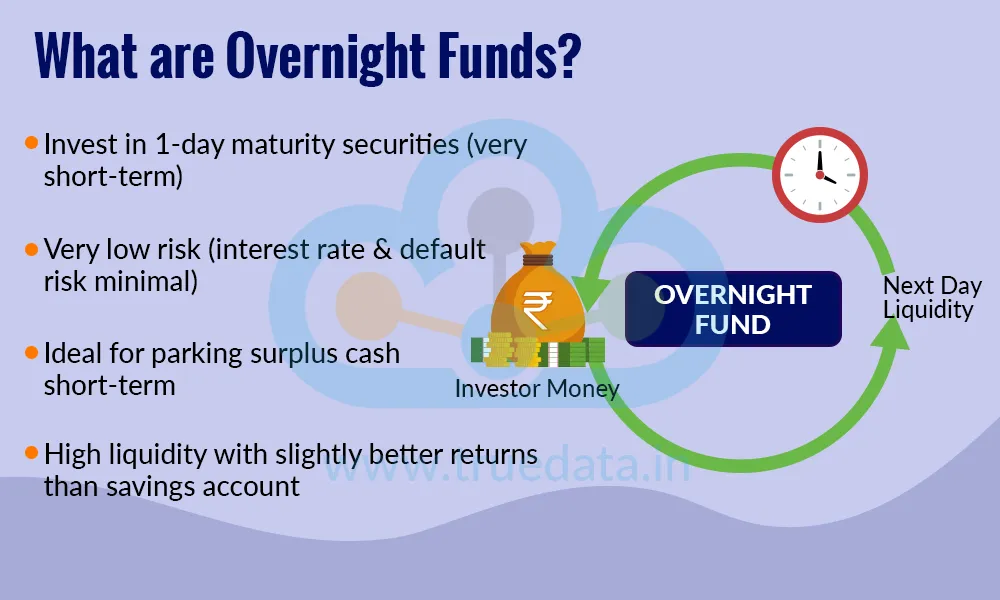
What are Overnight Funds

Overnight funds belong to the debt mutual funds category and invest in very short-term securities maturing in just one day. These funds typically lend money to banks or financial institutions for a single day through instruments like overnight repos. The money is returned the next day with a small interest. Due to the short investment duration, overnight funds carry very low risk from interest rate changes and credit defaults, making them one of the safest categories among mutual funds. These funds are ideal for investors seeking to park their surplus cash for a few days and earn returns that are marginally better than a regular savings account. Overnight funds also provide high liquidity and flexibility, making it easier for investors to withdraw their funds and reinvest quickly when market opportunities arise.

What are the Features of Overnight Funds?

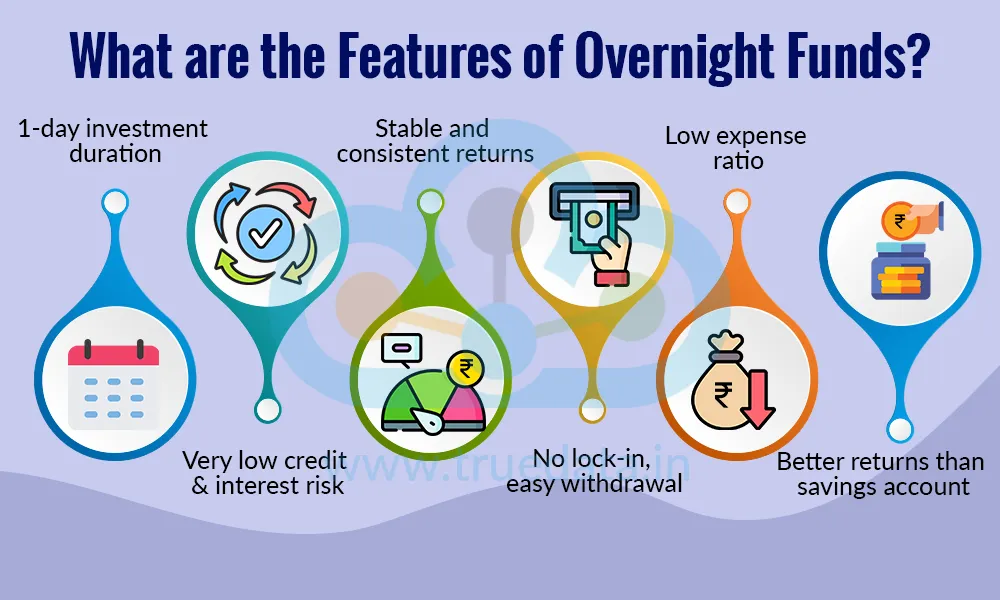
The key features of overnight funds that make them a unique and attractive investment opportunity for investors are highlighted below.

What are the Features of Overnight Funds

  • Short investment duration with the fund investing in securities maturing in a day.

  • These funds lend to high-quality borrowers, such as banks, and thus carry very low credit risk and interest rate risk. 

  • These funds provide relatively stable returns as they are not significantly affected by market fluctuations or interest rate changes.

  • There is no mandatory lock-in period, so investors have the flexibility to enter and exit the fund at any time.

  • Overnight funds generally have a lower expense ratio compared to many other mutual funds, which ultimately results in slightly better returns over the long term.

  • They may offer slightly higher returns than a regular savings account, especially for short durations, while still maintaining safety and liquidity.

How are Overnight Funds Taxed?

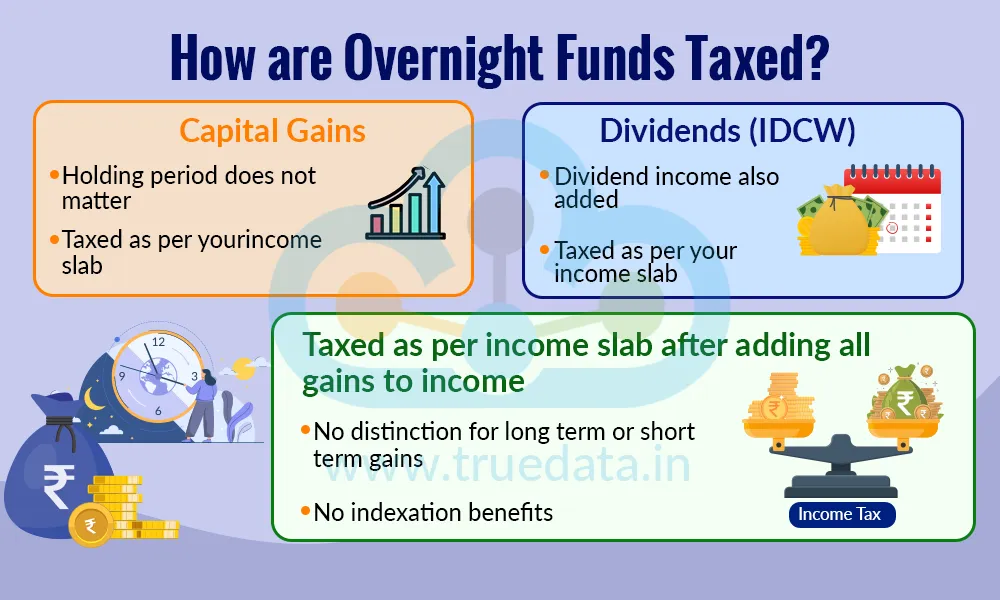
How are Overnight Funds Taxed

Overnight funds are taxed in line with other debt mutual funds as per the SEBI and Income Tax Act 2025 regulations. The capital gains arising at the time of redemption of fund units are taxable in the hands of the investors as per these regulations. As per the amendments in the taxation of mutual funds introduced from 1 April 2023 and continued in Budget 2025-26, there is no distinction between short-term and long-term capital gains for most new investments in debt funds. Thus, any gains earned from the overnight fund, irrespective of the holding period, are added to the total income of the investor and taxed as per their applicable income tax slabs. Furthermore, there are no indexation benefits on capital gain any more. In addition, if investors choose the dividend (IDCW) option, the income received is also added to your total income and taxed as per your slab.

What are the Key Differences Between Overnight Funds, Liquid Funds and Ultra Short-Term Duration Funds?

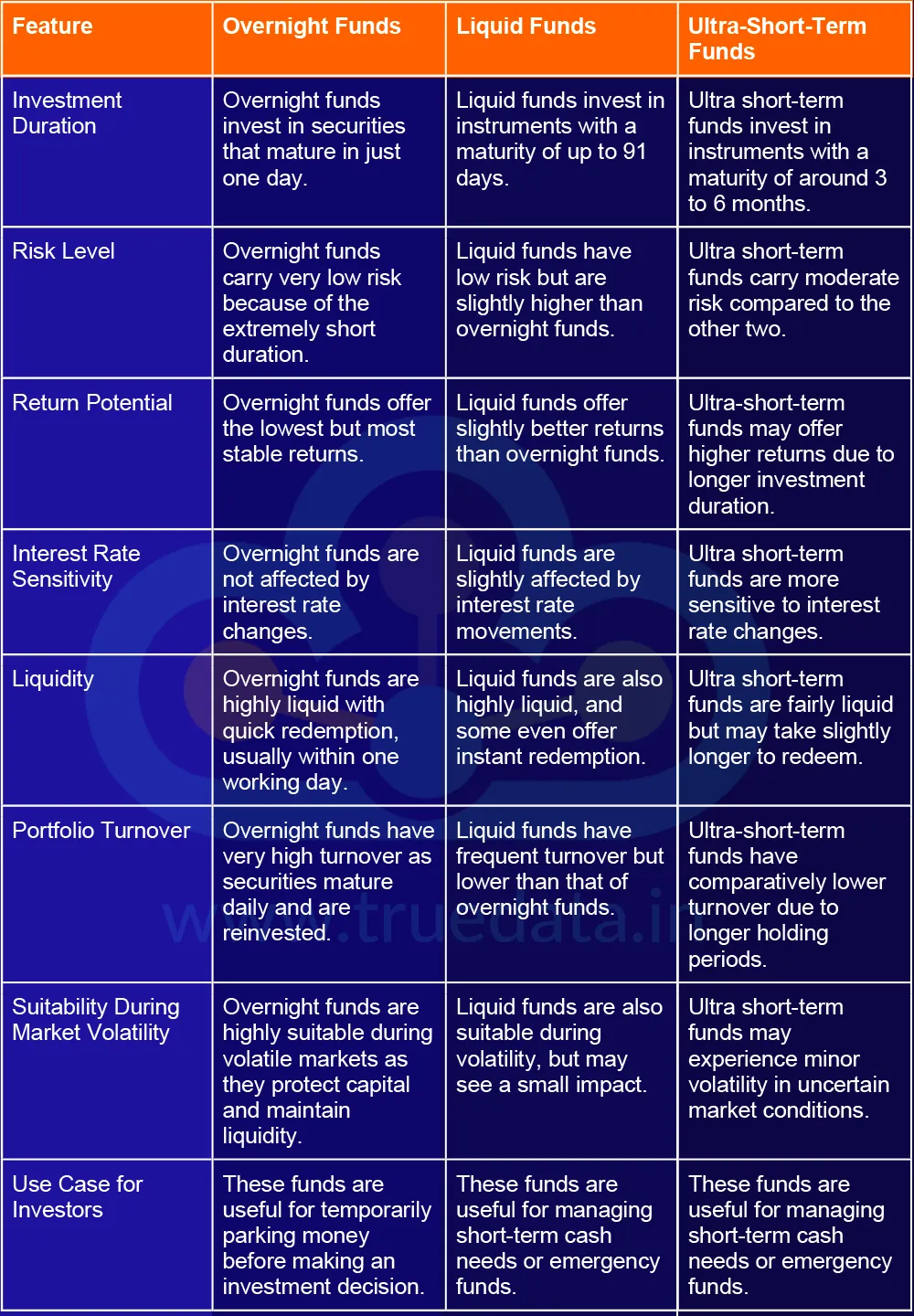
Overnight funds, liquid mutual funds, and ultra short-term duration funds are all debt mutual funds suitable for short-term parking and carry low risk. However, their subtle differences make them distinct and suitable for different investors. The key differences between these funds are explained below. 

What are the Key Differences Between Overnight Funds, Liquid Funds and Ultra Short-Term Duration Funds

Feature

Overnight Funds

Liquid Funds 

Ultra-Short-Term Funds

Investment Duration 

Overnight funds invest in securities that mature in just one day.

Liquid funds invest in instruments with a maturity of up to 91 days.

Ultra short-term funds invest in instruments with a maturity of around 3 to 6 months.

Risk Level

Overnight funds carry very low risk because of the extremely short duration.

Liquid funds have low risk but are slightly higher than overnight funds.

Ultra short-term funds carry moderate risk compared to the other two.

Return Potential

Overnight funds offer the lowest but most stable returns.

Liquid funds offer slightly better returns than overnight funds.

Ultra-short-term funds may offer higher returns due to longer investment duration.

Interest Rate Sensitivity

Overnight funds are not affected by interest rate changes.

Liquid funds are slightly affected by interest rate movements.

Ultra short-term funds are more sensitive to interest rate changes.

Liquidity

Overnight funds are highly liquid with quick redemption, usually within one working day.

Liquid funds are also highly liquid, and some even offer instant redemption.

Ultra short-term funds are fairly liquid but may take slightly longer to redeem.

Portfolio Turnover

Overnight funds have very high turnover as securities mature daily and are reinvested.

Liquid funds have frequent turnover but lower than that of overnight funds.

Ultra-short-term funds have comparatively lower turnover due to longer holding periods.

Suitability During Market Volatility

Overnight funds are highly suitable during volatile markets as they protect capital and maintain liquidity.

Liquid funds are also suitable during volatility, but may see a small impact.

Ultra short-term funds may experience minor volatility in uncertain market conditions.

Use Case for Investors

These funds are useful for temporarily parking money before making an investment decision.

These funds are useful for managing short-term cash needs or emergency funds.

These funds are useful for managing short-term cash needs or emergency funds.

What Should Investors Choose Between Overnight Funds and Liquid Funds?

What Should Investors Choose Between Overnight Funds and Liquid Funds

Choosing between overnight funds and liquid funds depends mainly on an investor’s time horizon and risk preference. Investors seeking to park their funds for just a few days with maximum safety and almost no risk may find overnight funds to be more suitable. These funds invest in securities maturing in one day, which helps protect capital and reduces the impact of interest rate changes or credit risk. They are especially useful during volatile market conditions when the focus is on safety and liquidity.

On the other hand, investors preferring to stay invested for a slightly longer period (such as a few weeks to a few months) may find liquid funds to be a better option. They offer slightly higher returns than overnight funds while still maintaining low risk and good liquidity. Liquid funds are thus more suitable for managing short-term surplus money or emergency funds, where investors are willing to take a small amount of risk in exchange for relatively better returns.

Conclusion

Overnight funds and liquid funds are useful options for investors looking to park their money safely for the short term, especially during volatile market conditions. Overnight funds offer the highest level of safety and liquidity, making them ideal for very short durations and quick access to funds. On the other hand, liquid funds come with slightly higher risk but provide better return potential and are suitable for investors who can stay invested for a few weeks to a few months. Thus, the right choice between them depends on the investor’s time horizon, need for liquidity, and comfort with risk, as both options serve different short-term financial needs effectively.

This article explores yet another category of debt funds and aims to help investors make informed decisions. Let us know your thoughts on the topic or if you need further information on the same, and we will address it soon. 

Till then, Happy Reading!


Read More: Should Investors Continue SIPs During Market Corrections?

Frequently Asked Questions

Overnight funds are safer than liquid funds because they invest in securities that mature in just one day, which reduces both interest rate risk and credit risk. Liquid funds are also low risk, but they carry slightly higher risk due to longer investment duration.

Overnight funds may offer slightly better returns than a savings account, especially over short periods. However, the difference is usually small, as these funds focus more on safety and liquidity than high returns.

Liquid funds are not completely risk-free, but they are considered low-risk investments. They can still be affected slightly by interest rate changes or rare credit issues, though the risk is generally minimal.

Liquid funds are generally better for emergency funds because they offer a good balance of safety, liquidity, and slightly higher returns. Overnight funds can also be used, but they are more suitable when maximum safety is the top priority.

Yes, investors can easily switch between overnight funds and liquid funds, as both are highly liquid and allow quick redemption and reinvestment. The money is usually credited within one working day, making it simple to move funds based on needs.
Marisha Bhatt

Marisha Bhatt is a financial content writer @TrueData.

She writes with the sole aim of simplifying complex financial concepts and jargon while attempting to clarify technical and fundamental analysis concepts of the stock markets. The ultimate goal is to spread vital knowledge and benefit the maximum audience. Her Chartered Accountant background acts as the knowledge base to help clarify crucial concepts and create a sound investment portfolio.

0 Comments

Related Articles

SEE ALL
Mutual Funds
Mutual Funds
How to Complain About Mutual Funds?

Mutual fund investments have simplified greatly with just a tap on your smartpho...

Investing / Trading
Investing / Trading
Stocks or mutual funds? Which is better?

Introduction For the longest time, investment in stock markets was thought to b...

Mutual Funds
Mutual Funds
PE Ratio in Mutual Funds

Every investor knows that the stepping stones to a good investment in thestock m...

Relevant Tags