Corporate Data

Return on Investment (ROI) - What it is and How to Calculate it?

Marisha Bhatt · 07 Jul 2026 · 11 mins read · 2 Comments

return-on-investments-roi-what-it-is-and-how-to-calculate-it

When it comes to investing, most investors focus on one key question, ‘How much return will I earn on my investment?’ Whether you are investing in stocks, mutual funds, or a business, understanding the returns generated on your money is essential. This is where Return on Investment (ROI) comes in. ROI is a simple yet powerful metric that helps investors measure the profitability and efficiency of an investment. Dive into this blog, where we explore the meaning of ROI, its importance, and how to calculate it to make better investment decisions.

What is ROI?

What is ROI

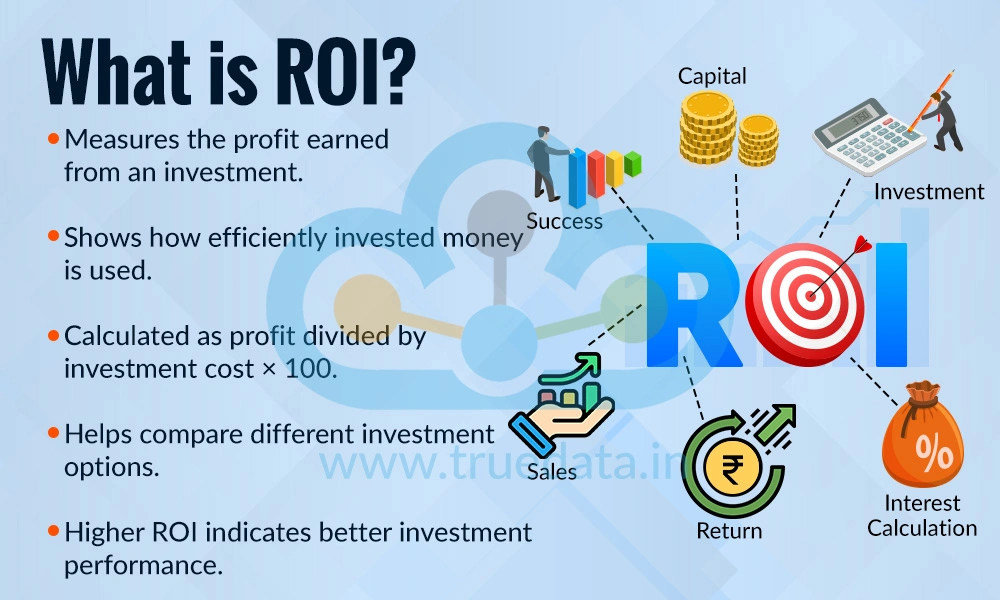
Return on Investment (ROI) is a financial ratio that shows the profitability or the gains from an investment as compared to the amount of money invested. It helps investors understand whether an investment has been worthwhile and essentially, the efficiency of the money used. It is usually expressed as a percentage and is calculated by dividing the profit earned from an investment by its original cost and then multiplying the result by 100. 

A higher ROI generally indicates a more profitable investment, while a lower or negative ROI suggests weaker performance or a loss. ROI is a versatile ratio and can be used to calculate returns and compare different investment options such as stocks, mutual funds, real estate, fixed deposits, or business projects. However, ROI should not be viewed in isolation, as it does not consider factors like the time taken to earn the return, the level of risk involved, or market conditions. Therefore, ROI is best used along with other financial metrics to make informed investment decisions.

How is ROI Calculated?

Return on Investment (ROI) measures the profit or loss generated from an investment relative to the amount invested. It helps investors understand the efficiency with which their money is utilised and thus compare the performance of different investments. The formula to calculate the ROI of an investment is,

  1. Standard ROI Formula 

Standard ROI Formula 

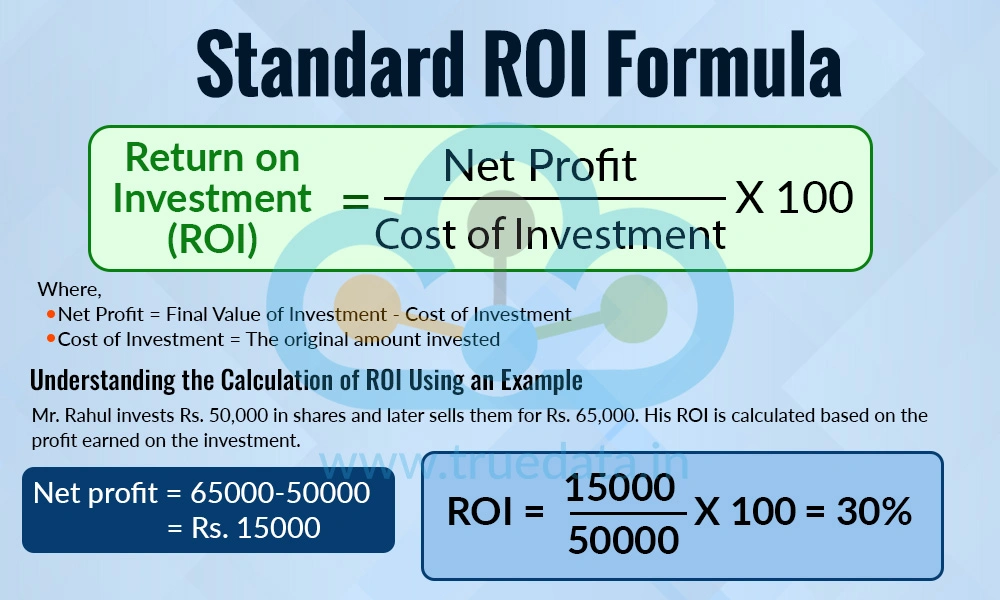
Return on Investment (ROI) = Net Profit / Cost of Investment * 100

Where,

  • Net Profit = Final Value of Investment - Cost of Investment

  • Cost of Investment = The original amount invested

Understanding the Calculation of ROI Using an Example

Consider Mr. Rahul, who buys shares worth Rs. 50,000. After a few years, the value of the investment rises to Rs. 65,000, and he decides to sell the shares. The ROI for Mr. Rahul is calculated as follows.

Net profit for Mr. Rahul = Final Value of Investment - Cost of Investment

Net profit = 65000-50000 = Rs. 15000

ROI = Net Profit / Cost of Investment * 100

ROI = 15000 / 50000 * 100 = 30%

Thus, the investor earned a 30% return on the original investment.

  1. Annualised ROI

Annualised ROI

The basic ROI formula does not consider the time taken to earn a return. Annualised ROI solves this problem by converting the return into an annual percentage. The formula to calculate the annualised ROI is,

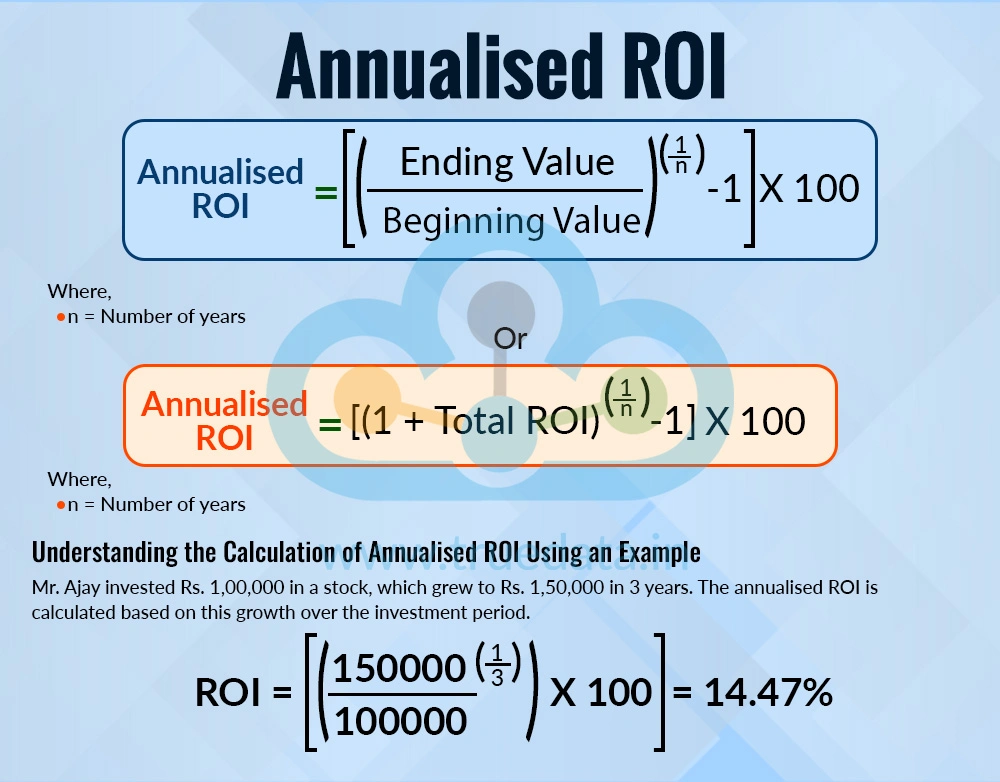
Annualised ROI = [(Ending Value / Beginning Value)^(1/n) − 1] × 100

Where,

  • n = Number of years

Or 

Annualised ROI = [(1 + Total ROI)^(1/n) - 1] * 100)

Where,

  • n = Number of years

Understanding the Calculation of Annualised ROI Using an Example

Consider Mr Ajay, who invested Rs. 1,00,000 in a stock, and after 3 years, the value of that investment is Rs. 1,50,000. The annualised ROI for Mr. Ajay in this investment is calculated below. 

Annualised ROI = [(Ending Value / Beginning Value)^(1/n) − 1] × 100

Annualised ROI = [(150000 / 100000) ^ (⅓) - 1] * 100 = 14.47%

Thus, the investment effectively grew at an average rate of 14.47% annually over three years.

How to Interpret ROI?

How to Interpret ROI

While calculating ROI is important, interpreting it correctly is equally crucial. A good understanding of ROI can help investors evaluate investment opportunities, compare different assets, and make informed financial decisions.

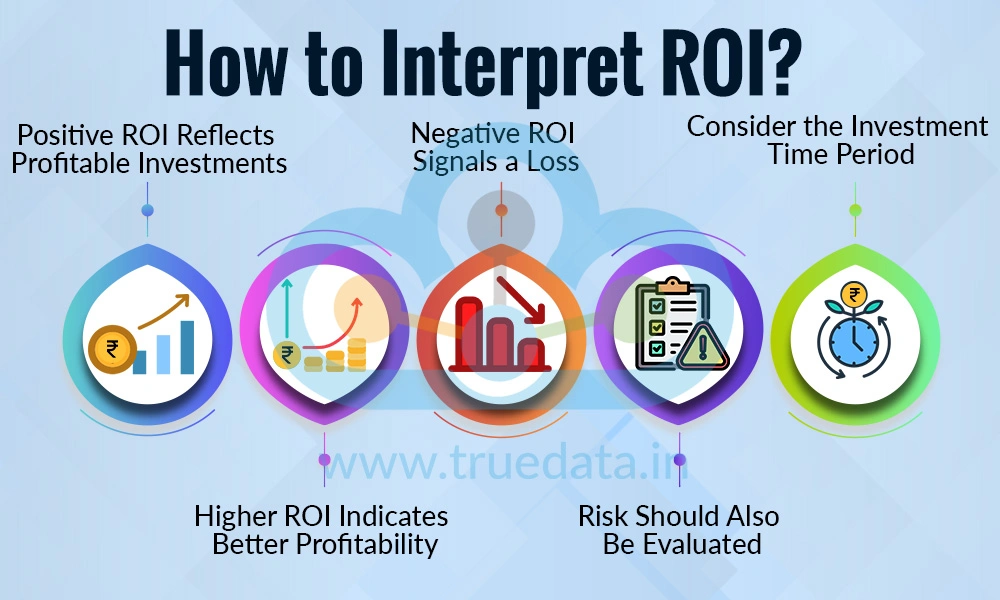
Positive ROI Reflects Profitable Investments

A positive ROI means that the investment has earned more money than the amount originally invested. For example, if an investor invests Rs. 1,00,000 and receives Rs. 1,20,000 when selling the investment, the ROI is positive as the investment generated a profit. A positive ROI generally indicates that the investment has been successful and has contributed to wealth creation. The larger the positive ROI, the more profitable the investment has been.

Higher ROI Indicates Better Profitability

A higher ROI suggests that an investment has generated greater profits relative to the amount invested. For example, if one stock delivers an ROI of 20% and another generates an ROI of 10%, the former has produced a higher return for every rupee invested. Investors often use ROI to identify investments that have performed well and created more value over time. However, a higher ROI should always be examined alongside the risks taken to achieve those returns.

Negative ROI Signals a Loss

A negative ROI indicates that the investor has lost money on the investment. This happens when the final value of the investment is lower than the original investment amount. For example, if an investor puts Rs. 1,00,000 into a stock and later sells it for Rs. 90,000, the ROI will be negative. A negative ROI highlights that the investment did not perform as expected and resulted in a financial loss. Investors should analyse the reasons behind a negative ROI to determine whether the loss was due to temporary market conditions or fundamental weaknesses in the investment.

Risk Should Also Be Evaluated

A high ROI may appear attractive, but it is important to understand the level of risk involved. Some investments may generate high returns as they may be carrying significant market, business, or economic risks. On the other hand, safer investments such as fixed deposits may offer lower ROI but provide greater stability and capital protection. Therefore, investors should not focus solely on ROI and should always assess whether the potential return justifies the risks taken.

Consider the Investment Time Period

ROI should never be interpreted without considering the time taken to generate the return. For example, an investment that generates a 30% ROI in one year is generally more attractive than another investment that generates the same 30% ROI over five years. Since ROI does not account for the holding period, investors should evaluate how long it took to earn the return. Combining ROI with annualised return metrics can provide a more accurate picture of investment performance.

Why is ROI Important?

Why is ROI Important

Return on Investment (ROI) is one of the most widely used financial metrics because it helps investors understand how effectively their money is generating returns. By analysing ROI, investors can make better decisions and allocate their capital more efficiently. The importance of ROI is explained below.

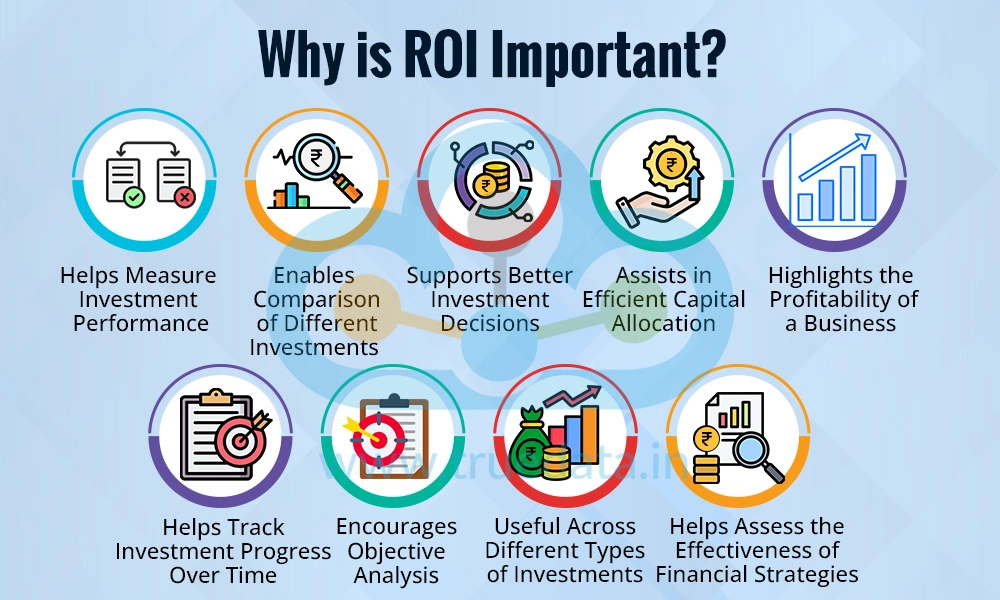
  • Helps Measure Investment Performance - One of the primary reasons ROI is important is that it helps investors assess the performance of an investment. It shows how much profit and loss has been generated relative to the amount invested. A higher ROI indicates that an investment has been successful in creating value, while a lower or negative ROI may suggest weaker performance. This makes ROI a useful tool for understanding whether an investment is meeting expectations.

  • Enables Comparison of Different Investments - Investors often have multiple investment options in their portfolio, such as stocks, mutual funds, fixed deposits, gold, or real estate. ROI provides a common benchmark that allows these different opportunities to be compared and evaluated. Since ROI is expressed as a percentage, investors can easily identify which investment has delivered better returns relative to the money invested. This comparison helps investors choose opportunities that align with their financial goals.

  • Supports Better Investment Decisions - ROI plays an important role in decision-making as it provides a clear picture of an investment’s profitability. Before investing in a company or project, investors can estimate the expected ROI and compare it with alternative opportunities. This helps them focus on investments that have the potential to generate attractive returns while avoiding those that may not be worth the risk or capital commitment.

  • Assists in Efficient Capital Allocation - Efficient capital allocation is a key factor in long-term wealth creation, and every investor has limited financial resources, making it important to use capital wisely. ROI helps investors determine where their money is likely to generate the highest returns. By identifying investments with stronger ROI potential, investors can allocate their funds more effectively and improve the overall profitability and performance of their portfolio.

  • Highlights the Profitability of a Business - For investors analysing companies, ROI can provide insights into how effectively a business uses its resources to generate profits. A consistently strong ROI may indicate that management is making efficient investment decisions and creating value for shareholders. On the other hand, a weak ROI could signal operational inefficiencies or poor investment choices. This makes ROI a useful metric when evaluating a company's financial performance.

  • Helps Track Investment Progress Over Time - ROI allows investors to monitor how their investments are performing over different periods. Calculating ROI regularly can help investors track whether their investments are growing as expected or if there is a need for adjustments. This ongoing evaluation helps investors stay aligned with their financial goals and make timely decisions when market conditions change.

  • Encourages Objective Analysis - Investment decisions can sometimes be influenced by emotions, market trends, or personal biases. ROI introduces an objective and data-driven approach by focusing on actual returns generated from an investment. This allows investors to evaluate opportunities based on measurable performance rather than speculation, leading to more disciplined and rational investment decisions.

  • Useful Across Different Types of Investments - Another advantage of ROI is its versatility. It can be used to evaluate a wide range of investments, including stocks, mutual funds, bonds, real estate, business ventures, and even personal projects. As the concept of evaluating investments remains the same regardless of the investment type, ROI serves as a universal metric that investors can use throughout their investment journey.

  • Helps Assess the Effectiveness of Financial Strategies - Investors often use different strategies to achieve their financial goals, such as growth investing, value investing, or dividend investing. ROI helps measure the effectiveness of these strategies by showing the returns generated over time. Comparing ROI across different approaches can help investors identify which strategies are working best and refine their investment plans accordingly.

What is a Good ROI?

What is a Good ROI

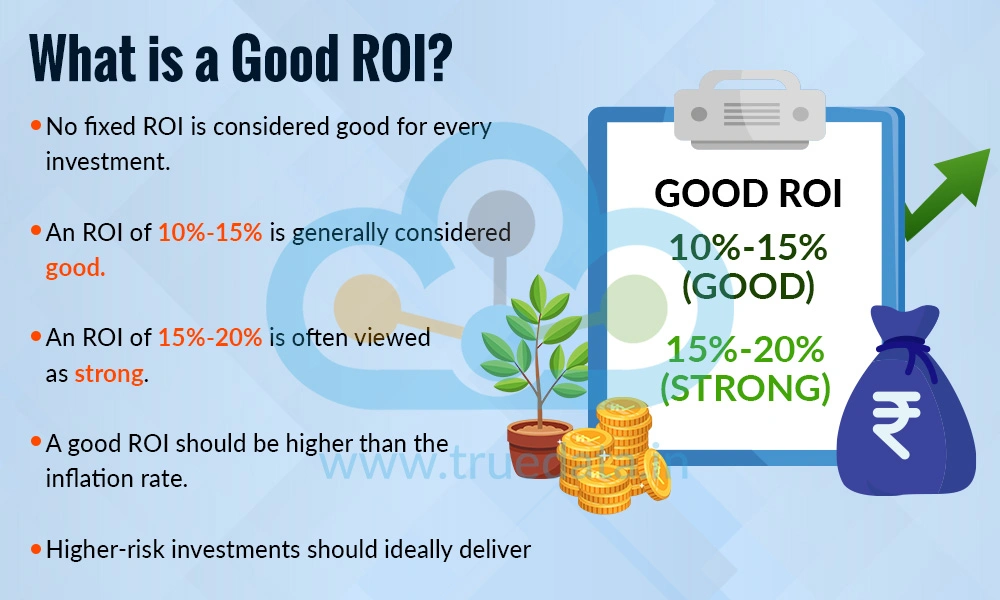
There is no single ROI percentage that can be considered ‘good’ for every investment. However, an ROI of approximately 10%-15% is considered to be a good ROI ratio across most industries or sectors, while an ROI of 15%-20% is generally considered to be strong in the industry. A good ROI depends on factors such as the type of investment, the level of risk involved, market conditions, and the investor's financial goals. One of the basic requirements of a good ROI is that it should be higher than the inflation rate. If an investment earns less than inflation, the investor's purchasing power may actually decline over time. Therefore, a good ROI should generate real growth in wealth after accounting for rising prices. Many investors compare ROI with relatively safe investments such as fixed deposits, government bonds, or savings schemes. If a stock or mutual fund carries more risk, investors generally expect a higher ROI than these safer alternatives as compensation for taking on additional risk. 

What are the Advantages and Disadvantages of Using ROI?

The advantages and disadvantages are an integral part of understanding a ratio and have a practical approach in using it for company fundamental analysis. Here are a few advantages and disadvantages of using ROI.

What are the Advantages and Disadvantages of Using ROI

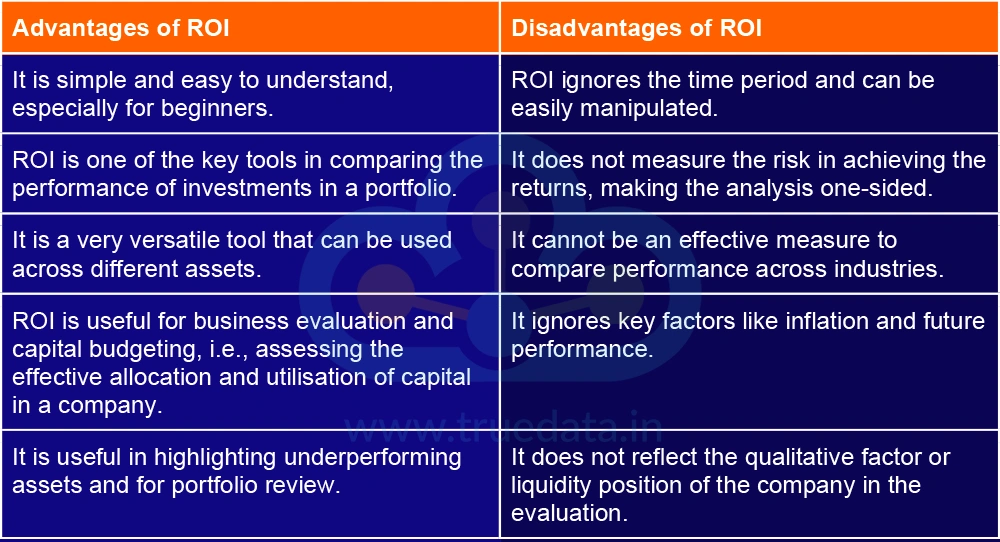
Advantages of ROI

Disadvantages of ROI

It is simple and easy to understand, especially for beginners.

ROI ignores the time period and can be easily manipulated. 

ROI is one of the key tools in comparing the performance of investments in a portfolio. 

It does not measure the risk in achieving the returns, making the analysis one-sided. 

It is a very versatile tool that can be used across different assets.

It cannot be an effective measure to compare performance across industries.

ROI is useful for business evaluation and capital budgeting, i.e., assessing the effective allocation and utilisation of capital in a company. 

It ignores key factors like inflation and future performance.

It is useful in highlighting underperforming assets and for portfolio review.

It does not reflect the qualitative factor or liquidity position of the company in the evaluation. 

Conclusion

Return on Investment (ROI) is one of the most important and widely used financial metrics for evaluating the profitability of an investment. ROI can be used to compare different investment opportunities, assess business efficiency, and make informed investment decisions. However, since ROI does not provide a complete picture on its own, it is best used alongside other financial ratios and qualitative factors.

This article focuses on a key financial ratio and its importance in evaluating a portfolio. Let us know your thoughts on the topic or if you need further information on the same and we will address it soon. 

Till then, Happy Reading!


Read More: Return on Invested Capital (ROIC) and Cash ROIC (CROIC)

Frequently Asked Questions

CAGR (Compound Annual Growth Rate) measures the average annual growth rate of an investment over a specific period, assuming the returns are compounded each year. While ROI shows the total return earned on an investment, CAGR helps investors understand how much the investment grew per year, making it more useful for comparing long-term investments.

ROI measures the profit earned on an investment relative to the amount invested, while break-even refers to the point where total revenue equals total costs, resulting in neither a profit nor a loss. Thus, break-even shows when an investment starts recovering its cost, whereas ROI shows how much profit it generates after that.

Yes, ROI can sometimes be misleading because it does not consider factors such as the time taken to earn the return, the level of risk involved, or the impact of inflation. An investment with a high ROI may not necessarily be the better choice if it took many years to generate the return or involved significant risk.

ROI should be used along with metrics such as Return on Equity (ROE), Return on Capital Employed (ROCE), Earnings Per Share (EPS), profit margins, cash flow, and debt ratios to get a more complete picture of an investment. These metrics help investors assess a company's profitability, financial health, growth potential, and risk levels rather than focusing only on returns.

Investors often use Annualised ROI instead of the basic ROI formula for projects that generate returns over multiple years. This method takes the investment period into account and shows the average return earned per year, making it easier to compare long-term projects and investments with different time horizons.
Marisha Bhatt

Marisha Bhatt is a financial content writer @TrueData.
She writes with the sole aim of simplifying complex financial concepts and jargon while attempting to clarify technical and fundamental analysis concepts of the stock markets. The ultimate goal is to spread vital knowledge and benefit the maximum audience. Her Chartered Accountant background acts as the knowledge base to help clarify crucial concepts and create a sound investment portfolio.

2 Comments
S
Shrinath
· July 07, 2026

Very Informative

·
R
Rahul
· July 07, 2026

Nice Post. understanding ROI really helps in making smarter investment decisions.

·

Related Articles

SEE ALL
Corporate Data
Corporate Data
Investing Smarter: The Power of Corporate Data and Market Sentiment Analysis

Thestock market never stands still, and prices swing constantly with every new h...

Corporate Data
Corporate Data
Return on Assets - How to Calculate it and Use it

Net profit indicates the company’s earnings, but it does not tell the full...

Corporate Data
Corporate Data
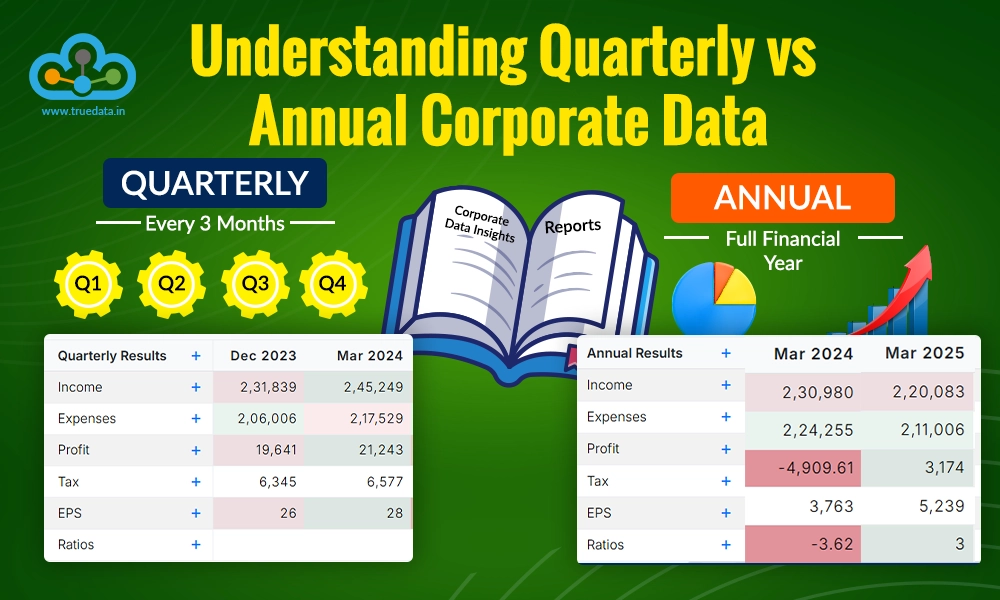
Understanding Quarterly vs Annual Corporate Data

Corporate data is more than just the numbers of a company. They can show what is...