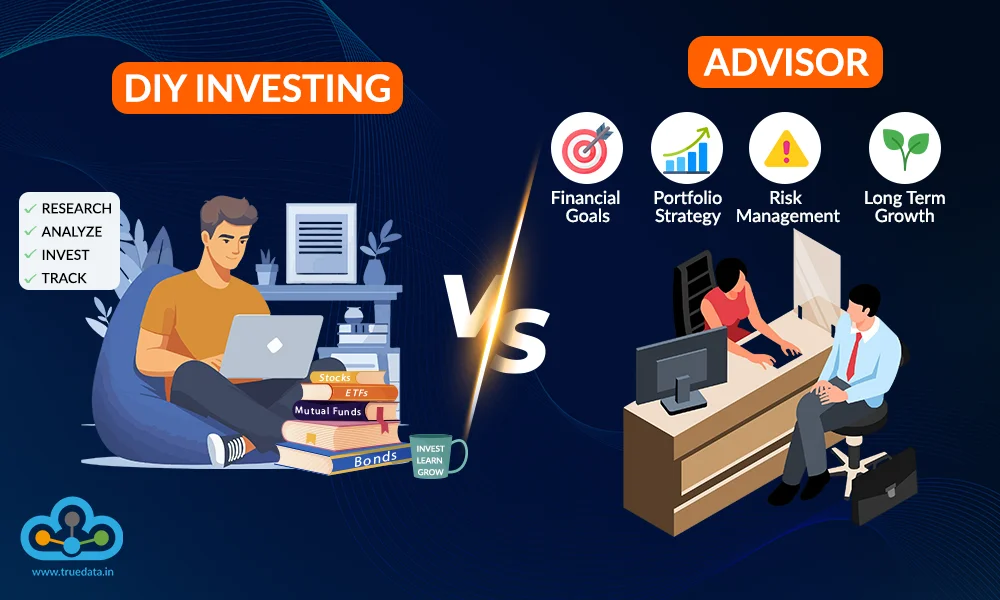
When it comes to investing, is having a demat account and access to endless information enough to build a successful portfolio? With markets becoming more accessible, many investors are tempted to research, choose and manage their investments on their own. But does going solo always mean making better investment decisions? On the other hand, can an advisor’s expertise really make a difference, or is it simply an added cost? The answer may not be the same for every investor, as experience, financial goals, time and risk appetite all matter. So, should investors trust their own judgement or seek professional guidance? Dive into this blog to explore DIY vs advisor investing and discover which approach may suit different types of investors.

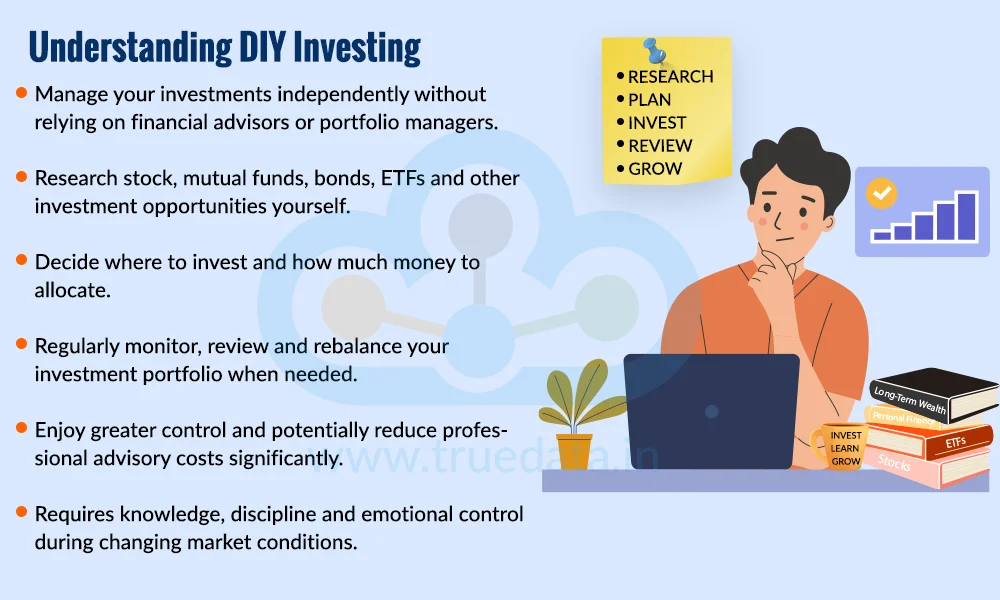
DIY investing, or Do-It-Yourself investing, means managing investments independently without relying on a financial advisor or professional portfolio manager to make investment decisions. In this approach, investors research different options such as stocks, mutual funds, bonds, ETFs and other securities, decide where to invest, choose how much money to allocate, and monitor their portfolio on their own. They are also responsible for reviewing their investments, rebalancing the portfolio when needed and making changes based on their financial goals, risk appetite and market conditions. For example, an investor who studies a company’s financial performance, evaluates its valuation and then buys its shares through a brokerage platform is following a DIY investing approach. While DIY investing gives investors greater control and can reduce advisory costs, it also requires time, knowledge, discipline and the ability to make informed decisions without being influenced by emotions or short-term market movements.

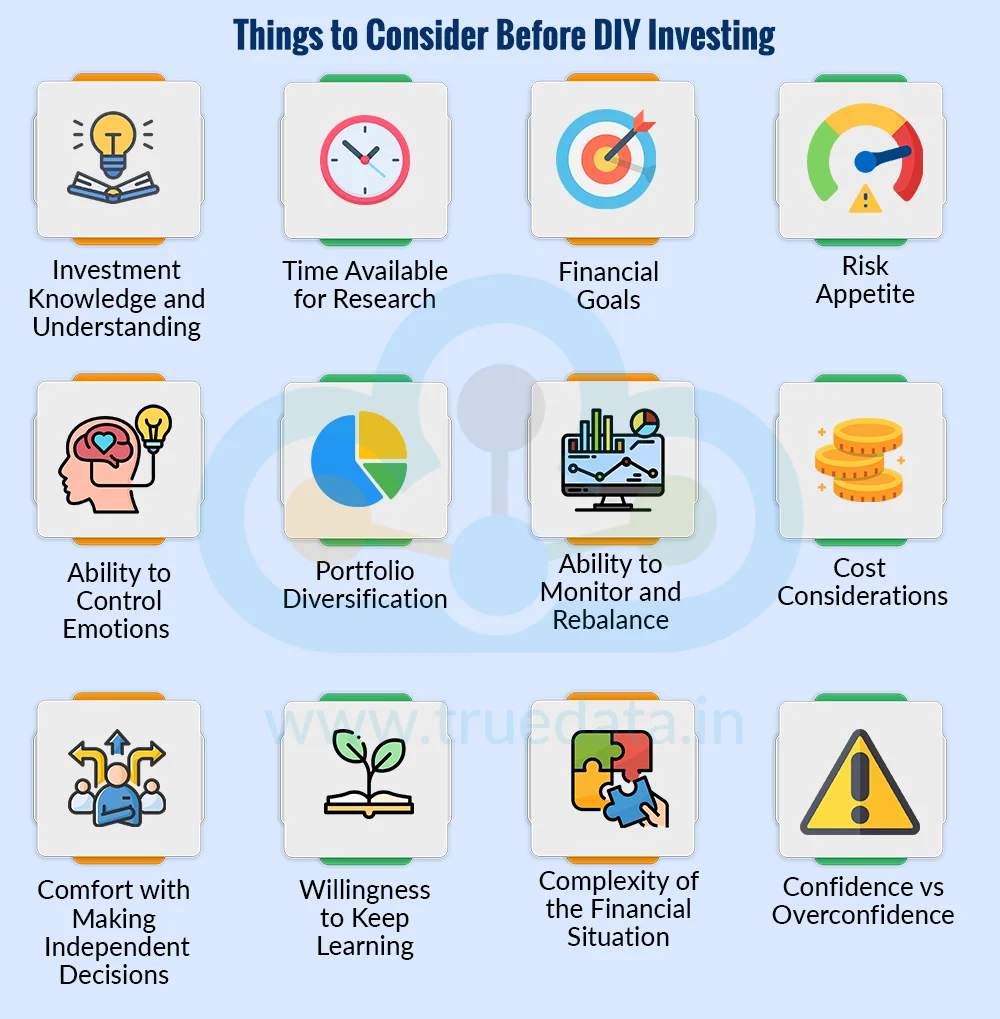
DIY investing can give investors greater control over their money, but it also comes with the responsibility of making the right decisions. Before choosing to manage investments independently, investors should consider the following factors.
Investment Knowledge and Understanding - Investors should first assess how well they understand different investment products and basic financial concepts. Knowing how different securities, risk, returns, diversification and valuation work can help investors make more informed choices. An investor does not need to know everything, but should be comfortable researching investments and understanding what they are investing in.
Time Available for Research - DIY investing requires more than simply buying an investment and waiting for returns. Investors may need to study company financials, compare mutual funds, track portfolio performance, read market updates and review their asset allocation periodically. Those who have the time and willingness to do this research may find DIY investing more suitable.
Financial Goals - An investor's financial goals should play an important role in deciding whether to invest independently. Goals such as buying a house, funding a child’s education or building a retirement corpus may require different investment strategies and time horizons. Investors should be confident that they can select and manage investments in a way that aligns with these goals.
Risk Appetite - Every investor has a different ability and willingness to handle market fluctuations. Before choosing DIY investing, investors should understand how much loss or volatility they can realistically tolerate. They should also ensure that their investment choices match their risk appetite rather than simply following popular stocks or market trends.
Ability to Control Emotions - Market movements can trigger emotions such as fear, greed and excitement. DIY investors may be more likely to make impulsive decisions, such as selling during a market fall or buying an investment simply because it is performing well. Investors should consider whether they can remain disciplined and stick to their investment strategy during both rising and falling markets.
Portfolio Diversification - Building a portfolio independently also means taking responsibility for diversification. Investors should avoid putting too much money into a single stock, sector or asset class. They should consider whether they can create a well-diversified portfolio that balances risk across different investments based on their goals and risk profile.
Ability to Monitor and Rebalance - A portfolio may need changes over time as market conditions, investment performance and personal financial goals change. DIY investors need to review their portfolios periodically and rebalance them when the allocation moves significantly away from the desired level. Investors who are willing to monitor their investments regularly may be better suited to this approach.
Cost Considerations - One of the key attractions of DIY investing is that investors can avoid or reduce professional advisory fees. However, investors should look beyond advisory costs and consider other expenses such as brokerage charges, fund expense ratios, taxes and transaction costs. The focus should be on the overall cost of investing rather than assuming that DIY investing is always cheaper.
Comfort with Making Independent Decisions - DIY investing means that the final responsibility for investment decisions rests with the investor. There may be times when market information is confusing or different experts have different views. Investors should consider whether they are comfortable evaluating information, comparing alternatives and making decisions without depending on an advisor.
Willingness to Keep Learning - Financial markets and investment products continue to evolve. New products, regulations, economic developments and market trends can affect investment decisions. Investors choosing the DIY route should be willing to keep learning and updating their knowledge instead of relying only on what they knew when they first started investing.
Complexity of the Financial Situation - DIY investing may be easier for someone with straightforward financial needs. However, investors with multiple financial goals, complex investments, significant assets or specific tax and estate-planning requirements may find their financial decisions more complicated. In such cases, professional guidance may provide additional value.
Confidence vs Overconfidence - Confidence is useful for a DIY investor, but overconfidence can be risky. Investors should distinguish between being comfortable making their own decisions and assuming they can consistently outperform the market. A willingness to acknowledge mistakes, review past decisions and change an approach when necessary can be more valuable than simply being confident.
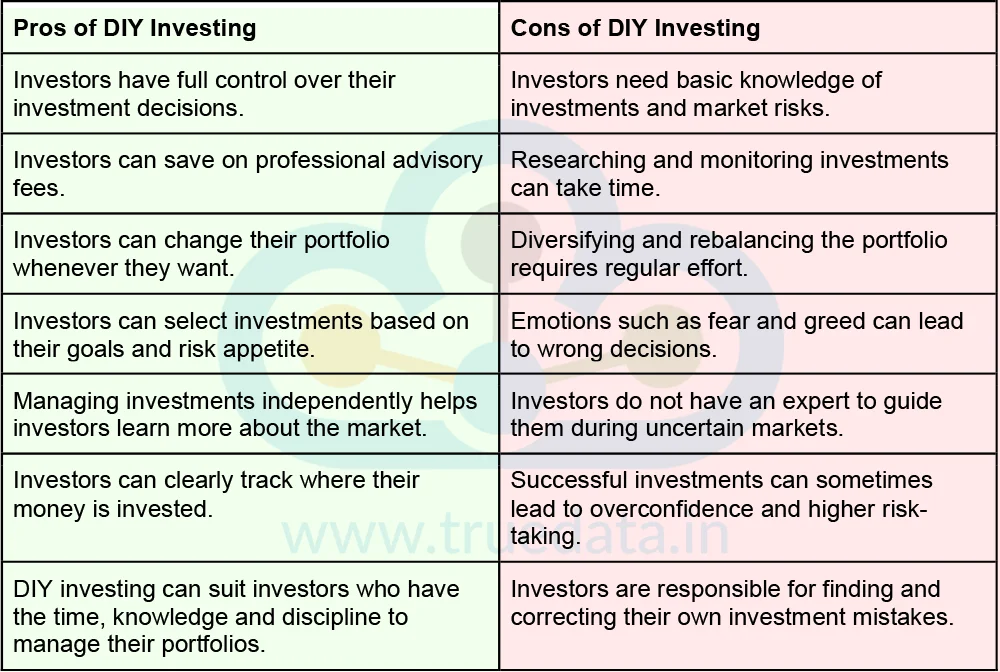
DIY investing may suit investors who have the knowledge, time, discipline and confidence to manage their portfolios independently. However, choosing this approach should not be based only on saving advisory fees. The pros and cons of DIY Investing are explained below.


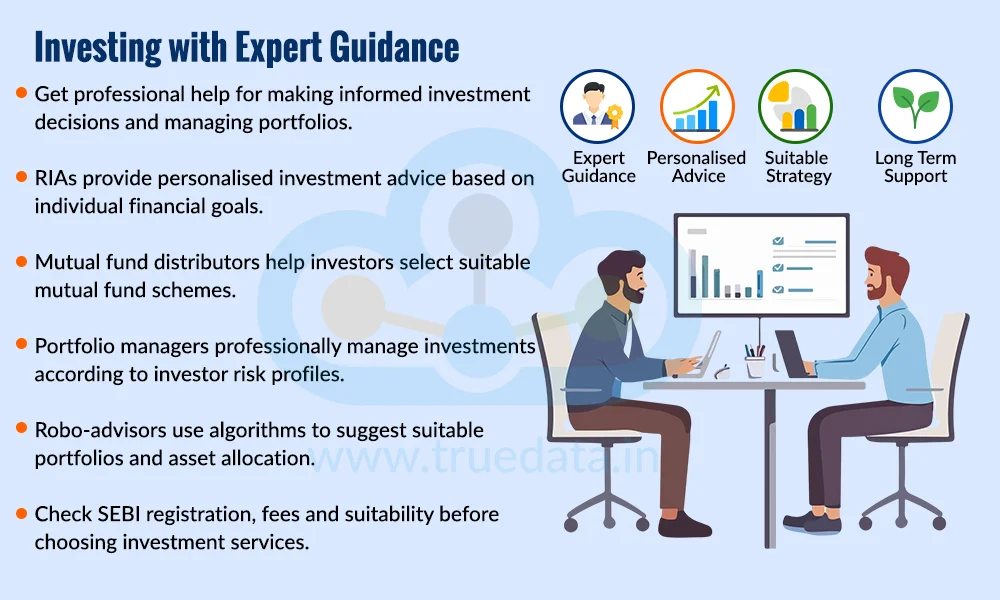
Investing through advisors means taking professional help to make investment decisions instead of managing the entire portfolio independently. This can include SEBI-registered investment advisers (RIAs) who provide personalised investment advice, as well as mutual fund distributors who help investors select and invest in mutual fund schemes. Investors may also invest through Portfolio Management Services (PMS), where a professional portfolio manager manages a portfolio based on the investor’s objectives and risk profile. Fund managers make investment decisions for mutual funds within a particular scheme, although they do not provide personalised advice to each individual investor. This approach can be useful for investors who lack the time, knowledge or confidence to research and manage investments on their own.
Another increasingly popular option is robo-advisory, where technology and algorithms use information such as an investor’s goals, time horizon and risk appetite to suggest a suitable portfolio or asset allocation. Investors may also use digital investment platforms and wealth-management services, which can combine technology with human guidance. However, the level of advice and responsibility differs across these options, so investors should understand whether they are receiving personalised advice, distribution services or professional portfolio management. They should also check the relevant SEBI registration or regulatory status, understand the fees involved and evaluate whether the service genuinely suits their financial goals and risk profile.

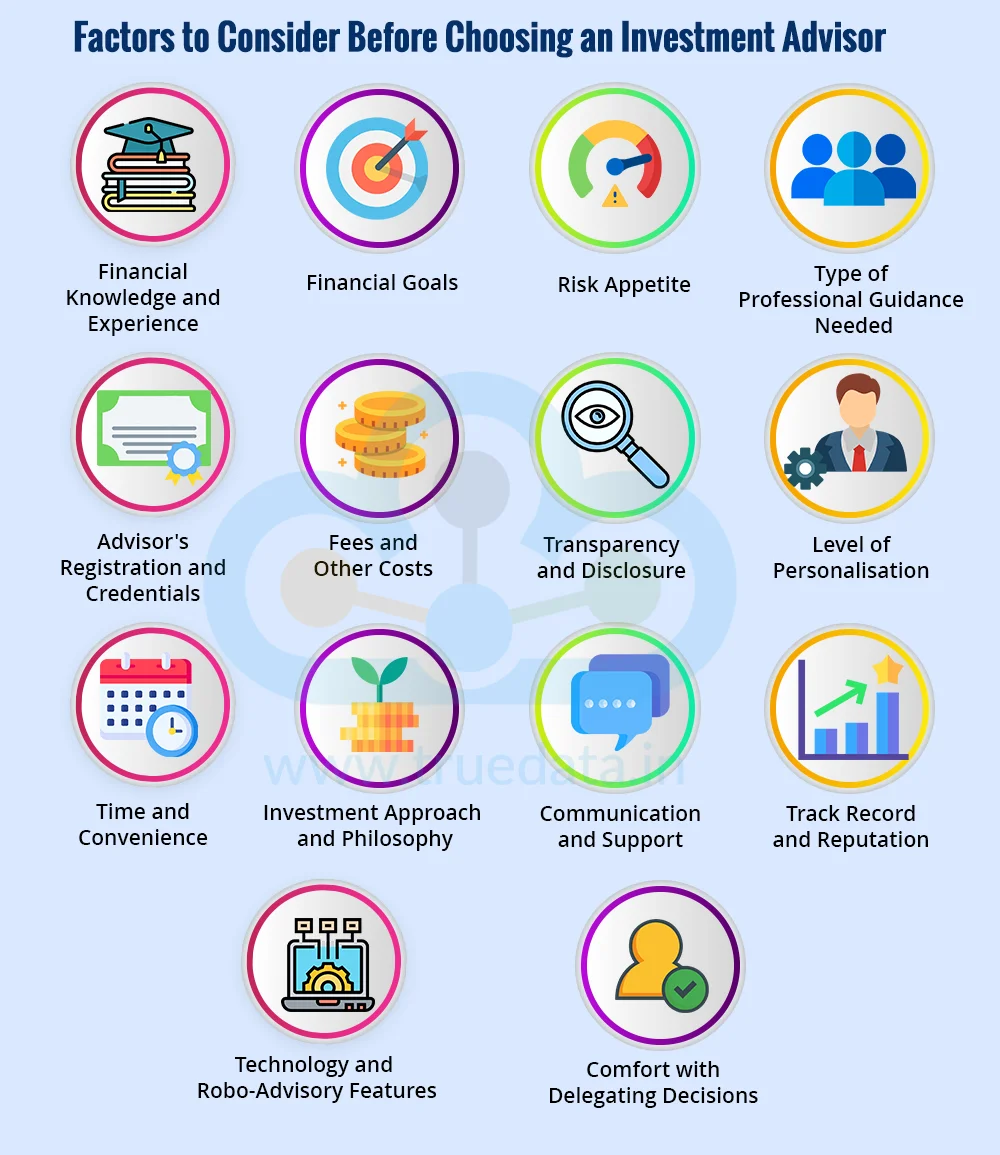
Investing through an advisor can make portfolio management easier, but it is important to choose the right type of professional and understand what service is actually being offered. Before handing over investment decisions to an advisor or using an advisory platform, investors should consider the following factors.
Financial Knowledge and Experience - Investors should first consider their own level of financial knowledge and investing experience. Those who are new to investing or find it difficult to understand financial statements, asset allocation, valuation or market risks may benefit from professional guidance. An advisor can help explain investment options and create a strategy based on the investor's needs.
Financial Goals - An advisor should understand an investor's financial goals before recommending investments. Whether the goal is retirement planning, buying a house, children's education or building long-term wealth, different goals may require different investment strategies. Investors should therefore choose an advisor who takes their goals and investment time horizon into account rather than offering the same approach to everyone.
Risk Appetite - Investors should understand how much market risk they can comfortably take before choosing an advisor. A good advisor should assess the investor's risk profile and recommend investments accordingly. Investors should be cautious if an advisor focuses mainly on high returns without clearly explaining the risks involved.
Type of Professional Guidance Needed - Not every investment professional provides the same service. A SEBI-registered Investment Adviser (RIA) provides personalised investment advice, while a mutual fund distributor primarily facilitates the distribution of mutual fund products. A Portfolio Management Service (PMS) can involve professional management of an investor's portfolio, subject to the applicable requirements. Fund managers, meanwhile, manage investments within a particular mutual fund scheme rather than providing personalised advice to each investor. Investors should understand these differences and choose the service that matches their needs.
Advisor's Registration and Credentials - Investors should check whether the professional or entity is appropriately registered with the relevant regulator before taking investment services. For example, investors considering personalised investment advice should verify the advisor's SEBI registration. Checking credentials, experience and regulatory status can help investors avoid dealing with unqualified or unauthorised individuals.
Fees and Other Costs - Professional guidance comes at a cost, so investors should understand exactly how the advisor or platform earns money. They should check advisory fees, commissions, fund expenses, transaction charges and any other applicable costs. The cheapest option is not necessarily the best, but investors should be able to understand what they are paying for and what value they are receiving in return.
Transparency and Disclosure - A trustworthy advisor should clearly explain the reasoning behind investment recommendations, the risks involved and the costs associated with them. Investors should also understand whether the advisor receives any commission or other benefit from recommending a particular product. Greater transparency can help investors make decisions with more confidence.
Level of Personalisation - Investors should consider whether they need a customised investment plan or are comfortable with general recommendations. A personalised approach should take into account factors such as income, existing investments, financial goals, risk appetite and time horizon. Robo-advisors and other digital platforms may offer automated recommendations, but investors should understand how much personalisation and human support they actually provide.
Time and Convenience - Managing a portfolio requires regular research, monitoring and rebalancing. Investors who have limited time or do not want to track markets regularly may prefer professional assistance. An advisor can help with portfolio reviews and investment decisions, allowing investors to focus on their other responsibilities.
Investment Approach and Philosophy - Before choosing an advisor, investors should understand how the advisor approaches investing. Some may focus on long-term wealth creation and diversification, while others may follow different strategies. Investors should choose an approach that matches their own financial goals and risk tolerance rather than following an advisor simply because they have delivered strong returns in the past.
Communication and Support - Good communication can make professional investing more useful. Investors should check how frequently the advisor provides portfolio reviews, how easily they can reach the advisor and whether their questions are answered clearly. Regular communication can also help investors understand why changes are being made to their portfolio.
Track Record and Reputation - Past performance alone should not be the deciding factor when selecting an advisor, as market conditions can change and past returns do not guarantee future results. However, investors can still consider the advisor's experience, professional history, reputation and approach to handling different market conditions. They should focus more on the quality and consistency of the investment process than on promises of unusually high returns.
Technology and Robo-Advisory Features - For investors considering robo-advisors, it is important to understand how the platform works. Investors should check how their risk profile is assessed, how portfolios are recommended or rebalanced, what investment products are used and how much human support is available. Technology can make investing convenient, but investors should still understand the logic behind the recommendations.
Comfort with Delegating Decisions - Investing through an advisor involves giving up some control over the investment process. Investors should consider whether they are comfortable relying on someone else's expertise while still keeping themselves informed about their portfolio. Professional advice should support better decision-making, not mean that investors stop understanding where their money is invested.
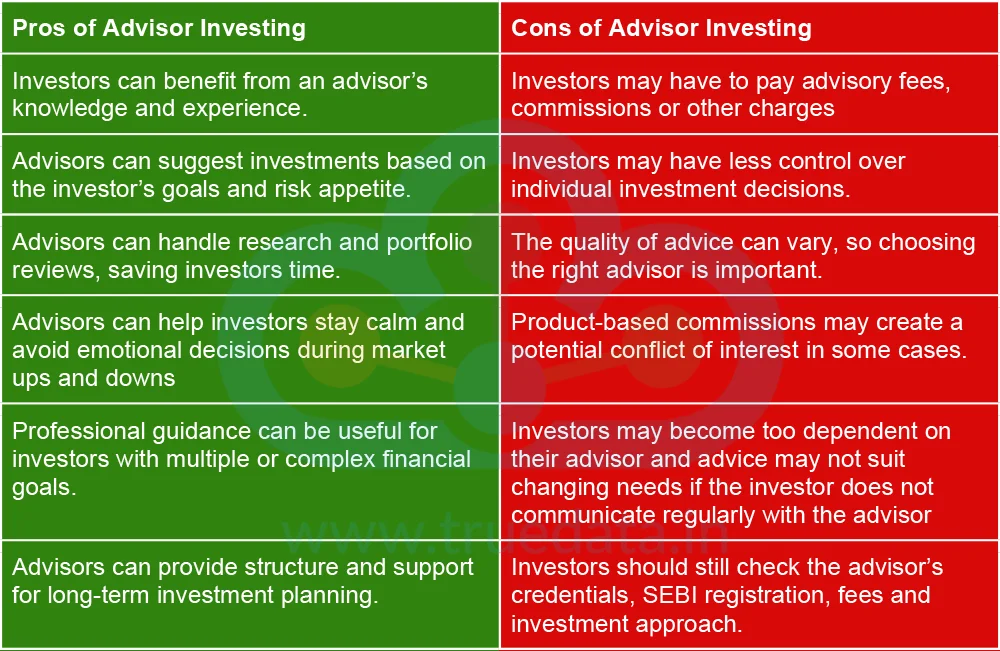
Investing through an advisor can be useful for investors who need expertise, personalised guidance or help managing their portfolios. However, investors should not choose an advisor simply because they promise higher returns. It is also equally important to understand the pros and cons of investing through an advisor.


There is no single right answer to the DIY vs advisor investing debate because the better approach depends on an investor’s knowledge, time, financial goals and comfort with risk. Investors who understand financial markets, have enough time to research investments and can make disciplined decisions may prefer to manage their portfolios themselves. On the other hand, investors who are new to investing, have limited time or find it difficult to create and maintain a suitable portfolio may benefit from professional guidance. The decision should therefore be based on what works best for the individual investor rather than simply choosing the option that appears cheaper or more convenient.
Investors can also consider a combination of both approaches. For example, they may manage simpler investments themselves while seeking professional guidance for complex financial decisions or periodic portfolio reviews. Whichever approach they choose, investors should understand their investments, diversify appropriately, review their portfolio regularly and avoid making decisions based purely on market emotions or short-term trends. If professional help is chosen, investors should check the advisor’s regulatory status, understand the fees and ensure that the recommendations align with their financial goals and risk profile. Ultimately, the goal should not be to decide whether DIY investing or advisor investing is universally better, but to choose an approach that helps investors make informed, disciplined and goal-oriented investment decisions.
Choosing between DIY investing and taking help from an advisor ultimately depends on an investor’s knowledge, time, financial goals and comfort with risk. While DIY investing offers greater control and flexibility, professional guidance can bring experience, structure and support when making investment decisions. Neither approach is automatically better for every investor. What matters most is choosing an approach that helps investors stay informed, disciplined and focused on their long-term financial goals. Whether investing independently or with professional help, making well-researched decisions and reviewing investments regularly can go a long way towards building a stronger financial future.
This article addresses a key question that most investors face and the way to navigate it. We hope this article helps you understand which choice suits you best and create a robust portfolio. Let us know your thoughts on the topic or if you need further information, and we will address it soon.
Till then, Happy Reading!
Read More: What is Loss Aversion? Is it Bad for Your Portfolio?
Your mutual fund has delivered impressive returns, but are those the actual retu...
Mutual fund investments have simplified greatly with just a tap on your smartpho...
Many investors think thatmutual fund investing is simply selecting a fund and wa...