Options trading has grown exponentially in India. However, it is still quite tricky, especially for beginners, which is why understanding key options concepts is essential before trading. Now what if there was a level at which the maximum number of options traders could end up losing money at expiry? This is the idea behind the Max Pain Theory, a concept widely discussed among options traders. But does the market really gravitate towards this ‘max pain’ level, or is it simply a popular trading theory? Let us explore how Max Pain works, why traders track it, and whether it can actually help you make better options trading decisions.

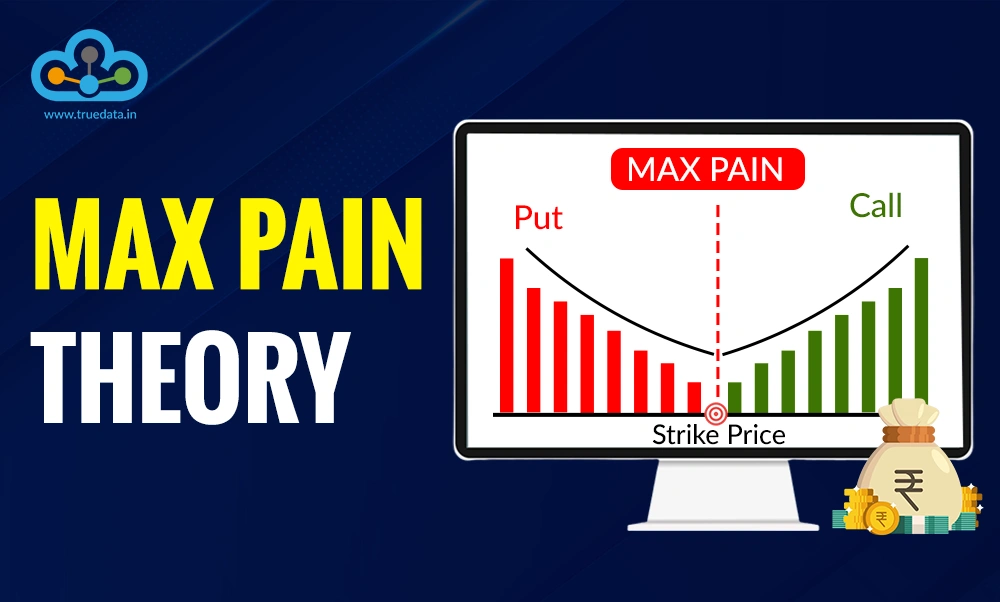
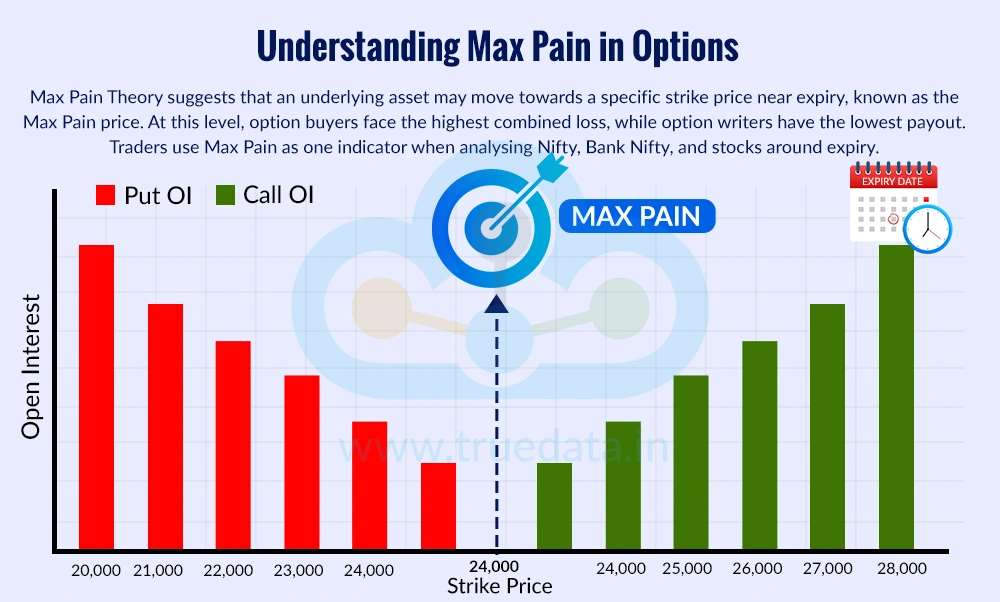
Max Pain Theory is an options-market concept that suggests the underlying asset’s price may tend to move towards a particular strike price as the expiry date approaches. This strike price is called the Max Pain point or Max Pain price. At this level, the combined loss of option buyers (call and put holders) is theoretically the highest, while option writers would face the least payout. In simple words, Max Pain tries to identify the price level at which the maximum number of options expire with the least value for buyers. Traders often track the Max Pain level for Nifty, Bank Nifty and individual stocks as one of the indicators while analysing the market around expiry.
The concept originated in the U.S. options market and became popular among traders as a way of analysing open interest across different strike prices. It is based on the distribution of open interest (OI) in call and put options and is sometimes referred to as the ‘maximum pain’ theory or ‘option pain’ theory. However, it is important to remember that Max Pain is a market theory, not a rule that guarantees where the underlying price will settle. Market trends, news, institutional activity, volatility and other factors can cause prices to move significantly away from the Max Pain level. Therefore, traders generally use it as one supporting tool rather than a standalone trading strategy.

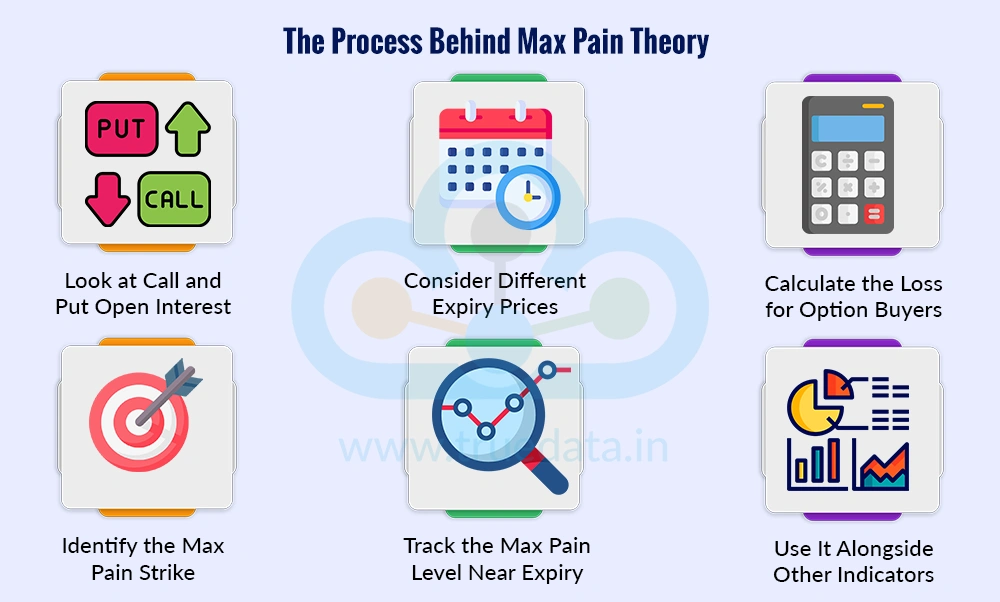
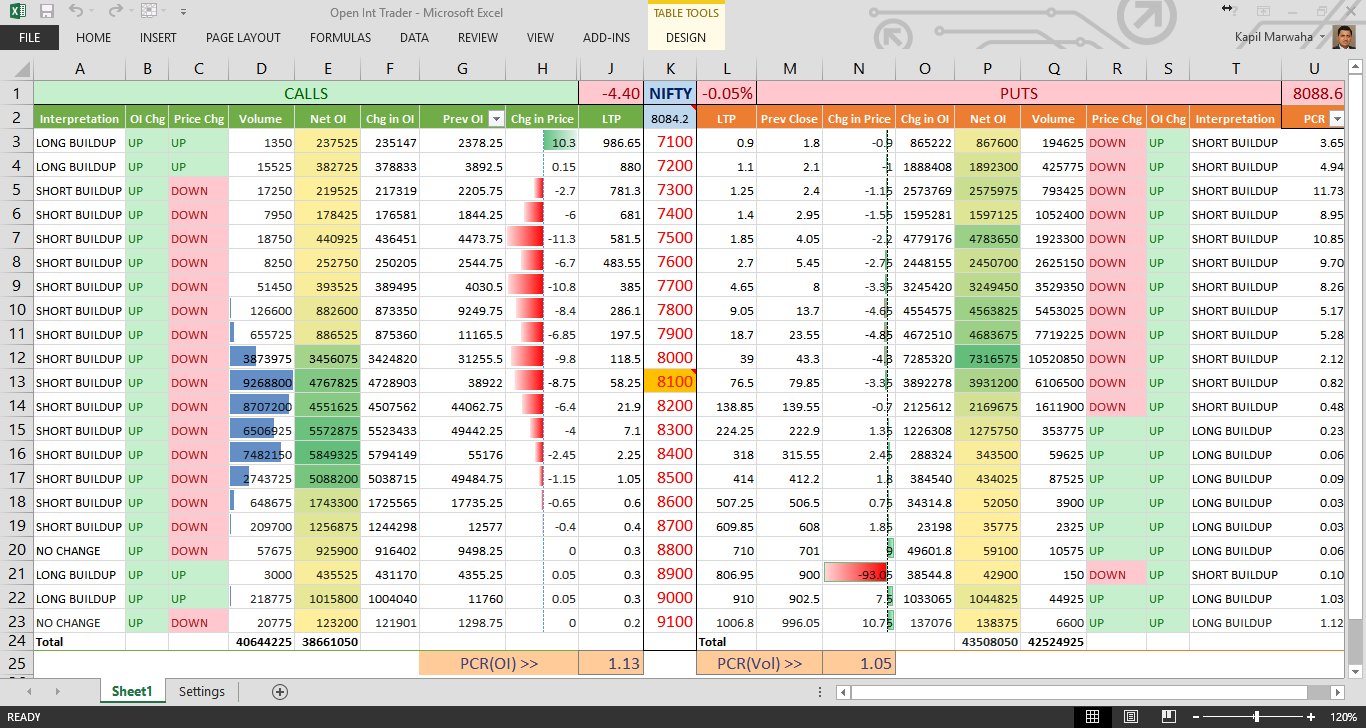
Max Pain Theory looks at the open interest (OI) in call and put options across different strike prices and identifies the strike price where option buyers would collectively face the highest loss at expiry. Traders can understand it through the following steps,
Look at Call and Put Open Interest - First, traders look at the open interest of both Call (CE) and Put (PE) options across different strike prices. Higher OI indicates that more option contracts are open at that strike.
Consider Different Expiry Prices - The potential profit or loss of option holders is calculated for different possible prices of the underlying asset at expiry. For example, traders may check what would happen if Nifty expires at 24,000, 24,100, 24,200, and so on.
Calculate the Loss for Option Buyers - For each possible expiry price, the losses of call and put option buyers are added together. The calculation considers the strike price, open interest and option type.
Identify the Max Pain Strike - The strike price at which the total loss for option buyers is the highest is identified as the Max Pain point. This is the level where option writers would theoretically have the lowest overall payout.
Track the Max Pain Level Near Expiry - Traders often compare the Max Pain level with the current market price as expiry approaches. If the two are close, some traders may consider the Max Pain level as an additional reference when analysing possible expiry movements.
Use It Alongside Other Indicators - Max Pain should not be treated as a guaranteed prediction of where the market will close. Traders should consider it along with price action, support and resistance, open interest changes, implied volatility, market trends and other relevant factors before making a trading decision.

Calculating Max Pain involves comparing the potential loss of call and put option buyers at different possible expiry prices. The expiry price at which the combined loss of all option buyers is the highest is called the Max Pain price.
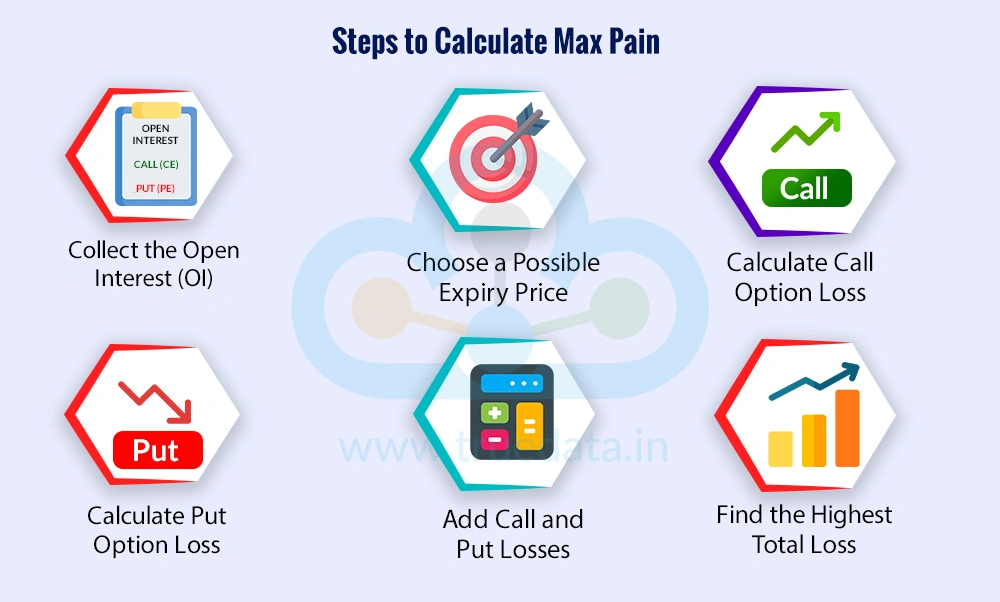
The calculation can be understood in these simple steps.
Collect the Open Interest (OI) - Note the open interest for both Call (CE) and Put (PE) options at different strike prices for the same expiry.
Choose a Possible Expiry Price - Take one strike price as a possible expiry price. Then calculate the loss that option buyers would face if the underlying asset expired at that price.
Calculate Call Option Loss - For a call option, the buyer has a loss when the expiry price is below the strike price. When the expiry price is above the strike price, the buyer has an intrinsic value.
Call loss = Max (Expiry Price - Strike Price, 0) * Call OI
Calculate Put Option Loss - For a put option, the buyer has a loss when the expiry price is above the strike price. When the expiry price is below the strike price, the buyer has an intrinsic value.
Put loss = Max (Strike Price - Expiry Price, 0) * Put OI
Add Call and Put Losses - Add the losses from all call and put strikes for that possible expiry price.
Find the Highest Total Loss - Repeat the calculation for different possible expiry prices. The price with the highest combined loss for option buyers is the Max Pain price.
Understanding the Calculation of Max Pain Theory Using an Example
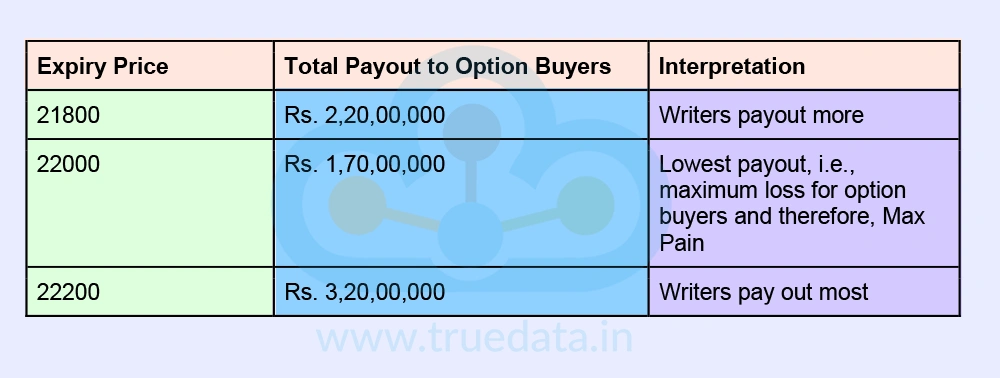
Max Pain is the expiry price at which option writers pay out the least in intrinsic value, and therefore, where option buyers collectively lose the most. The underlying asset theoretically tends to gravitate toward this level near expiry.
Therefore,
Lowest total payout to option buyers = Max Pain level
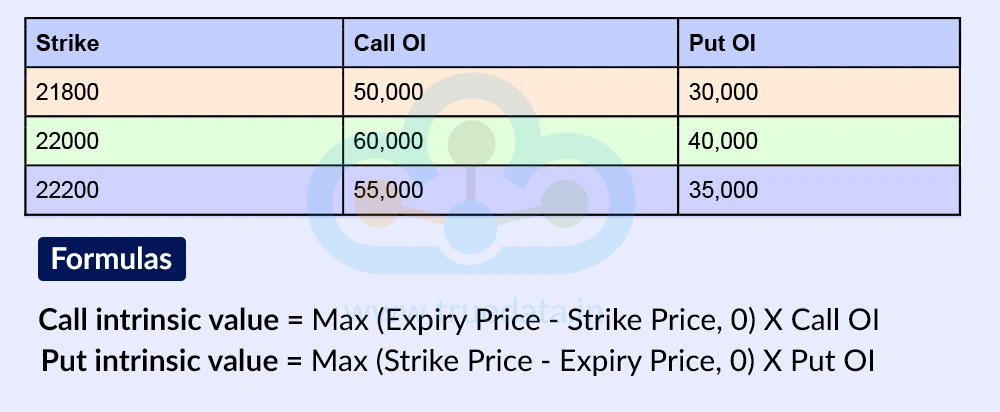
Suppose Nifty is near expiry and the options chain shows the following open interest across three strikes. For simplicity, assume lot size is 1.

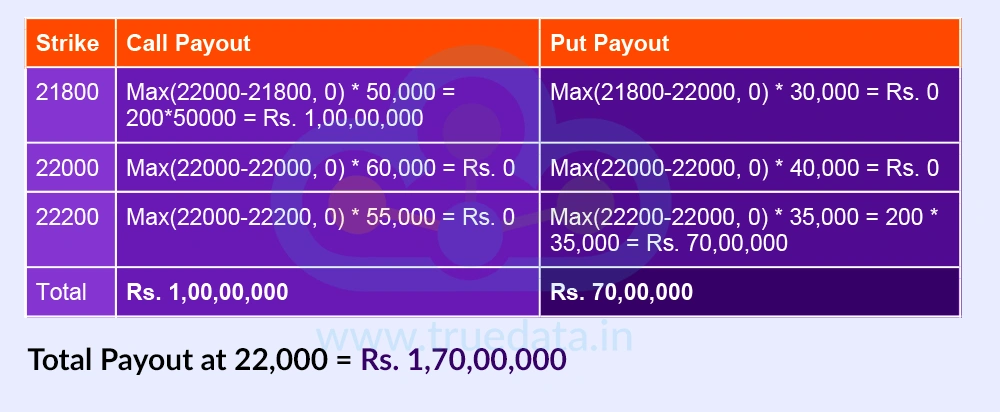
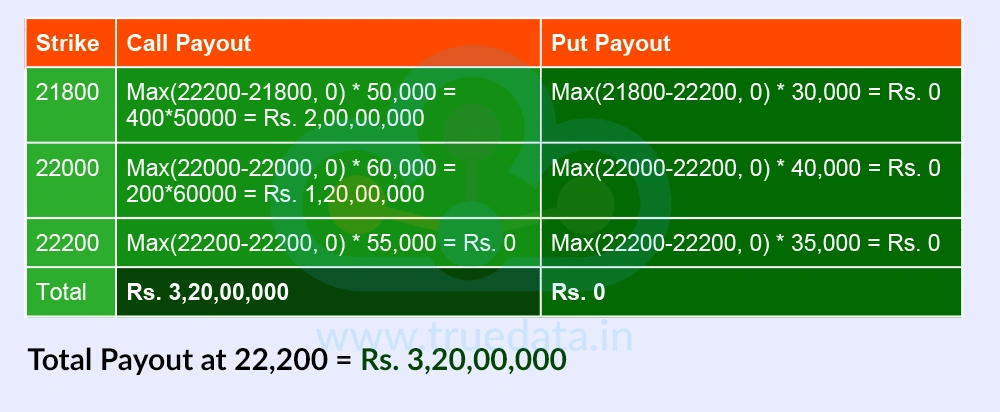
To calculate Max Pain, we assume Nifty expires at each strike price one by one. For each assumed expiry price, we calculate the intrinsic value of all the outstanding call and put options.
The formulas are,
Call intrinsic value = Max (Expiry Price - Strike Price, 0) * Call OI
Put intrinsic value = Max (Strike Price - Expiry Price, 0) * Put OI
The expiry price with the lowest total intrinsic value is the conventional Max Pain level because it represents the lowest aggregate intrinsic value obligation for option writers, i.e., the maximum loss or pain for option buyers.
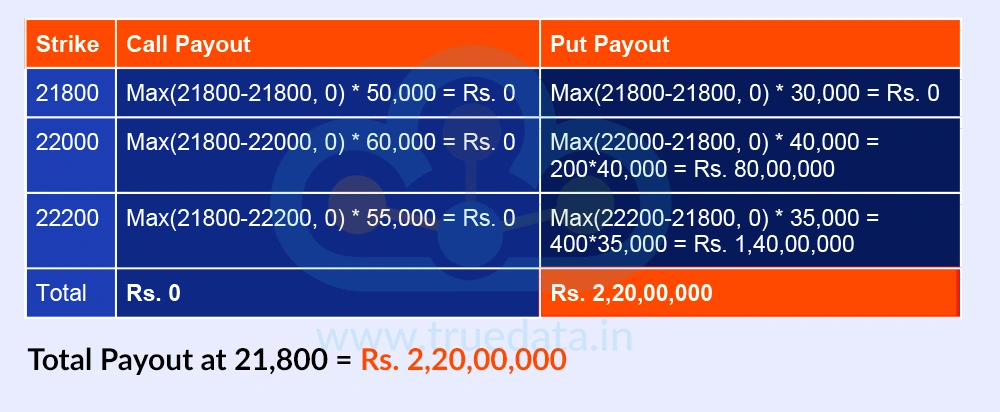
1. If Nifty Expires at 21,800

Total Payout at 21,800 = Rs. 2,20,00,000
2. If Nifty Expires at 22,000

Total Payout at 22,000 = Rs. 1,70,00,000
3. If Nifty Expires at 22,200

Total Payout at 22,200 = Rs. 3,20,00,000
Finding the Max Pain Level

Max Pain identifies the expiry price at which the combined intrinsic-value obligation represented by the outstanding call and put open interest is lowest. The theory suggests that the underlying may move towards this level as expiry approaches, potentially causing the greatest theoretical ‘pain’ to option holders relative to the distribution of open interest. However, this is only a theory and does not guarantee that Nifty will expire at the Max Pain level.
Important Notes -
This example uses a lot size of 1 for simplicity. In actual Nifty options trading, the lot size must be applied to arrive at real rupee payout values.
Only intrinsic value is used, as the premium already paid by option buyers is excluded from this calculation entirely, as it is a sunk cost that does not affect the Max Pain formula.
Real-world Max Pain uses the full options chain covering all available strikes, not just three.
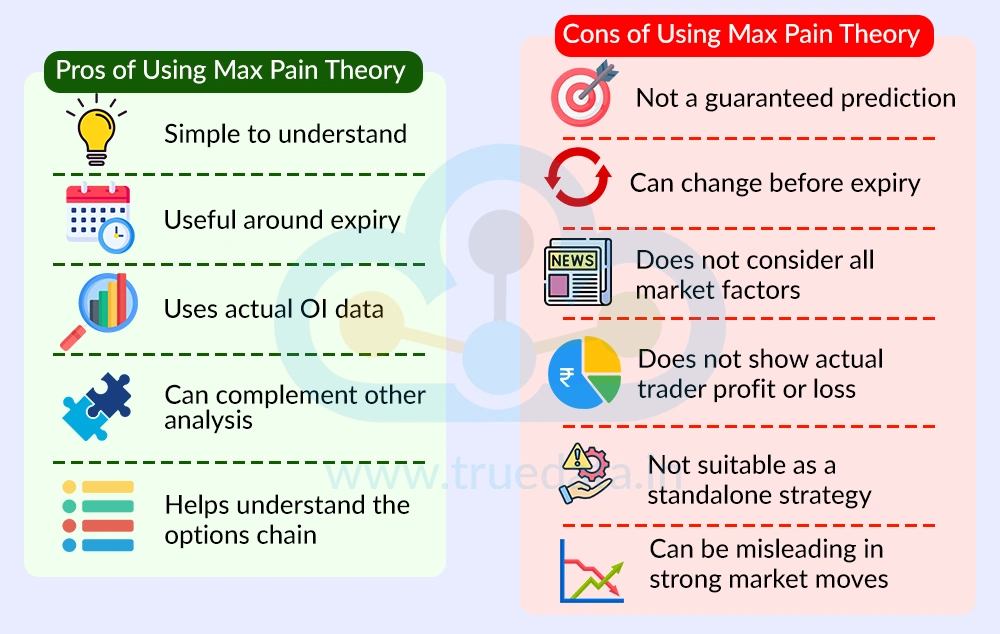
Understanding the pros and cons of Max Pain Theory is important for successful option trading and making informed portfolio decisions. The pros and cons of the Max Pain theory are explained below.

Simple to understand - Max Pain provides a specific price level that traders can track, making it easy to include in expiry analysis.
Useful around expiry - It can be particularly useful for traders who monitor the options market as expiry approaches, when changes in open interest can become important.
Uses actual OI data - Max Pain is calculated from the open interest of calls and puts across different strikes, giving traders a way to study the structure of the options chain.
Can complement other analysis - Traders can compare the Max Pain level with support, resistance, price action, OI changes and market trends to get a broader view of the market.
Helps understand the options chain - Calculating Max Pain can help beginners understand how call and put open interest at different strikes can affect the theoretical payoff at expiry.
Not a guaranteed prediction - Max Pain does not guarantee where Nifty or a stock will expire. The actual expiry price can be significantly different from the calculated level.
Can change before expiry - Max Pain is based on open interest, and OI can change as traders open, close or adjust positions. Therefore, the Max Pain level can also change.
Does not consider all market factors - It does not directly account for news, market sentiment, price momentum, volatility or unexpected events, all of which can influence prices.
Does not show actual trader profit or loss - The basic Max Pain calculation focuses on intrinsic value at expiry. It does not include the premiums paid or received, so it should not be treated as a measure of actual net P&L.
Not suitable as a standalone strategy - Using Max Pain alone to decide when to buy or sell an option can be risky. It is better used as a supporting indicator along with other forms of market analysis.
Can be misleading in strong market moves - During a strong uptrend or downtrend, the underlying may continue moving in the direction of the trend rather than moving towards the Max Pain level.
Max Pain Theory can be a useful concept for traders who want to understand how open interest across different option strikes may influence the market around expiry. It provides a theoretical price level where the aggregate intrinsic-value obligation of option writers is lowest. However, Max Pain is not a guaranteed expiry target or a standalone trading signal. Traders should use it as one supporting tool along with price action, open interest changes, support and resistance, market trends and other relevant factors before making trading decisions.
This article explains a critical concept of options trading and how to use it successfully. Let us know your thoughts on the topic or if you need further information, and we will address it soon.
Till then, Happy Reading!
Read More: What is the difference between In the Money, At the Money and Out of the Money options?
NSE Stock Prices in Excel in Real Time - Microsoft Excel is a super software cap...
Remember the first time you tried riding a bicycle? The thrill of moving forward...
Market data is the backbone ofsuccessful trading, but not all market data is the...