Capital is the lifeline of any business, and companies often need fresh funds to support expansion, repay debt, or strengthen their financial position. While companies may raise capital through debt or an IPO, an established company can also raise money from its existing shareholders through a rights issue. A rights issue gives existing shareholders the opportunity to buy additional shares, usually at a price set by the company. But does participating in a rights issue always make sense for investors? The answer is not so straightforward. The decision depends on factors such as the issue price, the company’s financial health, how the funds will be used, and your investment goals. Dive into this blog to understand the meaning of a rights issue, how it works, and what investors should consider before deciding whether to participate.

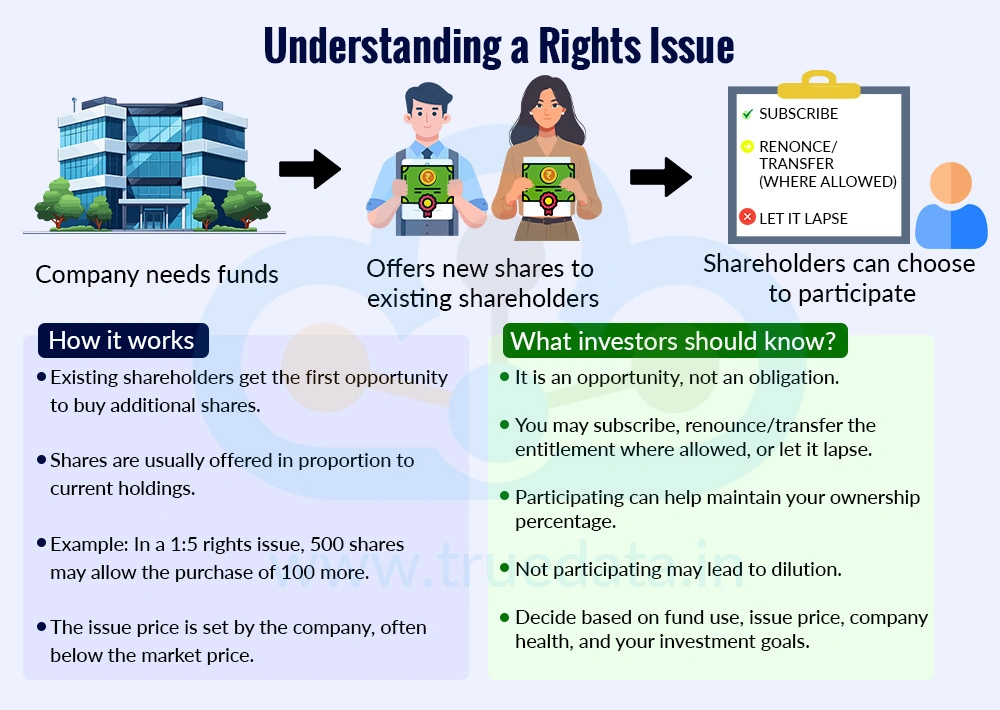
A rights issue is a way for a company to raise additional money by offering new shares to its existing shareholders, usually in proportion to the shares they already own. For example, in a 1:5 rights issue, a shareholder holding 500 shares may be entitled to buy 100 additional shares at the specified issue price. Unlike an IPO, which is open to the public, a rights issue gives existing shareholders the first opportunity to invest. In India, rights issues by listed companies are governed by Section 62(1)(a) of the Companies Act, 2013 and SEBI’s ICDR Regulations, which provide rules for the offer, disclosures and rights entitlements.
A rights issue is an opportunity for investors and not an obligation. Eligible shareholders can generally subscribe to the additional shares, transfer or renounce their rights where permitted, or allow the entitlement to lapse. Participating can help investors maintain their ownership percentage, while not participating may lead to dilution if new shares are issued to others. However, investors should not participate simply because the shares are offered at a discount. They should consider why the company is raising funds, how the money will be used, the issue price, the company’s financial health and the potential impact on the share price before making a decision.
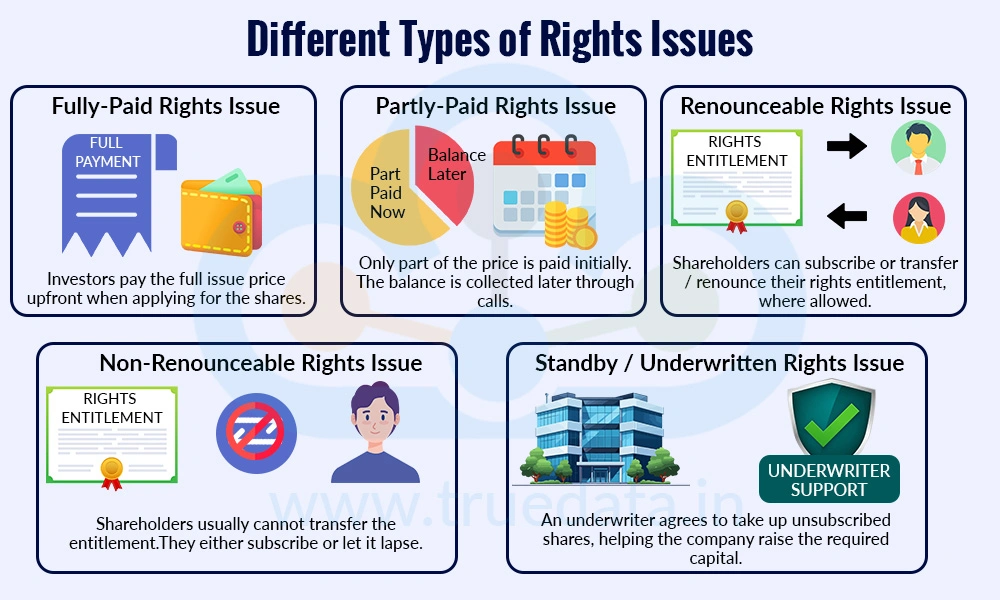
Rights issues can be broadly understood based on how the rights are offered and what shareholders can do with their entitlement. The following types and structures are important to understand.

In a fully-paid rights issue, shareholders have to pay the entire issue price of the new shares when they apply for them. For example, if the rights issue price is Rs. 100 per share and an investor applies for 100 shares, they need to pay Rs. 10,000 at the time of application. Once the shares are allotted, there are no further payments to be made. This is the simpler structure for investors because they know the full amount they need to invest upfront and do not have to worry about future payment calls.
In a partly-paid rights issue, shareholders do not have to pay the entire issue price upfront. The company may ask investors to pay a portion when applying for the shares and collect the remaining amount later through additional calls. For example, if a share is offered at Rs. 100, the company may require Rs. 40 initially and the remaining Rs. 60 at a later date. This can reduce the immediate cash requirement for investors, but they must remember that they will have to arrange the remaining money when the company makes the calls. Investors should therefore check the payment schedule carefully before subscribing.
A renounceable rights issue gives an eligible shareholder the flexibility to either subscribe to the additional shares or transfer/renounce the Rights Entitlement (RE), subject to the applicable rules and terms of the issue. For example, if you receive an entitlement to apply for 100 additional shares but do not want to invest more money, you may be able to transfer those rights to another eligible person through the permitted mechanism. This can allow shareholders to realise value from their entitlement rather than simply letting it expire. Investors should check the RE trading/transfer period because the entitlement can lapse if no action is taken within the specified period.
In a non-renounceable rights issue, shareholders generally cannot transfer or sell their rights entitlement to someone else. They can either subscribe to the shares offered to them or allow the entitlement to lapse, depending on the terms of the issue. This gives investors less flexibility compared with a renounceable rights issue. If a shareholder chooses not to participate, their percentage ownership in the company may reduce after new shares are issued to other investors. Therefore, investors should carefully check whether the rights are renounceable and understand what happens to their entitlement if they do not subscribe.
In an underwritten rights issue, an underwriter agrees, subject to the terms of the underwriting arrangement, to subscribe to some or all of the shares that existing shareholders do not take up. This provides the company with greater certainty that it will be able to raise the required capital even if the rights issue is not fully subscribed by existing shareholders. For investors, underwriting can provide some indication that arrangements are in place to support the fundraising, but it does not mean that the company or its shares are automatically a good investment. Investors should still examine why the company is raising money, its financial health, the issue price and how the funds will be used.
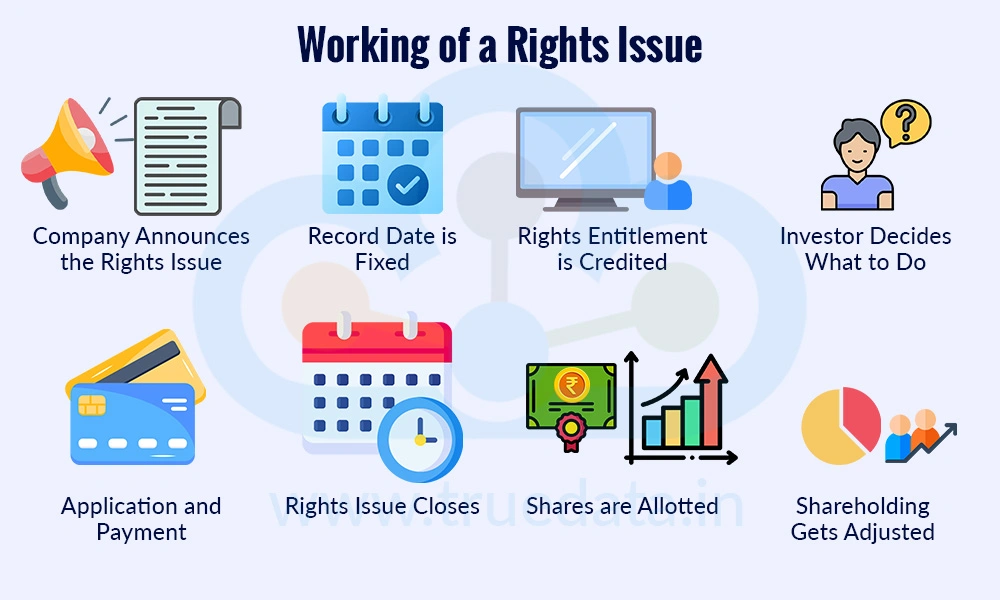
A rights issue follows a defined process that gives existing shareholders an opportunity to buy additional shares. The rights issue can be explained as under.

Company Announces the Rights Issue - The company announces that it plans to raise additional capital through a rights issue. It provides details such as the number of shares being offered, the issue price, the rights ratio and the purpose for raising the funds.
Record Date is Fixed - The company announces a record date to identify the shareholders who are eligible to receive the rights entitlement. Investors who hold the company's shares as of the relevant date, subject to the applicable rules, become eligible for the rights issue.
Rights Entitlement is Credited - Eligible shareholders receive Rights Entitlements (REs) in their demat accounts. For example, in a 1:5 rights issue, an investor holding 500 shares may receive an entitlement to apply for 100 additional shares.
Investor Decides What to Do - The investor can generally choose to,
Subscribe to all the shares offered under the entitlement.
Subscribe to only part of the entitlement, where permitted.
Renounce or transfer the REs, where the issue allows this.
Let the entitlement lapse.
Application and Payment - If the investor wants to subscribe, they need to apply through the permitted application process, such as ASBA or the mechanism specified for the issue, and pay the required amount according to the issue terms.
Rights Issue Closes - The company keeps the issue open for the specified period, during which eligible investors can submit their applications. Investors should carefully check the opening and closing dates because applications generally cannot be made after the issue closes.
Shares are Allotted - After the issue closes, the company processes the applications and allots the shares according to the applicable rules and the terms of the issue. The newly allotted shares are then credited to investors' demat accounts.
Shareholding Gets Adjusted - Once the new shares are issued, the company's total number of shares increases. Investors who participated may increase or maintain their ownership percentage, while investors who did not participate may see their percentage shareholders’ equity diluted, depending on how the issue is structured and subscribed.
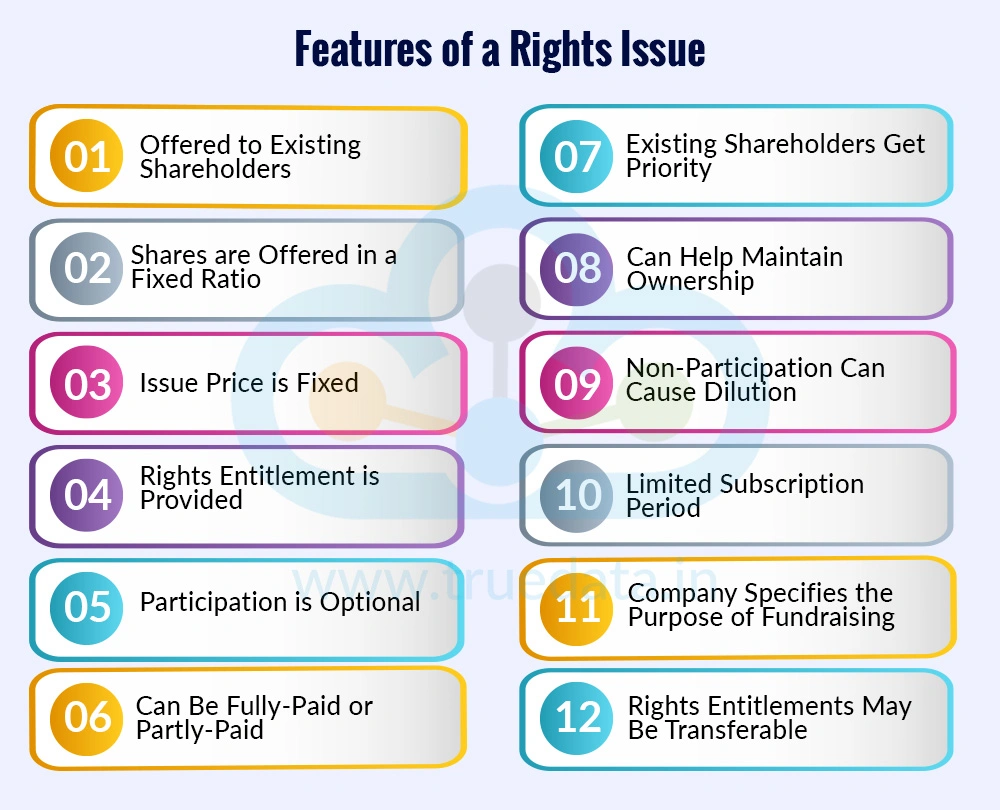
A rights issue has several features that make it different from an IPO or other methods of raising capital. Here are the key points investors should know.

Offered to Existing Shareholders - A rights issue primarily gives the company's existing shareholders an opportunity to buy additional shares. This allows them to increase or maintain their ownership in the company.
Shares are Offered in a Fixed Ratio - The company announces a rights ratio, such as 1:5 or 2:10. This tells shareholders how many new shares they can apply for based on the number of shares they already own.
Issue Price is Fixed - The company specifies the price at which the new shares will be offered. This price may be lower than the prevailing market price to encourage shareholders to participate, but investors should not assume that a discounted price automatically makes the issue attractive.
Rights Entitlement is Provided - Eligible shareholders receive Rights Entitlements (REs) representing their right to apply for the specified number of new shares. REs are generally credited to eligible shareholders' demat accounts in electronic form.
Participation is Optional - Shareholders are not required to subscribe to the rights issue. They can generally subscribe to their entitlement, subscribe to part of it where permitted, transfer/renounce the REs if allowed, or let them lapse.
Existing Shareholders Get Priority - The main purpose of a rights issue is to give existing shareholders the first opportunity to invest in additional shares before the company offers those shares to others, subject to the applicable rules.
Can Help Maintain Ownership - If an investor subscribes to the full entitlement, they can generally maintain their proportionate ownership in the company despite the increase in the total number of shares.
Non-Participation Can Cause Dilution - If a shareholder does not participate and new shares are issued to other investors, their percentage ownership in the company may decrease. This is known as dilution.
Limited Subscription Period - A rights issue remains open only for a specified period. Investors need to apply or take appropriate action within the prescribed timeline; otherwise, their entitlement may lapse.
Company Specifies the Purpose of Fundraising - The company must disclose why it is raising money, such as funding expansion, reducing debt, meeting working-capital requirements or supporting general corporate purposes. Investors should evaluate whether this purpose is likely to create value for the company.
Can Be Fully-Paid or Partly-Paid - Depending on the structure of the issue, investors may have to pay the entire amount upfront or may be required to pay a portion initially and the balance later through additional calls.
Rights Entitlements May Be Transferable - In issues where the rights are renounceable, investors may be able to transfer or sell their REs through the permitted mechanism. This gives shareholders an alternative if they do not wish to invest additional money.
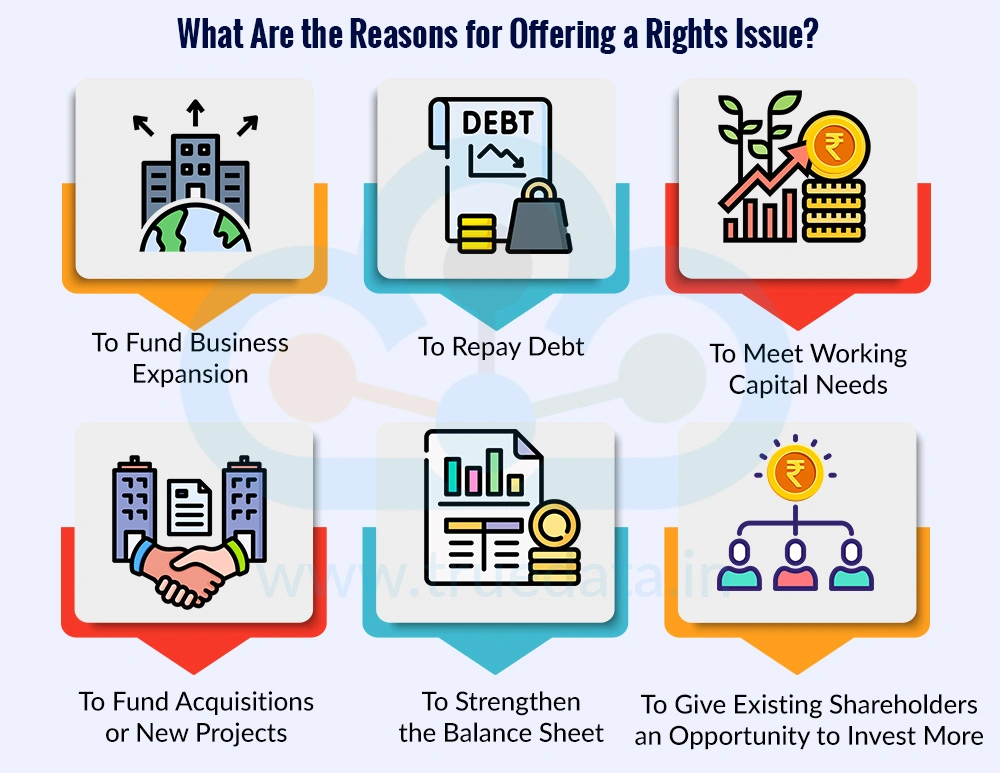
Companies offer rights issues mainly to raise fresh capital from their existing shareholders. The funds can be used for different business and financial needs.

To Fund Business Expansion - A company may raise money to expand its operations, increase production, enter new markets, launch new products or build new facilities. This can help the company support its growth plans without relying entirely on debt.
To Repay Debt - Companies may use the money raised to repay existing loans or reduce their debt burden. Lower debt can reduce interest costs and improve the company's financial position.
To Meet Working Capital Needs - Businesses need funds for their day-to-day operations, such as purchasing raw materials, paying suppliers, managing inventory and meeting other operating expenses. A rights issue can provide additional funds for these requirements.
To Fund Acquisitions or New Projects - A company may raise capital to acquire another business, invest in a new project or pursue a strategic opportunity. Equity funding can help the company finance such plans without taking on excessive additional debt.
To Strengthen the Balance Sheet - Fresh equity can increase the company's capital base and improve its overall financial position. This can give the company greater financial flexibility to manage its operations and pursue future growth.
To Give Existing Shareholders an Opportunity to Invest More - A rights issue gives existing shareholders the first opportunity to invest additional money in the company. By subscribing to their full entitlement, shareholders can generally maintain their proportionate ownership in the company.
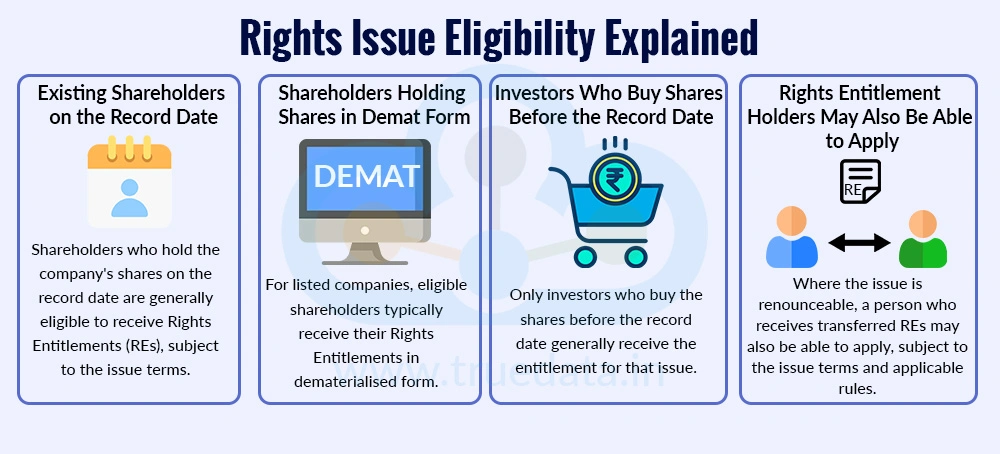
The eligibility to participate in a rights issue generally depends on whether the investor is an existing shareholder on the record date and whether they meet the conditions specified in the issue documents.

Existing Shareholders on the Record Date - Shareholders who hold the company's shares in their demat account as of the record date are generally eligible to receive Rights Entitlements (REs), subject to the terms of the issue.
Shareholders Holding Shares in Demat Form - Shares are held electronically in a demat account for listed companies. Eligible shareholders receive their Rights Entitlements in dematerialised form, subject to applicable SEBI rules.
Investors Who Buy Shares Before the Record Date - Only investors who purchase the company's shares before the record date generally receive the Rights Entitlement for that particular issue.
Rights Entitlement Holders May Also Be Able to Apply - Where the rights are renounceable, and the REs are transferred through the permitted mechanism, the person receiving the RE may be able to apply for the underlying shares, subject to the issue terms and applicable regulations.

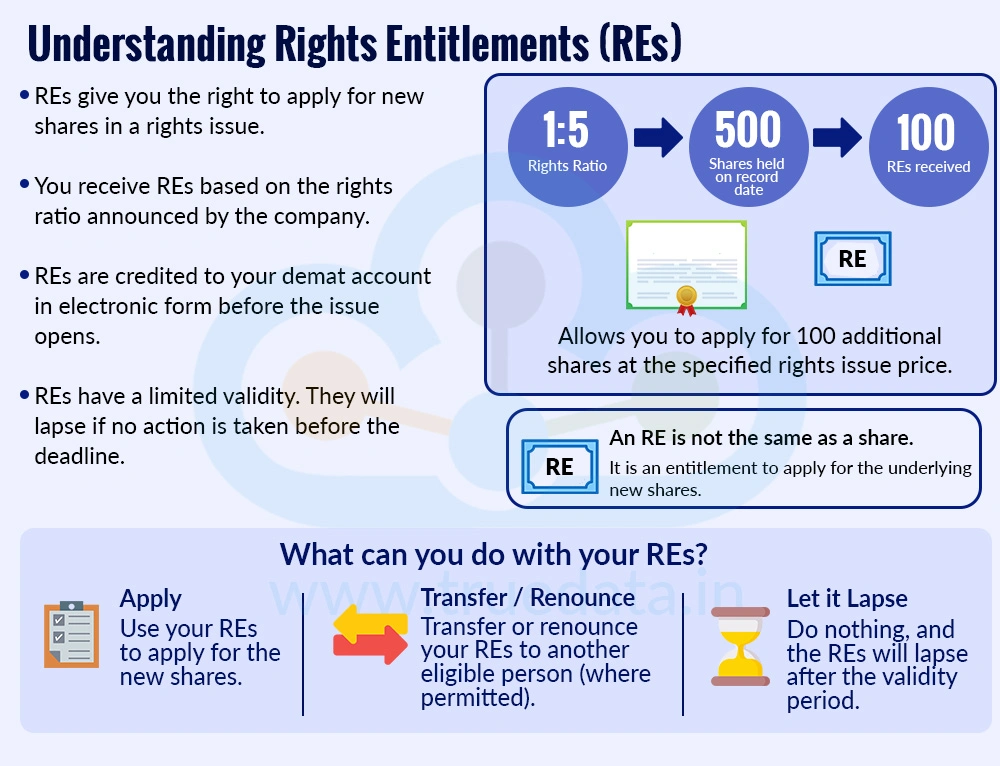
Rights Entitlements (REs) represent the right given to eligible existing shareholders to apply for a specific number of new shares in a rights issue, based on the rights ratio announced by the company. For example, if a company announces a 1:5 rights issue, a shareholder holding 500 shares on the record date may receive REs allowing them to apply for 100 additional shares at the specified rights issue price. These REs are generally credited to the demat accounts of the eligible shareholders of listed companies in electronic form before the rights issue opens. An RE is not the same as a share; it represents an entitlement to apply for the underlying new shares. Depending on the terms of the issue, an investor may use the RE to apply for the shares, transfer or renounce the RE where permitted, or allow it to lapse. Investors should also remember that REs have a limited validity period and may become worthless if no action is taken before the specified deadline.
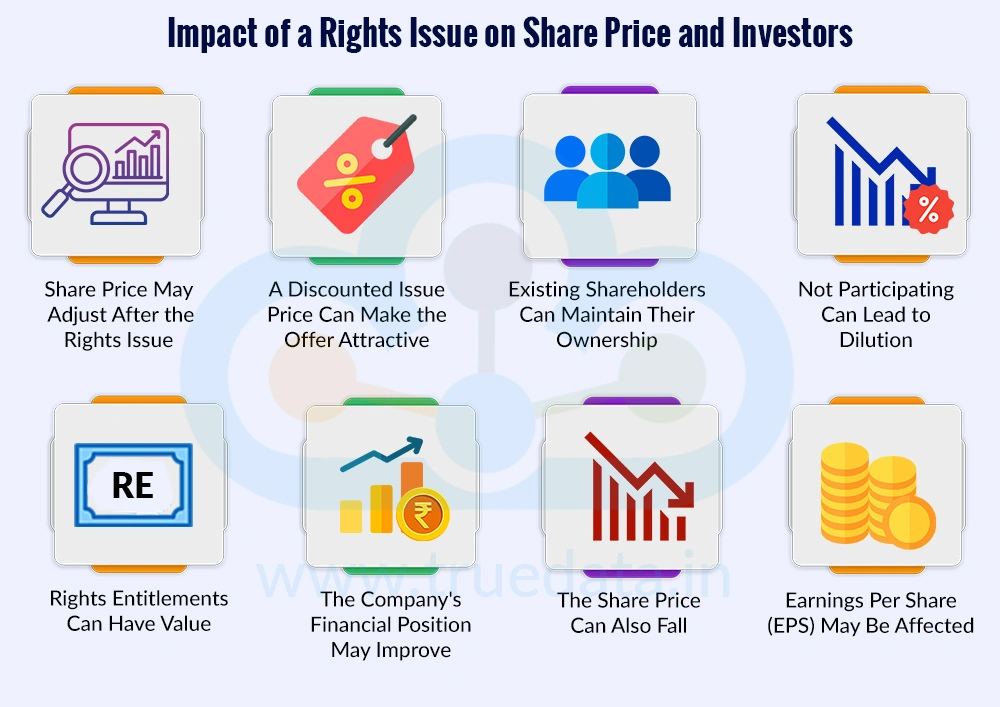
A rights issue can affect both the company's share price and the value of an investor's holding. The impact depends on factors such as the issue price, number of new shares issued, investor participation and how the company uses the money raised.

Share Price May Adjust After the Rights Issue - When a company issues additional shares, the total number of shares in circulation increases. Since the new shares are often offered at a price different from the prevailing market price, the market price may adjust after the issue. The theoretical adjustment can be understood using the Theoretical Ex-Rights Price (TERP), which considers both the existing market price and the rights issue price.
A Discounted Issue Price Can Make the Offer Attractive - Companies may offer rights shares below the current market price to encourage shareholders to participate. However, investors should not assume that the discount automatically means they are getting a bargain. The market price can adjust after the issue, and the company's future performance remains important.
Existing Shareholders Can Maintain Their Ownership - If an investor subscribes to their full rights entitlement, they can generally maintain their proportionate ownership in the company despite the increase in the number of shares. This can be useful for investors who remain confident about the company's long-term prospects.
Not Participating Can Lead to Dilution - If an investor does not subscribe to the rights issue and new shares are issued to other shareholders or investors, their percentage ownership in the company may decrease. For example, if the company significantly increases its share capital and you do not participate, your existing shares may represent a smaller percentage of the company.
Rights Entitlements Can Have Value - In a renounceable rights issue, the Rights Entitlement (RE) may be transferable through the permitted mechanism. This means an investor who does not want to subscribe may be able to transfer the RE instead of allowing it to lapse. The value of an RE can change depending on the company's share price, rights issue price, market conditions and time remaining before the entitlement expires.
The Company's Financial Position May Improve - A successful rights issue can strengthen the company's financial position by bringing in fresh equity. If the company uses the funds to reduce expensive debt, expand a profitable business or finance productive projects, it could potentially support long-term growth.
The Share Price Can Also Fall - A rights issue is not automatically a positive event. If investors believe the company is raising money because of financial difficulties, continuing losses or weak cash flows, market sentiment may turn negative. The share price can therefore fall despite the company receiving fresh capital.
Earnings Per Share (EPS) May Be Affected - A rights issue increases the number of shares outstanding. If the additional capital does not generate enough additional profit, EPS may decrease because the company's earnings are spread across a larger number of shares. On the other hand, if the funds are used effectively and generate higher profits, EPS may improve over time.

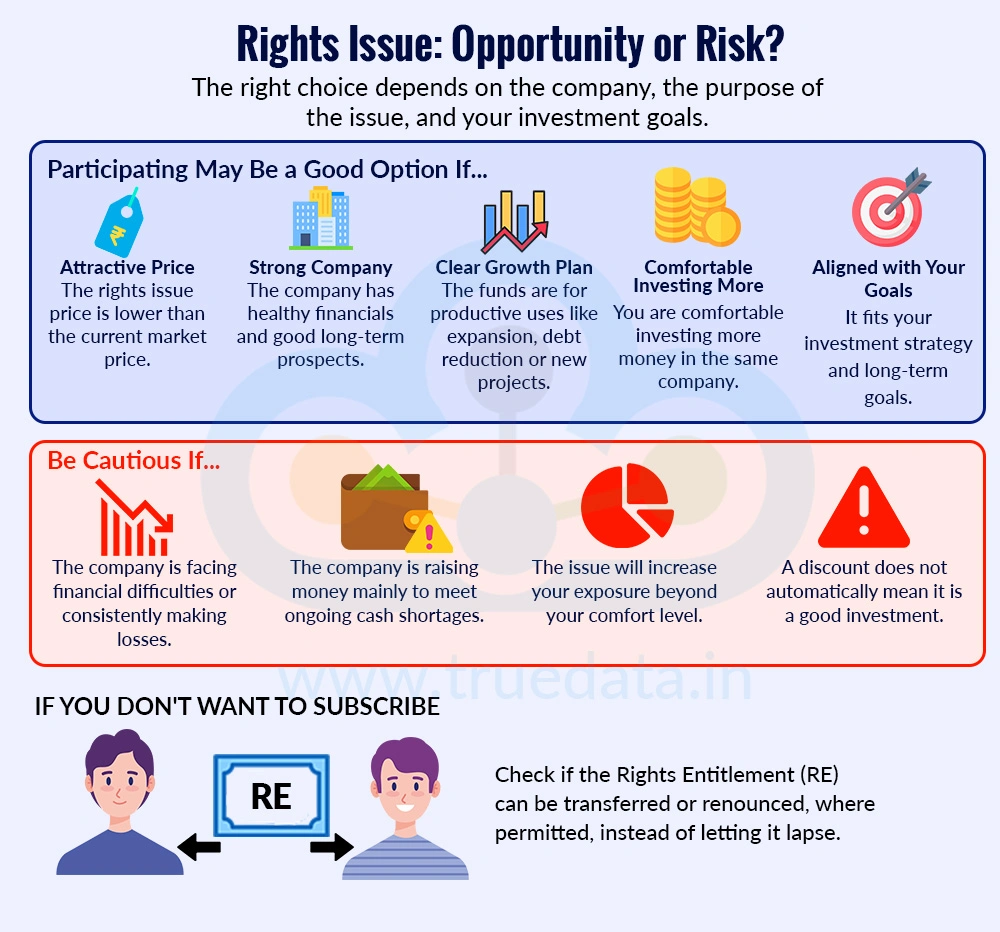
Participating in a rights issue can make sense if you understand the company and remain confident about its long-term prospects. Before investing, investors should look at the rights issue price compared with the current market price, the company's financial health, its growth plans and, most importantly, why it is raising the money. If the funds are being used for productive purposes such as business expansion, reducing high-cost debt or funding promising projects, participating may be worth considering. Investors should also consider whether they are comfortable investing more money in the same company and increasing their exposure to it.
However, a discounted rights issue does not automatically mean it is a good investment. If the company is facing financial difficulties, consistently making losses or raising money mainly to meet ongoing cash shortages, investors should be more cautious. If investors decide not to subscribe, check whether the Rights Entitlement (RE) can be transferred or renounced, where permitted, rather than simply allowing it to expire.
A rights issue gives existing shareholders an opportunity to invest more in a company and potentially maintain their ownership stake. However, investors should not participate simply because the shares are offered at a discount. Before making a decision, consider the company's financial health, reason for raising funds, issue price and how the money will be used. A well-planned rights issue can support future growth, but it may also carry risks if the company is facing financial challenges. Making an informed decision can help investors decide whether participating in the rights issue is right for them.
This article focuses on rights issues, which are a common way for companies to raise capital through existing shareholders. Let us know your thoughts on this topic or if you need further information, and we will address it soon.
Till then, Happy Reading!
Read More: What is an Offer for Sale? How does it differ from an IPO?
Thestock market never stands still, and prices swing constantly with every new h...
Corporate data is more than just the numbers of a company. They can show what is...
Investing is not just about numbers on a screen. It is about understanding the s...