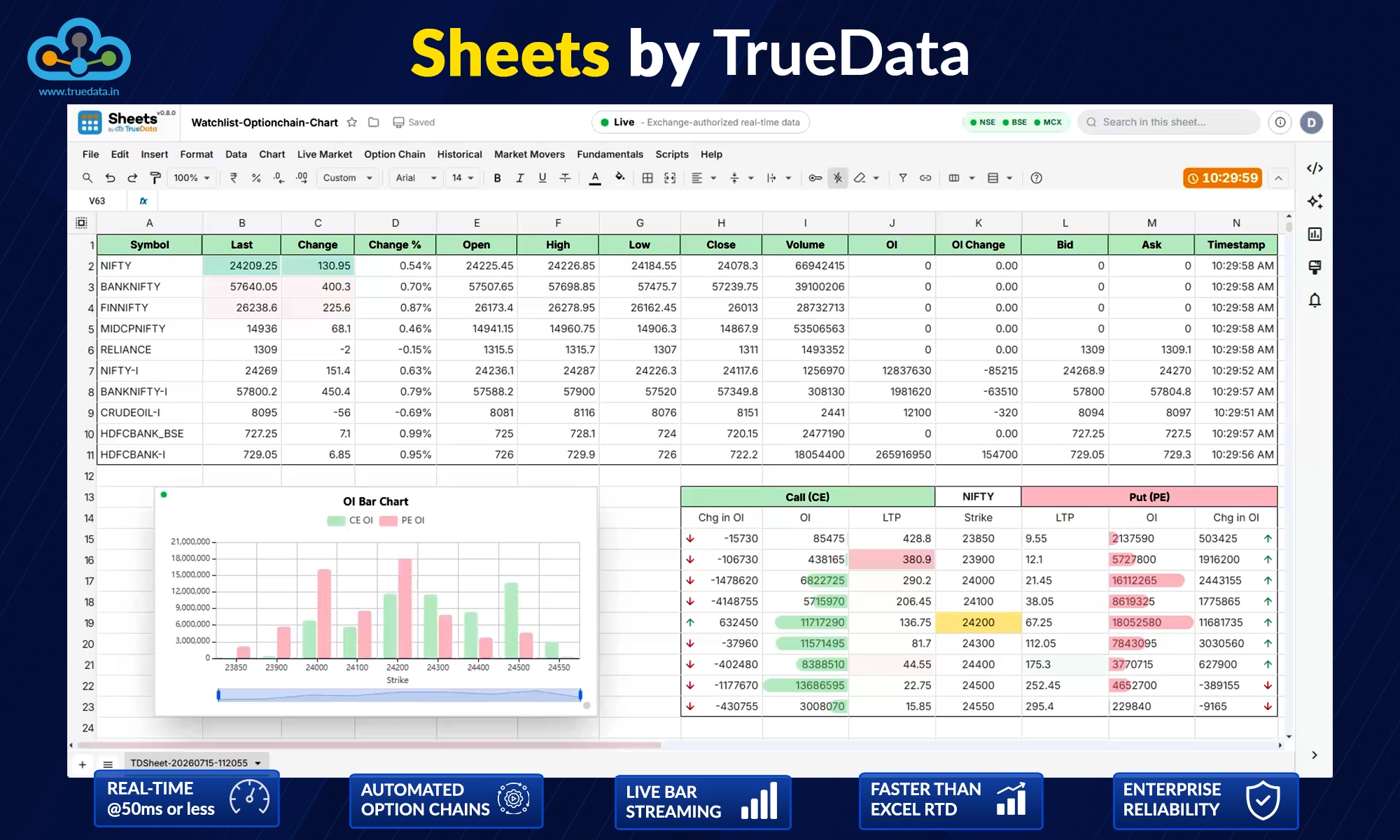
When you track stock prices, every movement in the market can matter. But have you ever noticed that the price shown on your screen may sometimes be a few minutes behind the actual market? This is where the difference between real-time and delayed market data becomes important. Let us understand how these two types of market data work and why the difference matters to investors and traders.

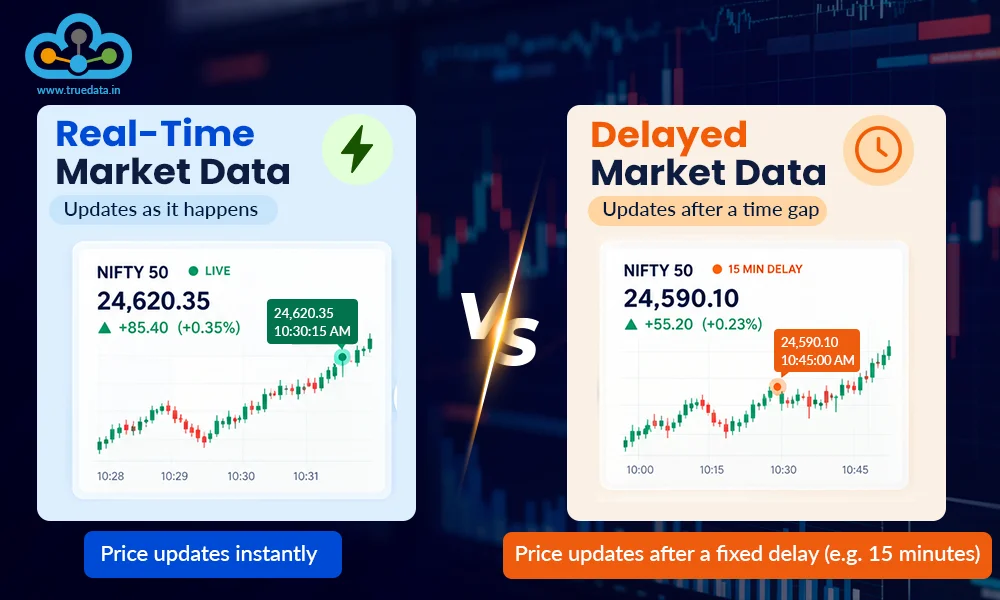
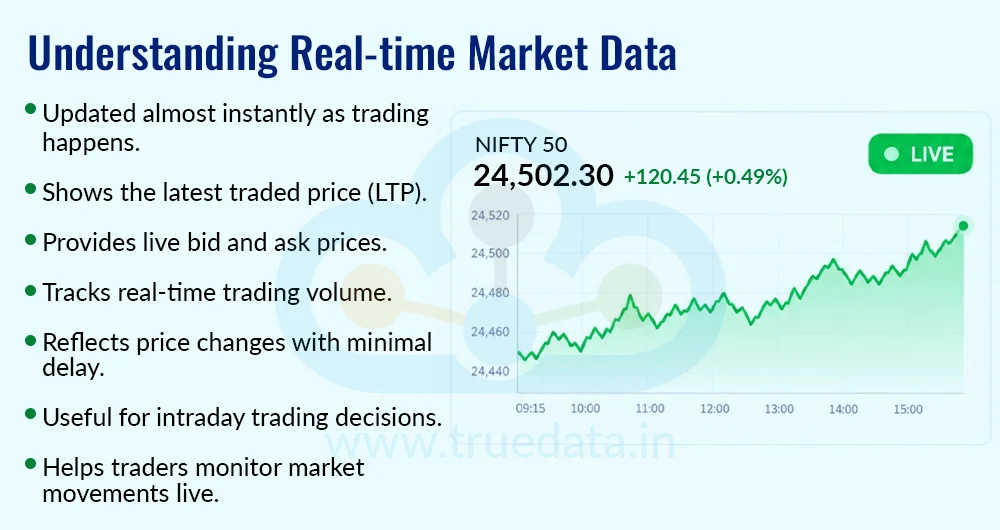
Real-time market data refers to market information that is updated almost immediately as trading activity happens on a stock exchange. It can include details such as a stock’s latest traded price (LTP), bid and ask prices, trading volume, and other market information. For example, if a stock’s price changes from Rs. 500 to Rs. 502 on the exchange, real-time data allows a trader to see that change with very little delay. This can be particularly useful for intraday traders and investors who need the latest market information to make timely decisions. Real-time market data helps you see what is happening in the market as it happens, rather than relying on prices from a few minutes earlier.
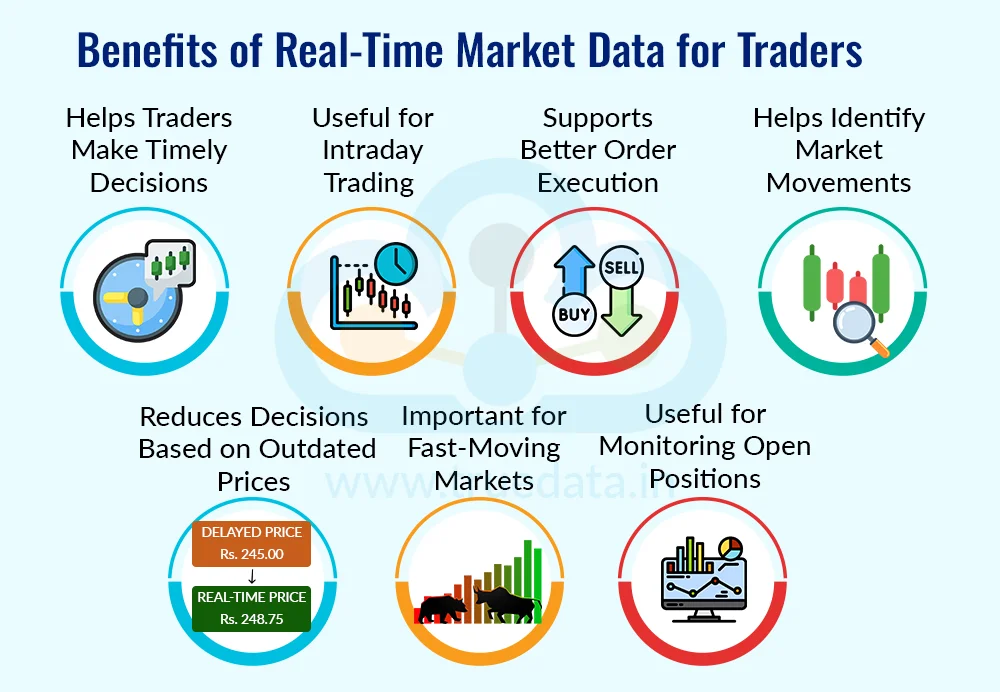
The importance of market data for successful trading is explained below.

Helps Traders Make Timely Decisions - Financial markets can move quickly, especially during important news, earnings announcements or periods of high volatility. Real-time market data gives traders the latest available price and trading information, helping them make decisions based on what is happening in the market at that moment rather than relying on older prices.
Useful for Intraday Trading - Real-time data is particularly important for intraday traders because they open and close positions within the same trading session. Even a small price movement can affect an entry or exit. Access to current prices, volumes and bid-ask information can help traders monitor their trades more closely.
Supports Better Order Execution - When a trader places an order, the actual market price can change quickly. Real-time data gives a more current view of the market, which can help traders decide when to place, modify or exit an order. It can also help them understand why the execution price may differ from the price they saw a moment earlier.
Helps Identify Market Movements - Real-time market data can make it easier to spot sudden price changes, changes in trading volume and other short-term market activity. Traders using strategies based on breakouts, momentum, or technical indicators may find timely data especially useful for tracking these movements.
Reduces Decisions Based on Outdated Prices - With delayed data, the price displayed on the screen may be different from the current market price. A trader could therefore make a decision based on information that is already a few minutes old. Real-time data reduces this gap and provides a more up-to-date picture of market conditions.
Important for Fast-Moving Markets - Real-time data becomes particularly useful when markets are moving rapidly. During events such as the Union Budget, RBI policy announcements, company results or major global market developments, stock prices can change quickly. Having timely market information can help traders follow these movements as they happen.
Useful for Monitoring Open Positions - Real-time data also helps traders keep track of positions after an order has been executed. By seeing the latest price and market activity, they can monitor whether the trade is moving as expected and manage their position according to their trading plan.

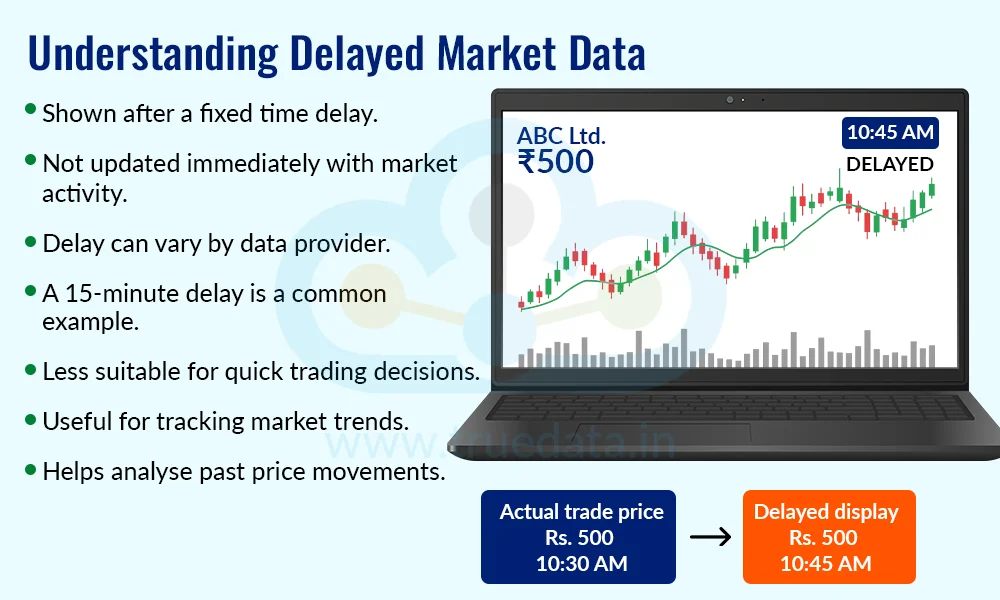
Delayed market data is market information that is shown to investors after a fixed time gap instead of almost immediately. For example, if a stock trades at Rs. 500 at 10:30 AM, a platform providing 15-minute delayed data may show that price around 10:45 AM. The delay can vary depending on the exchange, data provider and type of market data. While delayed data may not be suitable for traders who need the latest price for quick decisions, it can still be useful for investors who are tracking market trends, studying stocks or analysing historical price movements. Delayed market data shows traders what happened in the market a little earlier, rather than what is happening right now.
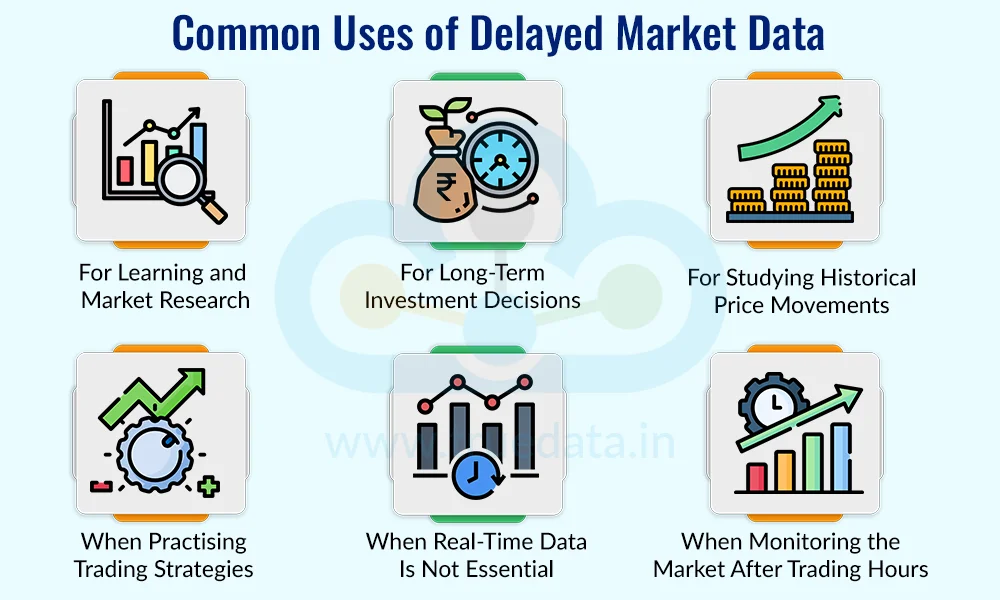
The use of delayed market data can be explained below.

For Learning and Market Research - Delayed market data can be useful for investors who are learning how the stock market works or researching companies. Since the data shows actual market prices and activity, it can help investors study price movements, trading volumes and market trends without needing live updates.
For Long-Term Investment Decisions - Investors who follow a long-term approach may not need prices that update every second. If the goal is to analyse a company’s financial performance, valuation and long-term growth prospects, a small delay in market prices may not significantly affect the decision.
For Studying Historical Price Movements - Delayed data can also be useful for analysing how a stock has moved during the trading session. Traders can use such information to study charts, identify patterns and review how prices reacted to different market events.
When Practising Trading Strategies - Beginners can use delayed data to understand how trading strategies work before using real money. It can help them observe price movements and practise reading charts, indicators and trading patterns. However, the delay should be kept in mind when evaluating how a strategy would work in live market conditions.
When Real-Time Data Is Not Essential - Not every trading activity requires second-by-second information. For example, an investor checking a stock occasionally or reviewing the broader market trend may find delayed data sufficient. However, traders who depend on quick entries and exits generally need more timely data.
When Monitoring the Market After Trading Hours - Delayed market data can also be useful for reviewing the day’s market activity after trading hours. Investors can look at closing prices, volumes and price movements to understand what happened during the session and prepare for further analysis.
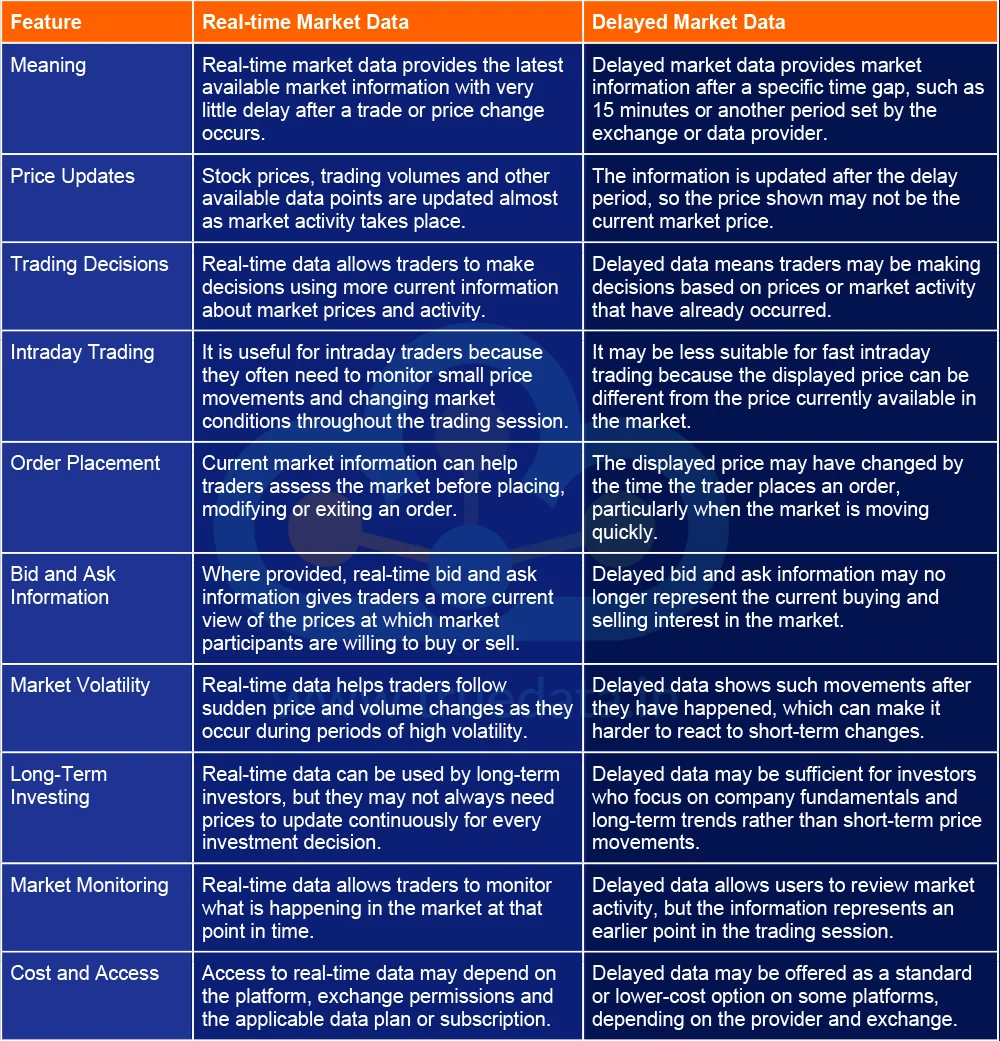
Real-time market data shows market activity almost as it happens, while delayed market data shows it after a specified time gap. The key differences between these market data types are explained below.

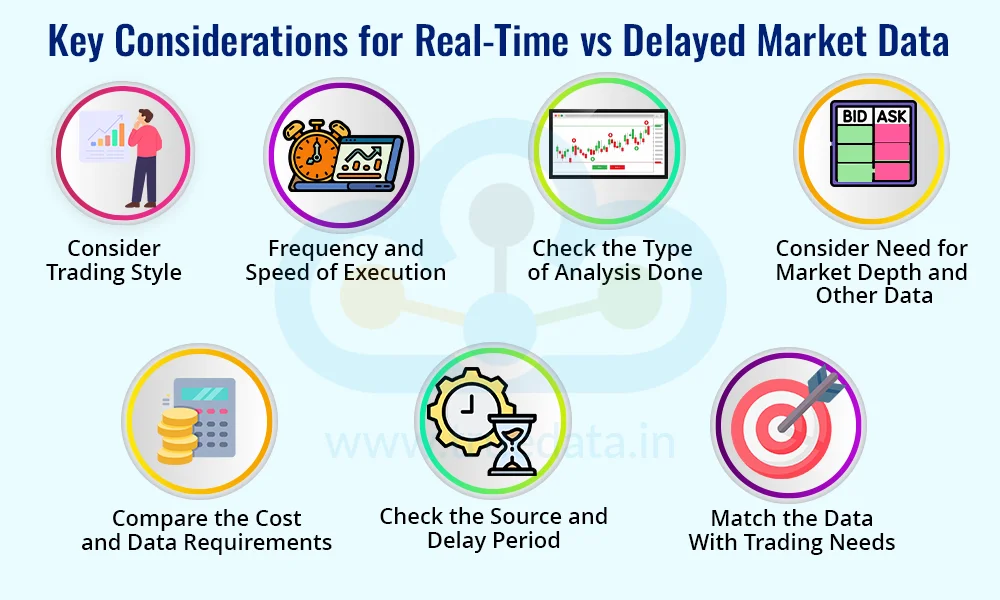
The choice between real-time and delayed market data depends mainly on how traders trade, how often they need price updates, and how quickly they need to act. There is no single option that suits every investor. Understanding trading needs can help traders choose the type of market data that fits their requirements.

Consider Trading Style - An intraday trader, scalper or active trader may need frequent and timely price updates because trades can depend on small price movements. Real-time market data can provide a more current view of prices and market activity. On the other hand, investors who follow a longer-term approach may not need prices to update every second.
Frequency and Speed of Execution - Consider whether a few minutes of delay could affect your trading decision. If traders regularly enter or exit positions based on short-term price movements, delayed data may show a price that is different from the current market price. In such cases, access to real-time data can be more relevant.
Check the Type of Analysis Done - The choice can also depend on the type of analysis traders perform. Traders using intraday charts, technical indicators, breakout strategies, or momentum-based approaches may require more current data. If traders mainly study company fundamentals, historical prices or longer-term market trends, delayed data may still be useful for many research activities.
Consider Need for Market Depth and Other Data - Do not look only at the stock price. Check what information the data feed provides, such as bid and ask prices, trading volume, market depth, option-chain information and other available data points. If the trading strategy depends on such information, make sure the chosen data service provides it with the required level of timeliness.
Compare the Cost and Data Requirements - Real-time market data may involve additional charges depending on the exchange, broker, platform or data provider. Before paying for a data feed, consider how frequently traders actually need live information and whether its features match their trading requirements. If traders mainly use market data for learning or research, a delayed feed may be sufficient for their needs.
Check the Source and Delay Period - Not all delayed data feeds necessarily have the same delay. The delay can vary based on the exchange, market, data type and provider. Before using a feed for trading or analysis, check how much the data is delayed and which markets and instruments are covered.
Match the Data With Trading Needs - The choice between these types of data should be based on its use. If the trading decisions depend heavily on current market movements and quick order execution, real-time data may be more relevant. If traders mainly research stocks, study market trends, or review past movements, delayed data may meet their requirements without the need for continuous live updates.
Real-time and delayed market data both have their uses, but the right choice depends on your trading needs. Real-time data can be helpful when you need the latest price and market activity for timely trading decisions, while delayed data may be enough for research, learning and long-term investing. Understanding this difference can help investors choose the right market data and use it more effectively in their trading journey.
This article explains the important distinction between real-time market data and delayed market data and how it can impact trading strategies. Let us know your thoughts on this topic or if you need further information, and we will address it soon.
Till then, Happy Reading!
Read More: Understanding Tick-by-Tick Data: Benefits & Challenges
Market data is the foundation of informed trading decisions, and having access t...
Investment in the securities market is rising, even asvolatility keeps investors...
Life has always been unpredictable, but the COVID-19 pandemic and the events tha...