Life has always been unpredictable, but the COVID-19 pandemic and the events that followed have made many of us look at financial security differently. Insurance is no longer something to consider only after building wealth, but rather an important part of a well-rounded financial plan. Yet, choosing the right insurance can be confusing, especially when terms such as life insurance and term insurance are often used interchangeably. So, are you wondering whether term insurance and life insurance are actually the same? Or are you unsure about which one may be more suitable for your financial goals and your family’s needs? Check out our blog to understand the meaning and scope of term insurance and life insurance and the differences between the two to make informed financial plans.

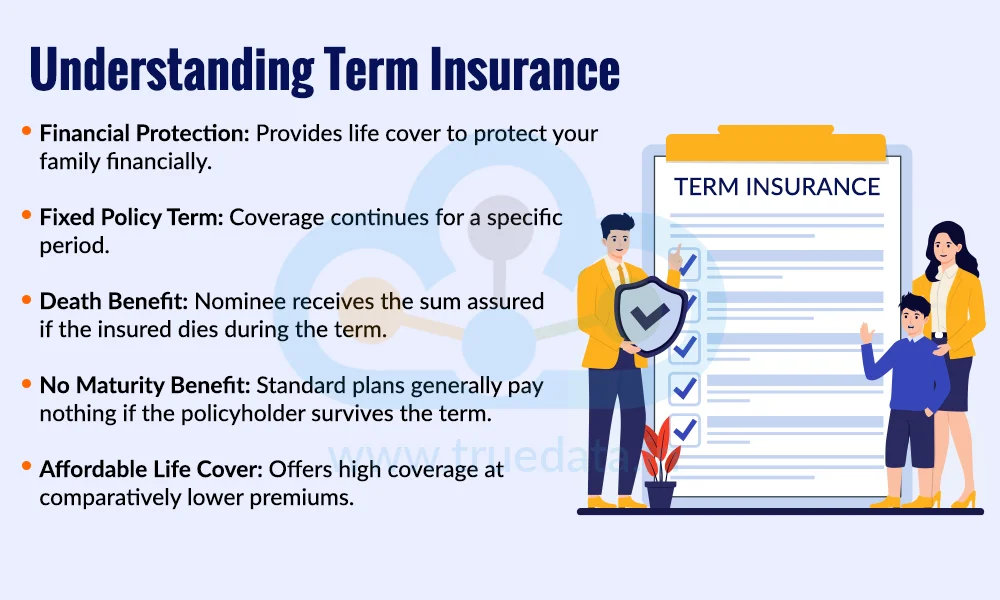
Term insurance is a pure life insurance plan that provides financial protection to the policyholder’s family for a fixed period, known as the policy term. Under this plan, policyholders pay a regular premium to the insurance company, and if the insured person dies during the policy term, the insurer pays the agreed sum assured (death benefit) to the nominee. If the policyholder survives the entire term, a standard term insurance policy generally does not pay any maturity benefit. The main purpose of term insurance is therefore protection rather than investment or wealth creation. Since it usually does not include savings or investment components, term insurance can offer a relatively high life cover at a comparatively lower premium. This can make it useful for protecting dependants against financial obligations such as home loans, education expenses, household costs and other long-term financial goals if the earning member is no longer around.
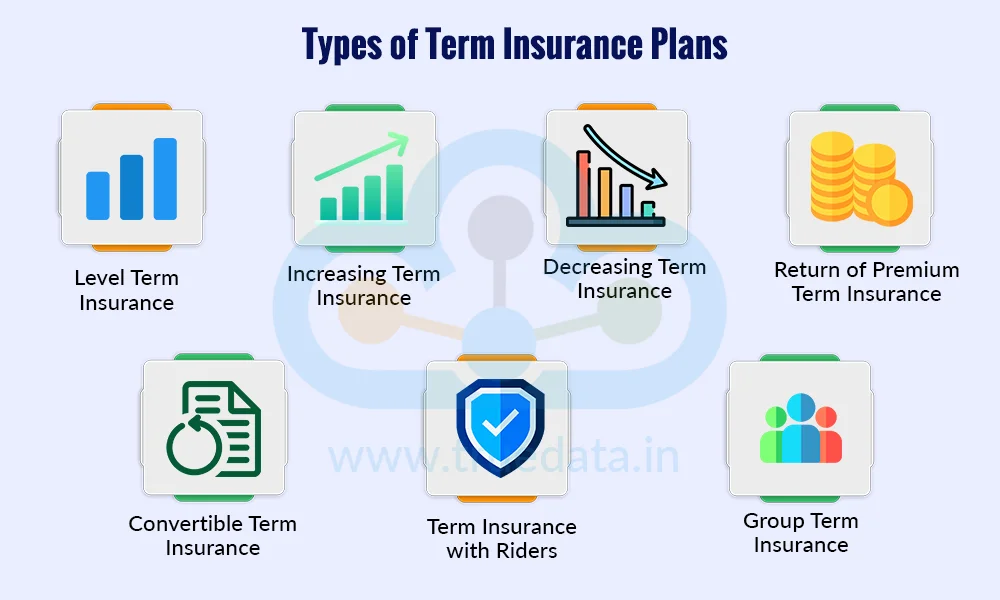
Term insurance is primarily designed to provide financial protection to the policyholder’s family for a specified period. However, term insurance plans can differ in the way the death benefit is paid, the level of cover changes over time, and the additional features offered. Some common types of term insurance plans in India are as follows.

Level Term Insurance - Under a level term insurance plan, the sum assured generally remains the same throughout the policy term. For example, if a policyholder chooses a Rs. 1,00,00,000 cover, the death benefit generally remains Rs. 1,00,00,000 throughout the policy period, subject to the policy terms. This type of plan is relatively simple and can be suitable for individuals who want a consistent level of financial protection for their dependants.
Increasing Term Insurance - An increasing term insurance plan allows the life cover to increase over time, usually according to a predefined structure in the policy. The increase can help an individual account for rising income, inflation and growing financial responsibilities. Such plans may be considered by individuals who expect their family’s financial needs to increase over the years.
Decreasing Term Insurance - Under a decreasing term insurance plan, the sum assured reduces over the policy term according to a predefined schedule. These plans are often designed to cover a liability that also reduces over time, such as a home loan or another outstanding loan. As the loan balance decreases, the required financial protection may also reduce.
Return of Premium Term Insurance - A return of premium term insurance plan generally provides life cover during the policy term and may return the eligible premiums paid if the policyholder survives the policy term, subject to the specific terms and conditions of the policy. Since it offers an additional maturity-related benefit compared with a standard term plan, the premium may be higher. Investors should therefore compare the cost and benefits carefully before choosing this option.
Convertible Term Insurance - A convertible term insurance plan provides an option to convert the term policy into another type of life insurance policy, subject to the terms and conditions of the insurer and the policy. This can provide flexibility if the policyholder’s financial needs change in the future. The availability of such a conversion option, the eligible products and the applicable conditions can vary between policies.
Term Insurance with Riders - Some term insurance plans allow policyholders to add riders, which are additional benefits available at an extra cost or under specified conditions. Depending on the policy, riders may provide additional protection for situations such as accidental death or certain critical illnesses. Investors should assess whether a rider addresses a genuine financial need rather than adding features simply because they are available.
Group Term Insurance - Group term insurance provides life cover to a group of individuals under a common master policy, rather than each member purchasing an individual policy separately. Employer-provided group life cover is a common example. However, such cover may be linked to employment or membership of the group, so individuals should understand whether the coverage continues if they leave the organisation.

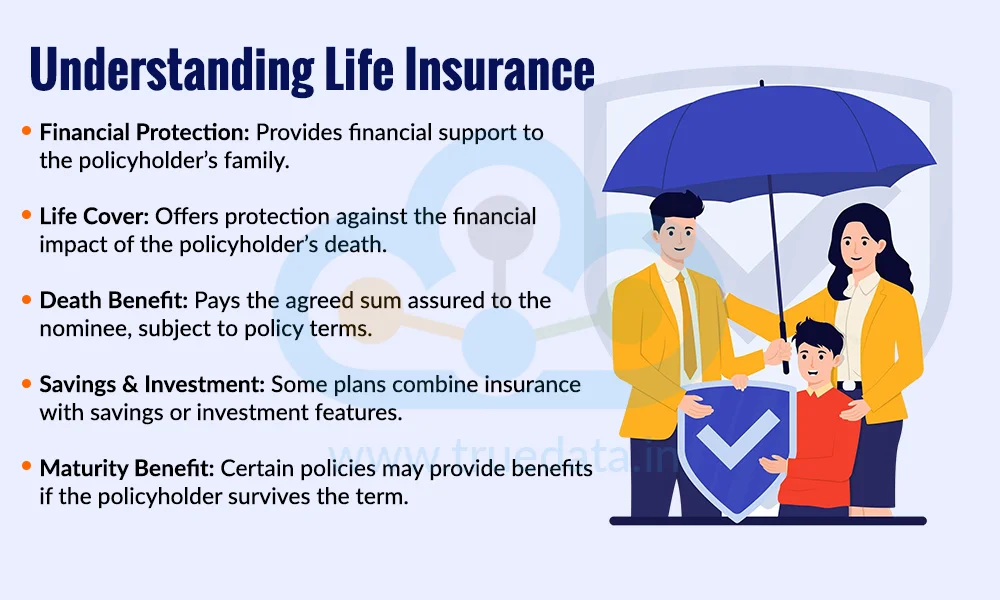
Life insurance is a financial protection product designed to provide financial support to a policyholder’s family or other nominees in the event of the policyholder’s death. Under a life insurance policy, the policyholder pays a premium to the insurance company in return for a defined life cover, and if the insured event occurs during the policy period, the insurer pays the agreed death benefit (sum assured) to the nominee, subject to the terms and conditions of the policy. Unlike pure term insurance, some types of life insurance policies may combine insurance protection with savings or investment features and may provide a maturity benefit if the policyholder survives the policy term. Life insurance therefore covers a broad range of products, including term insurance, whole life insurance, endowment plans and certain other savings-linked insurance plans. The key purpose of life insurance is to provide financial protection against the loss of an earning member, while the specific benefits, premiums, maturity proceeds and investment features depend on the type of policy selected.
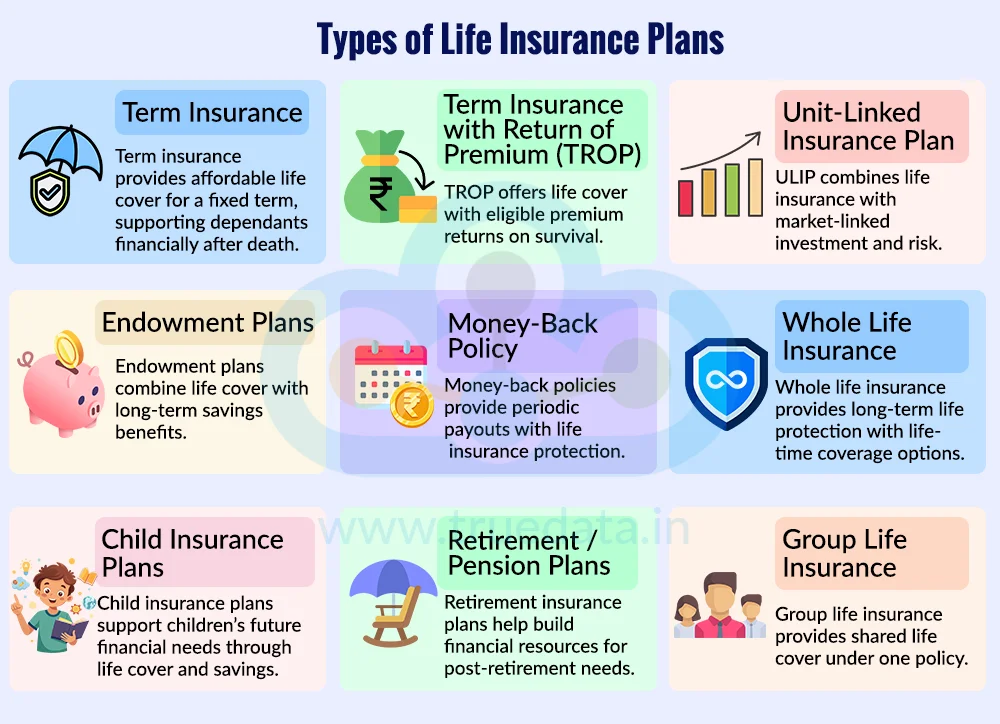
Life insurance plans in India come in different forms, with each type designed to meet a particular financial need. While some plans focus mainly on providing life protection, others combine insurance with savings, investment or retirement-related benefits. The key types are explained below in simple terms.

Term Insurance - Term insurance is a pure protection plan that provides life cover for a fixed policy term. If the policyholder dies during the policy term, the insurer generally pays the agreed death benefit to the nominee, subject to the policy terms and conditions. If the policyholder survives the entire term, a standard term plan generally does not provide a maturity benefit. It can therefore be suitable for individuals who want a relatively high level of financial protection for their dependants at an affordable premium.
Term Insurance with Return of Premium (TROP) - Term Insurance with Return of Premium, commonly called TROP, provides life cover during the policy term and may return the eligible premiums paid if the policyholder survives the term, subject to the specific policy conditions. Since it offers a maturity-related benefit that a standard term plan generally does not provide, its premium can be higher. Individuals considering TROP should compare the additional premium with the benefits offered before making a decision.
Unit-Linked Insurance Plan (ULIP) - A Unit Linked Insurance Plan (ULIP) combines life insurance with a market-linked investment component. A part of the premium is used to provide life cover, while another part is invested in funds available under the policy. The value of the investment depends on market performance, so the policyholder bears the associated investment risk. ULIPs may be considered by individuals seeking insurance along with long-term market-linked investment, but the policy's charges, risks, lock-in period and other terms should be understood carefully.
Endowment Plans - Endowment plans combine life insurance protection with a savings component. If the policyholder dies during the policy term, the nominee receives the applicable death benefit according to the policy terms. If the policyholder survives the term, the policy may provide a maturity benefit. These plans may be considered by individuals who want life cover along with a structured long-term savings feature.
Money-Back Policy - A money-back policy is a type of life insurance plan that can provide periodic payouts during the policy term, according to a predefined schedule in the policy. The policy can also provide a death benefit if the policyholder dies during the policy period, subject to its terms and conditions. This type of plan may suit individuals who prefer to receive certain policy benefits at intervals rather than waiting until the end of the policy term.
Whole Life Insurance - Whole life insurance provides life cover for a long duration, often extending to a specified advanced age or throughout the policyholder's lifetime, depending on the policy structure. It is intended for individuals who want long-term life protection rather than cover limited to a particular working period. Some whole life policies may also offer savings or other benefits, depending on their features and terms.
Child Insurance Plans - Child insurance plans are designed to help parents or guardians build financial resources for a child's future needs, such as higher education or other major life goals. These plans can combine life cover with savings or investment-related benefits, depending on the product. Some policies may also provide features intended to help protect the child's financial goals if the parent or policyholder dies during the policy term.
Retirement / Pension Plans - Retirement or pension-oriented insurance plans are designed to help individuals create a financial corpus for their post-retirement needs. Depending on the product, benefits may be accumulated during the policy period and subsequently used to provide an income or other retirement-related benefits. Individuals considering these plans should evaluate the premium, expected benefits, charges, liquidity and other terms as part of their overall retirement strategy.
Group Life Insurance - Group life insurance provides life cover to a group of individuals under a common policy, rather than requiring each person to purchase an individual policy. Employer-provided life insurance is a common example. The amount of cover, eligibility and continuation of the policy can depend on the terms of the group policy and the individual's relationship with the organisation. Therefore, an individual covered under a group plan should understand its limitations and consider whether additional individual life cover is required.
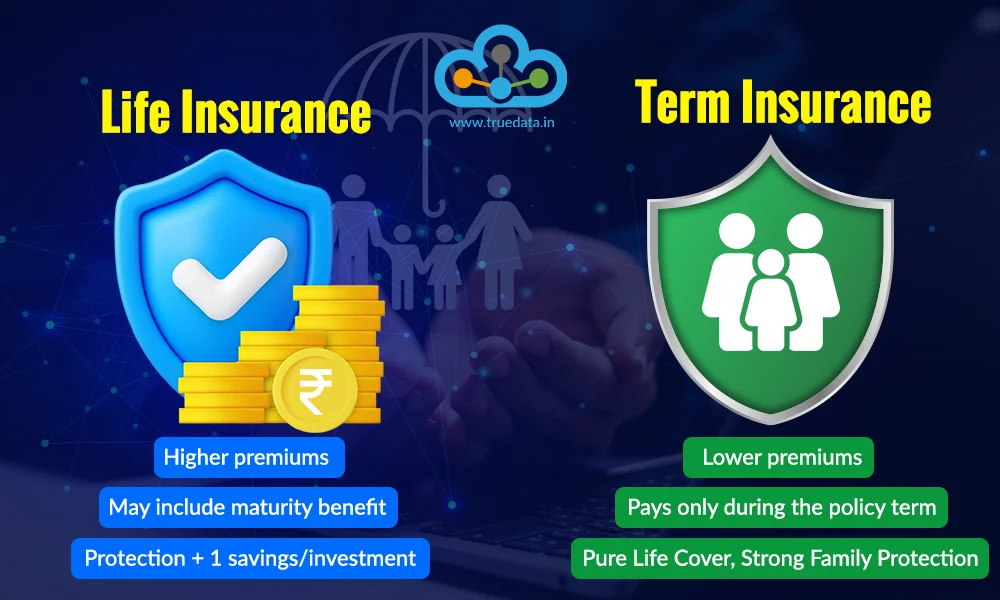
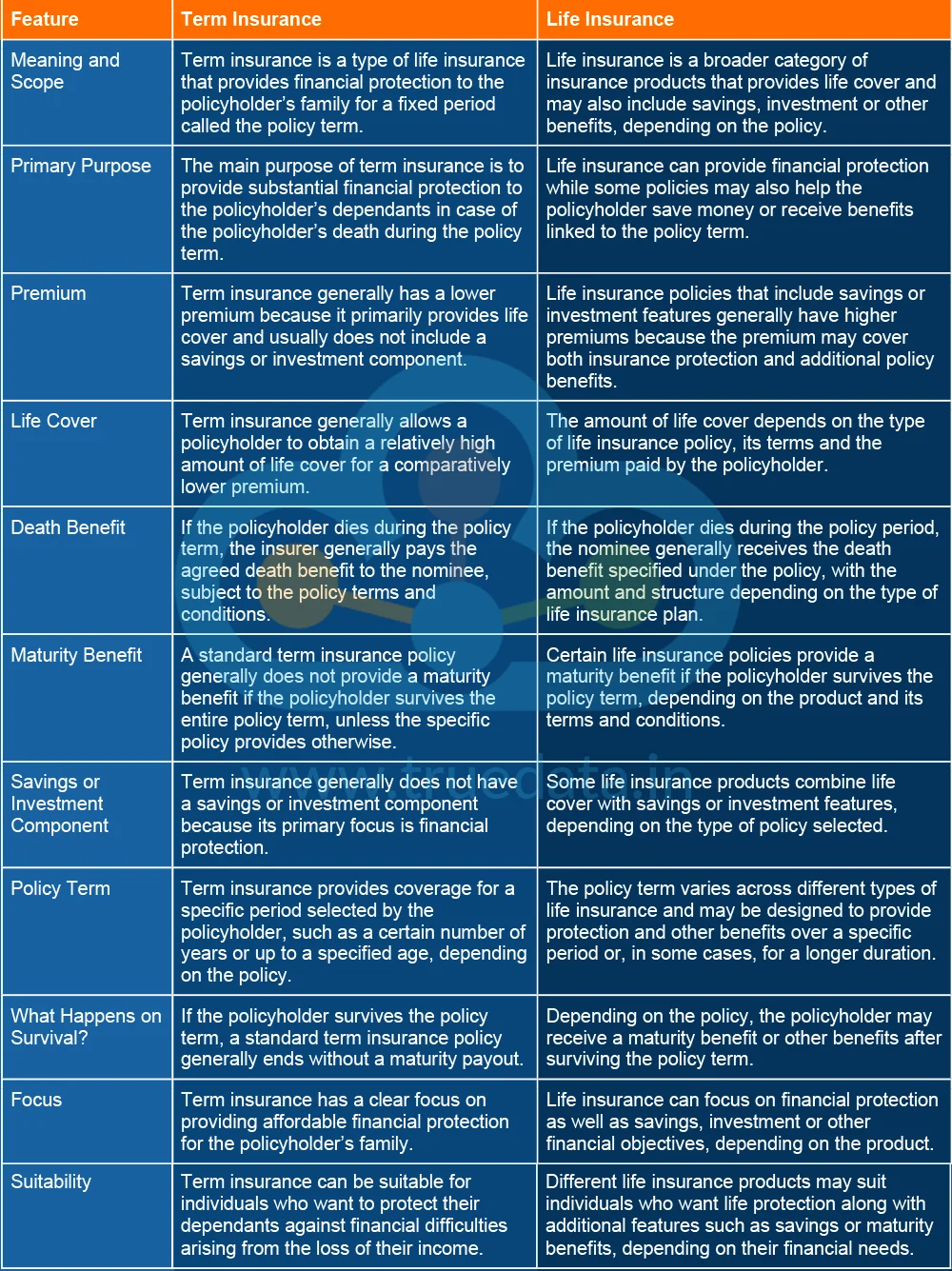
Although term insurance is a type of life insurance, the two differ in their purpose, features and benefits. The key differences between the two are explained below.

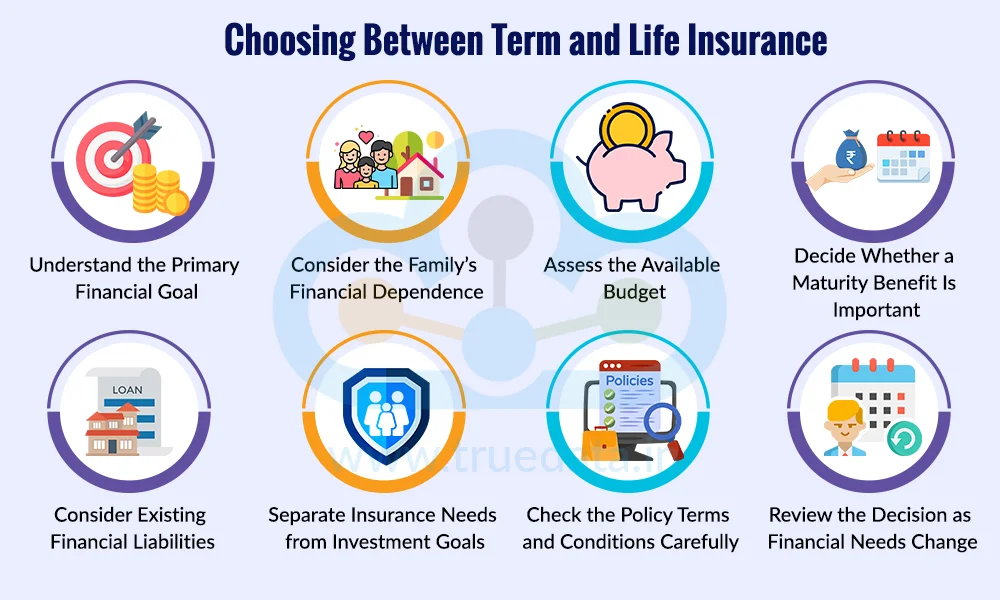
Choosing between term insurance and other types of life insurance depends on an individual’s financial goals, family responsibilities, budget and need for protection. There is no single policy that is suitable for every investor. A policy that works well for one person may not be appropriate for another. Before making a decision, investors can consider the following factors.

The first step is to identify the main reason for buying insurance. If the primary objective is to provide a substantial financial safety net for dependants in case of the policyholder’s premature death, term insurance may be more suitable. It is designed mainly for protection and generally offers a high level of life cover for a comparatively lower premium. On the other hand, if an individual is looking for life cover along with savings or other policy benefits, certain types of life insurance products may be considered. The decision should therefore begin with the purpose of buying the policy rather than simply comparing premiums.
The level of financial dependence on the policyholder is another important factor. Individuals who have dependants, such as a spouse, children or ageing parents, may need adequate life cover to ensure that their family can manage financially if their income stops unexpectedly. Term insurance can be particularly useful in such situations because it can provide a large death benefit at a relatively affordable premium. Individuals should consider their family’s regular expenses, future financial goals and outstanding liabilities while deciding how much life cover is required.
Premium affordability should also be considered before selecting a policy. Term insurance generally costs less than life insurance products that combine protection with savings or investment features. This can allow an individual to obtain a higher level of life cover without putting excessive pressure on the household budget. If the available budget is limited but the need for financial protection is high, term insurance may therefore be worth considering. However, the premium should remain affordable throughout the policy term so that the policy can be maintained as intended.
Investors should understand whether they want their insurance policy to provide only death protection or also offer a maturity benefit. A standard term insurance policy generally does not pay a maturity benefit when the policyholder survives the policy term. Some other life insurance products, however, may provide maturity or other benefits depending on their structure and terms. A person who primarily wants protection may prefer to keep insurance focused on that purpose, while someone seeking additional policy benefits may evaluate other types of life insurance.
Outstanding financial commitments should form an important part of the decision. Home loans, personal loans, education expenses and other long-term obligations can place a significant burden on the family if the earning member dies unexpectedly. Investors should therefore consider whether the proposed life cover would be sufficient to help their dependants manage these liabilities along with their regular living expenses. Term insurance can be useful for this purpose because it can provide a relatively high sum assured at a comparatively lower premium.
Investors should also ask whether they are buying insurance primarily for protection or expecting it to serve as an investment. Term insurance is primarily a protection product and generally does not have a savings or investment component. Certain life insurance products combine protection with savings or investment-related features. It is important to understand these features, along with their costs, benefits, risks and conditions, before making a decision. Insurance and investment serve different financial purposes, so investors should avoid choosing a policy solely because it appears to combine both.
The policy’s features and conditions can vary significantly across products. Before purchasing any policy, investors should carefully check the sum assured, policy term, premium payment period, exclusions, surrender conditions, maturity benefits, death benefit and other applicable terms. They should also understand what happens if premiums are not paid on time or if the policy is discontinued. Reading the policy document carefully can help avoid misunderstandings later.
The choice of insurance should not be treated as a one-time decision. An individual’s financial responsibilities can change after marriage, the birth of children, purchase of a home, a change in income or other major life events. The adequacy of existing life cover should therefore be reviewed periodically. If financial responsibilities increase, the individual may need to reassess whether the existing protection is still sufficient.
Term insurance and life insurance both aim to provide financial protection, but they serve different needs. Term insurance mainly focuses on providing high life cover at an affordable premium, while other life insurance plans may combine protection with savings, investment or maturity benefits. Investors should therefore choose a policy based on their financial responsibilities, family’s needs, budget and long-term goals rather than simply comparing premiums. Understanding these differences can help them select the insurance cover that fits their overall financial plan.
This article addresses the common confusion between term insurance and life insurance and the purposes they serve. We hope this helps you understand these products better and make informed decisions. Let us know your thoughts on the topic or if you need further information, and we will address it soon.
Till then, Happy Reading!
Read More: Gen Z Guide to Smart Mutual Fund Investing
India’s health insurance market is projected to more than double from USD ...
Market data is the foundation of informed trading decisions, and having access t...
Have you ever noticed that a company’s share price suddenly drops while th...