Mutual Funds

What Happens If I Miss a SIP?

Marisha Bhatt · 30 Jul 2026 · 10 mins read · 0 Comments

what-happens-if-i-miss-a-sip

SIPs are often considered the easiest and most effective path to build long-term wealth. However, life can sometimes throw a curveball that disrupts your investment plans. A delayed salary, a forgotten auto-debit date or an emergency and that simple SIP payment is missed. So, what happens if you miss an SIP? Does this mean you lose your full investment? Can you restart the SIP? Are there any penalties to be paid? If these questions have worried you, then take a deep breath. In most cases, missing an SIP instalment is not as serious as it may seem. Dive into this blog where we explore this lesser-known side of SIPs to help you make informed investment decisions. 

How Do SIPs Work?

How Do SIPs Work

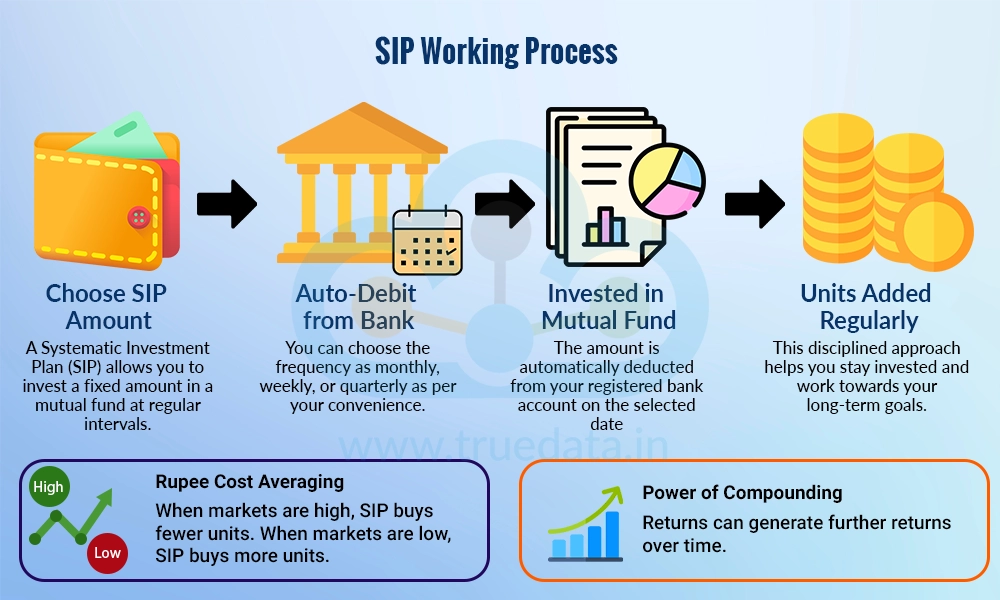
A Systematic Investment Plan (SIP) is a simple way to invest a fixed amount of money in a mutual fund at regular intervals, such as every month, every week, or every quarter. When investors start an SIP, the chosen amount is automatically deducted from their registered bank account on the selected date and invested in the mutual fund scheme of their choice. When the market is high, the fixed investment buys fewer mutual fund units, and when the market is low, it buys more units. This process, known as rupee cost averaging, can help reduce the impact of short-term market fluctuations over time. Therefore, instead of trying to predict the best time to invest, SIPs allow investors to invest consistently, regardless of whether the market is rising or falling. As investments remain invested, they also benefit from the power of compounding, where the returns earned have the potential to generate further returns. Thus, SIPs help investors build wealth gradually by investing regularly and staying invested for the long term, while making investing more disciplined, convenient, and affordable.

What are the Common Reasons for Missing SIPs?

What are the Common Reasons for Missing SIPs

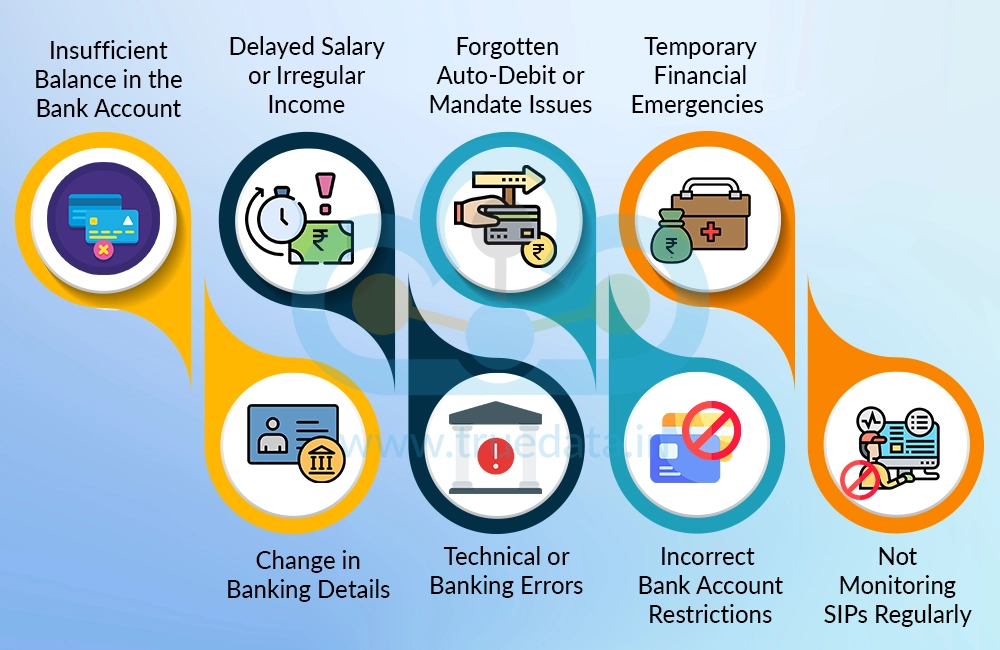
Missing SIPs can be a financial risk that interrupts your investment goals. So it is important to avoid such cases to have a healthy portfolio that can meet all the short-term and long-term goals. Nevertheless, there may be many reasons that can lead to missing SIPs. These reasons include, 

  • Insufficient Balance in the Bank Account - One of the most common reasons for a missed SIP is not having enough money in the registered bank account on the SIP date. If the available balance is lower than the SIP amount, the auto-debit transaction usually fails, and the investment or the SIP is not made for that instalment. This can happen due to unexpected expenses, delayed salary credits, or poor cash flow management.

  • Delayed Salary or Irregular Income - Many investors schedule their SIPs soon after their salary is credited. However, if the salary is delayed or if the investor has an irregular income, such as freelancers, consultants, or business owners, there may not be enough funds in the account on the SIP date. This can result in a missed instalment even if the investor intends to continue investing.

  • Forgotten Auto-Debit or Mandate Issues - SIPs usually rely on an auto-debit mandate, making the investment process convenient. However, problems such as an expired mandate, cancelled mandate, changes in the bank account, or technical issues with the bank can prevent the SIP amount from being debited. Sometimes, investors may also forget to update their mandate after changing banks or account details, leading to failed transactions.

  • Temporary Financial Emergencies - Unexpected situations such as medical expenses, home repairs, job loss, or other urgent financial needs may force investors to prioritise immediate expenses over investments. In such cases, maintaining sufficient funds for the SIP may not be possible, resulting in one or more missed instalments.

  • Change in Banking Details - If an investor changes their bank account, closes the existing account, or updates their banking information without modifying the SIP instructions, the auto-debit request may fail. It is important to update the new bank details with the mutual fund or registrar as soon as possible to ensure future SIP instalments are processed smoothly.

  • Technical or Banking Errors - Sometimes, the problem is not with the investor but with the banking system. Temporary server issues, payment gateway failures, network problems, or technical glitches at the bank or mutual fund's end can cause an SIP transaction to fail. Although such cases are relatively uncommon, they can occasionally result in a missed instalment.

  • Incorrect Bank Account Restrictions - Certain bank accounts may have debit limits, frozen transactions, or restrictions due to regulatory or security reasons. If the bank blocks or declines the auto-debit request, the SIP payment may not go through. Investors should regularly check their bank account status and ensure there are no restrictions that could affect scheduled payments.

  • Not Monitoring SIPs Regularly - Many investors start an SIP and assume everything will continue automatically. However, failing to monitor bank statements, transaction alerts, or mutual fund account updates can allow failed SIP instalments to go unnoticed. Regularly reviewing the investments helps investors identify any missed payments early and take corrective action before multiple instalments are missed.

What are the Consequences of Missing SIPs?

What are the Consequences of Missing SIPs

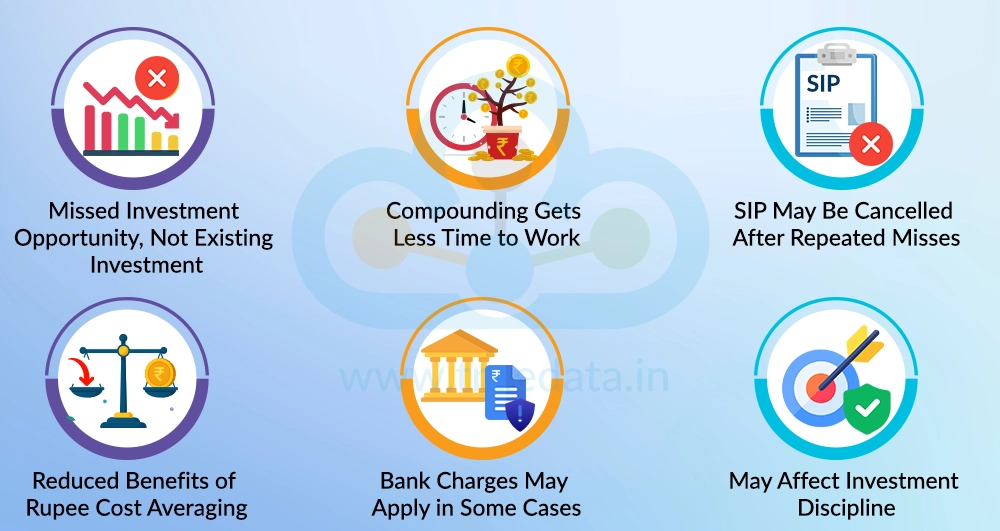
When investors miss an SIP, the impact is not just on a single investment but on the entire portfolio, along with applicable bank charges. These consequences are explained below.

Missed Investment Opportunity, Not Existing Investment

Missing an SIP instalment simply means that the scheduled investment for that month does not take place as the amount could not be deducted from the bank account. As a result, no new mutual fund units are allotted for that particular instalment, but all earlier investments remain completely safe and continue to stay invested in the mutual fund. However, missing an SIP also means losing the opportunity to invest during that period. If the market is temporarily down, investors may miss the chance to buy more units at lower prices, which is one of the key benefits of SIP investing. Over time, repeatedly missing such opportunities can reduce the benefits of rupee cost averaging and may have a small impact on the long-term wealth creation.

Compounding Gets Less Time to Work

The power of compounding depends on staying invested for as long as possible. When an SIP instalment is missed, that amount does not get the opportunity to earn returns and generate further returns over the years. Although the impact of a single missed SIP is usually small, repeated missed investments can reduce the overall benefits of compounding.

SIP May Be Cancelled After Repeated Misses

Most mutual fund companies do not cancel an SIP because of one missed instalment. However, if several consecutive SIP payments fail, the Asset Management Company (AMC) or the bank may discontinue or cancel the SIP mandate, depending on their policies. If this happens, investors may have to register a new SIP or complete a fresh auto-debit mandate to continue investing.

Reduced Benefits of Rupee Cost Averaging

One of the biggest advantages of SIPs is rupee cost averaging, where investors buy more units when prices are low and fewer units when prices are high. Missing an SIP breaks this regular investment pattern. While missing one instalment is unlikely to make a major difference, frequent missed SIPs can reduce the effectiveness of this strategy over time.

Bank Charges May Apply in Some Cases

While mutual fund companies generally do not charge any penalty for a missed SIP instalment, the investor's bank may levy a charge if the auto-debit fails due to insufficient funds. The exact amount varies from bank to bank, but failed auto-debit or ECS/NACH return charges are commonly in the range of Rs. 100 to Rs. 750 per failed transaction, plus applicable GST, depending on the bank's schedule of charges. Therefore, checking the bank's fee structure and maintaining sufficient funds before the SIP date can help avoid these charges.

May Affect Investment Discipline

The biggest long-term impact of missing SIPs is often psychological rather than financial. SIPs are meant to encourage disciplined investing by making regular investments automatic. Frequently skipping SIPs can develop a habit of delaying investments, making it harder to stay committed to long-term financial goals. Maintaining consistency is one of the key reasons why SIPs have helped many investors build wealth over time.

What Can Investors Do if They Miss Their SIP? 

What Can Investors Do if They Miss Their SIP

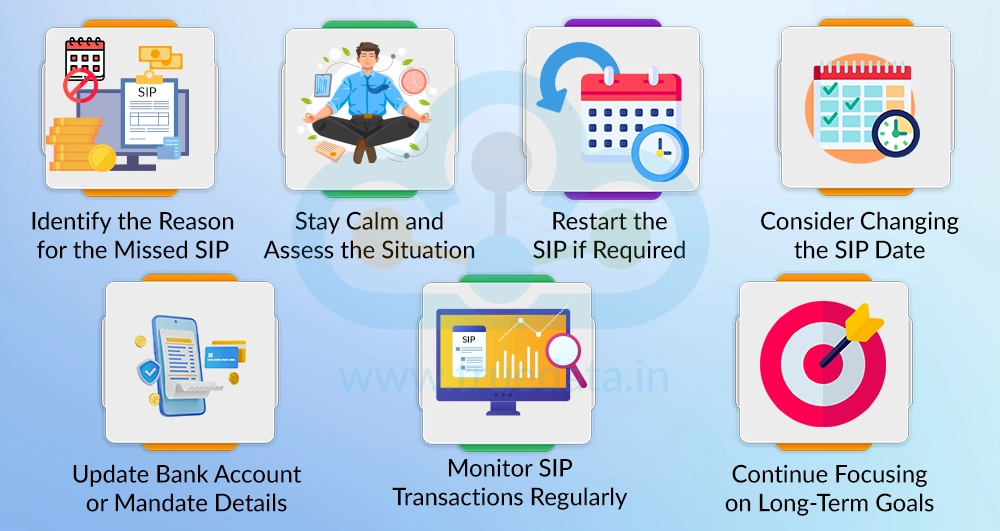
While most beginners think that missing an SIP will lead to losing the investment, it is simply a common misconception. After missing the SIP, here are a few steps or situations investors can consider.

  • Identify the Reason for the Missed SIP - The investor should check the reason behind the failed SIP transaction. Common reasons include insufficient bank balance, a delayed salary, an expired auto-debit mandate, incorrect bank account details, or a temporary technical issue with the bank or payment system. Identifying the exact cause helps in resolving the problem quickly and reduces the chances of future SIP failures.

  • Stay Calm and Assess the Situation - Missing a single SIP instalment is usually not a reason to panic. In most cases, the investor's existing mutual fund investments remain safe and continue to be invested in the scheme. Only the missed instalment is affected, meaning that no new mutual fund units are purchased for that particular SIP date. The investor should first understand why the SIP was missed before taking any further action.

  • Restart the SIP Without Worrying About Existing Investments - In most cases, an investor can easily restart an SIP after missing one or more instalments. If the SIP has not been cancelled, future instalments usually continue automatically once sufficient funds are available in the registered bank account. However, if the SIP has been discontinued due to repeated payment failures or an inactive mandate, the investor can simply register a new SIP or complete a fresh auto-debit mandate through the Asset Management Company (AMC), registrar, distributor, or investment platform. When the SIP is restarted in the same mutual fund schemes under the same holding pattern, it is generally linked to the existing folio number, making it easier to track and manage investments. In some cases, a new folio may be created due to changes in investor details or operational requirements, and the AMC or investment platform will inform the investor accordingly. Existing mutual fund investments remain unaffected throughout the process.

  • Consider Changing the SIP Date - If the investor regularly faces cash flow issues around the existing SIP date, changing the SIP date may be a practical solution. Selecting a date that better matches the timing of salary or business income can reduce the chances of missing future instalments. Many mutual fund companies provide investors with the option to modify the SIP date, subject to their terms and procedures.

  • Consider Pausing the SIP if Needed - If the investor is facing temporary financial difficulties, pausing the SIP may be a better option than repeatedly missing instalments. Many mutual fund companies allow investors to pause their SIPs for a specified period, subject to the scheme's terms and conditions. This gives the investor time to manage finances without permanently stopping the investment plan. Once the financial situation improves, the SIP automatically resumes after the pause period ends.

  • Update Bank Account or Mandate Details - If the investor has changed the registered bank account or if the auto-debit mandate has expired, the new banking details should be updated with the mutual fund company or registrar as soon as possible. Keeping bank information and mandates up to date helps ensure that future SIP instalments are processed without interruption.

  • Monitor SIP Transactions Regularly - Although SIPs are automated, investors should regularly check bank statements, transaction alerts, and mutual fund account statements to confirm that each instalment has been successfully processed. Monitoring investments periodically helps identify any failed transactions early, allowing corrective action to be taken before multiple SIPs are missed.

  • Continue Focusing on Long-Term Goals - A missed SIP instalment should not discourage an investor from continuing the investment journey. SIPs are designed to create wealth through regular investing over a long period. Missing one or even a few instalments does not erase the progress already made. Once the issue has been resolved and the SIP has been restarted, maintaining consistency and staying focused on long-term financial goals is far more important than worrying about occasional interruptions.

Conclusion

Missing an SIP instalment can be worrying, but in most cases, it is not a major setback. The existing mutual fund investments remain safe, and a single missed instalment does not undo the progress already made. The key is to identify the reason for the missed payment, take corrective action, and restart the SIP if required. Since SIPs are designed to create wealth through regular and disciplined investing, staying consistent over the long term is far more important than worrying about an occasional missed instalment.

This article addresses a common concern among investors and helps them navigate through missed SIPs. Let us know your thoughts on the topic or if you need further information on the same, and we will address it soon.


Read More: Mutual Fund Myths You Still Believe 

Frequently Asked Questions

Missing one SIP payment does not affect the mutual fund units already purchased. The existing investment remains invested and continues to grow based on the fund's performance, while only the missed instalment is not invested.

Generally, mutual fund companies do not charge a penalty for missing an SIP instalment. However, the investor's bank may levy a charge if the auto-debit fails due to insufficient balance, depending on the bank's policies.

Missing one SIP instalment usually does not stop the SIP automatically. However, if several consecutive instalments are missed, the SIP may be discontinued or cancelled, depending on the policies of the mutual fund company and the bank.

Missing one SIP instalment usually has only a small impact, but it reduces the amount invested and gives that money less time to benefit from compounding. If SIPs are missed frequently, it may slow progress towards the investor's long-term financial goals.

Yes, in most cases, an investor can restart an SIP after missing one or more instalments. If the SIP has been discontinued due to repeated missed payments, the investor can simply register a new SIP or complete a fresh auto-debit mandate to continue investing.

No, there is generally no grace period for a missed SIP instalment. If the payment fails, that instalment is skipped, and the next SIP continues on the scheduled date (if the SIP remains active), while the investor can usually make a separate lump sum investment to compensate for the missed amount.

Yes, in most cases, an investor can make a one-time lump sum investment to compensate for a missed SIP instalment, provided the mutual fund scheme accepts lump sum investments. However, this is treated as a separate investment and does not replace the missed SIP instalment.

If an investor misses multiple consecutive SIP instalments, the SIP may be discontinued or cancelled, depending on the policies of the mutual fund company and the bank. The existing mutual fund investments remain unaffected, and the investor can usually start a new SIP to continue investing.
Marisha Bhatt

Marisha Bhatt is a financial content writer @TrueData.

She writes with the sole aim of simplifying complex financial concepts and jargon while attempting to clarify technical and fundamental analysis concepts of the stock markets. The ultimate goal is to spread vital knowledge and benefit the maximum audience. Her Chartered Accountant background acts as the knowledge base to help clarify crucial concepts and create a sound investment portfolio.

0 Comments

Related Articles

SEE ALL
Mutual Funds
Mutual Funds
How to Complain About Mutual Funds?

Mutual fund investments have simplified greatly with just a tap on your smartpho...

Mutual Funds
Mutual Funds
Difference Between Active Mutual Funds and Passive Mutual Funds

Many investors think thatmutual fund investing is simply selecting a fund and wa...

Investing / Trading
Investing / Trading
Stocks or mutual funds? Which is better?

Introduction For the longest time, investment in stock markets was thought to b...

Relevant Tags