Corporate Data

What is Seed Money in Business?

Marisha Bhatt · 16 Apr 2026 · 15 mins read · 0 Comments

What is Seed Money in Business

Starting a business often begins with a simple idea, a solution to a problem or a vision for something better. However, turning an idea into a successful business is a whole different story! Many trials and triumphs come along the way, but one indispensable ingredient is the initial capital, i.e., money to build products, hire talent, and reach customers. This is where seed money comes into the picture. So what is this seed money, and where can startups find it? Dive into this blog to explore the meaning of seed money and other important details related to it. 

What is the meaning of Seed Money?

What is the meaning of Seed Money

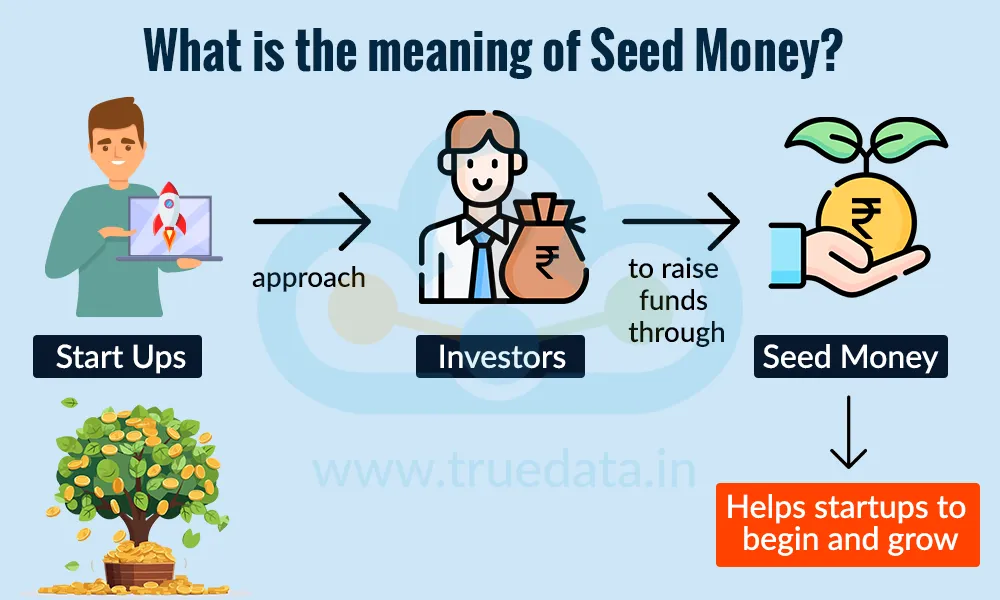
Seed money refers to the initial capital used to start a new business or startup. It is the first round of funding that helps entrepreneurs turn their ideas into reality. At the early stage of a business, founders may not yet have a product ready or a steady stream of revenue, but they still need money to carry out essential activities. Seed money is typically used for tasks like developing the product or service, conducting market research, building a small team, setting up operations, and launching the business in the market. This funding acts like the ‘seed’ that is planted to grow a business, which is why it is called seed money.

In many cases, seed funding comes from the founders’ personal savings, contributions from family and friends, angel investors, or early-stage venture capital firms that believe in the startup’s idea and potential. In India, seed money can also come from startup incubators, accelerators, government schemes, and startup support programs that aim to encourage entrepreneurship and innovation. Since startups are still at an early stage and may not yet be profitable, investors who provide seed funding usually take a small ownership stake (equity) in the company in return for their investment.

Why is Seed Money Important?

Why is Seed Money Important

Seed funding is the lifeline that helps entrepreneurs to see their ideas take shape. The importance of seed money can be explained below.

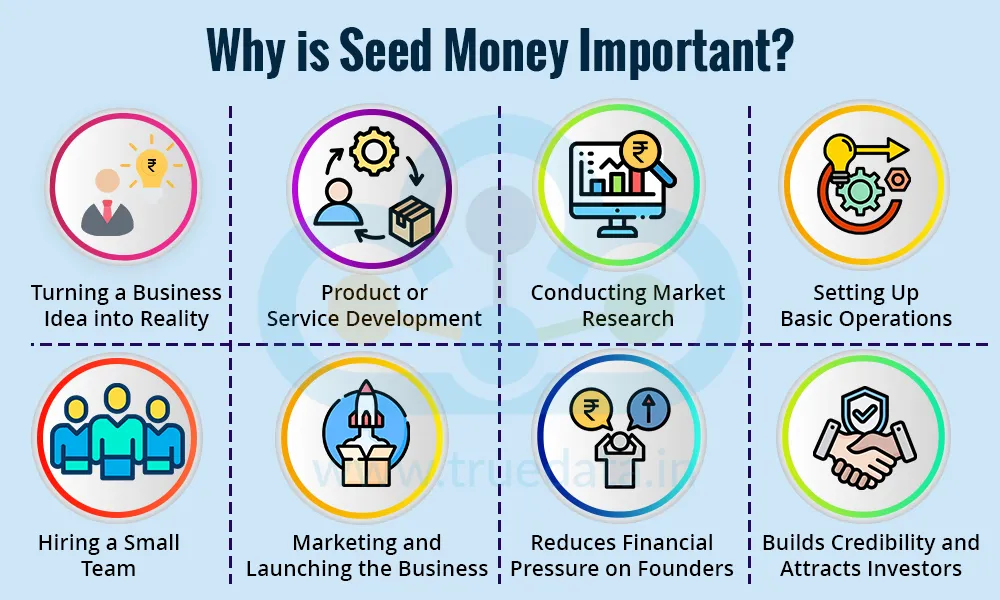
  • Turning a Business Idea into Reality - At the beginning, founders may have a strong concept but lack the financial resources to implement it. Seed funding provides the initial capital needed to start building the business.

  • Product or Service Development - One of the main uses of seed money is developing the product or service. Startups often use this funding to create prototypes, improve product designs, test their solutions, and make sure the offering meets customer needs.

  • Conducting Market Research - Before launching a business fully, entrepreneurs need to understand the market demand, competition, and customer preferences. Seed money can be used to conduct surveys, research the target audience, and validate whether the business idea has real potential.

  • Setting Up Basic Operations - Starting a business requires basic infrastructure such as office space, technology tools, legal registrations, and operational systems. Seed funding helps cover these initial setup costs so that the startup can function smoothly.

  • Hiring a Small Team - In the early stages, founders may need to hire a small but skilled team to help with product development, marketing, and operations. Seed money helps pay salaries or consulting fees for these early team members.

  • Marketing and Launching the Business - Once the product or service is ready, startups need to promote it and reach their first customers. Seed money can be used for marketing activities such as digital advertising, branding, website development, and promotional campaigns.

  • Reduces Financial Pressure on Founders - Starting a business entirely with personal savings can be risky. Seed funding allows founders to share the financial burden with investors, reducing personal financial stress and allowing them to focus more on building the business.

  • Builds Credibility and Attracts Investors - When a startup receives seed funding, it often signals that investors believe in the idea and its potential. This can increase the company’s credibility and make it easier to attract further funding from venture capitalists or other investors later.

What are the Sources of Seed Money?

Various sources of seed funding can provide entrepreneurs with several ways to raise the initial capital needed to start and grow a business. Entrepreneurs can use one or more sources or combine them to maximise their opportunities and gain strategic access for their business. 

Personal Savings (Bootstrapping)

Personal Savings (Bootstrapping)

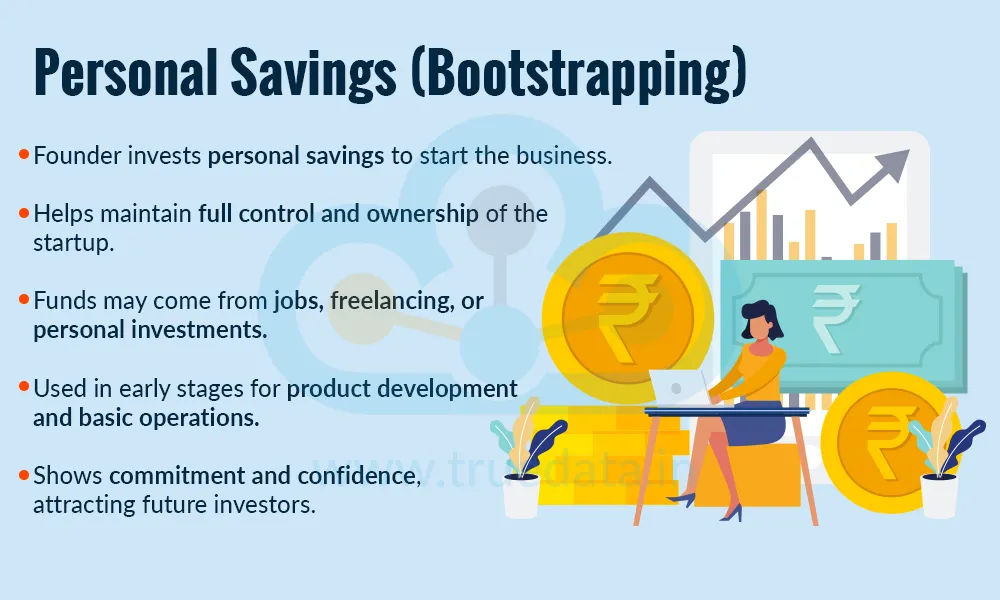
One of the most common sources of seed money is the founder’s own savings, a method often called bootstrapping. Many entrepreneurs in India begin their startup journey by investing their personal funds because it allows them to maintain full control and ownership of the business. These funds may come from savings accumulated through previous jobs, freelance work, or other personal investments. Bootstrapping is often used in the very early stages to develop a basic version of the product, build a website, or cover initial operational costs. Although this approach involves personal financial risk, it also demonstrates the founder’s commitment and confidence in the business idea, which can later attract outside investors.

Friends and Family

Friends and Family

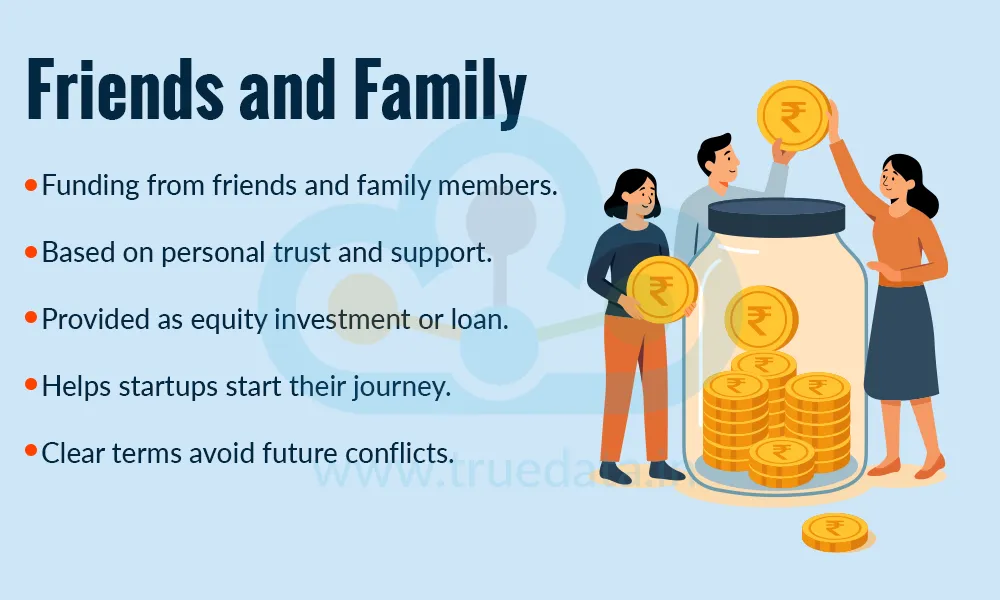
Another common source of seed money is financial support from friends and family members. People who know the founder personally may be willing to invest in the startup because they trust the entrepreneur’s abilities and vision. This funding is usually provided either as a small investment in exchange for equity or as a loan that the founder agrees to repay later. In India, many startups have taken their first steps with help from family members or close friends who believe in the idea. However, it is still important to keep the arrangement professional by clearly discussing expectations, repayment terms, or ownership shares to avoid misunderstandings in the future.

Angel Investors

Angel Investors

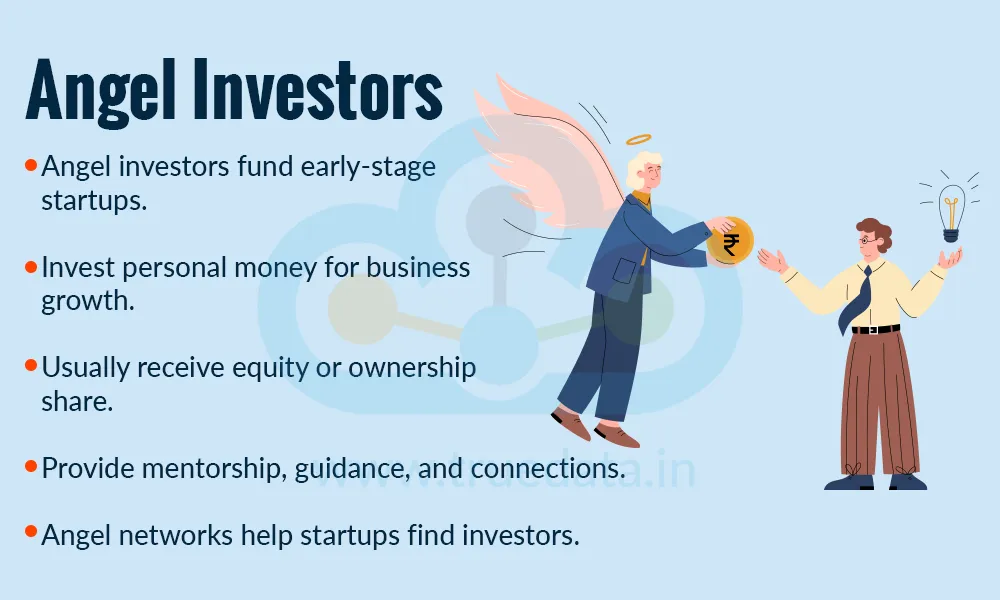
Angel investors are individuals who invest their personal money in early-stage startups with strong growth potential. These investors are often experienced entrepreneurs, business professionals, or high-net-worth individuals who want to support innovative ideas while earning returns on their investments. Angel investors usually provide funding in exchange for equity or ownership in the startup. In addition to money, they may also offer valuable mentorship, industry knowledge, and business connections, which can help the startup grow faster. In India, angel networks and platforms have become popular, allowing startups to connect with investors who are interested in funding promising new ventures.

Venture Capital Firms

Venture Capital Firms

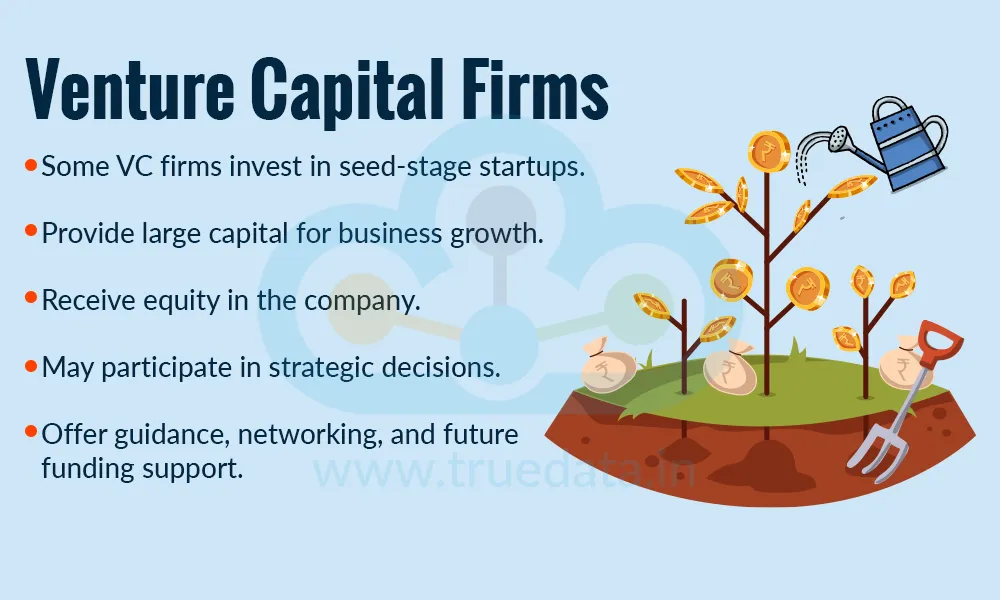
Although venture capital firms typically invest in slightly later stages, some venture capital (VC) funds specialise in seed-stage investments. These firms provide capital to startups that show strong potential for growth and scalability. In return, they usually receive equity in the company and may also take part in strategic decision-making. Venture capital funding can provide startups with larger amounts of seed money compared to individual investors. In India, several venture capital firms actively invest in early-stage startups, particularly in sectors such as technology, fintech, e-commerce, and healthcare. Apart from funding, VCs often help startups with strategic guidance, networking opportunities, and preparation for future funding rounds.

Startup Incubators and Accelerators

Startup Incubators and Accelerators

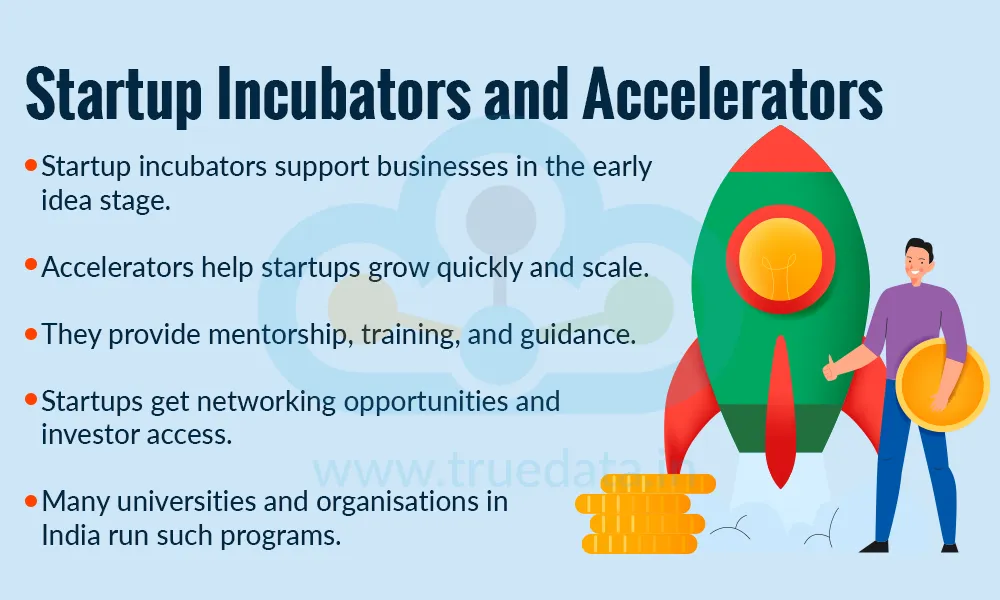
Startup incubators and accelerators are organisations designed to support early-stage businesses. They often provide seed funding along with mentorship, training programs, office space, networking opportunities, and access to investors. Incubators typically help startups during the very early stages when the idea is still being developed, while accelerators focus on helping startups grow quickly and prepare for investment rounds. In India, many universities, private organisations, and startup hubs run incubation and acceleration programs that help entrepreneurs develop their ideas and launch their businesses successfully.

Government Schemes and Grants

Government Schemes and Grants

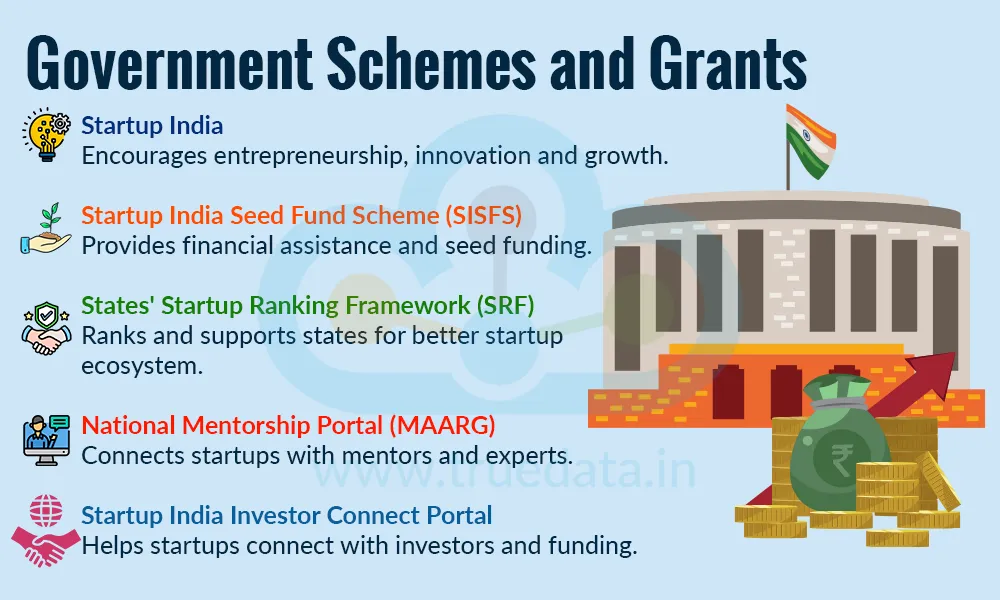
The Government of India also supports startups by offering seed funding through various schemes, grants, and financial assistance programs. Initiatives under programs such as Startup India, Startup India Seed Fund Scheme (SISFS), States’ Startup Ranking Framework (SRF), National Mentorship Portal (MAARG), Startup India Investor Connect Portal, etc., encourage entrepreneurship by providing funding support, mentorship, and infrastructure to new businesses. Government-backed incubators, innovation missions, and research grants can help startups obtain seed money without necessarily giving away equity. These programs are especially useful for startups working in sectors such as technology innovation, social impact, healthcare, and research-based businesses. By providing financial assistance and policy support, these schemes aim to strengthen the startup ecosystem in India.

Crowdfunding Platforms

Crowdfunding Platforms

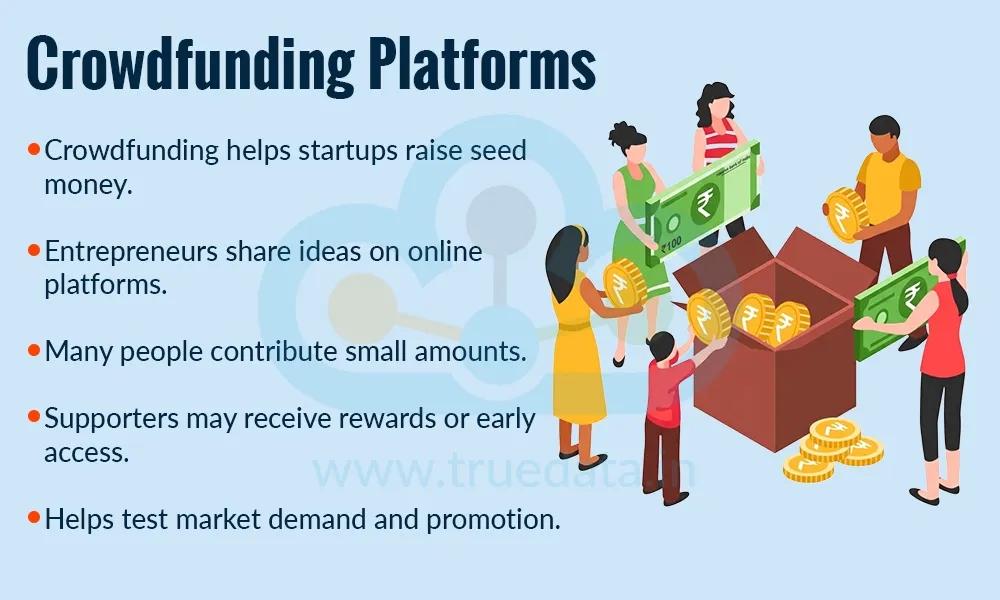
In recent years, crowdfunding has become another way for startups to raise seed money. Through online platforms, entrepreneurs can present their business ideas to a large number of people who may contribute small amounts of money to support the project. In some cases, contributors receive early access to products, rewards, or small equity stakes in return for their support. Crowdfunding not only helps raise funds but also allows startups to test market interest and build an early community of supporters. For many entrepreneurs, it serves as both a funding source and a marketing opportunity.

Corporate Investors and Strategic Partners

Corporate Investors and Strategic Partners

Some startups also receive seed money from large companies or corporate investors that want to support innovative ideas related to their industry. These corporations may invest in startups to gain access to new technologies, explore new markets, or form strategic partnerships. In addition to funding, corporate investors may provide technical expertise, industry guidance, infrastructure support, and access to established customer networks. This type of investment can help startups grow faster by leveraging the experience and resources of an established organisation.

Business Competitions and Startup Contests

Business Competitions and Startup Contests

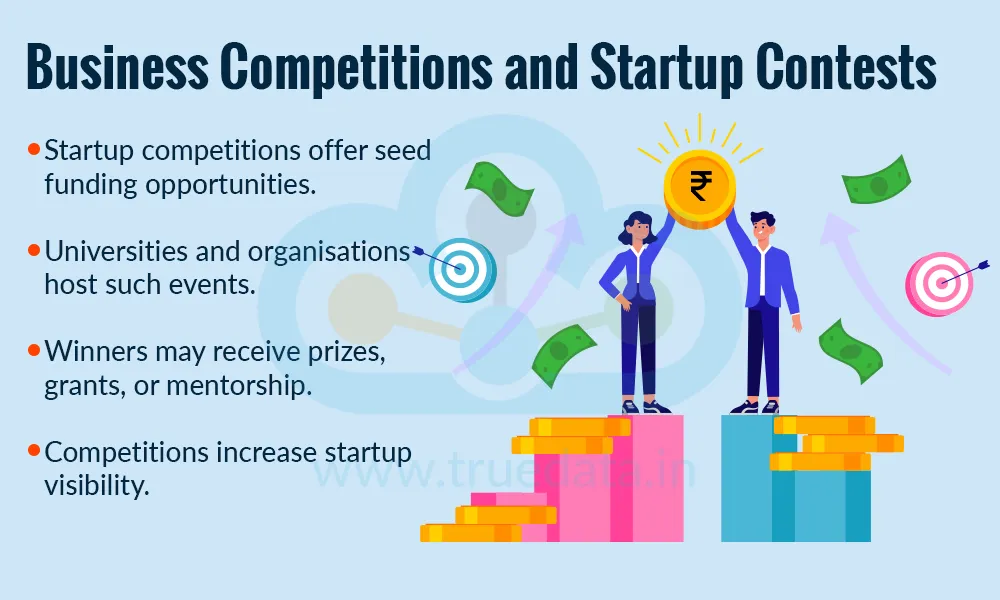
Another possible source of seed money is startup competitions, innovation challenges, and business plan contests. Many universities, corporations, and entrepreneurship organisations conduct such events to encourage new business ideas. Startups that present strong business models and innovative solutions may win cash prizes, grants, mentorship, and investment opportunities. Participating in these competitions can be a useful way for new entrepreneurs to secure seed funding while also gaining visibility in the startup ecosystem.

How to Prepare to Raise Seed Money?

How to Prepare to Raise Seed Money

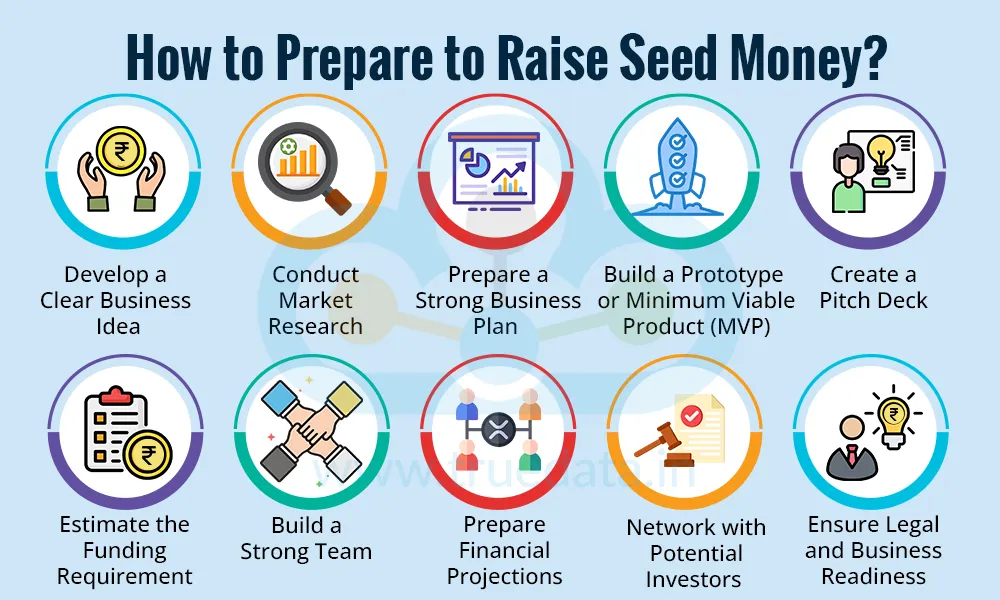
Raising seed money can be a Herculean task that needs more than passion. It needs a structured and well-planned approach that can convince potential investors of the merit of investing in the business. Here are a few pointers for the same. 

  • Develop a Clear Business Idea - Before raising seed money, entrepreneurs should have a clear and practical business idea. They must understand the problem they are solving, the solution they are offering, and why customers would be interested in their product or service.

  • Conduct Market Research - It is important to study the target market, customer needs, and existing competitors. Market research helps founders understand whether their idea has real demand and how their business can stand out in the market.

  • Prepare a Strong Business Plan - A well-structured business plan explains the startup’s goals, business model, target audience, revenue sources, and growth strategy. Investors often review the business plan to evaluate whether the idea is practical and scalable.

  • Build a Prototype or Minimum Viable Product (MVP) - If possible, startups should create a basic version of their product or service, known as a Minimum Viable Product (MVP). This shows investors that the idea can actually work and helps gather early customer feedback.

  • Create a Pitch Deck - A pitch deck is a short presentation used to explain the startup to potential investors. It usually includes details about the problem, solution, market opportunity, business model, team, and funding requirements.

  • Estimate the Funding Requirement - Entrepreneurs should clearly calculate how much seed money they need and how the funds will be used. Investors prefer startups that have a realistic and well-planned budget.

  • Build a Strong Team - Having a capable and committed team increases investor confidence. Investors often look at the founders’ skills, experience, and ability to execute the business idea successfully.

  • Prepare Financial Projections - Startups should prepare basic financial forecasts, such as expected costs, revenue, and profit for the next few years. These projections help investors understand the startup’s growth potential.

  • Network with Potential Investors - Founders should actively connect with angel investors, venture capital firms, incubators, and startup communities. Attending startup events, networking sessions, and pitch competitions can help entrepreneurs find potential investors.

  • Ensure Legal and Business Readiness - Before approaching investors, startups should complete basic legal and regulatory requirements, such as registering the business, protecting intellectual property if needed, and maintaining proper documentation. This shows professionalism and builds investor trust.

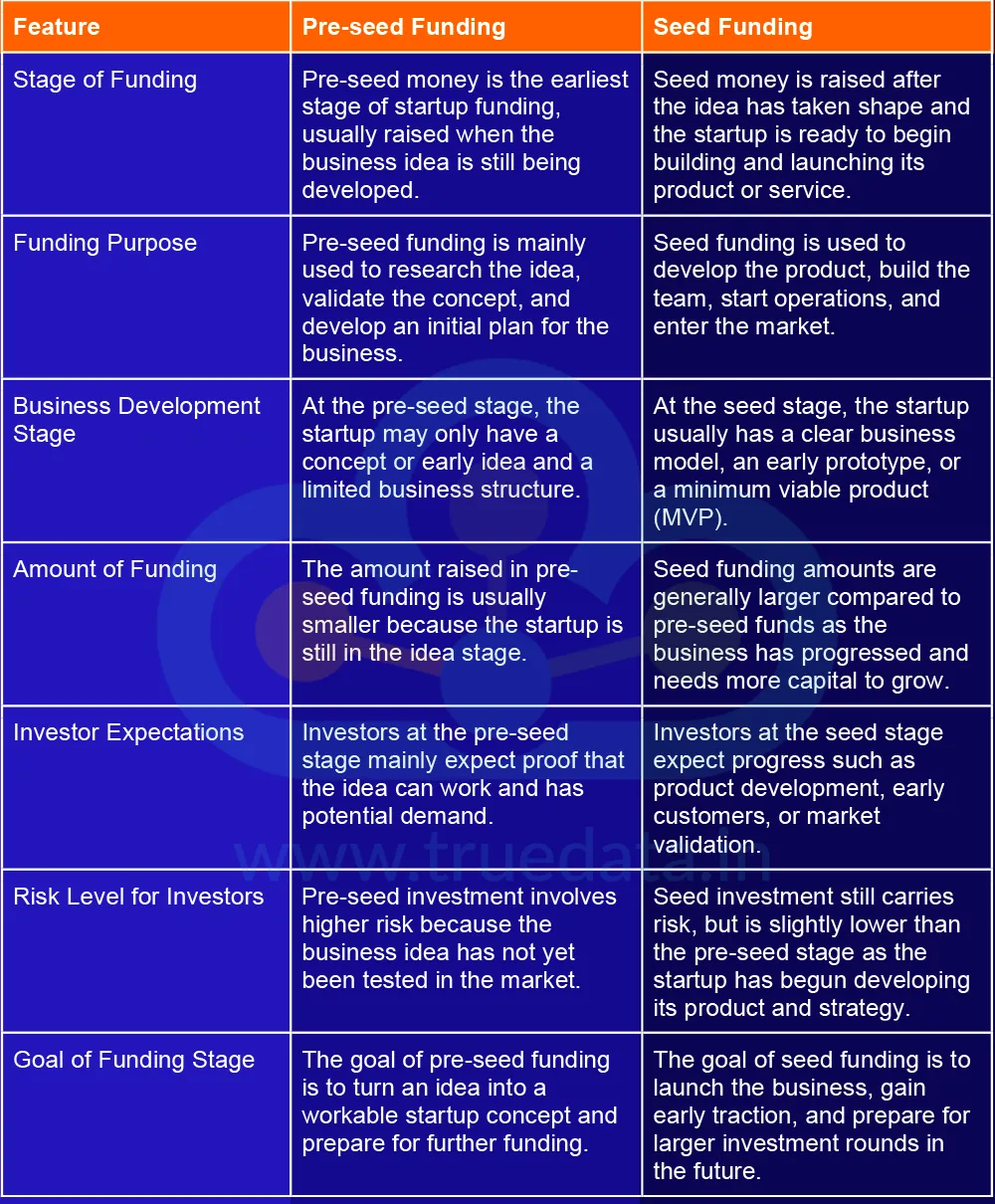
What are the Differences Between Pre-Seed Money and Seed Money?

The pre-seed stage is the very nascent stage of funding that precedes the seed money. While these stages sound similar and are precursors to having an established business, they have a few key differences to understand. These differences include,

What are the Differences Between Pre-Seed Money and Seed Money

Feature

Pre-seed Funding

Seed Funding

Stage of Funding

Pre-seed money is the earliest stage of startup funding, usually raised when the business idea is still being developed.

Seed money is raised after the idea has taken shape and the startup is ready to begin building and launching its product or service.

Funding Purpose

Pre-seed funding is mainly used to research the idea, validate the concept, and develop an initial plan for the business.

Seed funding is used to develop the product, build the team, start operations, and enter the market.

Business Development Stage

At the pre-seed stage, the startup may only have a concept or early idea and a limited business structure.

At the seed stage, the startup usually has a clear business model, an early prototype, or a minimum viable product (MVP).

Amount of Funding

The amount raised in pre-seed funding is usually smaller because the startup is still in the idea stage.

Seed funding amounts are generally larger compared to pre-seed funds as the business has progressed and needs more capital to grow.

Investor Expectations

Investors at the pre-seed stage mainly expect proof that the idea can work and has potential demand.

Investors at the seed stage expect progress such as product development, early customers, or market validation.

Risk Level for Investors

Pre-seed investment involves higher risk because the business idea has not yet been tested in the market.

Seed investment still carries risk, but is slightly lower than the pre-seed stage as the startup has begun developing its product and strategy.

Goal of Funding Stage

The goal of pre-seed funding is to turn an idea into a workable startup concept and prepare for further funding.

The goal of seed funding is to launch the business, gain early traction, and prepare for larger investment rounds in the future.

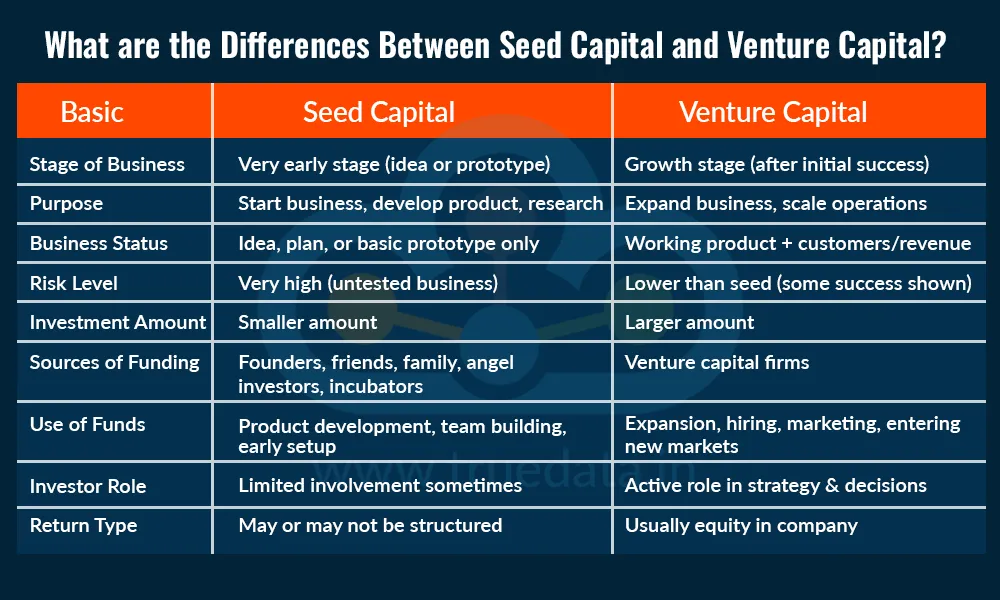
What are the Differences Between Seed Capital and Venture Capital?

What are the Differences Between Seed Capital and Venture Capital

Seed capital and venture capital are both types of funding used by startups, but they are provided at different stages of a business and for different purposes. Seed capital is the initial funding that helps entrepreneurs start their business. It is usually used to develop the product or service, conduct market research, build a basic team, and set up early operations. At this stage, the startup may only have an idea, a business plan, or a basic prototype. As the business is still new and untested, the risk for investors is quite high. Seed capital often comes from founders’ personal savings, friends and family, angel investors, incubators, or government startup programs. The amount invested at this stage is usually smaller compared to later funding rounds.

On the other hand, venture capital is funding provided to startups that have already moved beyond the initial stage and are ready to expand and grow rapidly. By the time a company receives venture capital, it usually has a working product or service, a clear business model, and some customer traction or revenue. Venture capital firms invest larger amounts of money to help the company scale its operations, enter new markets, hire more employees, and increase production or marketing efforts. Although venture capital investments still involve risk, the risk is generally lower than seed funding because the business has already shown some potential for success. In return for their investment, venture capitalists usually receive equity in the company and may also participate in strategic decisions to help guide the startup’s growth.

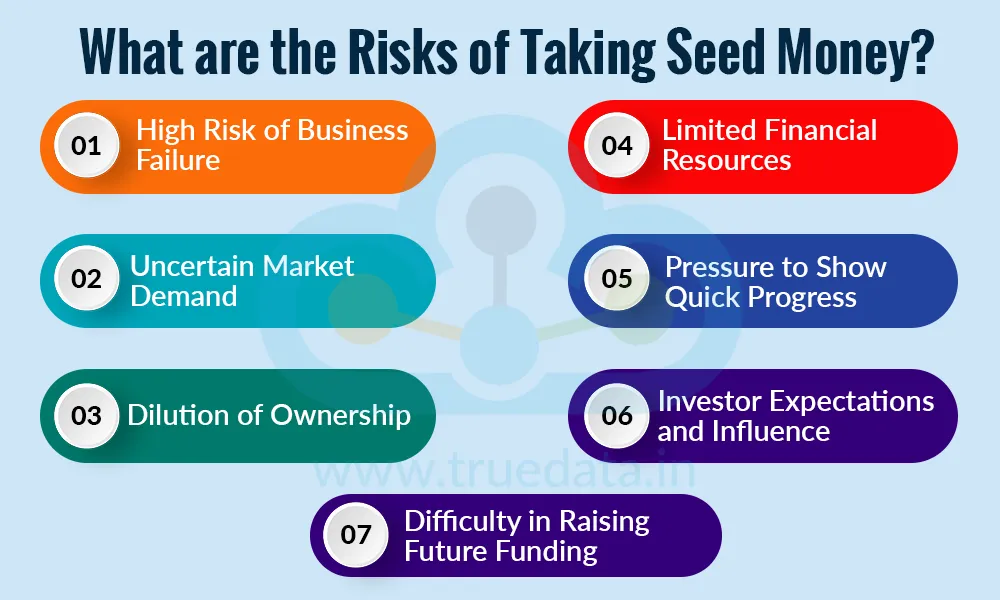
What are the Risks of Taking Seed Money?

What are the Risks of Taking Seed Money

While seed money can be the lifeline for a startup, some risks should not be ignored. These risks of seed money include,

  • High Risk of Business Failure - Startups are still in their early stages when they receive seed money. Many new businesses may fail due to poor planning, lack of demand, or strong competition, which means investors may lose the money they invested.

  • Uncertain Market Demand - At the seed stage, the product or service may not yet be fully tested in the market. There is a risk that customers may not accept the product, which can affect the startup’s growth and profitability.

  • Dilution of Ownership - Founders usually give investors a portion of the company’s ownership (equity) to raise seed money. This can reduce the founders’ control over the business as more investors join in future funding rounds.

  • Limited Financial Resources - Seed funding is usually a small amount of capital compared to later investment rounds. If the funds are not managed properly, the startup may run out of money before achieving stable growth.

  • Pressure to Show Quick Progress - Investors expect startups to show results and growth after receiving seed funding. This can create pressure on founders to quickly develop products, gain customers, and prove the business model.

  • Investor Expectations and Influence - Some seed investors may want to participate in important business decisions. This can sometimes lead to disagreements between founders and investors regarding the direction of the business.

  • Difficulty in Raising Future Funding - If the startup fails to show progress after using seed money, it may become difficult to attract further investment from venture capital firms or other investors in the future.

Conclusion

Seed money plays a crucial role in helping a business take the first steps. These initial funds can help turn an idea into reality, develop products, conduct market research, build a small team, and launch operations. While seed money comes with a few challenges, it acts as the foundation that allows innovative ideas to develop into successful and scalable businesses.

This article is the first part in our series on startup funding and evaluating an upcoming business. Let us know your thoughts on the topic or if you have any queries, and stay tuned for more interesting posts in this series. 

Till then, Happy Reading! 


Read More: Share Dilution and Its Impact on Shareholders and Valuation

Frequently Asked Questions

Seed funding for startups usually ranges from about Rs. 10,00,000 to Rs. 5,00,00,000, depending on the business idea, industry, and growth potential. Smaller amounts are common for very early-stage ventures, while higher amounts are seen in tech-heavy or fast-scaling sectors.

Seed money is the initial funding raised from external sources such as angel investors, venture capitalists, or incubators to start a business. Bootstrapping, on the other hand, means starting and growing a business using the founder’s own savings or internal funds without external investment.

A SAFE (Simple Agreement for Future Equity) or a convertible note is a funding method where investors give money to a startup now, and the investment converts into company shares later, usually during a future funding round. Instead of setting the company’s valuation immediately, the shares are issued later based on agreed terms.

In seed rounds, valuation is usually estimated based on the startup’s idea, market potential, team, and early progress, since the company may not yet have stable revenue. Sometimes investors also use methods like SAFE or convertible notes, where the exact valuation is decided later during a future funding round.

Common terms for seed investors include equity ownership, board or advisory rights, and information rights, so they can stay informed about the company’s progress. They may also have protections such as anti-dilution clauses or liquidation preference, which help protect their investment if the company raises more funding or is sold.

A founder should decide how much to raise based on the money needed to run the startup for the next 12-18 months and achieve key milestones like building the product or gaining early customers. The amount should be enough to grow the business without giving away too much ownership too early.
Marisha Bhatt

Marisha Bhatt is a financial content writer @TrueData.

She writes with the sole aim of simplifying complex financial concepts and jargon while attempting to clarify technical and fundamental analysis concepts of the stock markets. The ultimate goal is to spread vital knowledge and benefit the maximum audience. Her Chartered Accountant background acts as the knowledge base to help clarify crucial concepts and create a sound investment portfolio.

0 Comments

Related Articles

SEE ALL
Corporate Data
Corporate Data
Investing Smarter: The Power of Corporate Data and Market Sentiment Analysis

Thestock market never stands still, and prices swing constantly with every new h...

Corporate Data
Corporate Data
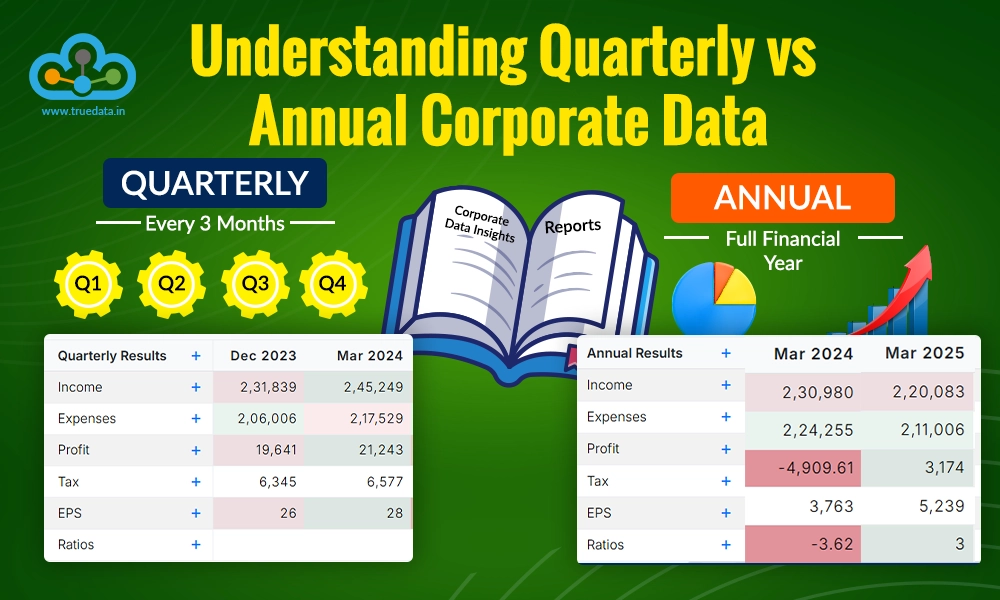
Understanding Quarterly vs Annual Corporate Data

Corporate data is more than just the numbers of a company. They can show what is...

Mutual Funds
Mutual Funds
Money Market Funds and How to Invest Them?

Mutual funds are often associated with long-term wealth creation, but they also ...