Mutual Funds

What is AUM in Mutual Funds?

Marisha Bhatt · 30 Oct 2025 · 8 mins read · 12 Comments
Share

what-is-aum-in-mutual-funds

When it comes to investing in mutual funds, investors often consider popular factors like risk-return balance, financial goals and duration. However, have you ever wondered why some investors also pay close attention to the fund’s AUM? Does it really make a difference? Dive into this blog to know the meaning and importance of AUM and how it impacts your investment decisions. 

What is the meaning of AUM in mutual funds?

What is the meaning of AUM in mutual funds

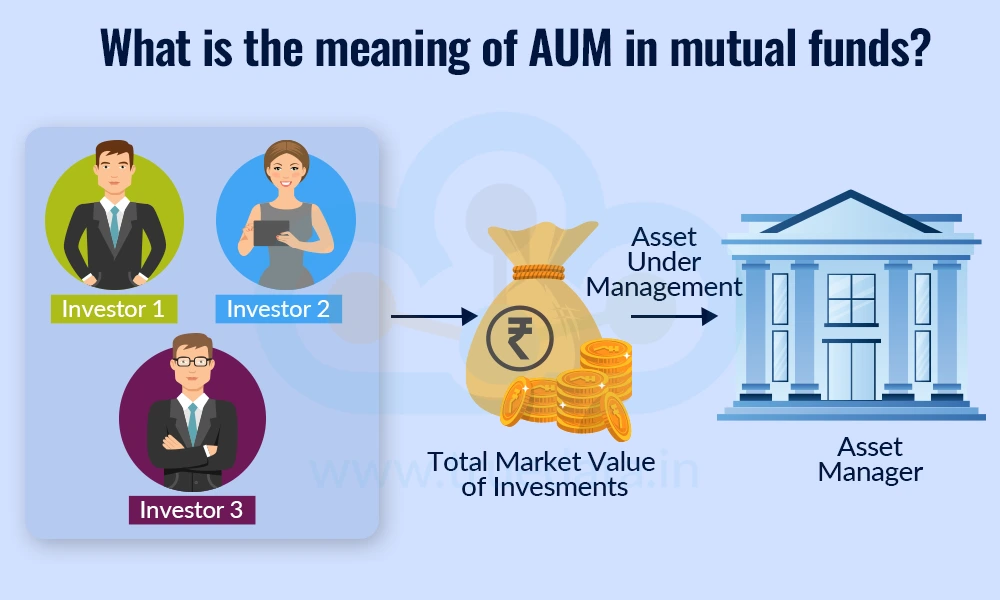
AUM, ot the Assets Under Management, refer to the total market value of all the assets and investments that a mutual fund manages on behalf of its investors (retail and institutional investors). This includes the total capital after considering all the assets like equity, debt, gold and more. The total AUM amount can change every day as it depends on the market value of the securities the fund holds and whether new investors are joining or existing ones are withdrawing their money. A higher AUM usually means that the fund has earned the trust of many investors and has grown over time. On the other hand, a smaller AUM might indicate that the fund is newer or has a more focused investment base. However, it is essential to recognise that a large AUM does not necessarily imply that the fund is superior or will yield higher returns. It is just one of many factors to consider when choosing where to invest.

What is the significance of AUM in mutual funds?

What is the significance of AUM in mutual funds

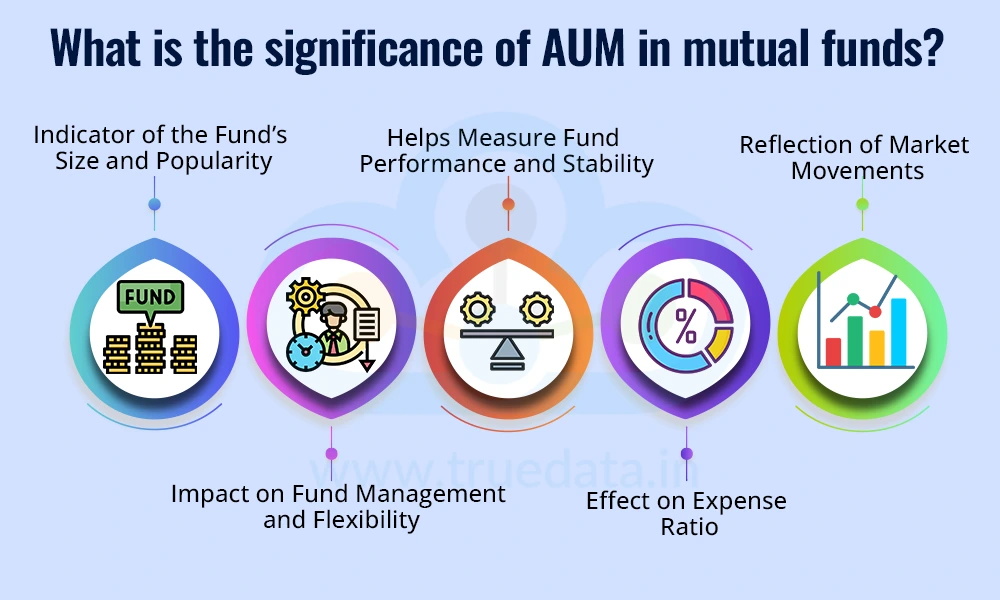
AUM indicates the total value of the assets managed by the fund, and thus, it is important to understand its significance in shaping an investment portfolio. The importance of AUM and its overall impact are explained below. 

Indicator of the Fund’s Size and Popularity

AUM shows the size or the strength of a mutual fund and the extent of investor money it manages. A fund with a high AUM usually means that many investors trust it based on several factors, and they have invested their money in it. This popularity can be a sign of consistent performance and confidence in the fund manager’s ability. However, it is also important to remember that a bigger fund is not always better, as smaller funds can also perform well depending on their strategy, focus and asset allocation.

Impact on Fund Management and Flexibility

The size of the AUM can affect how a fund is managed. Funds with a very large AUM may find it harder to move in and out of certain investments quickly, especially in smaller or less liquid markets. Smaller funds, on the other hand, can be more flexible and take advantage of specific investment opportunities. So, depending on the fund’s strategy, the size of the AUM can have both advantages and challenges.

Helps Measure Fund Performance and Stability

When a mutual fund’s AUM grows over time, it often means that the fund has delivered good returns and attracted more investors. A stable or growing AUM gives confidence that the fund is being managed efficiently, even in the face of market volatility. On the other hand, if the AUM keeps falling, it might suggest that investors are withdrawing money due to poor performance, market conditions, better investment options with a lower expense ratio or higher returns at similar risks.

Effect on Expense Ratio

AUM also plays a role in determining the expense ratio, i.e., the percentage of total assets that go toward managing the fund. Generally, funds with a larger AUM can spread their costs over more investors, which may result in a lower expense ratio. This means that investors might pay slightly less in fees compared to smaller funds with higher costs per investor.

Reflection of Market Movements

AUM changes not only because investors buy or sell fund units but also due to market performance. When the value of the stocks or bonds held by the fund increases, the AUM rises, and when markets fall, the AUM decreases. So, AUM can give a quick snapshot of how the fund is performing in the current market environment.

How is AUM calculated?

How is AUM calculated

AUM (Assets Under Management) is calculated by adding up the total market value of all the investments that a mutual fund currently manages on behalf of its investors. This includes the value of shares, bonds, cash, and other securities held in the fund’s portfolio. The AUM can change daily because the market prices of these investments go up and down, and investors may add or withdraw their money from the fund.

The formula to calculate the AUM of a fund is,

AUM = Current Market Value of Investments + Cash and Other Assets - Liabilities

Understanding the calculation of AUM with an example. 

Consider a Fund ABC with the following details,

  • Value of Shares in different companies = Rs. 80 crore

  • Value of Bonds = Rs. 10 crore

  • Cash in Hand = Rs. 5 crore

  • Liabilities (outstanding expenses and payments) = Rs. 2 crore 

Thus, the AUM of Fund ABC is,

AUM = (80+10) + 5 - 2 = Rs. 93 crores

This means the fund is currently managing Rs. 93 crore worth of assets for all its investors combined. As the market value of its holdings changes or as investors add or withdraw money, the AUM will also change accordingly.

What are the benefits of investing in funds with high AUM?

What are the benefits of investing in funds with high AUM

The benefits of investing in funds with high AUM can be multiple, including the trust in the fund built over time. Some of these key benefits are mentioned below.

  • Experienced Fund Management - Funds with large AUMs are usually managed by experienced and skilled fund managers. Since they handle large sums of money, these funds often have access to better research, analysis tools, and professional expertise.

  • Lower Expense Ratio - A higher AUM allows the fund to spread its operating costs over a larger pool of money. This usually leads to a lower expense ratio, i.e., smaller fees for fund management, thus leading to more of the net returns.

  • Stability and Consistency - Funds with high AUM tend to be more stable since they have a larger base of investors and diversified investments. Even if some investors withdraw money, it is less likely to affect the fund’s overall performance significantly.

  • Better Diversification - A fund with a large AUM usually invests in a wide variety of companies, sectors, and instruments. This diversification helps reduce risk, i.e., if one investment does not perform well, others in the portfolio may balance it out.

  • Strong Track Record - Often, funds with a high AUM have reached that level due to their ability to consistently deliver good returns over time. While past performance does not guarantee future results, it can still give confidence to new investors.

  • Economies of Scale - When a fund manages a large amount of money, it can negotiate better deals on transaction costs, research, and other services. These savings can indirectly benefit investors by improving returns or keeping costs low.

  • Stronger Risk Management Systems - Big funds usually have dedicated teams and advanced tools for monitoring risk. This helps them manage market volatility, credit risks, and portfolio balance more effectively, which provides an added layer of safety for investors.

  • Easier Benchmark Comparison - Funds with higher AUM are often compared against well-known market benchmarks and peer funds. This transparency makes it easier for investors to evaluate how the fund is performing relative to others in the same category. 

Should only AUM be considered while investing in mutual funds?

should-only-aum-considered-while-investing-in-mutual-funds

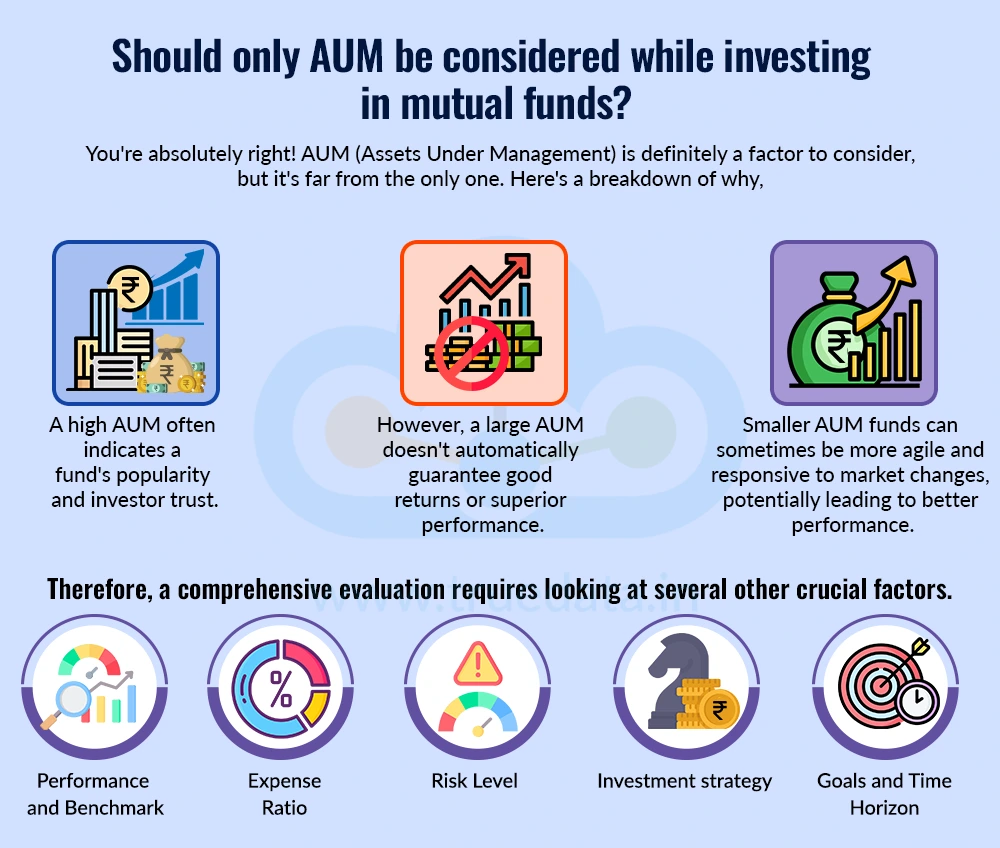
AUM is an important tool for evaluating a fund. However, it cannot be the sole consideration. A high AUM may show that the fund is popular and trusted by many investors, but that alone does not guarantee good returns or performance. Sometimes, funds with smaller AUMs can perform better because they are more flexible and can easily adjust their investments based on market conditions. Therefore, while analysing a mutual fund, an investor should also look at other key aspects such as the fund’s past performance, returns compared to its benchmark, risk level, expense ratio, investment strategy, and the experience of the fund manager. It is equally important that the fund aligns with the investor’s financial goals, risk appetite, and time horizon. Thus, AUM can give an idea about the fund’s size and reputation, but a wise investment decision should be based on a complete evaluation of all these factors together.

Conclusion

AUM (Assets Under Management) is an important indicator of a mutual fund’s size, popularity, and investor confidence. It helps understand how much money a fund manages and can reflect its stability and reputation in the market. However, investors should use AUM as just one of many factors to make well-informed and balanced investment decisions rather than solely depending on it or giving undue importance to it. 

This article talks about a very basic concept in mutual funds and its importance in making investment decisions. Let us know your thoughts on the topic or if you need any further information on the same. 

Till then, Happy Reading!


Read More: How to Calculate Returns on Mutual Fund Investments?

Frequently Asked Questions

A mutual fund’s AUM is usually updated daily, as it changes with market movements and investor transactions. The value can rise or fall depending on how the fund’s investments perform and whether investors are adding or withdrawing money.

Inflows increase a mutual fund’s AUM when more investors put money into the fund, while outflows reduce the AUM when investors withdraw their money. These changes, along with market performance, directly affect the total size of the fund.

A higher AUM generally improves a fund’s liquidity, making it easier for investors to buy or sell units without affecting the fund’s value. Very large funds, however, may face challenges trading in smaller or less liquid securities due to their size.

Yes, AUM (Assets Under Management) usually means the same as fund size. It shows how much money is managed in a mutual fund or investment scheme. It is a common way to measure how big or popular a fund is.

Comparing AUM across funds requires considering the total value of assets each fund manages, the type of fund, its investment strategy, and category. It helps see which funds are more popular or stable, but it should be done alongside other factors like returns, risk, and expenses.

Besides the expense ratio, AUM can also involve entry or exit loads, which are fees charged when investors buy or sell fund units. Some funds may also have performance fees if they earn above a certain benchmark, but these depend on the fund’s rules.
Marisha Bhatt

Marisha Bhatt is a financial content writer @TrueData.

She writes with the sole aim of simplifying complex financial concepts and jargon while attempting to clarify technical and fundamental analysis concepts of the stock markets. The ultimate goal is to spread vital knowledge and benefit the maximum audience. Her Chartered Accountant background acts as the knowledge base to help clarify crucial concepts and create a sound investment portfolio.

12 Comments
M
Mohan
· October 31, 2025

total market value of all the assets that are under the management of an fund house

·
Marisha Bhatt Author
Mohan · November 04, 2025

Exactly! AUM is the total market value of all the investments a fund house manages for its investors. It can also be considered a good way to see how big or popular a mutual fund is.

·
B
Bala
· October 31, 2025

Good post

·
Marisha Bhatt Author
Bala · November 04, 2025

Thanks for appreciating our work! Stay tuned for more interesting content on TrueData!

·
V
Vikram
· November 01, 2025

Good one

·
Marisha Bhatt Author
Vikram · November 04, 2025

Glad you like our work Sir! Keep reading and sharing your thoughts on our other posts too!

·
A
Arora
· November 01, 2025

Good blog post

·
Marisha Bhatt Author
Arora · November 04, 2025

Thank you Sir! Glad you like our work.

·
A
Ashok
· November 02, 2025

Good post. thanks for sharing it

·
Marisha Bhatt Author
Ashok · November 04, 2025

Glad you like our work Sir! Stay tuned for more interesting content on TrueData!

·
N
Naran
· November 04, 2025

Excellent topic

·
Marisha Bhatt Author
Naran · November 04, 2025

Thank your valuable feedback! Keep reading and sharing your thoughts on our other topics too!

·

Related Articles

SEE ALL
Knowledge bank
Knowledge bank
How to Complain About Mutual Funds?

Mutual fund investments have simplified greatly with just a tap on your smartpho...

Knowledge bank
Knowledge bank
How to Complain About Mutual Funds?

Mutual fund investments have simplified greatly with just a tap on your smartpho...

Investing / Trading
Investing / Trading
Stocks or mutual funds? Which is better?

Introduction For the longest time, investment in stock markets was thought to b...