Investing / Trading

Monopoly Stocks in India 2026

Marisha Bhatt · 06 Jun 2026 · 13 mins read · 0 Comments

monopoly-stocks-in-india

The first rule of any business is that the ‘Customer is King’. In a competitive market, customers enjoy more choices, better quality, and fair pricing. But interestingly, some industries in India are dominated by just one major player, giving these companies a strong market position and significant pricing power. These are known as monopoly stocks, and they often attract investors looking for stable growth and long-term opportunities. However,  are monopoly stocks always a safe bet? In this blog, we explore monopoly stocks in India, their advantages and risks, and how investors can use them wisely to build a strong portfolio. 

What are Monopoly Stocks?

What are Monopoly Stocks

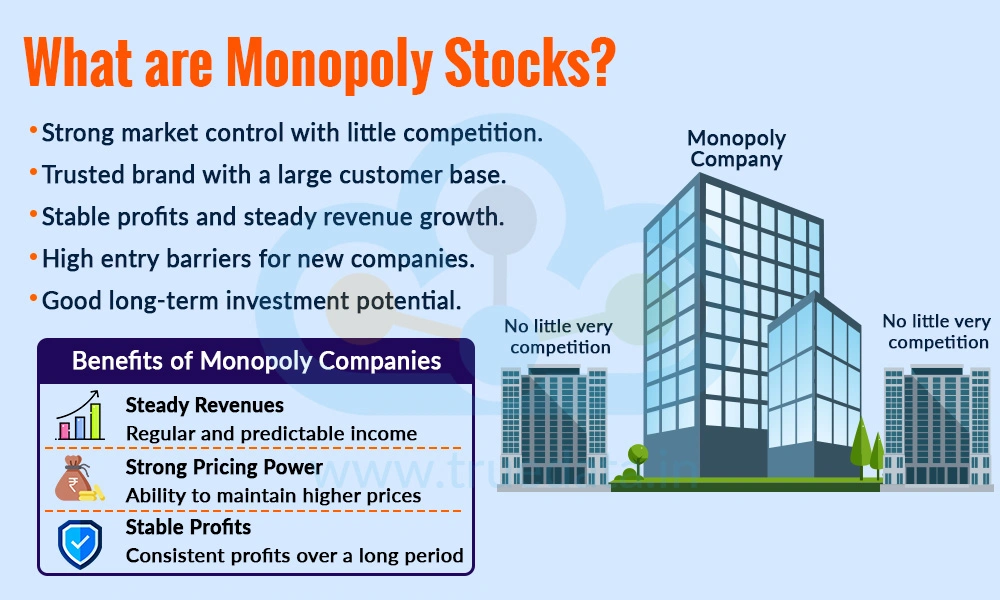
Monopoly stocks are shares of companies that dominate a particular industry or market with very little or no competition. These companies usually have a strong brand name, a large customer base, unique products or services, or high entry barriers that make it difficult for new competitors to enter the business. Due to their dominant position, monopoly companies often enjoy steady revenues, strong pricing power, and stable profits over long periods. In India, businesses operating in sectors like railways, stock exchanges, mining, or specialised manufacturing are often considered monopoly or near-monopoly players. Monopoly stocks can be attractive for investors as such companies may offer consistent growth and financial stability. However, they are not completely risk-free, as factors like government regulations, technological changes, or rising competition can still affect their performance. Therefore, investors should study the company’s financial health, future growth potential, and industry position carefully before investing in monopoly stocks.

What are the Features of Monopoly Stocks?

What are the Features of Monopoly Stocks

Monopoly Stocks can be an important addition to a portfolio, providing stability and long-term wealth. The top features of Monopoly Stocks that make them attractive are highlighted below.

  • Strong Market Dominance - Monopoly companies usually control a large share of their industry or operate with very little competition. Their strong presence makes them leaders in their sector and gives them a stable position in the market.

  • High Entry Barriers - It is often difficult for new companies to enter these industries due to huge capital requirements, government regulations, technology, or strong brand value. This protects monopoly businesses from new competition.

  • Strong Pricing Power - Since customers have limited alternatives, monopoly companies can often influence the pricing of their products or services. This helps them maintain healthy profit margins over time.

  • Stable Revenue and Profits - Monopoly businesses usually enjoy consistent demand for their products or services. Because of this, their revenues and profits may remain stable even during difficult market conditions.

  • Strong Brand Recognition - Many monopoly companies become trusted household names over time. Their strong reputation and customer trust help them retain market leadership for years.

  • Economies of Scale - Large monopoly companies often operate at a bigger scale, which helps reduce production and operational costs. Lower costs can improve profitability and business efficiency.

  • Long-Term Growth Potential - Due to their dominant market position, monopoly companies may continue growing steadily for many years. This makes them attractive for long-term investors looking for stable wealth creation.

  • Lower Competition Risk - Unlike highly competitive industries, monopoly businesses face less pressure from rivals. This allows them to focus more on expansion, innovation, and improving profitability.

  • Regulatory Influence - Some monopoly companies operate in sectors closely linked to government policies, such as railways, utilities, or mining. Government support or regulations can play a major role in their growth.  

How to Identify Monopoly Stocks? 

How to Identify Monopoly Stocks

The first step to add monopoly stocks to a portfolio is to identify them correctly. Here are a few pointers for the same. 

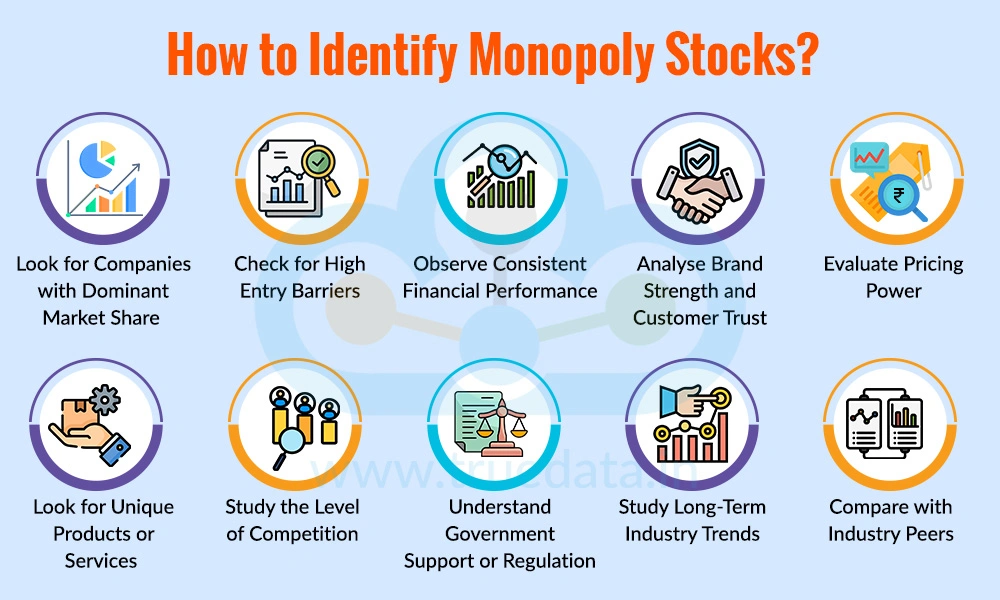
  • Look for Companies with Dominant Market Share - One of the easiest ways to identify a monopoly stock is by checking whether the company controls a major share of its industry. A business that dominates its sector usually faces very little competition and has a strong influence over pricing and customer demand. For example, companies operating in specialised industries like stock exchanges, railway services, or certain mining sectors may enjoy a near-monopoly position in India.

  • Check for High Entry Barriers - Strong monopoly businesses are usually protected by high entry barriers. These barriers may include huge capital requirements, government licences, advanced technology, patents, or a strong distribution network. When entering an industry becomes difficult for new players, existing companies can maintain their dominant position for a long time.

  • Observe Consistent Financial Performance - Monopoly businesses often generate stable revenues, healthy profit margins, and steady cash flows over many years. Investors can study financial statements to check whether the company has consistent sales growth, rising profits, and strong return ratios. Stable financial performance is often a sign of strong market control.

  • Analyse Brand Strength and Customer Trust - Many monopoly companies have built strong brand value over decades. Customers trust their products or services and continue using them regularly. Investors should look for companies that are widely recognised, have loyal customers, and enjoy a strong reputation in the market.

  • Evaluate Pricing Power - A monopoly company usually has the ability to increase prices without losing a large number of customers. Businesses with strong pricing power can protect their profits even during inflation or rising costs. Investors should study whether the company has been able to maintain or improve profit margins over time.

  • Look for Unique Products or Services - Some companies become monopoly players because they offer specialised products, services, or infrastructure that are difficult to replace. Investors should identify businesses that provide essential services or operate in niche industries with limited alternatives.

  • Study the Level of Competition - A monopoly company often operates in an industry where there are very few strong competitors. Investors should analyse whether customers have many alternatives available in the market. If switching to another company is difficult or uncommon, it may indicate that the business has monopoly-like characteristics.

  • Understand Government Support or Regulation - In India, some monopoly businesses operate in sectors influenced by government policies, such as railways, utilities, energy, or infrastructure. Investors should understand whether government regulations support the company’s dominant position or create barriers for competitors.

  • Study Long-Term Industry Trends - A company may appear dominant today but face competition in the future due to technological changes or changing consumer preferences. Investors should analyse whether the business can maintain its leadership position over the long term and adapt to industry changes.

  • Compare with Industry Peers - Finally, investors should compare the company with other businesses in the same sector. A monopoly stock usually stands out because of its larger market share, stronger profits, wider reach, or better operational efficiency compared to competitors. This comparison can help investors identify whether the company truly has monopoly characteristics.

Who Should Invest in Monopoly Stocks?

who-should-invest-in-monopoly-stocks

Now that we have explored the meaning and features of monopoly stocks, let us now focus on the target investors for this category. 

  • Long-Term Investors - Monopoly stocks are often suitable for investors who want to stay invested for many years. These companies usually have strong market positions, stable businesses, and steady growth potential. Long-term investors may benefit from consistent returns and wealth creation over time.

  • Conservative and Stable Growth Investors - Monopoly stocks can be suitable for conservative investors who prefer relatively stable businesses with steady growth, stable profits, and lower volatility during market fluctuations.

  • Dividend-Seeking Investors - Many monopoly businesses generate strong and consistent cash flows. Due to this, some of them regularly reward shareholders through dividends. Investors looking for regular passive income may find such stocks attractive.

  • Beginners in the Stock Market - New investors who are still learning about stock investing may prefer companies with simple and stable business models. Monopoly stocks are often easier to understand because they usually operate in established industries with strong market leadership.

  • Stability-Focused Investors - Monopoly stocks are suitable for investors who prefer portfolio stability and are comfortable with moderate but potentially consistent long-term returns instead of very high short-term gains.

  • Investors with a Disciplined Approach - Monopoly stocks still require proper research and patience. Investors who carefully study company fundamentals, avoid emotional decisions, and stay invested with discipline are more likely to benefit from these businesses over time.

What are the Benefits and Risks of Investing in Monopoly Stocks?

Analysing monopoly stocks is incomplete without considering the risks and the benefits of investing in them. The primary benefits and risks of including monopoly stocks in a portfolio include, 

What are the Benefits and Risks of Investing in Monopoly Stocks 

Benefits of Investing in Monopoly Stocks

Risks of Investing in Monopoly Stocks

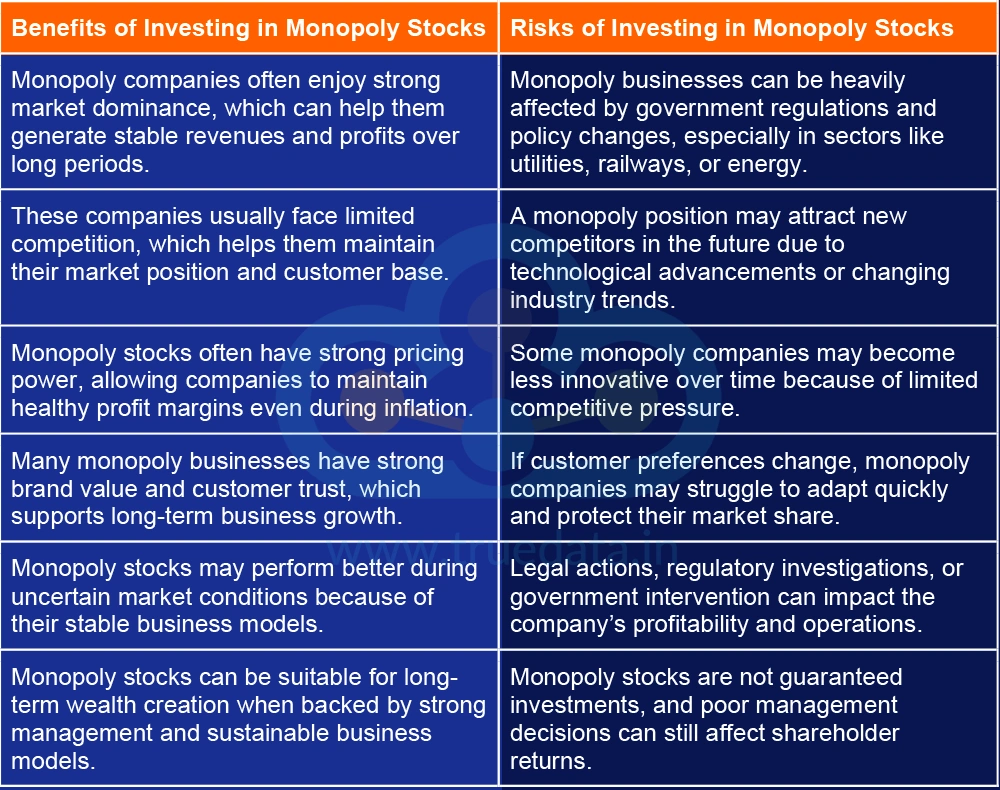
Monopoly companies often enjoy strong market dominance, which can help them generate stable revenues and profits over long periods.

Monopoly businesses can be heavily affected by government regulations and policy changes, especially in sectors like utilities, railways, or energy.

These companies usually face limited competition, which helps them maintain their market position and customer base.

A monopoly position may attract new competitors in the future due to technological advancements or changing industry trends.

Monopoly stocks often have strong pricing power, allowing companies to maintain healthy profit margins even during inflation.

Some monopoly companies may become less innovative over time because of limited competitive pressure.

Many monopoly businesses have strong brand value and customer trust, which supports long-term business growth.

If customer preferences change, monopoly companies may struggle to adapt quickly and protect their market share.

Monopoly stocks may perform better during uncertain market conditions because of their stable business models.

Legal actions, regulatory investigations, or government intervention can impact the company’s profitability and operations.

Monopoly stocks can be suitable for long-term wealth creation when backed by strong management and sustainable business models.

Monopoly stocks are not guaranteed investments, and poor management decisions can still affect shareholder returns.

Top Monopoly Stocks in India 

  1. IRCTC

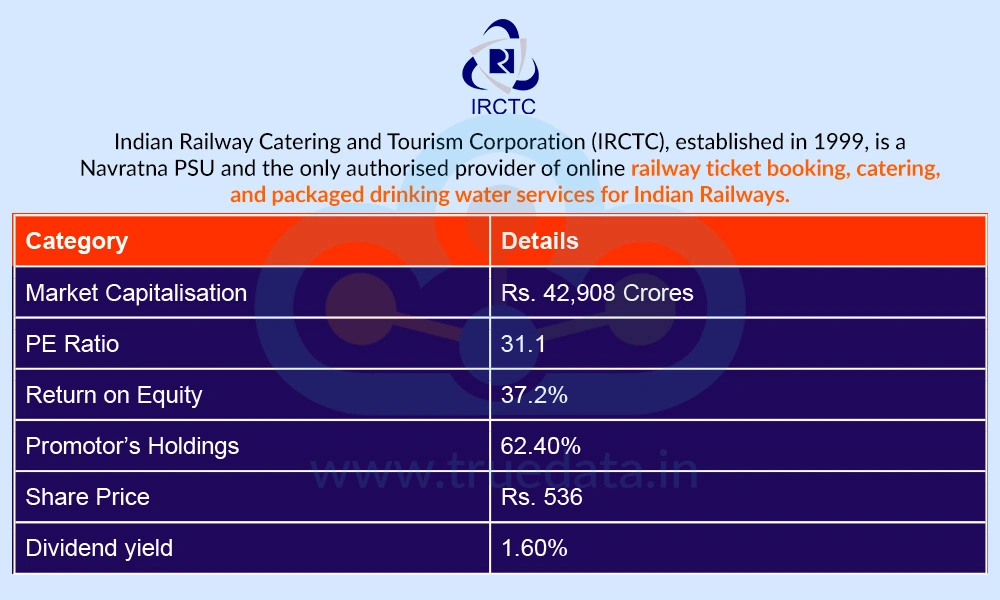
Indian Railway Catering and Tourism Corporation (IRCTC), established in 1999, is a Navratna public sector company and the only government-authorised provider of online railway ticket booking, catering, and packaged drinking water services for Indian Railways. The company operates across railway catering, tourism, internet ticketing, and packaged drinking water businesses, while also expanding into non-railway catering services to strengthen its growth opportunities across India.

  IRCTC

Category

Details

Market Capitalisation

Rs. 42,908 Crores

PE Ratio

31.1

Return on Equity

37.2%

Promotor’s Holdings

62.40% 

Share Price

Rs. 536

Dividend yield

1.60%

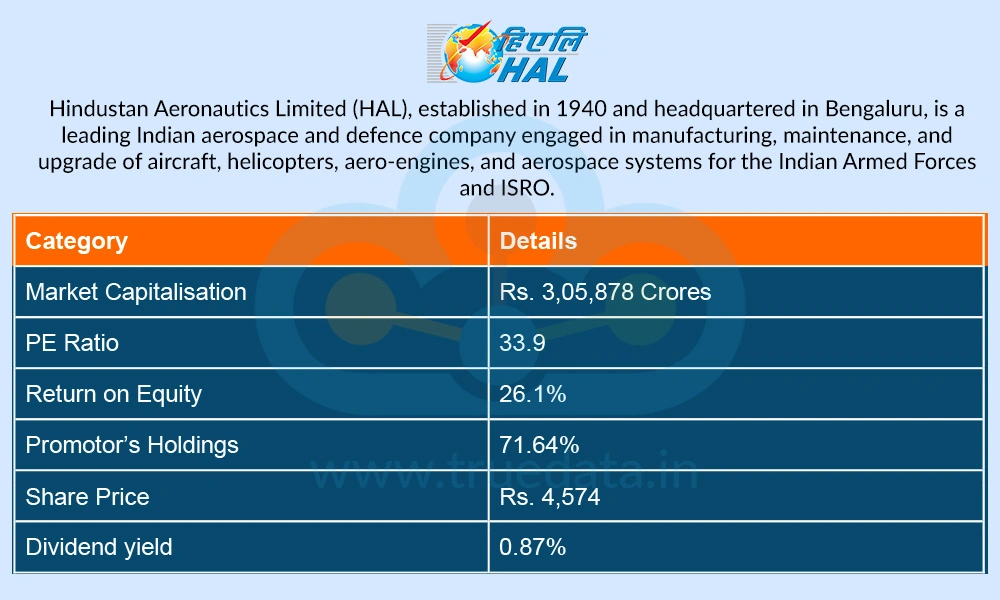
  1. HAL

Hindustan Aeronautics Limited (HAL), established in 1940 and headquartered in Bengaluru, is one of India’s leading aerospace and defence companies engaged in the design, manufacturing, repair, upgrade, and maintenance of aircraft, helicopters, aero-engines, avionics, and aerospace systems. The company primarily operates through its manufacturing and services segments, supplying advanced defence equipment and maintenance solutions to the Indian Armed Forces while also contributing to India’s space programmes through collaborations with ISRO. HAL has secured major defence contracts in recent years, including orders for Light Combat Helicopters, Su-30MKI aircraft and engines, and aircraft upgrade projects, strengthening its position as a key player in India’s defence and aerospace sector.

 HAL

Category

Details

Market Capitalisation

Rs. 3,05,878 Crores

PE Ratio

33.9

Return on Equity

26.1%

Promotor’s Holdings

71.64% 

Share Price

Rs. 4,574

Dividend yield

0.87%

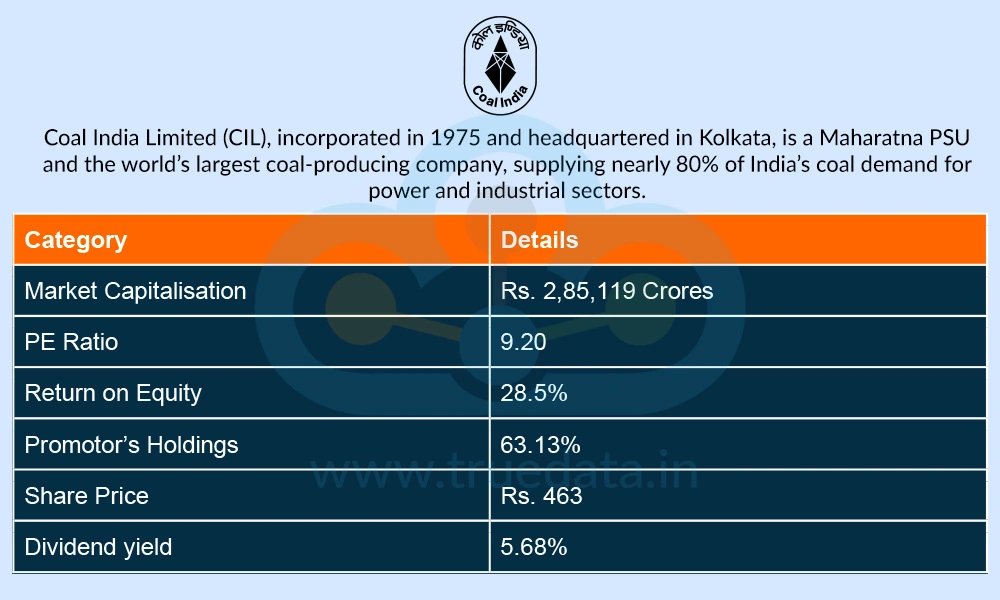
  1. Coal India 

Coal India Limited (CIL), incorporated in 1975 after the nationalisation of India’s coal sector, is a Maharatna public sector company and the world’s largest coal-producing company. Headquartered in Kolkata, the company plays a dominant role in India’s energy sector by contributing nearly 80% of the country’s total coal production and supplying the majority of coal to the power sector. Coal India operates across multiple states in India and is engaged in coal mining, coal processing, consultancy services, and renewable energy initiatives, making it one of the most important companies supporting India’s industrial and power generation needs.

Coal India 

Category

Details

Market Capitalisation

Rs. 2,85,119 Crores

PE Ratio

9.20

Return on Equity

28.5%

Promotor’s Holdings

63.13% 

Share Price

Rs. 463

Dividend yield

5.68%

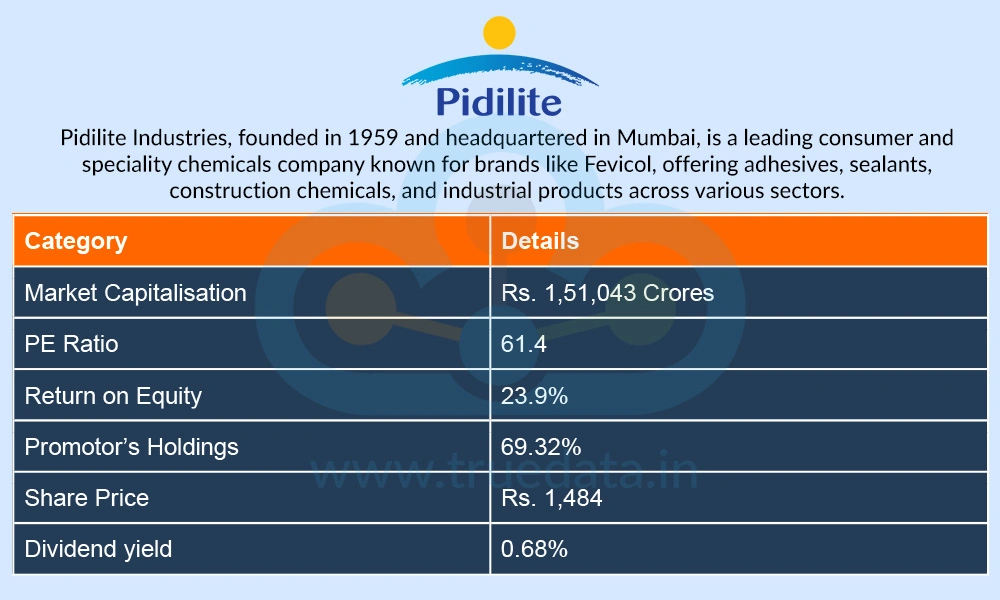
  1. Pidilite Industries

Pidilite Industries, founded in 1959 and headquartered in Mumbai, is one of India’s leading consumer and speciality chemicals companies, best known for its iconic adhesive brand Fevicol. The company operates through consumer and industrial business segments, offering a wide range of products including adhesives, sealants, construction chemicals, art and craft materials, pigments, and industrial resins. With a dominant market share of around 70% in India’s adhesive industry, Pidilite has built strong brand recognition and customer trust over the years, making its products widely used across households, construction, packaging, paints, textiles, and various industrial sectors.

 Pidilite Industries

Category

Details

Market Capitalisation

Rs. 1,51,043 Crores

PE Ratio

61.4

Return on Equity

23.9%

Promotor’s Holdings

69.32% 

Share Price

Rs. 1,484

Dividend yield

0.68%

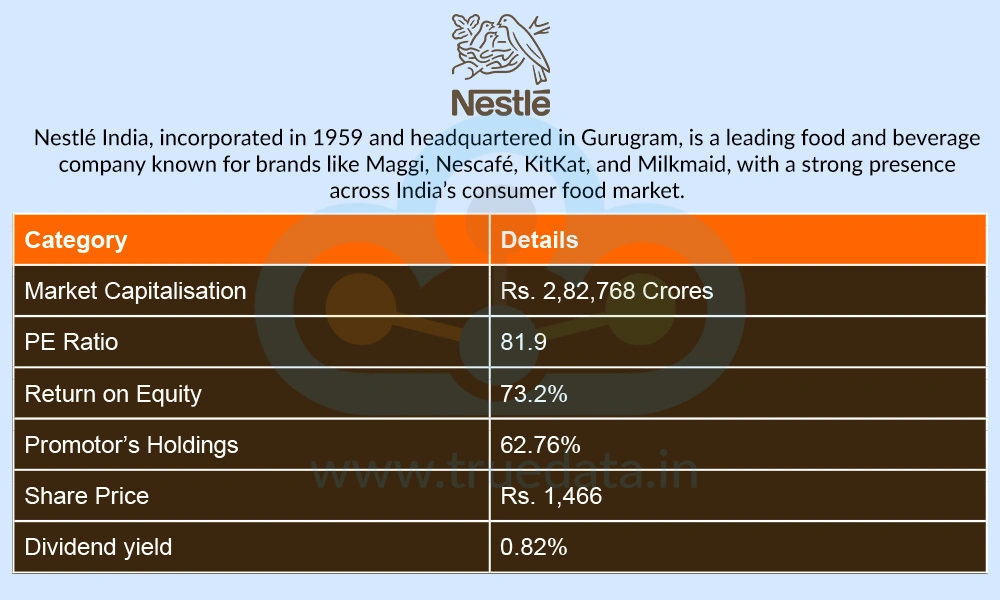
  1. Nestle India

Nestle India, incorporated in 1959 and headquartered in Gurugram, is one of India’s leading food and beverage companies and a subsidiary of Nestlé S.A., which holds a majority stake in the business. The company owns several well-known brands such as Nescafé, Maggi, KitKat, Milkybar, Milkmaid, and Bar-One, and operates across categories including milk products, nutrition, beverages, prepared foods, cooking aids, and confectionery. With a strong distribution network of over 10,000 distributors and presence across millions of retail outlets, Nestlé India holds a leading position in several product categories, making it one of the most trusted consumer food brands in the country.

 Nestle India

Category

Details

Market Capitalisation

Rs. 2,82,768 Crores

PE Ratio

81.9

Return on Equity

73.2%

Promotor’s Holdings

62.76% 

Share Price

Rs. 1,466

Dividend yield

0.82%

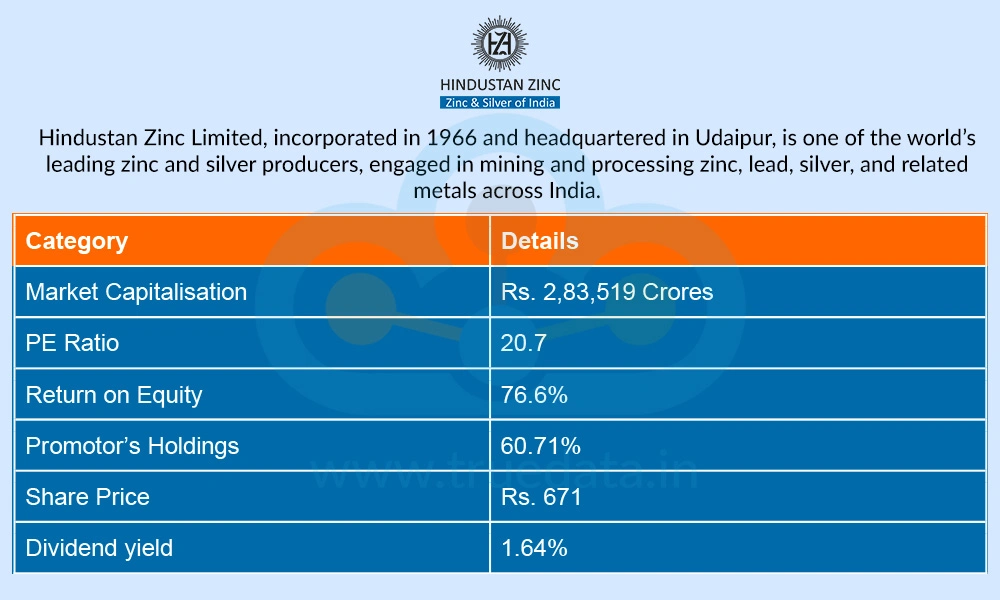
  1. Hindustan Zinc

Hindustan Zinc Limited, incorporated in 1966 and headquartered in Udaipur, is one of the world’s leading zinc and silver producers and a subsidiary of Vedanta Limited. The company holds a dominant share of India’s zinc market and is engaged in the exploration, mining, and processing of zinc, lead, silver, and related alloys. With large-scale mining and smelting operations across Rajasthan, including the world’s largest underground zinc mining operations at Rampura Agucha, Hindustan Zinc has built a strong position in the metals industry. The company is also self-sufficient in power generation through captive thermal, wind, and solar power plants, supporting its focus on operational efficiency and sustainable growth.

 Hindustan Zinc

Category

Details

Market Capitalisation

Rs. 2,83,519 Crores

PE Ratio

20.7

Return on Equity

76.6%

Promotor’s Holdings

60.71% 

Share Price

Rs. 671

Dividend yield

1.64%

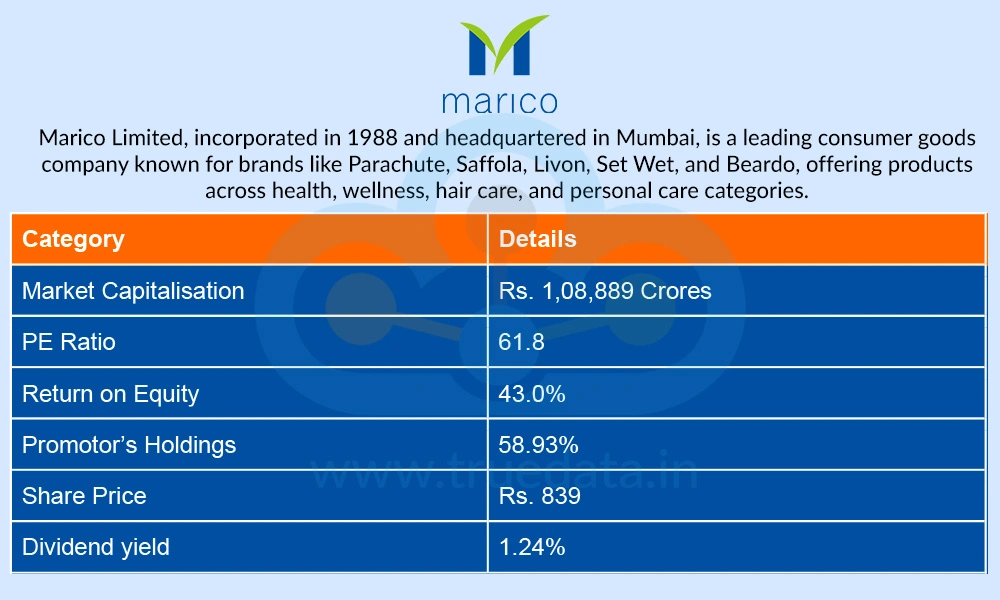
  1. Marico

Marico Limited, incorporated in 1988 and headquartered in Mumbai, is one of India’s leading consumer goods companies operating in the beauty, wellness, and health products segment across India and several international markets. The company owns well-known brands such as Parachute, Saffola, Hair & Care, Livon, Set Wet, Beardo, and True Elements, offering products across categories like edible oils, hair care, healthy foods, male grooming, skin care, and personal wellness. Marico holds strong market leadership in multiple categories, including coconut oil, value-added hair oils, oats, leave-on serums, and hair styling products, supported by its wide distribution network and strong brand recognition among Indian consumers.

 Marico

Category

Details

Market Capitalisation

Rs. 1,08,889 Crores

PE Ratio

61.8

Return on Equity

43.0%

Promotor’s Holdings

58.93% 

Share Price

Rs. 839

Dividend yield

1.24%

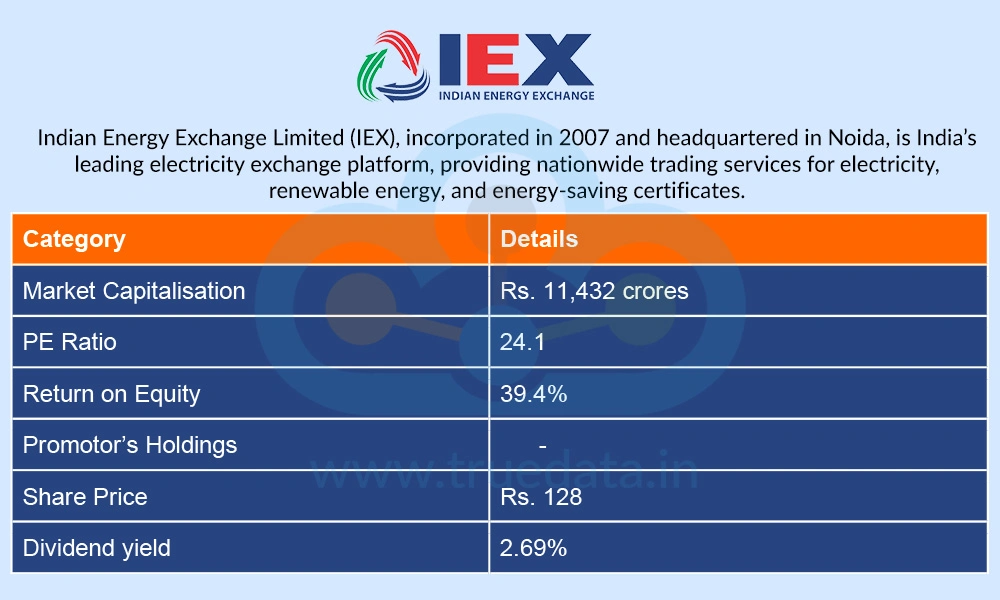
  1. Indian Energy Exchange Ltd. 

Indian Energy Exchange Limited (IEX), incorporated in 2007 and headquartered in Noida, is India’s leading electricity exchange platform with a 85% market share in the country’s power trading sector. The company provides an automated and nationwide trading platform for the physical delivery of electricity, renewable energy, and energy-saving certificates, helping improve price discovery, efficiency, and transparency in India’s power market. IEX offers multiple power trading products, including day-ahead, real-time, term-ahead, and green energy markets, playing an important role in supporting the growth of India’s energy and renewable power ecosystem.

 Indian Energy Exchange Ltd. 

Category

Details

Market Capitalisation

Rs. 11,432 crores

PE Ratio

24.1

Return on Equity

39.4%

Promotor’s Holdings

Share Price

Rs. 128

Dividend yield

2.69%

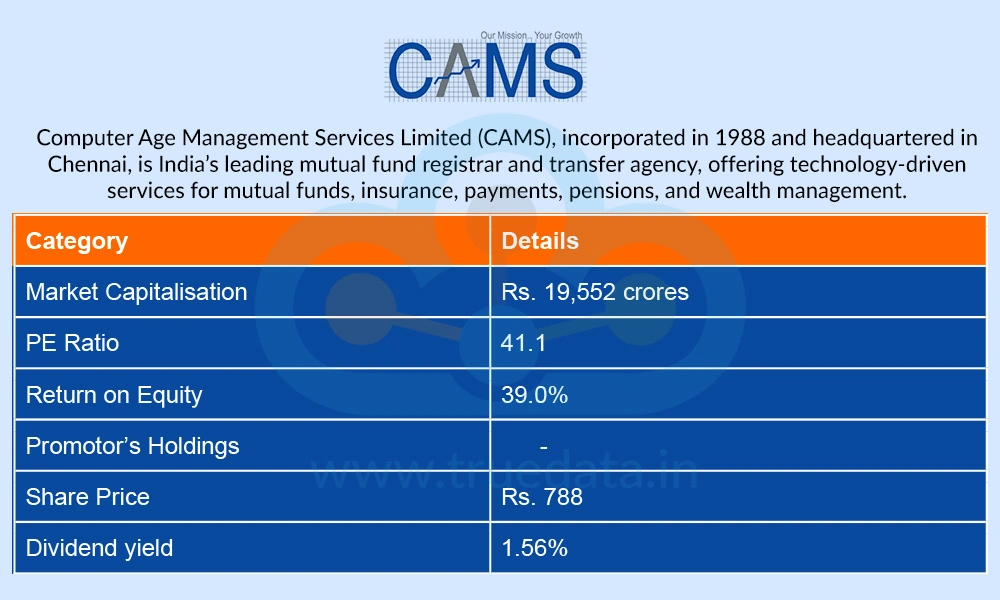
  1. CAMS

Computer Age Management Services Limited (CAMS), incorporated in 1988 and headquartered in Chennai, is India’s leading mutual fund registrar and transfer agency, providing technology-driven services to mutual funds, financial institutions, distributors, and investors. The company holds a dominant market share in the mutual fund RTA segment and manages a large portion of the country’s mutual fund assets under management. CAMS offers a wide range of digital platforms and solutions for mutual fund transactions, investor servicing, KYC processing, insurance, payments, pensions, and wealth management. The company has also been expanding its non-mutual fund business and strengthening its position through new AMC partnerships, digital investment products, and AI-driven financial solutions.

 CAMS

Category

Details

Market Capitalisation

Rs. 19,552 crores

PE Ratio

41.1

Return on Equity

39.0%

Promotor’s Holdings

  •  

Share Price

Rs. 788

Dividend yield

1.56%

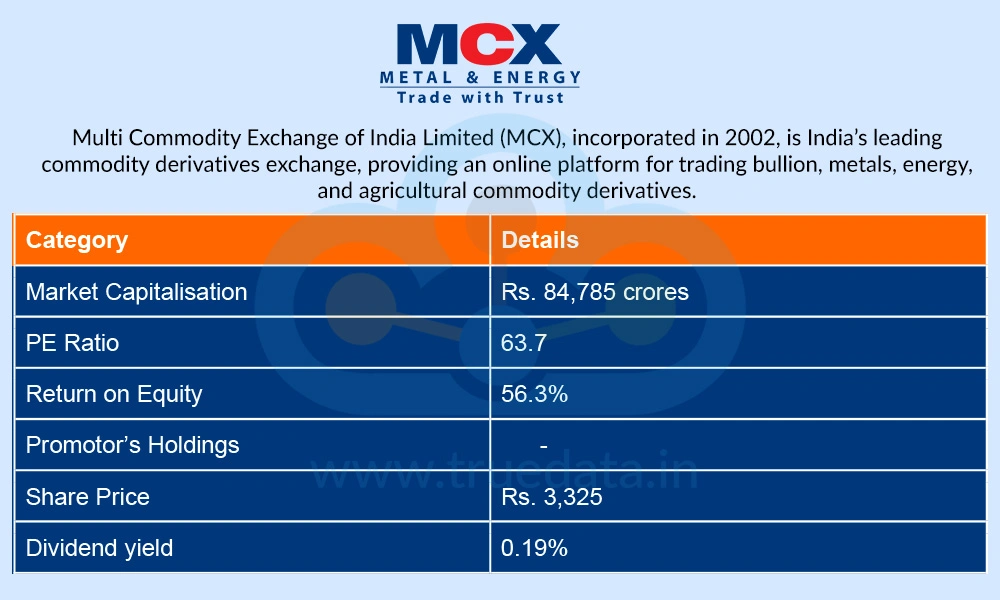
  1. MCX

Multi Commodity Exchange of India Limited (MCX), incorporated in 2002 and operational since 2003, is India’s leading commodity derivatives exchange and the country’s first listed national-level electronic commodity exchange regulated by SEBI. The company provides an online platform for trading commodity derivatives across bullion, base metals, energy, and agricultural commodities, while also offering clearing, settlement, and market data services. MCX holds a dominant position in India’s commodity futures market, especially in precious metals, energy, and base metals, making it a key player in price discovery and risk management for the Indian commodity market ecosystem.

 MCX

Category

Details

Market Capitalisation

Rs. 84,785 crores

PE Ratio

63.7

Return on Equity

56.3%

Promotor’s Holdings

  •  

Share Price

Rs. 3,325

Dividend yield

0.19%

Conclusion

Monopoly stocks in India can offer investors an opportunity to invest in companies with strong market leadership, stable demand, powerful brands, and long-term growth potential. While such companies may provide relatively stable earnings and consistent business growth, investors should remember that no stock is completely risk-free. Factors such as government regulations, changing technology, competition, and economic conditions can still affect their performance. Therefore, careful research, proper diversification, and a long-term investment approach remain important while investing in monopoly stocks.

This article highlights the details on monopoly stocks and if they can be a good addition to the portfolio. Let us know your thoughts on the topic or if you need further information on the same, and we will address it soon. 

Till then. Happy Reading!


Read More: Should Investors Continue SIPs During Market Corrections?

Frequently Asked Questions

True legal monopolies are rare in India’s stock market because most industries allow competition under Indian laws and SEBI regulations. However, some companies enjoy near-monopoly or dominant market positions due to government support, strong brand value, large market share, or high entry barriers.

Investors are often attracted to monopoly-like stocks because these companies usually have strong market positions, stable earnings, and lower competition. Such businesses may offer steady long-term growth, better pricing power, and relatively stable performance during market volatility.

Government regulations can strongly impact monopoly-like stocks because many of these companies operate in sectors such as energy, railways, mining, and finance. Changes in policies, pricing rules, taxes, or licensing norms can affect their revenues, profits, and future growth prospects.

ESG and political risks are very important for monopoly stocks because many of these companies operate in sectors closely linked to government policies, environmental rules, and public welfare. Poor ESG practices, regulatory issues, or political changes can affect a company’s reputation, operations, and long-term growth potential.

Investors can evaluate entry points for monopoly stocks by checking valuations, business growth, profit trends, and overall market conditions before investing. Buying quality monopoly stocks during market corrections or temporary price declines may help investors get better long-term returns.

Investors should avoid putting all their money into only monopoly stocks and instead diversify across different sectors, company sizes, and asset classes. A balanced portfolio with monopoly stocks, growth companies, and safer investments can help reduce risk and improve long-term stability.
Marisha Bhatt

Marisha Bhatt is a financial content writer @TrueData.
She writes with the sole aim of simplifying complex financial concepts and jargon while attempting to clarify technical and fundamental analysis concepts of the stock markets. The ultimate goal is to spread vital knowledge and benefit the maximum audience. Her Chartered Accountant background acts as the knowledge base to help clarify crucial concepts and create a sound investment portfolio.

0 Comments

Related Articles

SEE ALL
Investing / Trading
Investing / Trading
How do I download BSE and NSE stock prices in Excel in real time?

NSE Stock Prices in Excel in Real Time - Microsoft Excel is a super software cap...

Investing / Trading
Investing / Trading
What is loss aversion? Is it bad for your portfolio?

Remember the first time you tried riding a bicycle? The thrill of moving forward...

Investing / Trading
Investing / Trading
Level 1 vs Level 2 Data

Market data is the backbone ofsuccessful trading, but not all market data is the...

Relevant Tags