Analyst Report

India's Chemical Sector: A Strategic Equity Research Report (July 2025)

Santoo Chakraborty · 30 Oct 2025 · 6 mins read · 10 Comments

india-chemical-sector-a-strategic-equity-research-report

India's chemical industry stands at a pivotal point of growth and transformation, underpinned by robust domestic demand, strategic policy interventions, and opportunities to significantly expand global value chain participation. Valued at approximately USD 220 billion in 2023, the sector is anticipated to nearly double to USD 400-450 billion by 2030 and reach between USD 850 billion to USD 1 trillion by 2040. This sector, currently ranked sixth globally and third in Asia, contributes around 7% to India's GDP, supporting key sectors such as pharmaceuticals, agriculture, textiles, and automotive. However, India's share in global chemicals consumption remains modest at 3-3.5%, highlighting immense growth potential contingent on strategic policy actions.

Market Size and Segmentation

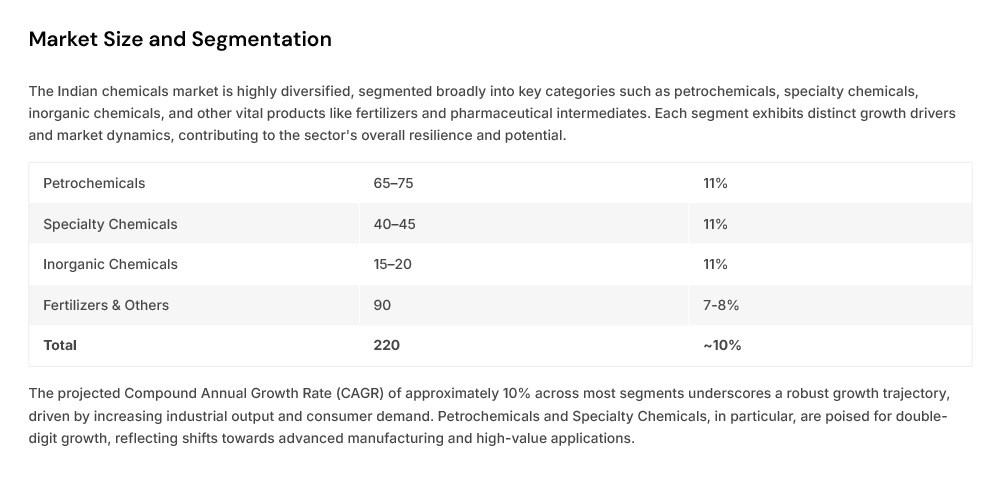
The Indian chemicals market is highly diversified, segmented broadly into key categories such as petrochemicals, specialty chemicals, inorganic chemicals, and other vital products like fertilizers and pharmaceutical intermediates. Each segment exhibits distinct growth drivers and market dynamics, contributing to the sector's overall resilience and potential.

market-size-and-segmentation

The projected Compound Annual Growth Rate (CAGR) of approximately 10% across most segments underscores a robust growth trajectory, driven by increasing industrial output and consumer demand. Petrochemicals and Specialty Chemicals, in particular, are poised for double- digit growth, reflecting shifts towards advanced manufacturing and high-value applications.

Key Growth Drivers

Several structural and macroeconomic tailwinds are expected to propel the Indian chemical industry into a new era of expansion. These drivers collectively create a fertile ground for sustained growth and increased market penetration, both domestically and globally.

  • Rising Household Incomes - With household consumption expected to add an astounding USD 1.5 trillion by 2030, the demand for chemical-derived products across various industries-from consumer goods to construction - is set to surge. This upward mobility in economic status translates directly into higher consumption of value-added chemicals.

  • Urbanization & Evolving Preferences - Rapid urbanization and changing consumer lifestyles are fueling a growing demand for specialty chemicals. These are crucial components in sectors like pharmaceuticals, personal care products, and advanced agrochemicals, reflecting a societal shift towards higher- quality and more sophisticated products.

  • Supply Chain Diversification - The global geopolitical landscape and supply chain vulnerabilities have prompted multinational corporations to seek alternatives to traditional manufacturing hubs. India is strategically positioned as a key alternative, offering stability, a skilled workforce, and a rapidly expanding domestic market, thereby attracting significant foreign investment in its chemical sector.

India's rising share in global chemical value chains, projected to reach 536% by 2030, is further underpinned by supportive government initiatives including Production-Linked Incentives (PLI), the Make in Indiaî campaign, and the Aatmanirbhar Bharatî (Self-Reliant India) initiative. These policies aim to boost domestic manufacturing, reduce import dependency, and integrate India more deeply into global supply networks.

Competitive Landscape

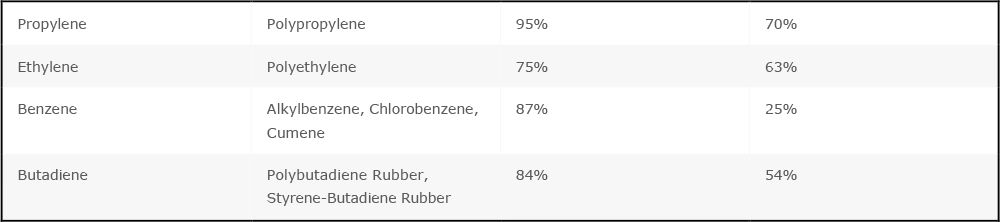
The Indian chemical industry is characterized by a dynamic mix of large-scale petrochemical producers and highly specialized players in niche chemical segments. Historically, India's chemical manufacturing has disproportionately focused on upstream commodities, creating a significant gap in value-added downstream specialty chemicals, which offer higher margins and greater global competitiveness.

Competitive Landscape

This feedstock utilization disparity highlights a critical opportunity for India to pivot towards high-value downstream manufacturing. By reducing reliance on commodity-grade output and increasing the production of specialty chemicals, India can enhance its global competitiveness, capture higher margins, and solidify its position as a diversified chemical manufacturing hub.

Regulatory Environment and Strategic Interventions

The regulatory environment has historically posed challenges for India¾s chemical sector, primarily due to complex environmental clearances, cumbersome procedural bottlenecks, and limited availability of key feedstocks. However, the government's renewed policy push aims to address these issues through targeted and structured interventions, fostering a more conducive ecosystem for growth and investment.

  • Establishment of Chemical Hubs - Inspired by successful international models like Jurong Island in Singapore, India plans to establish specialized chemical hubs. These integrated zones will centralize infrastructure, enhance logistical efficiency, and provide a single-window clearance system, thereby attracting both domestic and foreign investments into the sector.

  • Production-linked Incentives (PLI) & VGF - Financial mechanisms such as Production-Linked Incentives (PLI) and Viability Gap Funding (VGF) are being deployed. These schemes are designed to stimulate incremental domestic production, reduce import dependency, and provide crucial support for the development of high-value specialty chemical segments.

  • Accelerated Environmental Clearances - Proposals are underway to significantly streamline and expedite environmental regulatory approvals. This proactive measure aims to mitigate perennial project execution delays, ensuring that new ventures and expansions can commence operations more efficiently and predictably.

These strategic interventions are critical for transforming the regulatory landscape into an enabler of growth, rather than a barrier, positioning India as a more attractive destination for chemical manufacturing investments.

India in the Global Context

india-in-the-global-context

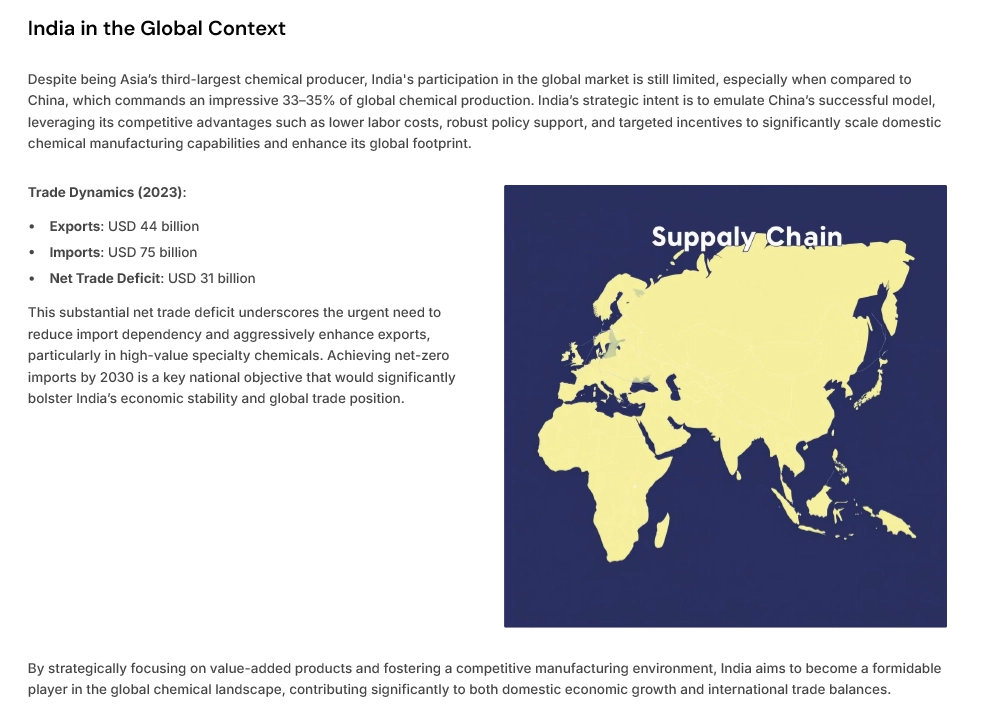
Despite being Asia's third-largest chemical producer, India's participation in the global market is still limited, especially when compared to China, which commands an impressive 33-35% of global chemical production. India's strategic intent is to emulate China's successful model, leveraging its competitive advantages such as lower labor costs, robust policy support, and targeted incentives to significantly scale domestic chemical manufacturing capabilities and enhance its global footprint.

Trade Dynamics (2023):

  • Exports: USD 44 billion
  • Imports: USD 75 billion
  • Net Trade Deficit: USD 31 billion

This substantial net trade deficit underscores the urgent need to reduce import dependency and aggressively enhance exports, particularly in high-value specialty chemicals. Achieving net-zero imports by 2030 is a key national objective that would significantly bolster India¾s economic stability and global trade position.

By strategically focusing on value-added products and fostering a competitive manufacturing environment, India aims to become a formidable player in the global chemical landscape, contributing significantly to both domestic economic growth and international trade balances.

Strategic Roadmap and Policy Recommendations

The NITI Aayog report provides a comprehensive strategic roadmap for the Indian chemical sector, structured around four core pillars. These pillars are designed to synergistically enhance competitiveness, foster innovation, and drive sustainable growth, ultimately positioning India as a global chemical powerhouse.

  • Export Growth  - Capitalize on existing strengths and expand market share in global demanding chemical categories such as agrochemicals, dyes, and other intermediates where India has a competitive edge.

  • Emerging Segments -Strategically invest in sunrise sectors like battery chemicals, driven by the accelerating transition to renewable energy and the electric vehicle revolution, ensuring future-ready manufacturing capabilities.

  • Enhancing Competitiveness - Address structural gaps through targeted support and incentives for downstream, high-value production of essential chemicals like styrene and phenol, moving up the value chain. 

  • Technology Access - Facilitate robust R&D initiatives and foster international technology partnerships to advance innovation, adopt cutting-edge manufacturing processes, and enhance product sophistication.

Projected Economic Impact by 2030: 

  • Market Size: USD 400-450 billion
  • Global Market Share: 5-6%
  • Employment Creation: 700,000-1 million new jobs
  • Net-zero Chemical Imports

Risks and Challenges

risks-and-challenges

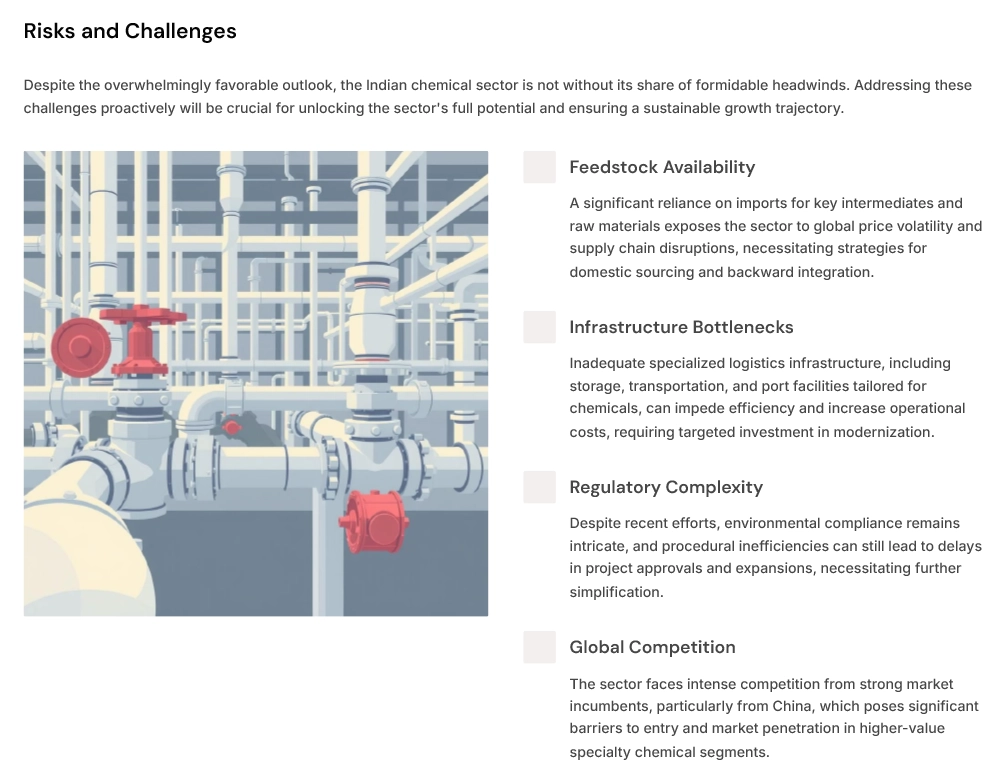
Despite the overwhelmingly favorable outlook, the Indian chemical sector is not without its share of formidable headwinds. Addressing these challenges proactively will be crucial for unlocking the sector's full potential and ensuring a sustainable growth trajectory.

  • Feedstock Availability  - A significant reliance on imports for key intermediates and raw materials exposes the sector to global price volatility and supply chain disruptions, necessitating strategies for domestic sourcing and backward integration.

  • Infrastructure Bottlenecks -Inadequate specialized logistics infrastructure, including storage, transportation, and port facilities tailored for chemicals, can impede efficiency and increase operational costs, requiring targeted investment in modernization.

  • Regulatory Complexity - Despite recent efforts, environmental compliance remains intricate, and procedural inefficiencies can still lead to delays in project approvals and expansions, necessitating further simplification. 

  • Global Competition - The sector faces intense competition from strong market incumbents, particularly from China, which poses significant barriers to entry and market penetration in higher-value specialty chemical segments.

Investment Conclusion

India's chemical industry offers a compelling investment proposition, firmly anchored by solid structural growth drivers, targeted government interventions, and vast untapped opportunities in high-value chemical segments. The confluence of increasing domestic demand and a strategic push towards global integration creates an exceptionally favorable environment for investors.

Strategic investments in infrastructure, technological capabilities, and well-calibrated policy incentives provide a robust pathway toward achieving global competitiveness and sustaining long-term growth. This multifaceted approach is designed to transform India into a global chemical manufacturing hub.

For institutional investors, a selective approach is highly recommended. The focus should be on companies that are actively transitioning towards downstream, specialty, and higher-margin chemicals. These entities are best positioned to leverage the prevailing policy tailwinds, drive technological advancement, and adapt effectively to evolving global trade dynamics. Such strategic investments promise not only significant returns but also contribute to India's broader economic transformation.

Overweight

India's chemical sector is positioned for sustained outperformance, making it a key growth engine in India's broader economic trajectory towards a USD 5 trillion economy.

Source: Adapted from "NITI Aayog Chemical Industry Report, July 2025"

Santoo Chakraborty

Santoo Chakraborty is a Financial Markets Analyst @TrueData

An experienced Market Enthusiast with CMT-Level 2. I had served USA and Indian Markets in different domains for more than 23 years. Now heading a Prop Desk managing more than >200 CR of portfolio.

10 Comments
K
keyur
· November 20, 2025

Good post

·
M
Marisha Bhatt
keyur · November 21, 2025

Thank you Sir! Glad you like the post.

·
S
Shravan
· December 23, 2025

good info

·
Meyhar Singh
Shravan · December 26, 2025

Thanks! Glad you found the information useful, appreciate you taking the time to share that.

·
R
Robert
· January 20, 2026

Well-written and informative report — especially liked the data on market size and policy tailwinds. Helps in understanding sectoral investment opportunities.

·
Meyhar Singh
Robert · January 22, 2026

Thank you for the thoughtful note! We’re glad the market sizing and policy angle came through clearly and helped with evaluating opportunities. We’ll keep sharing more data-backed reports like this.

·
D
Dhivya
· February 10, 2026

Good content! A bit long, but worth reading

·
Meyhar Singh
Dhivya · February 12, 2026

Thank you for the feedback! We’re glad you found it worth the read.

·
A
Arazukh
· February 10, 2026

Hello, nice post. I’d love to see more examples of India’s success stories in the digital and infrastructure sectors!

·
Meyhar Singh
Arazukh · February 12, 2026

Thank you! We appreciate the suggestion and are glad you enjoyed the post.

·